Al-Masaq-Journal of the Medieval Mediterranean
Scope & Guideline
Charting New Territories in Medieval Mediterranean Studies
Introduction
Aims and Scopes
- Cultural Interactions and Exchanges:
The journal emphasizes the study of cultural exchanges among Christian, Muslim, and Jewish communities, highlighting how these interactions shaped societal norms and practices in the medieval period. - Economic History and Trade Networks:
Research often focuses on trade routes, economic systems, and the impact of commerce on urban development and community life in the medieval Mediterranean. - Political Structures and Diplomacy:
The journal investigates the political dynamics of the Mediterranean, including the roles of diplomacy, power struggles, and the influence of various ruling entities. - Social Structures and Identity Formation:
Studies often delve into social hierarchies, gender roles, and the formation of identities in multicultural settings, examining how these elements influenced medieval societies. - Religious Plurality and Interfaith Relations:
Al-Masaq provides a platform for exploring the complexities of religious coexistence and conflict in the medieval Mediterranean, particularly how faith influenced everyday life and governance. - Art and Architecture:
Research in the journal also covers the artistic and architectural achievements within the region, analyzing how these reflect cultural identities and historical narratives.
Trending and Emerging
- Interdisciplinary Approaches:
There is a growing trend towards interdisciplinary research that combines history with anthropology, sociology, and literary studies, allowing for a more comprehensive understanding of medieval Mediterranean societies. - Microhistorical Perspectives:
Recent publications increasingly adopt microhistorical approaches, focusing on specific locales or events to draw broader conclusions about societal trends and cultural exchanges. - Urban Studies and City Life:
A notable increase in studies examining urbanism, sanitation, and city governance within the medieval Mediterranean reflects a growing interest in how urban spaces shaped social interactions and economic activities. - Gender Studies and Social Dynamics:
Research focusing on gender roles and the social dynamics of identity is gaining traction, offering insights into the complexities of societal structures in the medieval context. - Environmental and Economic Sustainability:
Emerging themes include the exploration of environmental factors and their impact on economic practices, revealing how climate and geography influenced trade and community resilience.
Declining or Waning
- Traditional Military History:
There has been a noticeable decrease in the focus on traditional military history narratives, particularly those centered solely on battles and conquests, as the journal shifts towards more nuanced social and cultural analyses. - Static National Histories:
Research that strictly adheres to nationalistic frameworks is becoming less common, as interdisciplinary and transnational approaches gain traction in understanding the complexities of the medieval Mediterranean. - Hagiography and Religious Texts:
Studies centered exclusively on hagiography or religious texts without broader context are appearing less frequently, indicating a move towards integrating these texts within wider socio-political and cultural frameworks. - Art Historical Studies in Isolation:
Art historical studies that do not connect to broader historical narratives are declining, as there is a trend towards integrating art within discussions of cultural exchange and identity.
Similar Journals

Espacio Tiempo y Forma-Serie III-Historia Medieval
Unveiling the Rich Tapestry of Medieval NarrativesEspacio Tiempo y Forma-Serie III-Historia Medieval, published by the Universidad Nacional de Educación a Distancia (UNED), is a prominent open-access journal dedicated to advancing research in medieval history. Since its establishment, this journal has gained a significant reputation within the academic community, achieving Q1 rankings in both Classics and History, reflecting its commitment to high-quality scholarship and insightful contributions to the field. With a remarkable Scopus ranking of 36th in Classics and 589th in History, it places itself among the top-tier publications, ensuring visibility and impact for its authors. Open access since 2011, the journal promotes the dissemination of knowledge to a broader audience, enhancing academic engagement and fostering collaboration among researchers globally. With its rich resources, the journal attracts a diverse readership, including historians, students, and professionals keen on exploring innovative perspectives in medieval studies.
AMERICAN JEWISH HISTORY
Documenting Heritage, Inspiring Future GenerationsAMERICAN JEWISH HISTORY is a premier academic journal published by Johns Hopkins University Press, dedicated to the exploration and analysis of the Jewish experience in the American context. With ISSN 0164-0178 and E-ISSN 1086-3141, this journal serves as a vital resource for scholars and students in the fields of cultural studies, history, and religious studies, as evidenced by its placement in the Q3 quartile across these disciplines in 2023. Reaching a broad audience interested in the historical, social, and cultural dimensions of the American Jewish narrative, the journal has converged in various years, ensuring a robust collection of multidisciplinary research and discussions. Although it operates under a traditional subscription model, the journal remains an essential platform for critical analysis, fostering deeper understanding of Jewish identity and history. With Scopus rankings placing it at the 60th percentile in History and 62nd percentile in Religious Studies, AMERICAN JEWISH HISTORY stands as a respected publication that significantly contributes to the discourse surrounding Jewish history and culture in the United States.
Journal of Medieval Iberian Studies
Illuminating the Depths of Medieval Iberian StudiesThe Journal of Medieval Iberian Studies is a leading academic journal published by Routledge Journals, Taylor & Francis Ltd, dedicated to exploring the diverse and rich tapestry of medieval Iberian history and culture. With its ISSN 1754-6559 and E-ISSN 1754-6567, this journal serves as a vital resource for scholars engaged in the fields of cultural studies and history, attaining a prestigious Q1 ranking in both categories as of 2023. The journal is recognized for its significant contribution to the humanities, featuring peer-reviewed articles that foster innovative research and critical discourse on medieval Iberia from 2010 to 2024. Spanning an array of topics, it encapsulates interdisciplinary approaches to medieval studies, making it an essential publication for researchers, professionals, and students alike who seek to deepen their understanding of this pivotal period in history. Although it currently does not offer open access options, the journal is committed to advancing scholarly discussion and knowledge dissemination within the academic community.
MEDIEVAL HISTORY JOURNAL
Illuminating the Complexities of the Middle AgesWelcome to the MEDIEVAL HISTORY JOURNAL, a prominent academic platform published by SAGE PUBLICATIONS INC, dedicated to advancing the field of medieval studies. Since its inception in 1998, this journal has established itself as a vital source of scholarly discourse, offering a rich array of articles that cover various aspects of medieval history, from cultural and societal developments to the intricate interplay of politics and religion. With an impressive rank of #568 out of 1760 in the Scopus Arts and Humanities History category and a respectable 67th percentile, the journal exemplifies rigorous academic standards and impactful research. Although it operates primarily under subscription access, its contributions are indispensable for researchers, professionals, and students seeking to deepen their understanding of the medieval era. The journal's ongoing commitment to publishing cutting-edge research makes it a cornerstone for anyone passionate about exploring the complexities of medieval history.
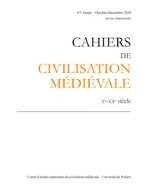
CAHIERS DE CIVILISATION MEDIEVALE
Navigating the Intricacies of the Medieval WorldCAHIERS DE CIVILISATION MEDIEVALE is a distinguished scholarly journal focusing on the multifaceted aspects of medieval civilization, including its history, literature, visual arts, and performing arts. Published by the CENTRE ETUD SUPERIEUR CIV MED in France, this journal serves as a vital resource for researchers, professionals, and students striving to deepen their understanding of the medieval period. Although the journal’s impact factor and HIndex are not explicitly listed, it has been categorized in Q4 for 2023 in key areas such as History and Literature, indicating its role within niche academic discussions. With content spanning converged publication years from 2002 to 2014 and 2017 to 2023, CAHIERS DE CIVILISATION MEDIEVALE aims to foster a rich dialogue among scholars in the field, while its accessibility options provide a pathway for the dissemination of knowledge. Dive into the intricate world of medieval studies through this essential publication, which seeks to elevate the discourse and provide a platform for innovative research.

Jebat-Malaysian Journal of History Politics and Strategic Studies
Advancing Insights into Malaysian Strategic Studies.Jebat-Malaysian Journal of History Politics and Strategic Studies is a pivotal platform for interdisciplinary research in the fields of history, political science, and strategic studies. Published by the Centre for History, Politics & Strategic Studies at Universiti Kebangsaan Malaysia, this journal contributes significantly to the understanding of Malaysia’s historical and political landscape, offering insights that resonate within the broader context of Southeast Asian studies. With its ISSN 0126-5644 and E-ISSN 2180-0251 designations, Jebat aims to foster scholarly dialogue by presenting original research, critical reviews, and case studies that highlight emerging trends and contemporary issues. Although not an open-access journal, the works published here undergo rigorous peer review, ensuring scholarly integrity and relevance. The journal serves as an essential resource for researchers, professionals, and students seeking to deepen their understanding of political dynamics and historical narratives in Malaysia and beyond, solidifying its importance as a notable academic resource in its field.
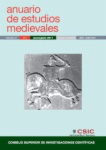
Anuario de Estudios Medievales
Exploring the Depths of Medieval HistoryAnuario de Estudios Medievales is an esteemed academic journal dedicated to the field of Medieval Studies, published by the Consejo Superior de Investigaciones Científicas (CSIC) in Spain. With an ISSN of 0066-5061 and an E-ISSN of 1988-4230, the journal has been offering open access to researchers since 1996, fostering a collaborative and inclusive scholarly environment. Recognized for its high impact, it holds a commendable Q1 ranking in History as of 2023, reflecting its influence in the academic community. The journal encompasses a rich array of topics within medieval history, making it a vital resource for historians, scholars, and students alike who seek to explore and understand the complexities of the medieval period. With its indexed presence in Scopus, where it ranks 557th among 1760 in the Arts and Humanities category, Anuario de Estudios Medievales stands as a cornerstone publication, bridging historical inquiry and contemporary research in Medieval Studies.

Belleten
Charting New Territories in Turkish Historical ResearchBeleten is a distinguished academic journal published by TURK TARIH KURUMU, focusing on cultural studies and history. With an ISSN of 0041-4255, this journal has made significant contributions to the understanding of Turkey's historical and cultural landscape since its inception in 1971. Recognized for its scholarly rigor, it holds a notable Q2 ranking in both the Cultural Studies and History categories as of 2023, reflecting its substantial impact within these fields. The journal is accessible to a diverse audience, including researchers, professionals, and students, who seek to explore comprehensive studies and discussions on Turkish history and culture. While it does not operate under an open-access model, its commitment to high-quality research continues to resonate within the academic community. Situated in Ankara, Turkey, Beleten aims to foster scholarly dialogue and provide a platform for innovative research that addresses contemporary and historical issues relevant to Turkish society and beyond.
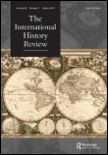
INTERNATIONAL HISTORY REVIEW
Navigating the Complexities of Cultural NarrativesINTERNATIONAL HISTORY REVIEW is an esteemed academic journal published by ROUTLEDGE JOURNALS, TAYLOR & FRANCIS LTD, dedicated to advancing the field of historical studies. Established in 1979, this journal has become a significant platform for researchers and scholars striving to explore and interpret historical narratives, methodologies, and debates. With a notable Q2 ranking in both Cultural Studies and History, and a commendable 85th percentile rank in the Arts and Humanities category on Scopus, the journal attracts a diverse readership committed to interdisciplinary dialogue. Although it currently does not offer an Open Access option, the journal is essential for those seeking high-quality research and critical perspectives on history and its related fields. As it converges into 2024, INTERNATIONAL HISTORY REVIEW continues to uphold its mission of fostering scholarly communication and supporting the academic community.

Espana Medieval
Bridging Cultures through Medieval Spanish ScholarshipEspana Medieval is an esteemed academic journal dedicated to the exploration of medieval studies within the broader historical context of Spain. Published by the UNIV COMPLUTENSE MADRID, SERVICIO PUBLICACIONES, this peer-reviewed journal has established its reputation since becoming Open Access in 2004, thereby ensuring that vital historical research is accessible to a global audience. With an impressive Q1 ranking in History and a notable Scopus rank of 773 out of 1760, this journal plays a pivotal role in shaping contemporary scholarship in the field. Researchers and professionals can expect high-quality, rigorously vetted articles that delve into various aspects of medieval history, culture, and society, contributing to a richer understanding of the medieval past. Located in the vibrant academic milieu of Madrid, Spain, Espana Medieval continues to be a leading voice for historians, promoting innovative research and fostering academic discourse. Submissions from scholars worldwide are welcomed, encouraging a diverse array of perspectives on the medieval period.