AL-QANTARA
metrics 2024
Advancing Scholarly Dialogue Across Cultures and Eras.
Introduction
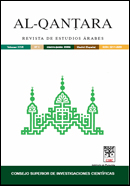
AL-QANTARA, published by the Consejo Superior Investigaciones Cientificas (CSIC), is a prestigious academic journal that has been at the forefront of interdisciplinary research in the fields of Cultural Studies, History, and Literature and Literary Theory since its inception in 1984. Renowned for its commitment to open access since 1996, the journal promotes a comprehensive understanding of the interconnectedness of cultural narratives and historical discourse, making it an invaluable resource for researchers and students alike. With impressive rankings in Scopus—including a top placement in the Q1 category for Literature and Literary Theory and Q2 in both Cultural Studies and History—AL-QANTARA effectively bridges theoretical insights with empirical research, contributing to robust academic dialogue and innovation. Operating out of Madrid, Spain, it stands as a pillar of scholarly excellence, offering a platform for diverse voices in the humanities to share their findings and engage with critical contemporary issues.
Metrics 2024
 0.180.400.4017
Metrics History
Rank 2024
Scopus
IF (Web Of Science)
JCI (Web Of Science)
Quartile History
Similar Journals
REVUE D HISTOIRE LITTERAIRE DE LA FRANCE
Unveiling the Rich Tapestry of Literary HistoryREVUE D'HISTOIRE LITTERAIRE DE LA FRANCE, published by Classiques Garnier, is a distinguished academic journal dedicated to the exploration and analysis of French literary history and theory. With an ISSN of 0035-2411 and an E-ISSN of 2105-2689, this journal serves as an essential resource for researchers, professionals, and students in the fields of literature and the humanities. Though it does not currently offer open access, its rigorous scholarship contributes significantly to the understanding of historical literary movements and their cultural contexts. Despite its discontinuation in Scopus after 2016, the journal has a notable academic pedigree, providing critical perspectives on literature from the past to the contemporary era. Situated at 6 Rue de la Sorbonne, Paris 75005, France, the journal aims to enrich the discourse surrounding literary theory and history, highlighting its enduring relevance in today's scholarly landscape.

Estudios de Historia de Espana
Bridging the Past and Present of Spain's Diverse HeritageEstudios de Historia de España is a distinguished academic journal published by the Universidad Católica Argentina, Facultad de Ciencias Sociales, focusing on the multifaceted dimensions of Spanish history. With an ISSN of 0328-0284 and an E-ISSN of 2469-0961, this journal has embraced an Open Access model since 2015, promoting broader dissemination and accessibility of research. Although the journal currently holds a Q4 ranking in key categories such as Arts and Humanities, History, and Religious Studies, it continues to strive for academic excellence and relevance in the field, engaging scholars, educators, and students alike. With a commitment to publishing innovative and rigorous research, Estudios de Historia de España is crucial for advancing the understanding of historical narratives and interpretations in Spain and beyond. For submission and access options, researchers can refer to the journal's [official website](#) for additional information.
SPECULUM-A JOURNAL OF MEDIEVAL STUDIES
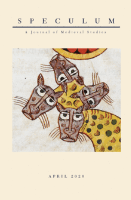
Charting New Paths in Historical UnderstandingSPECULUM: A Journal of Medieval Studies, published by University of Chicago Press, stands as a premier academic platform within the field of medieval studies. With an impressive legacy dating back to its inception in 1926, this journal has attracted scholarly contributions that explore the rich tapestry of human experience during the medieval period, encompassing areas such as history, literature, philosophy, cultural studies, and the visual and performing arts. It boasts elite rankings—Q1 in History, Literature and Literary Theory, Religious Studies, and Visual Arts and Performing Arts, with a commendable Q2 in Cultural Studies and Philosophy—attesting to its impact and relevance in academia. Although it is not an open-access journal, the rigorous peer-review process and critical scholarship found within its pages provide invaluable insights for researchers, professionals, and students alike. With a substantial Scopus ranking, ID 0038-7134, and E-ISSN 2040-8072, SPECULUM continues to serve as an essential resource for advancing knowledge and understanding of the medieval world, encouraging interdisciplinary dialogue and scholarly interaction.

Collectanea Christiana Orientalia
Exploring the Intersection of Faith and LanguageCollectanea Christiana Orientalia is a distinguished academic journal published by EDITORIAL UNIV CORDOBA-UCOPRESS, specializing in the fields of linguistics, literature, and literary theory. Since its inception, the journal has served as a vital platform for researchers and scholars from around the globe, promoting the exploration of Christian Oriental studies and their implications in contemporary literature and languages. Leveraging an Open Access model since 2013, it ensures widespread accessibility to cutting-edge research, fostering greater dissemination and engagement within the academic community. With an ISSN of 1697-2104 and an E-ISSN of 2386-7442, the journal is recognized for its rigorous peer-review process and has achieved commendable rankings in various categories: Q4 in Linguistics and Language and Q3 in Literature and Literary Theory as of 2023. This includes notable Scopus rankings that place it within the 57th percentile for Literature and Literary Theory, reflecting its significance and contribution to the field. Aspiring to foster dialogue and scholarship, Collectanea Christiana Orientalia invites contributions that delve into the intricacies of Christian thought, linguistics, and literary aesthetics, making it an essential resource for researchers, professionals, and students alike.
Early Medieval China
Fostering Scholarly Dialogue on Early Chinese HeritageEarly Medieval China is a distinguished journal published by ROUTLEDGE JOURNALS, TAYLOR & FRANCIS LTD, specializing in the intricate study of early medieval China through an interdisciplinary lens that encompasses Anthropology, Cultural Studies, History, Literature and Literary Theory, Philosophy, and Religious Studies. With a commendable impact factor and a prestigious standing in various quartile rankings, such as Q1 in Literature and Literary Theory and Q2 in Cultural Studies and History for 2023, this journal serves as a vital resource for scholars, researchers, and students alike. It aims to promote a deeper understanding of China's early medieval period by publishing innovative research, critical essays, and comprehensive analyses that contribute to the broader discourse on Asian studies and history. By offering a platform for cutting-edge research, Early Medieval China plays an essential role in enriching academic dialogue and fostering further explorations in this historically significant field.

Anaquel de Estudios Arabes
Unveiling the Rich Tapestry of Arab HistoryAnaquel de Estudios Arabes is a distinguished academic journal dedicated to the field of Arab studies, offering a platform for original research and critical discussions that span various disciplines. Published by UNIV COMPLUTENSE MADRID, SERVICIO PUBLICACIONES, this journal has established itself as a vital resource since it became Open Access in 2014, facilitating global dissemination of knowledge. With an ISSN of 1130-3964 and E-ISSN 1988-2645, the journal operates from Madrid, Spain, and supports a diverse range of topics related to history, linguistics, literature, and religious studies, earning esteemed Q2 and Q3 rankings in these categories as of 2023. Researchers, professionals, and students alike benefit from the journal's commitment to quality, reflected in its Scopus rankings across several related fields. As it approaches a pivotal period from 2019 to 2024, the Anaquel de Estudios Arabes continues to contribute significantly to the intellectual landscape of Arab studies, engaging scholars who seek to deepen their understanding of the complex cultural and linguistic heritage of the Arab world.
MOYEN AGE
Connecting Past and Present through Scholarly DialogueMOYEN AGE is a distinguished academic journal published by LE MOYEN AGE BOECK & LARCIER S A in Belgium, focused on the multifaceted disciplines of History, Linguistics, and Literature. With its ISSN 0027-2841 and E-ISSN 1782-1436, this journal serves as a platform for researchers, professionals, and students alike to engage with scholarly articles that contribute to the understanding of medieval studies. Although currently categorized in the fourth quartile across various fields as of 2023, MOYEN AGE demonstrates a commitment to fostering academic dialogue and exploration around historical linguistics and literary theory. The journal is available via subscription, making it an essential resource for those looking to deepen their knowledge in its scope, which spans from 2001 through 2024. As it continues to evolve, MOYEN AGE remains a relevant source for emerging thinkers and established scholars drawn to the complexities of the medieval era.

Gripla
Fostering Insightful Dialogues in Icelandic StudiesGripla, published by the Arni Magnusson Institute for Icelandic Studies, stands as a significant academic journal in the fields of linguistics and literary studies. With an ISSN of 1018-5011, this esteemed journal has been releasing cutting-edge research since its inception in 2011. Although currently categorized as Q4 in Linguistics and Language and Q3 in Literature and Literary Theory for 2023, it has showcased robust scholarship with a Scopus rank of #327 in Literature and Literary Theory, placing it within the 70th percentile of its category. Gripla serves as a vital platform for the exploration of Icelandic studies, fostering a deeper understanding of language and literature in a rapidly evolving academic landscape. While it is not an open-access journal, its contributions are essential for researchers, professionals, and students eager to engage with new developments in the linguistics and literary discourse. Situated in the heart of Reykjavik, Gripla continues to enrich the scholarly community by providing insights that bridge traditional knowledge with contemporary relevance.

Al-Arabiyya-Journal of the American Association of Teachers of Arabic
Illuminating the Richness of Arabic Literature and LinguisticsAl-Arabiyya: Journal of the American Association of Teachers of Arabic, published by Georgetown University Press, serves as a significant platform for research and scholarship in the fields of Arabic language education, linguistics, and literature. With its ISSN 0889-8731 and E-ISSN 2375-4036, this journal presents a robust blend of original articles, reflections, and pedagogical research aimed at both seasoned educators and emerging scholars. While the journal is not an open-access publication, it maintains a commendable impact in its categories, achieving Q4 in Education and Q2 in Literature and Literary Theory as per the latest rankings. Notably, it has been recognized within Scopus for its contributions to the arts and humanities, with rankings that reflect a vibrant academic discourse surrounding the Arabic language. Al-Arabiyya aims to promote and enhance the teaching and learning of Arabic while fostering an understanding of its literary and cultural richness, making it an invaluable resource for anyone interested in Arabic studies.
Early Medieval Europe
Connecting Disciplines to Reveal Historical InsightsEarly Medieval Europe, published by WILEY, is a distinguished academic journal that delves into the multifaceted history and cultural dynamics of the early medieval period in Europe. With an ISSN of 0963-9462 and an E-ISSN of 1468-0254, this journal provides a vital platform for scholars and researchers seeking to share innovative research developments within the field. Covering a range of disciplines including history and arts, it holds a category quartile ranking of Q3 in Arts and Humanities (miscellaneous) and History, alongside Q4 in Geography, Planning, and Development. Notably, it ranks #302 out of 1760 in the Arts and Humanities—History category, reflecting its significance and impact within the scholarly community. While devoted to the promotion of traditional scholarly communication, Early Medieval Europe also welcomes interdisciplinary approaches, making it a valuable resource for students, professionals, and academics interested in insights and advancements related to medieval studies. With an ongoing commitment to meaningful dialogue and exploration, this journal remains a pivotal resource for understanding the complexities of early medieval Europe.