ALLERGOLOGIA ET IMMUNOPATHOLOGIA
Scope & Guideline
Connecting Researchers to Transform Allergy and Immunology Insights
Introduction
Aims and Scopes
- Research on Allergic Diseases:
The journal publishes studies on various allergic conditions, including asthma, allergic rhinitis, and food allergies, with a focus on their clinical manifestations, epidemiology, and management strategies. - Immunopathological Mechanisms:
Papers often delve into the immunological and pathophysiological mechanisms underlying allergic responses, including the roles of specific immune cells, cytokines, and signaling pathways. - Innovative Therapeutic Approaches:
The journal highlights research on novel therapeutic strategies, such as allergen-specific immunotherapy, biologics, and traditional remedies, aimed at improving patient outcomes. - Epidemiological Studies:
Research focusing on the prevalence, risk factors, and socio-economic impacts of allergic diseases, particularly in pediatric populations, is a key area of interest. - Translational Research:
The journal encourages studies that bridge laboratory research with clinical applications, facilitating the translation of scientific discoveries into practical treatments for allergic conditions.
Trending and Emerging
- Biologics and Targeted Therapies:
There is a growing emphasis on the development and application of biologics and targeted therapies for treating allergic conditions, showcasing advancements in precision medicine. - Microbiome and Allergic Diseases:
Research exploring the role of the gut microbiome and its impact on allergic diseases is on the rise, highlighting the importance of microbial diversity in immune regulation. - Impact of Environmental Factors:
Emerging studies are increasingly focusing on how environmental changes, including climate change and pollution, affect the prevalence and severity of allergic diseases. - Psychological and Behavioral Aspects of Allergies:
There is an increasing recognition of the psychological impact of allergies on patients, leading to research that examines the interplay between mental health and allergic conditions. - Long-Term Outcomes of Allergy Treatments:
Research assessing the long-term effectiveness and safety of various allergy treatments, including immunotherapy and pharmacological interventions, is becoming more prevalent, reflecting a need for comprehensive management strategies.
Declining or Waning
- Traditional Remedies for Allergies:
There has been a noticeable decrease in studies focusing on traditional or alternative medicine approaches for treating allergies, reflecting a shift towards evidence-based and pharmacological treatments. - Single-Factor Allergy Triggers:
Research concentrating on isolated allergy triggers without considering comorbidities or multi-factorial influences is becoming less common, as studies increasingly emphasize the complexity of allergic disease. - General Immunology without Allergy Context:
Papers that address broad immunological topics without a specific link to allergy or immunopathology are appearing less frequently, indicating a more focused approach on relevant allergy-related immunological research.
Similar Journals
JOURNAL OF INVESTIGATIONAL ALLERGOLOGY AND CLINICAL IMMUNOLOGY
Pioneering research for a healthier tomorrow.JOURNAL OF INVESTIGATIONAL ALLERGOLOGY AND CLINICAL IMMUNOLOGY is an esteemed publication dedicated to the fields of Immunology and Allergy, published by ESMON PUBLICIDAD S A in collaboration with the Department of Allergy and Clinical Immunology at the University Clinical Navarra, Spain. With its rich history spanning over three decades since its inception in 1991, this journal has gained prominence in the scientific community, holding a commendable Q2 quartile in Allergy and a Q3 quartile in Immunology. Ranked within the top tiers of its categories according to Scopus, it stands at Rank #80/233 in Immunology and Allergy, and Rank #96/236 in Immunology and Microbiology, indicating its influential role in disseminating cutting-edge research and clinical insights. Though primarily print-focused, the journal strives to bridge gaps in knowledge and contribute to the ongoing dialogue among researchers, professionals, and students in the immunological sciences. The JOURNAL OF INVESTIGATIONAL ALLERGOLOGY AND CLINICAL IMMUNOLOGY is essential for anyone committed to advancing the understanding of allergic and immunological conditions.
CLINICAL AND EXPERIMENTAL ALLERGY
Transforming Understanding of Allergic DisordersCLINICAL AND EXPERIMENTAL ALLERGY is a premier peer-reviewed journal dedicated to advancing the scientific understanding of allergy and immunology. Published by Wiley in the United Kingdom, this esteemed journal maintains a significant impact factor, reflecting its high standards and influential research contributions. With an impressive history since its inception in 1971, the journal is poised to continue leading the discourse in the field until at least 2024. It is ranked in the Q2 quartile for both Immunology and Allergy categories, further highlighting its reputable standing within the academic community. The journal's Scopus rankings showcase its academic relevance, securing the 49th and 51st positions in the Medicine and Immunology categories, respectively. Researchers, professionals, and students will find vital insights and contemporary research trends within its pages, making it an essential resource for those invested in understanding and addressing allergic diseases and disorders.
Revue Francaise d Allergologie
Elevating Knowledge in Allergy and ImmunotherapyThe Revue Francaise d'Allergologie, an esteemed publication in the field of Immunology and Allergy, is published by ELSEVIER MASSON, CORP OFF in France. This journal plays a pivotal role in disseminating significant findings and advancements in allergy research and immunotherapy, reflecting the latest trends and challenges in these rapidly evolving areas. As part of its commitment to scholarly rigor, the journal encompasses a wide range of topics pertinent to allergology, aiming to bridge the gap between clinical practice and academic research. Although currently not listed as open access, it provides critical insights essential for researchers, professionals, and students alike, ensuring the advancement of knowledge and therapeutic strategies in allergy and immunology. With its impact factor and positioning in the Q4 category, it serves as a valuable resource, aiding in the education and development of future leaders in the field. The Revue Francaise d'Allergologie continues to be a vital platform for the exchange of innovative ideas and findings from 2009 to the present.
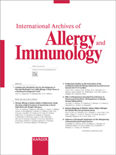
INTERNATIONAL ARCHIVES OF ALLERGY AND IMMUNOLOGY
Connecting Researchers and Clinicians in Allergy Science.INTERNATIONAL ARCHIVES OF ALLERGY AND IMMUNOLOGY, published by KARGER, is a distinguished journal dedicated to advancing the field of immunology and allergy research. With an ISSN of 1018-2438 and an E-ISSN of 1423-0097, this journal has been a vital resource since its inception in 1950, continuing to publish influential articles through 2024. Hailing from Switzerland, it holds an important position within the Q3 category in Immunology and Allergy and Q2 in miscellaneous Medicine, reflecting its growing impact in the scientific community. The Scopus rankings showcase its relevance, with a 52nd percentile in Immunology and Allergy and 45th in Immunology and Microbiology. Although not an open-access journal, it plays a critical role in disseminating significant findings and innovations in the understanding of allergic diseases and immunological responses. The INTERNATIONAL ARCHIVES OF ALLERGY AND IMMUNOLOGY is essential for researchers, clinicians, and students eager to stay at the forefront of allergy and immunology developments.

Alergia Astma Immunologia
Fostering collaboration for improved patient outcomes.Alergia Astma Immunologia is a dedicated journal focusing on the interdisciplinary fields of immunology and respiratory medicine, published by the Asthma and Allergy Patients Support Organization in Poland. With a commitment to advancing research and sharing knowledge, this journal serves as a platform for scholars and practitioners to discuss critical issues and recent advances in allergy, asthma, and immunological disorders. Despite being in Category Quartiles Q4 for both Immunology and Allergy and Pulmonary and Respiratory Medicine, its importance is highlighted by its continuous publication since 2000, providing a historical perspective on evolving scientific insights. Researchers and clinicians alike benefit from accessing novel findings and case studies that contribute to improved patient outcomes and innovative therapeutic strategies. While the journal currently offers limited open access, its commitment to providing high-quality, peer-reviewed content ensures its relevance in the academic discourse within these vital areas of health science. The journal aims to foster collaboration, stimulate research interest, and promote evidence-based practices within the professional community.
Allergy Asthma and Clinical Immunology
Empowering global collaboration in immunology.Allergy Asthma and Clinical Immunology, a pioneering open access journal published by BMC, has been at the forefront of immunological research since its inception in 2005. With an ISSN of 1710-1492, this UK-based journal has established a significant presence in the fields of Immunology, Allergy, and Pulmonary and Respiratory Medicine, achieving notable quartile rankings such as Q2 in Immunology and Allergy in 2023. It plays a crucial role in disseminating high-quality research that advances our understanding of allergy and asthma, making substantial contributions to clinical practices and public health. The journal embraces the principles of Open Access, allowing researchers, professionals, and students from around the globe to access its content freely, thus facilitating knowledge sharing and collaboration within the scientific community. As it converges towards 2024, Allergy Asthma and Clinical Immunology continues to attract impactful studies that drive innovation and improve patient care in the face of rapidly evolving challenges in immunological health.

Egyptian Journal of Pediatric Allergy and Immunology
Exploring breakthroughs in allergy and immunology for children.Welcome to the Egyptian Journal of Pediatric Allergy and Immunology, a leading academic platform dedicated to the advancement of knowledge in the field of pediatric allergy and immunology. Published by the prestigious Egyptian Society of Pediatric Allergy & Immunology, this journal aims to address the pressing challenges and breakthroughs in the diagnosis, treatment, and management of allergic diseases in children. As a crucial resource for researchers, healthcare professionals, and students, it focuses on disseminating high-quality, peer-reviewed articles that contribute to the global understanding of allergic conditions and immunological responses in pediatric populations. Although the journal is currently not an Open Access publication, it provides a valuable gateway to research findings that can shape clinical practice and influence future investigations. With an emphasis on contributing to improved healthcare outcomes for children suffering from allergy and immunology disorders, the Egyptian Journal of Pediatric Allergy and Immunology stands out as an essential reference in the field.
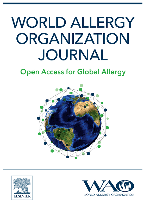
World Allergy Organization Journal
Empowering Knowledge in Allergy and Respiratory MedicineWorld Allergy Organization Journal is a premier open-access publication dedicated to advancing the understanding and treatment of allergic diseases and related conditions. Published by ELSEVIER, this journal boasts a commendable impact factor and ranks in the second quartile for both Immunology and Allergy, as well as the first quartile in Pulmonary and Respiratory Medicine. Since its inception as an open-access journal in 2008, it has consistently aimed to provide a credible platform for researchers, clinicians, and students to disseminate original research, reviews, and clinical studies. With its emphasis on high-quality scholarship and practical applications, the World Allergy Organization Journal plays a crucial role in bridging theoretical knowledge with clinical practice, making significant contributions to the fields of immunology, allergy, and respiratory medicine. The journal is particularly notable for its accessibility to a global audience, exemplified by its open-access model since 2008, promoting a wider exchange of ideas and innovations across borders.
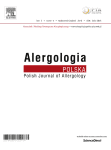
Alergologia Polska-Polish Journal of Allergology
Illuminating the pathways of allergy mechanisms and treatments.Alergologia Polska - Polish Journal of Allergology, published by TERMEDIA PUBLISHING HOUSE LTD, is a distinguished academic journal dedicated to advancing the field of allergy research and treatment. With the ISSN 2353-3854, this journal serves as an essential resource for professionals, researchers, and students alike, offering a platform for the dissemination of novel findings and comprehensive reviews in allergic diseases. The journal emphasizes open access to ensure widespread availability and engagement within the scientific community. Alergologia Polska aims to enhance the understanding of allergy mechanisms, diagnostics, and management strategies, fostering collaboration and innovation among experts in the field. Set against the vibrant backdrop of Poznań, Poland, this publication not only highlights clinical and experimental research but also promotes interdisciplinary discussions that are pivotal for tackling complex allergic conditions globally.
ANNALS OF ALLERGY ASTHMA & IMMUNOLOGY
Elevating Standards in Allergy and Immunology ResearchANNALS OF ALLERGY ASTHMA & IMMUNOLOGY is a premier peer-reviewed journal published by Elsevier Science Inc, dedicated to advancing the fields of allergy, asthma, and immunology. With its roots dating back to 1995 and with a focus on high-impact research, this journal has established itself as a leading platform for the dissemination of original research, reviews, and clinical studies within these critical areas. The journal boasts an impressive impact factor, supporting its Q2 ranking in both Immunology and Allergy, as well as in Pulmonary and Respiratory Medicine, indicating its significant contribution to the scientific community. Although it does not currently offer open access options, its comprehensive coverage and rigorous peer-review process ensure that published articles are of the highest quality, making it an invaluable resource for researchers, clinicians, and students alike. The Scopus rankings reflect its esteemed position in the academic landscape, providing professionals with access to cutting-edge developments and insights into the management and treatment of allergic and respiratory conditions.