ANTHROPOLOGIE
metrics 2024
Uncovering Insights into Human Behavior and Thought
Introduction
ANTHROPOLOGIE, published by Elsevier France - Éditions Scientifiques Médicales Elsevier, is a leading academic journal dedicated to advancing the fields of Anthropology and the History and Philosophy of Science. With a publication history that dates back to 1947, this esteemed journal has steadily carved its niche within the scholarly community, achieving a commendable Q2 rank in both the aforementioned categories in 2023. Although it does not offer Open Access, ANTHROPOLOGIE provides robust access options through institutional subscriptions, ensuring that researchers and practitioners alike can delve into its rich repository of knowledge. The journal's impact is underscored by its competitive Scopus rankings, particularly its position within the 65th percentile for History and Philosophy of Science and 56th percentile within Anthropology. Through rigorous peer-reviewed articles that illuminate a wide array of anthropological inquiries and philosophical debates, ANTHROPOLOGIE continues to be an essential resource for those committed to exploring the complexities of human behavior, culture, and scientific understanding in an ever-evolving world.
Metrics 2024
 0.280.600.6035
Metrics History
Rank 2024
Scopus
IF (Web Of Science)
JCI (Web Of Science)
Quartile History
Similar Journals

Bulletin de la Societe Prehistorique Francaise
Exploring the Depths of PrehistoryBulletin de la Societe Prehistorique Francaise (ISSN: 0249-7638; E-ISSN: 1760-7361), published by the SOCIETE PREHISTORIQUE FRANCAISE, stands as a pivotal journal within the domain of archaeology, particularly emphasizing prehistoric studies. With its classification in the Q2 quartile of both the arts and humanities as well as social sciences in archaeology, the journal positions itself among the top 25% of publications in these categories as of 2023. This distinguished ranking reflects its significant contribution to the field, providing researchers, professionals, and students with critical insights and innovative methodologies related to prehistoric research. Although open access options are currently unavailable, the journal is committed to fostering academic discourse and sharing knowledge that influences contemporary archaeological practices. As a member of the elite academic community, Bulletin de la Societe Prehistorique Francaise is highly regarded for its rigorous peer-review process and dedication to the advancement of archaeology, making it an essential resource for anyone invested in understanding our historical roots.
JOURNAL OF WORLD PREHISTORY
Pioneering Discoveries in Global PrehistoryJOURNAL OF WORLD PREHISTORY, published by SPRINGER, stands as a premier platform for disseminating pioneering research and scholarship in the field of archaeology. Boasting a prestigious Q1 status in Archeology and a remarkable 97th percentile ranking in its category, this journal has made significant contributions to the understanding of global prehistory since its inception in 1987. It serves as an invaluable resource for researchers, professionals, and students alike, providing access to high-quality articles that explore diverse archaeological methodologies, theoretical frameworks, and case studies. Although it is not an open-access journal, its impact and relevance continue to resonate within the academic community, fostering critical discussions and advancing knowledge in this vital discipline. With publications converging from 2006 and set to continue until 2024, the JOURNAL OF WORLD PREHISTORY remains committed to advancing archaeological research and enhancing interdisciplinary collaboration.

Cuadernos de Prehistoria y Arqueologia-Universidad Autonoma de Madrid
Charting New Territories in Archaeological ResearchCuadernos de Prehistoria y Arqueologia-Universidad Autonoma de Madrid is a distinguished academic journal dedicated to the fields of archaeology and prehistory, published by the Universidad Autonoma de Madrid, Departamento de Prehistoria y Arqueología. With an ISSN of 0211-1608, this journal plays a crucial role in disseminating significant research findings and theoretical advancements within these domains. Recognized for its scholarly excellence, it holds impressive quartile rankings in 2023, including Q2 in Archaeology and Q1 in History, reflecting its high impact within the academic community. While currently not an open-access publication, Cuadernos de Prehistoria y Arqueologia provides valuable insights to researchers, professionals, and students engaged in the exploration of human history and cultural heritage from 2018 to 2024 and beyond. With a commitment to fostering interdisciplinary dialogue, this journal serves as an essential platform for innovative studies and comprehensive reviews, contributing to the advancement of knowledge in archaeology and prehistory.

Complutum
Pioneering Research in the Heart of History and ArcheologyComplutum, published by the Universidad Complutense de Madrid, serves as a leading academic journal in the fields of Archeology and History. With a notable track record since its inception and a convergence stretching from 2011 to 2024, the journal has established itself as a pivotal platform for scholarly discourse in these disciplines. Recognized in 2023 with a Q2 ranking in Archeology and Arts and Humanities, as well as a Q1 ranking in History, Complutum demonstrates its commitment to quality research, attracting contributions from leading experts and emerging scholars alike. The journal's impact is further evidenced by its competitive ranks within various Scopus categories, particularly its placement in the 77th percentile for History and 64th for Archeology. As a printed publication without open access options, Complutum caters to a specialized audience, providing a forum for in-depth analysis and discussion on archaeological findings and historical interpretations. Researchers, professionals, and students engaged in these fields will find Complutum an invaluable resource for advancing knowledge and fostering academic collaboration.
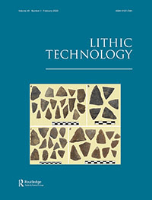
Lithic Technology
Pioneering Research in Stone Tool AnalysisLithic Technology is a premier international journal published by Routledge Journals, Taylor & Francis Ltd, dedicated to advancing the field of lithic studies in archaeology and anthropology. Established in 1977, this prestigious journal has established itself at the forefront of research concerning stone tool technology, providing a vital forum for scholars to share groundbreaking findings and methodologies. With an impressive Q1 ranking in both Archaeology and Anthropology, and indexed within the 91st percentile in its respective categories by Scopus, Lithic Technology is recognized for its significant contributions to the understanding of human prehistory and material culture. The journal features a diverse array of articles, from theoretical approaches to practical case studies, ensuring relevance to contemporary archaeological discourse. Though not an open-access publication, its meticulous peer-review process guarantees the highest quality of scholarship, making it an indispensable resource for researchers, professionals, and students eager to expand their knowledge in the rigors of lithic analysis.

Relaciones
Connecting Ideas, Transforming Anthropology.Relaciones is a prestigious open-access journal published by the SOC ARGENTINA ANTROPOLOGIA, dedicated to the field of anthropology. Since its inception in 1937, this journal has served as a vital platform for disseminating innovative research and insights within the social sciences community. With both its print (ISSN: 0325-2221) and online (E-ISSN: 1852-1479) formats, Relaciones ensures widespread accessibility, empowering researchers, professionals, and students to engage with contemporary anthropological discourse. The journal aims to foster critical discussions that not only reflect on cultural and societal issues but also contribute to theoretical advancements in anthropological methodologies. By maintaining a commitment to quality and open access, Relaciones plays a crucial role in shaping the future of anthropology in Argentina and beyond, encouraging scholarly collaboration and enriching the academic landscape.
ACTA ARCHAEOLOGICA
Advancing Knowledge, Preserving HeritageACTA ARCHAEOLOGICA is a highly regarded, peer-reviewed journal published by BRILL, focusing on the dynamic field of archaeology. With an ISSN of 0065-101X and an E-ISSN of 1600-0390, this journal disseminates innovative research, critical analyses, and comprehensive reviews that contribute to our understanding of human history, cultural heritage, and archaeological methodology. ACTA ARCHAEOLOGICA has excelled in its field, achieving a Q1 ranking in both the Arts and Humanities and Social Sciences categories for 2023, showcasing its impact and relevance in scholarly discourse. Though not currently open access, the journal caters to a diverse audience of researchers, professionals, and students, offering invaluable insights into archaeological studies from a global perspective. As it continues to foster academic dialogue, ACTA ARCHAEOLOGICA remains a cornerstone for those looking to deepen their knowledge and engage with cutting-edge archaeological research.
ANTHROPOLOGICAL SCIENCE
Unveiling the narratives of humanity through innovative methodologies.ANTHROPOLOGICAL SCIENCE is a prominent journal in the field of anthropology, published by the Anthropological Society of Nippon since 1993. With a rich pedigree of scholarly contributions, this journal is an essential platform for disseminating research findings and theoretical discussions that push the boundaries of anthropological knowledge. Currently ranked in the Q3 category in Anthropology by 2023 metrics, ANTHROPOLOGICAL SCIENCE boasts an impressive position at #163 out of 502 in Scopus, placing it in the 67th percentile among its peers. While it operates under a traditional access model, the journal supports a diverse range of anthropological research encompassing cultural, biological, and archaeological perspectives. Researchers, professionals, and students will find valuable insights and innovative methodologies that foster a richer understanding of human societies and behaviors. The current trends and findings published in this journal make it a crucial resource for those involved in anthropological studies or related fields.
Trabajos de Prehistoria
Pioneering Research That Shapes Our Understanding of Ancient CivilizationsTrabajos de Prehistoria is a distinguished peer-reviewed journal published by the Consejo Superior de Investigaciones Científicas (CSIC) since 1988, and it has established itself as a vital resource in the field of archaeology and prehistory. With an impressive impact factor and an open access policy, the journal aims to disseminate high-quality research that contributes to the understanding of human history and prehistorical studies. This Spanish journal has consistently ranked in the top quartile (Q1) in both the Arts and Humanities and Social Sciences categories, reflecting its significance in advancing archaeological scholarship, with Scopus rankings placing it in the 85th percentile among its peers. Covering a broad scope of topics related to archaeology, it serves as a platform for innovative research that connects researchers, professionals, and students globally, enhancing academic dialogue and fostering interdisciplinary collaboration. Based in Madrid, European researchers and global academics alike benefit from its open access model, promoting wider distribution and accessibility of foundational studies in the field.
Journal of Lithic Studies
Bridging history and technology through stone tools.Journal of Lithic Studies is a premier Open Access journal published by the University of Edinburgh's School of History, Classics & Archaeology, dedicated to advancing the field of lithics and stone tool studies. Since its inception in 2014, this journal has provided a valuable platform for researchers, professionals, and students to disseminate innovative research, explore new methodologies, and engage with the growing body of knowledge in archaeological sciences. The journal encompasses a wide range of topics within lithic studies, including technological analysis, experimental archaeology, and the cultural implications of stone tool production and use. As an open-access publication, the Journal of Lithic Studies ensures that groundbreaking findings are accessible to a global audience, fostering collaboration and scholarly dialogue within the archaeological community. With its commitment to high-quality research and interdisciplinary inquiry, the journal stands as a vital resource for those interested in the past and present significance of lithic technology.