
Journal of Paleolithic Archaeology
metrics 2024
Illuminating the Path of Human Evolution
Introduction
Journal of Paleolithic Archaeology, published by SpringerNature, stands at the forefront of scholarly research in the field of archaeology, focusing specifically on the rich and complex narratives of human prehistory. With an E-ISSN of 2520-8217, this engaging journal serves as a vital resource for researchers, professionals, and students alike, offering open-access articles that disseminate groundbreaking discoveries and theoretical advancements in Paleolithic studies. The journal's objective is to foster a deeper understanding of early human culture, technology, and the environment, ensuring accessibility to vital knowledge that shapes our understanding of human evolution. As the field of archaeology continues to evolve with innovative methodologies and interdisciplinary approaches, the Journal of Paleolithic Archaeology emerges as an essential platform for sharing insights and fostering a vibrant academic community dedicated to unraveling the mysteries of our ancient past.
Metrics 2024
 -1.802.20-
Metrics History
Rank 2024
IF (Web Of Science)
JCI (Web Of Science)
Quartile History
Similar Journals

ARCHAEOLOGY
Connecting History with Contemporary RelevanceARCHAEOLOGY is a distinguished peer-reviewed journal published by the Archaeological Institute of America, focusing on the multifaceted aspects of archaeological research and its relevance to contemporary society. Established in 1966, this journal serves as a critical platform for scholarly discourse in the field, showcasing innovative findings, theoretical advancements, and methodological discussions related to archaeology. While it maintains a Q4 ranking within the disciplines of archaeology and arts and humanities, its contributions remain valuable for those engaging in archaeological studies or seeking to understand historical and cultural narratives. The journal is accessible in print, with an ISSN of 0003-8113 and an E-ISSN of 1943-5746, ensuring that a wide audience can benefit from its insights. Although currently not classified as Open Access, the meticulous peer-review process ensures a high standard of academic rigor, making it an essential source for researchers, professionals, and students alike who are dedicated to exploring the past through archaeological lenses.
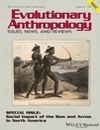
EVOLUTIONARY ANTHROPOLOGY
Pioneering Research for a Deeper Understanding of HumanityEVOLUTIONARY ANTHROPOLOGY is a premier journal published by WILEY, dedicated to advancing the field of anthropology through innovative and rigorous research. With an ISSN of 1060-1538 and an E-ISSN of 1520-6505, this journal boasts a remarkable Q1 ranking in both the Anthropology and Medicine (miscellaneous) categories, reflecting its significant impact within the academic community. Since its inception in 1992, it has continuously evolved, now encompassing a wide array of subjects pertinent to evolutionary studies and human health. Residing in the highly competitive Scopus rankings, it stands at an impressive rank of 10 out of 502 in the field, placing it within the top 2% of journals in Social Sciences - Anthropology. Researchers, professionals, and students alike will find this journal an invaluable resource for the latest findings, theoretical advancements, and discussions that shape our understanding of human evolution and its biological implications. While not categorized as an Open Access journal, EVOLUTIONARY ANTHROPOLOGY remains a vital outlet for high-quality scholarship, fostering dialogue and enriching knowledge across diverse audiences.
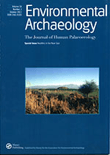
ENVIRONMENTAL ARCHAEOLOGY
Innovating Research on Humanity’s Environmental FootprintENVIRONMENTAL ARCHAEOLOGY, published by ROUTLEDGE JOURNALS, TAYLOR & FRANCIS LTD, serves as a leading platform for innovative research at the intersection of archaeology and environmental science. With a commendable history dating back to 1981 and a notable convergence in scholarly discussion from 2002 to 2024, this journal holds an esteemed Q1 ranking in both Archeology and Archeology (arts and humanities), as well as a Q2 in Environmental Science as of 2023. Positioned in the United Kingdom, ENVIRONMENTAL ARCHAEOLOGY's ISSN 1461-4103 and E-ISSN 1749-6314 reflect its commitment to disseminating high-quality research that explores how past human interactions with the environment inform modern ecological challenges. With its robust Scopus standings, including a rank of #17/413 in Arts and Humanities and an impressive #15/354 in Social Sciences, the journal is recognized for its significant contribution to the field, making it an essential resource for researchers, professionals, and students eager to advance their understanding and application of environmental archaeology.
Kiva-Journal of Southwestern Anthropology and History
Advancing Knowledge in Anthropology and HistoryKiva - Journal of Southwestern Anthropology and History is a distinguished academic journal published by Routledge Journals, Taylor & Francis Ltd, that serves as a vital resource for scholars in the fields of anthropology, archaeology, and history. With an ISSN of 0023-1940 and an E-ISSN of 2051-6177, this journal has established itself as a significant avenue for scholarly communication since its inception in 1964. It consistently ranks in the top quartiles, including Q1 in Archaeology and Q2 in Anthropology, reflecting its high impact and rigorous peer-review process. Covering a wide array of topics pertinent to the Southwestern United States, Kiva invites original research articles, reviews, and methodological papers that advance understanding of the region's rich cultural heritage and historical narratives. While currently not open access, its commitment to disseminating quality research makes it an essential reading for researchers, professionals, and students aiming to explore the multifaceted dimensions of southwestern studies.

E&G Quaternary Science Journal
Exploring Climate Change Through TimeE&G Quaternary Science Journal, published by COPERNICUS GESELLSCHAFT MBH in Germany, stands as a prominent open-access platform dedicated to disseminating high-quality research in the fields of archaeology, geology, paleontology, and stratigraphy since its inception in 1979. With its ISSN 0424-7116 and E-ISSN 2199-9090, the journal has achieved remarkable recognition, indicated by its Q1 quartile ranking in archaeology across both arts and humanities sections, and its strong placements within the social sciences and Earth sciences categories. The journal provides crucial insights into the Quaternary period, contributing to our understanding of climate change, human evolution, and geological processes, making it invaluable for researchers, professionals, and students engaged in these collaborating disciplines. As an open-access journal since 2008, it ensures that cutting-edge research is readily available to a global audience, promoting knowledge exchange and facilitating advancements within the scientific community. The continuous commitment to excellence and its strategic focus on high-impact research positions E&G Quaternary Science Journal as a cornerstone publication in quaternary science.
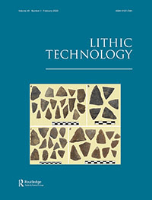
Lithic Technology
Connecting Scholars to the Art of Stone Tool CraftingLithic Technology is a premier international journal published by Routledge Journals, Taylor & Francis Ltd, dedicated to advancing the field of lithic studies in archaeology and anthropology. Established in 1977, this prestigious journal has established itself at the forefront of research concerning stone tool technology, providing a vital forum for scholars to share groundbreaking findings and methodologies. With an impressive Q1 ranking in both Archaeology and Anthropology, and indexed within the 91st percentile in its respective categories by Scopus, Lithic Technology is recognized for its significant contributions to the understanding of human prehistory and material culture. The journal features a diverse array of articles, from theoretical approaches to practical case studies, ensuring relevance to contemporary archaeological discourse. Though not an open-access publication, its meticulous peer-review process guarantees the highest quality of scholarship, making it an indispensable resource for researchers, professionals, and students eager to expand their knowledge in the rigors of lithic analysis.
ANTHROPOLOGICAL SCIENCE
Pioneering research that shapes the future of anthropology.ANTHROPOLOGICAL SCIENCE is a prominent journal in the field of anthropology, published by the Anthropological Society of Nippon since 1993. With a rich pedigree of scholarly contributions, this journal is an essential platform for disseminating research findings and theoretical discussions that push the boundaries of anthropological knowledge. Currently ranked in the Q3 category in Anthropology by 2023 metrics, ANTHROPOLOGICAL SCIENCE boasts an impressive position at #163 out of 502 in Scopus, placing it in the 67th percentile among its peers. While it operates under a traditional access model, the journal supports a diverse range of anthropological research encompassing cultural, biological, and archaeological perspectives. Researchers, professionals, and students will find valuable insights and innovative methodologies that foster a richer understanding of human societies and behaviors. The current trends and findings published in this journal make it a crucial resource for those involved in anthropological studies or related fields.

Intersecciones en Antropologia
Unlocking the richness of human experience.Intersecciones en Antropologia, published by the Universidad Nacional del Centro de la Provincia de Buenos Aires (UNICEN), Facultad de Ciencias Sociales, is a premier open-access journal in the field of anthropology, having established its presence since 2010. With an impressive impact factor and currently holding the distinguished Q1 quartile ranking in anthropology for 2023, this journal has quickly become a vital resource for scholars and practitioners alike, offering a platform for innovative research and critical discussion. The journal aims to advance anthropological scholarship by encouraging the dissemination of diverse perspectives and stimulating dialogue across geographical and cultural boundaries. Its open-access model, adopted in 2017, ensures that valuable research findings are accessible to a global audience, fostering collaboration and engagement within the academic community and beyond. Located in the vibrant cultural context of Argentina, Intersecciones en Antropologia serves as a conduit for significant anthropological dialogues, making it an essential read for those dedicated to understanding and contributing to the evolving landscape of social sciences.
ANTHROPOLOGIE
Uncovering Insights into Human Behavior and ThoughtANTHROPOLOGIE, published by Elsevier France - Éditions Scientifiques Médicales Elsevier, is a leading academic journal dedicated to advancing the fields of Anthropology and the History and Philosophy of Science. With a publication history that dates back to 1947, this esteemed journal has steadily carved its niche within the scholarly community, achieving a commendable Q2 rank in both the aforementioned categories in 2023. Although it does not offer Open Access, ANTHROPOLOGIE provides robust access options through institutional subscriptions, ensuring that researchers and practitioners alike can delve into its rich repository of knowledge. The journal's impact is underscored by its competitive Scopus rankings, particularly its position within the 65th percentile for History and Philosophy of Science and 56th percentile within Anthropology. Through rigorous peer-reviewed articles that illuminate a wide array of anthropological inquiries and philosophical debates, ANTHROPOLOGIE continues to be an essential resource for those committed to exploring the complexities of human behavior, culture, and scientific understanding in an ever-evolving world.
Archaeological Research in Asia
Illuminating the Rich Tapestry of Asia's Archaeological Landscape.Archaeological Research in Asia is a leading academic journal published by Elsevier Science Ltd, dedicated to advancing the understanding of archaeological practice, theory, and interpretations within the Asian context. Since its inception in 2015, the journal has emerged as a cornerstone in the field, holding a prestigious Q1 category status in both Archaeology and Arts and Humanities according to the latest evaluations in 2023. With its remarkable Scopus rankings, placing it at #45 out of 413 in the Arts and Humanities and #45 out of 354 in the Social Sciences, this journal offers a rich platform for the dissemination of original research articles, case studies, and scholarly reviews. Targeting archaeologists, historians, and cultural heritage professionals, the journal aims to facilitate meaningful dialogue and collaboration across disciplines. Although it does not currently operate on an open access model, the journal's commitment to high-quality scholarly discourse ensures that it remains a vital resource for those engaged in the intricacies of Asian archaeology.