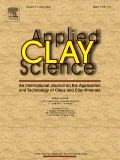
APPLIED CLAY SCIENCE
metrics 2024
Pioneering Research in Soil and Water Sciences
Introduction
APPLIED CLAY SCIENCE, published by Elsevier, is a leading international journal dedicated to the dissemination of high-quality research in the fields of geochemistry, geology, soil science, and water science and technology. With its ISSN 0169-1317 and E-ISSN 1872-9053, this peer-reviewed journal has been an essential resource for researchers since its inception in 1985 and is set to continue its impactful journey through 2024. Recognized for its significant contributions, it proudly holds a Q1 ranking in multiple categories according to the latest assessments, including Geochemistry and Petrology, and Geology, ranking 5th and 10th respectively in Scopus. This journal serves as a vital platform for the advancement of knowledge surrounding clay science, exploring both fundamental and applied research that addresses contemporary challenges in environmental and geological sciences. Whether accessed via institutional subscriptions or individual purchase, APPLIED CLAY SCIENCE is dedicated to fostering an open dialogue among scientists, professionals, and educators in the discipline.
Metrics 2024
 1.005.305.20160
Metrics History
Rank 2024
Scopus
IF (Web Of Science)
JCI (Web Of Science)
Quartile History
Similar Journals
INTERNATIONAL JOURNAL OF ENVIRONMENTAL ANALYTICAL CHEMISTRY
Connecting science to global environmental challenges.INTERNATIONAL JOURNAL OF ENVIRONMENTAL ANALYTICAL CHEMISTRY, published by Taylor & Francis Ltd, stands as an essential resource in the interdisciplinary field of environmental science and analytical chemistry. With a history dating back to 1971 and a convergence period extending to 2024, this journal addresses urgent global challenges by providing a platform for high-quality research that encompasses pivotal aspects of environmental analysis, pollution, and public health. The journal’s significant impact is reflected in its 2023 rankings, placing it in the second and third quartiles across various relevant categories, including Analytical Chemistry, Environmental Chemistry, and Water Science and Technology. Researchers and practitioners are encouraged to contribute to its wealth of knowledge, making it a vital reference for emerging studies in Health, Toxicology and Mutagenesis and beyond. Although it is not an open-access journal, subscriptions provide unparalleled access to groundbreaking research that can influence both academia and industry practices.
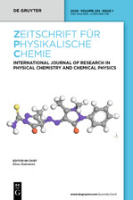
ZEITSCHRIFT FUR PHYSIKALISCHE CHEMIE-INTERNATIONAL JOURNAL OF RESEARCH IN PHYSICAL CHEMISTRY & CHEMICAL PHYSICS
Navigating the Landscape of Physical ChemistryZEITSCHRIFT FUR PHYSIKALISCHE CHEMIE-INTERNATIONAL JOURNAL OF RESEARCH IN PHYSICAL CHEMISTRY & CHEMICAL PHYSICS, published by WALTER DE GRUYTER GMBH, is a highly regarded platform for researchers in the field of physical chemistry and chemical physics. With an ISSN of 0942-9352 and an E-ISSN of 2196-7156, this journal serves as a vital resource for the dissemination of original research, critical reviews, and insightful discussions that span theoretical and experimental investigations. Recognized for its quality, it holds a Q2 classification within the 2023 quartiles of Physical and Theoretical Chemistry and ranks 72nd out of 189 in the Scopus database, placing it in the 62nd percentile. The journal’s extensive publication history, originating from 1943, showcases its long-standing commitment to advancing the understanding of complex chemical phenomena. Although it currently does not offer open-access options, it continues to attract contributions from leading experts worldwide, making it essential reading for professionals, researchers, and students dedicated to pushing the frontiers of chemical science. The journal is located in Berlin, Germany, at Genthiner Strasse 13, D-10785 Berlin, Germany.

JOURNAL OF DISPERSION SCIENCE AND TECHNOLOGY
Transforming the landscape of materials science.The Journal of Dispersion Science and Technology, published by Taylor & Francis Inc, stands as a vital resource in the fields of Physical and Theoretical Chemistry, Polymers and Plastics, and Surfaces, Coatings and Films. With an impressive history spanning over four decades, from 1980 to 2024, this journal plays a crucial role in advancing the understanding of dispersion science, emphasizing the intricacies of material interactions and their technological applications. Currently positioned in the Q2 and Q3 quartiles across relevant categories as of 2023, the journal demonstrates a robust impact within academic circles, reflected in its rankings: 49th in Materials Science - Surfaces, Coatings and Films and 63rd in Materials Science - Polymers and Plastics. Researchers, professionals, and students alike will find a wealth of innovative studies, comprehensive reviews, and experimental insights that contribute significantly to advancements in material science and technology. The journal's commitment to quality and rigor makes it an essential read for those seeking to stay at the forefront of these dynamic fields.
JOURNAL OF MATERIALS SCIENCE
Charting New Territories in Material ResearchJOURNAL OF MATERIALS SCIENCE, published by SPRINGER, stands as a highly regarded periodical in the field of materials science, delivering impactful research since its inception in 1966. With an impressive Q1 ranking in both Mechanical Engineering and Mechanics of Materials, alongside strong Q2 positions in Ceramics, Composites, and General Materials Science, this journal serves as a pivotal resource for scholars and practitioners alike. It offers insightful contributions that span a diverse range of topics, from emerging materials to advanced applications in engineering. With a robust Scopus ranking reflecting its global influence—ranking 91 out of 672 in Mechanical Engineering and 63 out of 398 in Mechanics of Materials—the JOURNAL OF MATERIALS SCIENCE maintains an essential role in advancing the understanding and innovation within the discipline. Researchers, professionals, and students are encouraged to access this esteemed journal to keep abreast of groundbreaking findings and methodologies that shape the future of materials science.
INORGANIC MATERIALS
Transforming Ideas into Inorganic ApplicationsINORGANIC MATERIALS, published by MAIK NAUKA/INTERPERIODICA/SPRINGER, is a pivotal journal in the realm of Materials Science, focusing primarily on the exploration and application of inorganic materials. With a robust commitment to advancing knowledge in areas such as Metals and Alloys, Inorganic Chemistry, and Chemical Engineering, this journal has successfully maintained a reputation for quality, achieving various category quartiles in 2023, including Q3 in Chemical Engineering and Materials Chemistry, and Q4 in Inorganic Chemistry. Although it operates under traditional access models, the journal welcomes contributions from researchers dedicated to understanding the properties and applications of inorganic substances. Throughout its publication history from 1996 to 2024, INORGANIC MATERIALS has become an essential resource for those engaged in innovative research and development, making it an invaluable tool for students, professionals, and academics alike.

RUSSIAN JOURNAL OF INORGANIC CHEMISTRY
Unveiling Innovations in Materials ChemistryThe Russian Journal of Inorganic Chemistry is a distinguished publication that delves into the fundamental and applied aspects of inorganic chemistry. Published by MAIK Nauka/Interperiodica/Springer, this journal has established itself as a vital resource for researchers, professionals, and students alike, contributing significantly to the fields of Inorganic Chemistry, Materials Science, and Physical and Theoretical Chemistry. With an ISSN of 0036-0236 and an E-ISSN of 1531-8613, the journal is indexed for easy access and citation. Though the journal currently operates under a subscription model, its commitment to disseminating high-quality research and fostering scientific discourse remains steadfast. The journal has been maintaining a consistent record since its inception, and its positioning in the Q3 quartile across various chemistry categories in 2023 underscores its relevance in the academic community. As it continues through its converged years from 1996 to 2024, the Russian Journal of Inorganic Chemistry plays a pivotal role in enhancing the understanding and advancement of inorganic chemistry, making it an indispensable tool for anyone engaged in this dynamic field.
JOURNAL OF SOL-GEL SCIENCE AND TECHNOLOGY
Pioneering Research in Materials ScienceJOURNAL OF SOL-GEL SCIENCE AND TECHNOLOGY, published by Springer, is a vital resource within the interdisciplinary fields of materials science and engineering, focusing on innovative research related to sol-gel processes and applications. With a rich publication history spanning from 1993, this journal enables the dissemination of cutting-edge findings in biomaterials, ceramics, and composites, ranking impressively across various categories—Q3 in Biomaterials and Q2 in several other materials-related fields. The journal's commitment to quality research is reflected in its Scopus rankings, particularly notable in the categories of Condensed Matter Physics and Materials Chemistry. Researchers and professionals leveraging the insights from this journal are supported through its comprehensive scope, which bridges theoretical foundations with practical applications, advancing knowledge and fostering collaboration among academics and industry leaders alike. As a non-open access journal, it is essential for subscribers and institutions to engage deeply with the latest advancements documented within its pages, underscoring the journal's role in shaping the future of sol-gel science and technology.

REVIEWS IN INORGANIC CHEMISTRY
Empowering Researchers with Invaluable InsightsREVIEWS IN INORGANIC CHEMISTRY, published by Walter de Gruyter GmbH, is a distinguished academic journal that serves as a vital resource for researchers, professionals, and students within the field of inorganic chemistry. With its ISSN 0193-4929 and E-ISSN 2191-0227, this journal has made a significant impact on the discipline, holding a commendable Q2 ranking in the 2023 category of Inorganic Chemistry, placing it in the 81st percentile among its peers according to Scopus rankings. Continuously published since its inception, with converged years spanning from 1985 to 1990 and 1992 to 2024, it features comprehensive reviews encompassing the latest advancements, methodologies, and theoretical frameworks in the subject. Researchers will find IDEAL insights and valuable discussions that keep them abreast of trends and challenges in the domain, essential for driving innovation and collaboration. The journal’s commitment to quality and rigorous peer review highlights its importance in advancing inorganic chemistry research, making it an indispensable tool for academic excellence.
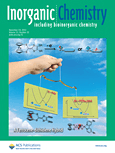
INORGANIC CHEMISTRY
Catalyzing Knowledge in Inorganic and Physical ChemistryInorganic Chemistry, published by the American Chemical Society, stands at the forefront of the field of inorganic and physical chemistry, boasting an impressive impact in the academic community with a 2023 classification in the Q1 quartile across multiple categories including Inorganic Chemistry and Miscellaneous Chemistry. Since its inception in 1962, this esteemed journal has been a crucial platform for disseminating groundbreaking research, innovative methodologies, and comprehensive reviews integral to understanding the complex behaviors of inorganic materials. With a ranking of #12 out of 79 in Inorganic Chemistry and #37 out of 189 in Physical and Theoretical Chemistry according to Scopus metrics, Inorganic Chemistry has established itself as a premier destination for researchers, professionals, and students alike, eager to stay abreast of pivotal developments and trends in the discipline. Despite being a subscription-based journal, its esteemed reputation and critical contributions make it essential for anyone engaged in the exploration of inorganic chemical phenomena. As it prepares to converge into a new era by 2024, the journal continues to embody excellence and innovation, fostering a dynamic exchange of ideas essential for advancing this vibrant area of science.
Microporous and Mesoporous Materials
Exploring the Depths of Porosity ScienceMicroporous and Mesoporous Materials is a leading academic journal published by ELSEVIER, specializing in the field of porosity characterization and applications of microporous and mesoporous materials. With an impactful Q1 ranking in various categories, including Chemistry, Condensed Matter Physics, and Materials Science, this journal serves as a vital resource for researchers, professionals, and students focused on advancing the understanding and application of these materials. Established in 1998 and set to continue its influence until 2024, the journal's rigorous peer-review process ensures the dissemination of high-quality research findings. Additionally, its commitment to open access publishing broadens accessibility, fostering an inclusive community dedicated to innovation in nanoscience, materials physics, and engineering. The journal's Scopus rankings highlight its prestigious standing, placing it among the top percentile within pertinent fields. For those engaged in cutting-edge research or education within these sectors, Microporous and Mesoporous Materials remains an essential journal for current advancements and insights.