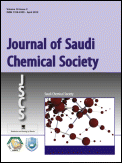
Journal of Saudi Chemical Society
metrics 2024
Unveiling the Future of Chemistry with Every Publication.
Introduction
The Journal of Saudi Chemical Society, published by ELSEVIER, stands as a premier platform for advancing knowledge in the field of chemistry. Since its inception in 2009, this Open Access journal has garnered significant attention, securing a prestigious Q1 ranking in the Chemistry (miscellaneous) category for 2023, reflecting its position among the top journals in the discipline. With an impressive Scopus ranking of #66 out of 408 in General Chemistry, this journal boasts a commendable 83rd percentile, underscoring its impact and relevance in the global research community. The journal aims to disseminate high-quality research articles, reviews, and case studies, fostering innovation and collaboration among chemists and allied professionals. By enabling widespread access to cutting-edge research, the Journal of Saudi Chemical Society plays a crucial role in supporting the educational and professional development of students, researchers, and practitioners alike, making it an essential resource for anyone invested in the dynamic field of chemistry.
Metrics 2024
 0.875.805.0076
Metrics History
Rank 2024
Scopus
IF (Web Of Science)
JCI (Web Of Science)
Quartile History
Similar Journals
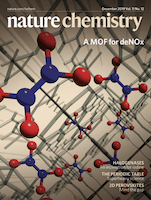
Nature Chemistry
Exploring the Depths of Chemical Discovery.Nature Chemistry is a prestigious journal published by NATURE PORTFOLIO, focusing on groundbreaking research in the realms of chemistry and chemical engineering. Since its inception in 2009, this esteemed publication has garnered significant recognition, currently ranking in the Q1 category for both Chemical Engineering and Chemistry (miscellaneous) as of 2023. With an impactful presence, it ranks 4th out of 273 in General Chemical Engineering and 9th out of 408 in General Chemistry, placing it within the top 2% of journals in its field. Nature Chemistry aims to publish high-quality, peer-reviewed articles that advance our understanding of chemical science and its applications, catering to an audience of researchers, professionals, and students eager to explore innovative discoveries. While it offers various access options, dedicated readers appreciate its contribution to the scientific community from its base in Berlin, Germany.
RUSSIAN CHEMICAL BULLETIN
Innovative Research. Timeless Impact.RUSSIAN CHEMICAL BULLETIN, published by SPRINGER, serves as a pivotal resource in the field of general chemistry, covering a wide array of topics that impact both theoretical and applied chemistry. With an ISSN of 1066-5285 and a presence since 1993, this journal provides a platform for disseminating significant research findings, practical applications, and novel methodologies within the broader chemistry community. While it currently holds a Q3 ranking in the Chemistry (miscellaneous) category and occupies the 230th position out of 408 in the Scopus rankings, its reputation continues to grow, fostering collaboration and innovation among researchers and professionals alike. Although the journal does not offer an open-access model, it is committed to making findings accessible within the academic community, ensuring that valuable insights can inform future research. With an anticipated convergence of studies extending to 2024, the RUSSIAN CHEMICAL BULLETIN remains an essential reference for those dedicated to advancing chemical science.

RUSSIAN CHEMICAL REVIEWS
Fostering Collaboration in the World of ChemistryRUSSIAN CHEMICAL REVIEWS, published by the esteemed ND Zelinsky Institute of Organic Chemistry, RAS, stands as a prominent platform for disseminating high-quality research in the diverse field of chemistry. With an ISSN of 0036-021X and an E-ISSN of 1468-4837, this journal has earned its place in the Q1 quartile of Chemistry (miscellaneous) for 2023, reflecting its outstanding impact and rigorous peer-review process. The journal encompasses a wide array of topics within chemistry, providing critical reviews that advance understanding and foster collaboration among researchers, professionals, and students globally. With its consistent publication since 1970, RUSSIAN CHEMICAL REVIEWS not only serves as a valuable resource for the latest advancements in the field but also plays a crucial role in shaping future research directions. The journal is based in the Russian Federation, with its office located at 47 Leninsky Pr, Moscow 119991, RUSSIA. As an essential reference for those in the chemical sciences, it provides an ideal avenue for authors looking to publish impactful reviews that contribute to the broader scientific community.
TETRAHEDRON
Transforming ideas into impactful scientific discoveries.TETRAHEDRON, published by Pergamon-Elsevier Science Ltd, is a leading peer-reviewed journal that has been pivotal in advancing the fields of Biochemistry, Drug Discovery, and Organic Chemistry since its inception in 1957. With an ISSN of 0040-4020 and an E-ISSN of 1464-5416, this journal provides a platform for the dissemination of cutting-edge research and innovative methodologies that contribute significantly to the scientific community. Recognized for its rigorous editorial standards, TETRAHEDRON has been categorized in the Q3 quartile for 2023 across its relevant fields, reflecting its solid impact within the scientific sphere. Despite the current absence of Open Access options, the journal continues to engage a diverse readership, offering invaluable insights and advancements that fuel both academic and industrial applications. With an ongoing commitment to excellence, TETRAHEDRON remains an essential resource for researchers, professionals, and students aiming to stay at the forefront of chemistry and biochemistry research.

JOURNAL OF THE CHEMICAL SOCIETY OF PAKISTAN
Advancing Chemistry, Enriching Knowledge.JOURNAL OF THE CHEMICAL SOCIETY OF PAKISTAN is a premier academic journal published by the Chemical Society of Pakistan, focusing on advancing the field of chemistry through rigorous research and scholarship. Established in 1996, this journal aims to disseminate high-quality research articles, reviews, and insights pertaining to various subfields of chemistry, making substantial contributions to both local and international scientific communities. With a current impact factor placing it in the Q4 category, the journal continues to foster discussions on emerging trends and innovations within the discipline. Additionally, it holds a Scopus rank of #305 out of 408, highlighting its growing influence despite being positioned in the 25th percentile. Although it is not an open-access journal, it provides a crucial platform for researchers and professionals in Pakistan and worldwide. The JOURNAL OF THE CHEMICAL SOCIETY OF PAKISTAN serves as a valuable resource for students, educators, and industry professionals alike, facilitating the exchange of knowledge and promoting advancements in chemical sciences.

REVIEWS IN INORGANIC CHEMISTRY
Exploring Innovations in Inorganic ChemistryREVIEWS IN INORGANIC CHEMISTRY, published by Walter de Gruyter GmbH, is a distinguished academic journal that serves as a vital resource for researchers, professionals, and students within the field of inorganic chemistry. With its ISSN 0193-4929 and E-ISSN 2191-0227, this journal has made a significant impact on the discipline, holding a commendable Q2 ranking in the 2023 category of Inorganic Chemistry, placing it in the 81st percentile among its peers according to Scopus rankings. Continuously published since its inception, with converged years spanning from 1985 to 1990 and 1992 to 2024, it features comprehensive reviews encompassing the latest advancements, methodologies, and theoretical frameworks in the subject. Researchers will find IDEAL insights and valuable discussions that keep them abreast of trends and challenges in the domain, essential for driving innovation and collaboration. The journal’s commitment to quality and rigorous peer review highlights its importance in advancing inorganic chemistry research, making it an indispensable tool for academic excellence.
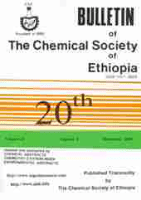
BULLETIN OF THE CHEMICAL SOCIETY OF ETHIOPIA
Elevating Chemical Research to New HeightsBULLETIN OF THE CHEMICAL SOCIETY OF ETHIOPIA (ISSN: 1011-3924; E-ISSN: 1726-801X), published by the Chemical Society of Ethiopia, serves as a pivotal platform for the dissemination of innovative research and developments within the field of chemistry. Since its inception in 1996 and now an open access journal since 2012, it has provided researchers, academics, and students with unrestricted access to critical studies and findings, thus fostering collaboration and the advancement of knowledge in the discipline. The journal's current standing in the Q3 quartile in the 2023 Chemistry category underlines its commitment to maintaining high academic standards, while its Scopus ranking, positioned at #250 out of 408 in general chemistry, showcases its growing influence and contribution to the scientific community. Hailing from Ethiopia and targeted toward a global readership, the journal aims to highlight local and international research, engaging scholars and practitioners alike in discussions that propel the science of chemistry forward.
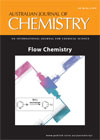
AUSTRALIAN JOURNAL OF CHEMISTRY
Unveiling innovative research in the heart of Australia.The Australian Journal of Chemistry, with an ISSN of 0004-9425 and an E-ISSN of 1445-0038, is a distinguished publication from CSIRO PUBLISHING, dedicated to advancing the field of chemistry since its inception in 1948. Based in Australia, this journal serves as a platform for original research articles, reviews, and innovative studies that encompass a wide spectrum of chemical disciplines, aiming to foster communication and collaboration among researchers globally. Despite its Q3 ranking in the Chemistry (Miscellaneous) category and standing at rank #236 in Scopus’ general chemistry classification, it remains an essential resource for professionals and students seeking to stay informed about emerging trends and discoveries in chemistry. The journal does not offer open access, emphasizing the premium quality of peer-reviewed content that adheres to rigorous academic standards. By bridging theory and practice, the Australian Journal of Chemistry continues to play a crucial role in shaping the future of chemical sciences.

Frontiers in Chemistry
Pioneering Discoveries in the World of Chemistry.Frontiers in Chemistry is an esteemed and innovative Open Access journal published by FRONTIERS MEDIA SA, based in Lausanne, Switzerland. Since its inception in 2013, the journal has established itself as a leading platform for the dissemination of high-quality research across a broad spectrum of chemistry disciplines, achieving a notable Q1 classification in the miscellaneous chemistry category as of 2023. With an impressive Scopus rank, placing it at 72nd out of 408 in General Chemistry and falling within the 82nd percentile, Frontiers in Chemistry is committed to publishing significant findings that contribute to the advancement of the field. The journal's Open Access model ensures that research is freely accessible to all, fostering a greater exchange of knowledge and collaboration among researchers, professionals, and students globally. It covers a range of topics, from organic and inorganic chemistry to materials science and biochemistry, making it an essential resource for anyone seeking to stay at the forefront of chemical research.
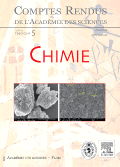
COMPTES RENDUS CHIMIE
Innovating Chemistry: Your Gateway to Cutting-Edge Research.COMPTES RENDUS CHIMIE, published by the prestigious Académie des Sciences in France, stands as a significant journal in the fields of chemistry and chemical engineering. With an ISSN of 1631-0748 and an E-ISSN of 1878-1543, this open-access journal has been committed to disseminating high-quality research since its transition to open access in 2020. Featuring a diverse array of studies, the journal covers innovative research trends and applications, while maintaining a Q3 category ranking in both Chemical Engineering (miscellaneous) and Chemistry (miscellaneous) as of 2023. Its Scopus rankings, positioning at #251 out of 408 in general chemistry and #169 out of 273 in general chemical engineering, highlight its growing impact within the scientific community. Authored by a global cohort of scientists and researchers, COMPTES RENDUS CHIMIE is dedicated to the advancement of knowledge and sharing insights that are vital for ongoing research and development in the chemical sciences. Located in the heart of Paris at 23 Quai de Conti, 75006, France, the journal is an essential resource for those passionate about chemistry and engineering disciplines, fostering collaboration and innovation across the world.