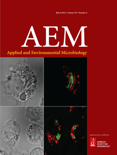
APPLIED AND ENVIRONMENTAL MICROBIOLOGY
metrics 2024
Pioneering Research for Environmental and Industrial Solutions
Introduction
Applied and Environmental Microbiology, published by the American Society for Microbiology, stands as a leading journal in the fields of applied microbiology and environmental science since its inception in 1976. With a prestigious Q1 quartile ranking across multiple categories including Applied Microbiology and Biotechnology, Ecology, and Food Science, this journal consistently disseminates high-impact research that drives innovation and advances our understanding of microbial interactions within our ecosystems and industries. As ranked by Scopus, it exhibits prominent rankings in various related fields, underscoring its critical role in shaping contemporary microbiological research. Researchers, professionals, and students alike can stay abreast of groundbreaking studies while contributing to a vast body of knowledge that spans diverse aspects of microbiology, biotechnology, and ecology, ultimately contributing to sustainable practices. Join the community of dedicated scholars and explore vital research findings that impact both environmental health and technological advancement.
Metrics 2024
 1.023.904.60367
Metrics History
Rank 2024
Scopus
IF (Web Of Science)
JCI (Web Of Science)
Quartile History
Similar Journals
ARCHIVES OF MICROBIOLOGY
Exploring the Depths of Microbial DiversityThe Archives of Microbiology, published by Springer, is a reputable journal in the field of microbiology, serving as a vital platform for the dissemination of groundbreaking research and critical reviews since its inception in 1974. With an ISSN of 0302-8933 and an E-ISSN of 1432-072X, this journal operates out of Germany and maintains a global reach, promoting high-quality scholarship across multiple disciplines, including biochemistry, genetics, and molecular biology, as evidenced by its Q2 ranking in Medicine (miscellaneous) and consistent Q3 placements in other categories in 2023. Although the journal does not offer open access options, its rigorous peer-review process ensures that published articles are of the highest standard, making it an essential resource for researchers, professionals, and students keen on advancing their understanding of microbial sciences. As the journal converges toward 2024, it remains committed to fostering innovative microbiological research and facilitating interdisciplinary dialogue within the scientific community.
RESEARCH IN MICROBIOLOGY
Pioneering insights into the microbial universe.Research in Microbiology, published by Elsevier, is a prominent academic journal devoted to advancing the field of microbiology, encompassing a diverse array of topics including immunology, molecular biology, and biochemistry. Established in 1987, the journal has expanded its focus over the years, with a commendable impact factor reflecting its relevance and influence in the scientific community. Although it does not currently offer open access options, Research in Microbiology remains a crucial resource for researchers and professionals seeking to stay abreast of the latest findings and methodologies. The journal holds a respectable Q2 ranking in Medicine (miscellaneous) and a Q3 ranking in both Microbiology and Molecular Biology for 2023, highlighting its position within the scholarly landscape. With its base in France and accessible to a global audience, Research in Microbiology continues to foster scholarly exchange, making it an essential platform for the dissemination of impactful microbiological research.
MICROBIOLOGY
Cultivating Knowledge in Microbial Dynamics and ApplicationsMICROBIOLOGY (ISSN: 0026-2617, E-ISSN: 1608-3237), published by MAIK NAUKA/INTERPERIODICA/SPRINGER, is a pivotal journal in the field of microbiological research, operating from the vibrant hub of New York, United States. With a focus on the intricate relationships and functionalities of microorganisms, MICROBIOLOGY serves as an essential resource for professionals and researchers dedicated to advancing the knowledge of applied microbiology and biotechnology. As of 2023, it holds a competitive Q3 and Q4 category ranking in Applied Microbiology and Biotechnology and Microbiology, respectively, reflecting its commitment to high-quality and impactful research. Although currently not open access, the journal extends comprehensive insights into critical topics that span environmental microbiology, clinical applications, and biotechnology advancements, making it a vital platform for disseminating innovative findings in this ever-evolving discipline. Researchers and students alike will find MICROBIOLOGY to be an invaluable addition to their academic and professional repertoire.
BIOLOGICAL RESEARCH
Empowering the scientific community with open access.BIOLOGICAL RESEARCH is a prestigious, peer-reviewed journal published by the Société de Biologie de Chile, dedicated to advancing the fields of Agricultural and Biological Sciences, Biochemistry, Genetics, and Molecular Biology, and Medicine. With an impressive ranking in the top quartile (Q1) in these categories as of 2023, this journal maintains high academic standards and visibility, making it a vital resource for researchers and professionals alike. Operating under an Open Access model since 2013, it ensures that research findings are freely accessible to a global audience, promoting the dissemination of knowledge and collaboration across disciplines. With a publication history dating back to 1992 and continued updates until 2024, BIOLOGICAL RESEARCH serves as a crucial platform for innovative research that impacts both scientific and healthcare communities. The journal’s commitment to quality and relevance is evidenced by its competitive performance in Scopus rankings, further solidifying its role as a leading journal within the biological sciences.
MICROBIOLOGICAL RESEARCH
Leading the Charge in Microbial AdvancementsMICROBIOLOGICAL RESEARCH, published by Elsevier GmbH, serves as a leading platform for advancements in the field of Microbiology, holding an impressive Q1 ranking in its category as of 2023. With an ISSN of 0944-5013 and E-ISSN 1618-0623, this journal has been instrumental in disseminating high-quality research since its inception in 1994 and continues to contribute significantly to the academic landscape through 2024. Positioned within the top 13% of publications in the Immunology and Microbiology category, ranked #24 out of 182 according to Scopus, it attracts the attention of researchers, professionals, and students alike. While the journal is not open access, it offers vital insights and peer-reviewed articles that drive innovation and exploration within microbiological research. Its rigorous selection process underscores the importance of quality and relevance in advancing knowledge in this dynamic field.
MICROBES AND ENVIRONMENTS
Pioneering Research on Microbes and Their Ecological RolesMICROBES AND ENVIRONMENTS is a prominent academic journal dedicated to advancing the field of microbial ecology, published by the Japanese Society of Microbial Ecology. Since its inception in 1996, the journal has provided a vital platform for disseminating innovative research and insights into the intricate relationships between microbes and their environments. With an impressive impact factor reflected in its Q2 rankings across multiple categories, including Ecology, Evolution, Behavior and Systematics, Medicine, Plant Science, and Soil Science, MICROBES AND ENVIRONMENTS is acknowledged as a significant contributor within the ecological and biological sciences community. The journal’s content, which spans over two decades of cutting-edge research, supports researchers, professionals, and students in enhancing their understanding of microbial functions and their critical roles in various ecosystems. The journal does not operate under an open access model, ensuring that submissions undergo a rigorous peer-review process that upholds its reputation for quality. Engage with MICROBES AND ENVIRONMENTS to explore the ever-evolving landscape of microbial research and its implications for environmental sustainability and public health.
Environmental Microbiology Reports
Connecting Microbial Insights to Environmental SustainabilityEnvironmental Microbiology Reports, published by WILEY, is a prestigious journal dedicated to the field of environmental microbiology, exploring the intricate interactions between microorganisms and their environments. With an ISSN of 1758-2229, this journal has established itself as a crucial resource for researchers, professionals, and students interested in the latest advancements and applications in microbial ecology, soil science, and environmental sustainability. Since its inception in 2009, the journal has grown in impact and reputation, proudly ranked in the Q1 category for both Agricultural and Biological Sciences and Ecology, Evolution, Behavior and Systematics as of 2023. Notably, it occupies the 17th position out of 193 in its subcategory based on Scopus rankings, showcasing its significance within the field. Although it does not currently offer open access options, the high-quality research published in this journal continues to contribute significantly to the understanding of microbial roles in environmental processes, emphasizing the vital role of microbes in maintaining ecosystem health and promoting sustainable practices.

Microbial Physiology
Unveiling the Secrets of Microbial FunctionalityMicrobial Physiology is a premier, peer-reviewed journal published by KARGER, dedicated to advancing the field of microbiology through innovative research and reviews. With an ISSN of 2673-1665 and an E-ISSN of 2673-1673, the journal stands out in the academic landscape having established a strong track record since its inception in 2020, converging its scope until 2024. It proudly holds a Q2 category ranking in several key areas including Applied Microbiology and Biotechnology, Biochemistry, and Microbiology, making it an essential resource for researchers and professionals in these disciplines. The journal provides open access options to ensure that cutting-edge findings are widely disseminated, fostering collaboration and knowledge sharing. As a vital contributor to the ongoing discourse in microbial physiology, the journal serves as a platform for novel discoveries and methodologies that can significantly impact health, industry, and environmental sustainability. Located in Basel, Switzerland, it brings together a global community of scholars eager to further explore the complexities of microbial life.

Frontiers in Microbiology
Leading the Charge in Microbial DiscoveriesFrontiers in Microbiology is a leading open-access journal published by Frontiers Media SA, available since 2010, and based in Switzerland. As a prominent platform for innovative research, it specializes in microbiology and medical microbiology, marked by its impressive Q1 classification in the respective fields, reflecting its significant impact and relevance in advancing microbial sciences. With a Scopus ranking of 49th in Microbiology and 41st in Medical Microbiology, this journal is positioned among the top-tier publications, catering to a diverse audience of researchers, professionals, and students. The journal aims to disseminate groundbreaking findings and foster discussions that drive the field forward, ensuring a comprehensive coverage of microbiological studies, from basic research to applications in healthcare and beyond. Enjoy unrestricted access to cutting-edge articles that contribute to both theoretical and applied aspects of microbiology, enriching the scientific community's knowledge base.
Nature Microbiology
Unveiling the Secrets of Microbial LifeNature Microbiology is a premier journal published by NATURE PORTFOLIO that has firmly established itself within the realms of microbiological research since its inception in 2016. Based in the United Kingdom, this prestigious journal specializes in the intricacies of applied microbiology, cell biology, genetics, immunology, and medical microbiology, making it a cornerstone for academics and professionals alike. With an impressive Scopus ranking placing it in the top tier across various relevant categories—such as rank #3 in Genetics and #2 in Applied Microbiology—it underscores the journal’s commitment to high-quality, impactful research. Although it operates under a subscription model, Nature Microbiology's broad Open Access policy facilitates greater dissemination and visibility for its authors. The journal's objectives are centered around publishing cutting-edge advancements that enhance our understanding of microbial life, its interactions, and applications in health and disease. As a Q1 journal across multiple disciplines, it holds immense significance for researchers, professionals, and students enthusiastic about the latest innovations and breakthroughs in microbiology.