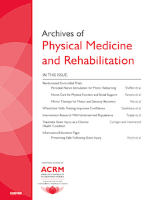
ARCHIVES OF PHYSICAL MEDICINE AND REHABILITATION
Scope & Guideline
Advancing Patient Care with Groundbreaking Insights
Introduction
Aims and Scopes
- Rehabilitation Research:
The journal emphasizes empirical studies that investigate rehabilitation practices across various settings, including inpatient, outpatient, and community-based rehabilitation. - Interdisciplinary Approaches:
Promoting collaboration among different healthcare disciplines, the journal publishes research that integrates physical therapy, occupational therapy, neuropsychology, and other fields to enhance rehabilitation outcomes. - Patient-Centered Care:
Research that focuses on patient engagement, satisfaction, and quality of life is a core area, highlighting the importance of tailoring rehabilitation interventions to meet individual patient needs. - Innovative Therapies and Technologies:
The journal showcases studies on novel rehabilitation interventions, including robotic assistance, virtual reality, and other technological advancements that aim to improve functional recovery. - Chronic Conditions and Disabilities:
A significant focus is placed on rehabilitation for chronic conditions such as stroke, traumatic brain injury, spinal cord injury, and neurodegenerative diseases, addressing the complexities involved in long-term care. - Outcome Measurement and Evaluation:
Research on the development and validation of assessment tools and outcome measures is essential, providing clinicians with reliable methods to evaluate patient progress and treatment efficacy.
Trending and Emerging
- Telehealth and Remote Rehabilitation:
The rise of telehealth solutions, particularly catalyzed by the COVID-19 pandemic, has become a focal point in rehabilitation research, showcasing the effectiveness of remote care models and technology integration. - Holistic and Multidimensional Approaches:
An increasing number of studies are adopting holistic frameworks that consider the biopsychosocial model of health, addressing psychological and social factors alongside physical rehabilitation. - Focus on Long COVID and Post-Acute Sequelae:
Research addressing the rehabilitation needs of individuals recovering from COVID-19 and its long-term effects is rapidly increasing, highlighting the need for specialized interventions for this population. - Machine Learning and Predictive Analytics:
Emerging studies are utilizing machine learning techniques to predict rehabilitation outcomes, enhancing the precision of interventions and tailoring patient care based on individual profiles. - Community Reintegration and Participation:
There is a growing emphasis on research that explores strategies for facilitating community reintegration and social participation among individuals with disabilities, reflecting a shift towards enhancing quality of life post-rehabilitation.
Declining or Waning
- Traditional Rehabilitation Models:
There has been a noticeable decline in studies focusing solely on traditional rehabilitation methods without the integration of innovative or evidence-based practices, as the field moves towards more advanced and comprehensive approaches. - Pharmacological Interventions:
Research centered on pharmacological treatments for rehabilitation-related conditions appears to be waning, as the emphasis shifts towards non-pharmacological, holistic interventions that prioritize patient autonomy and lifestyle changes. - Single-Disease Focus:
Papers concentrating exclusively on single disease entities, without considering comorbidities or broader health contexts, are becoming less common, reflecting a trend towards more integrative and multifaceted research. - Acute Care Rehabilitation:
The focus on acute rehabilitation settings is diminishing in favor of long-term recovery strategies and community-based rehabilitation, which are increasingly recognized as critical for patient outcomes.
Similar Journals
Journal of Neurologic Physical Therapy
Pioneering Knowledge in Neurologic RehabilitationJournal of Neurologic Physical Therapy, published by Lippincott Williams & Wilkins, stands as a premier resource in the field of physical therapy with a specific focus on neurology. With an ISSN of 1557-0576 and an E-ISSN of 1557-0584, this journal serves as a vital platform for researchers, practitioners, and students from 2004 to 2024, illustrating its commitment to advancing knowledge in neurologic rehabilitation. It holds a prestigious Q1 ranking in categories such as Physical Therapy, Sports Therapy, and Rehabilitation and Rehabilitation, alongside Q2 rankings in Geriatrics and Gerontology, Medicine (Miscellaneous), and Neurology (Clinical). With an impact factor that reflects its significance, the journal hosts comprehensive studies and clinical insights that propel practice and innovation in neurologic physical therapy. The content is designed to enhance understanding and skills, making it an indispensable resource for those dedicated to improving patient care and outcomes in this critical area of health.
Physical Therapy Reviews
Advancing knowledge in physical therapy and rehabilitation.Physical Therapy Reviews is a distinguished journal published by Taylor & Francis Ltd that serves as a vital resource for researchers, clinicians, and students within the fields of physical therapy, rehabilitation, and sports medicine. With an ISSN of 1083-3196 and an E-ISSN of 1743-288X, this journal has earned its place in the academic community, categorized in the 2023 Q3 quartiles for Orthopedics and Sports Medicine, Physical Therapy, Sports Therapy and Rehabilitation, and Rehabilitation. Although it is not an open-access journal, the research published within its pages contributes significantly to the understanding and advancement of therapeutic practices and interventions. Covering a spectrum of topics from evidence-based clinical practices to rehabilitation techniques, Physical Therapy Reviews aims to enhance knowledge and foster innovation, making it an essential tool for anyone engaged in the health professions and rehabilitation sectors. The journal's continued commitment to high-quality scholarship ensures that it remains a relevant and impactful publication through its converged years from 1996 to 2024.
Journal of Physiotherapy
Connecting Clinicians and Researchers for Better Patient OutcomesThe Journal of Physiotherapy, published by the Australian Physiotherapy Association, is a leading peer-reviewed journal dedicated to advancing the field of physical therapy, sports therapy, and rehabilitation. With a stellar impact factor and ranked Q1 in the 2023 category of Physical Therapy, this journal serves as an essential resource for researchers, clinicians, and educators alike. Located in Australia, it features open access options that allow global dissemination of knowledge, enhancing the visibility of cutting-edge research from 2010 to 2024. With a commendable Scopus Rank of #5 out of 247 in its field, achieving the 98th percentile, the Journal of Physiotherapy is committed to enriching the evidence base within the profession and promoting best practices in physiotherapy. Whether you are searching for the latest clinical studies, innovative treatments, or comprehensive reviews, this journal provides a platform for high-quality scholarship that drives the profession forward.

Turkish Journal of Physical Medicine and Rehabilitation
Bridging research and practice in physical medicine.Turkish Journal of Physical Medicine and Rehabilitation, an esteemed publication by BAYCINAR MEDICAL PUBL–BAYCINAR TIBBI YAYINCILIK, serves as a premier platform for the dissemination of cutting-edge research in the fields of physical therapy, sports therapy, and rehabilitation. Established in 2018, this open-access journal has rapidly ascended within the academic community, boasting a commendable Q2 ranking in both Physical Therapy, Sports Therapy and Rehabilitation and Rehabilitation categories for 2023. With a significant Scopus rank reflecting its competitive standing, researchers and practitioners can access vital findings that advance clinical practices and enhance patient outcomes. Located in Istanbul, Turkey, the journal not only emphasizes accessibility but also encourages contributions that address the evolving challenges in the realm of physical medicine. As it continues to grow, the journal aims to foster a collaborative research environment, engaging both established and emerging scholars in the exploration of innovative rehabilitation strategies and methodologies.
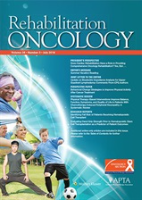
Rehabilitation Oncology
Elevating Quality of Life for Cancer SurvivorsRehabilitation Oncology, published by Lippincott Williams & Wilkins, is an essential academic journal dedicated to the interdisciplinary field of cancer rehabilitation. Since its inception in 2008, it has provided a platform for illuminating research, clinical practices, and innovative therapies aimed at improving the quality of life for cancer survivors. With an ISSN of 2168-3808 and an E-ISSN of 2381-2427, the journal covers a wide spectrum of topics, making significant contributions across various categories including Oncology, Rehabilitation, and Physical Therapy. Although currently not Open Access, the journal has garnered a notable 2023 Impact Factor status, placing it in the Q3 quadrant across multiple relevant disciplines as per the latest Scopus rankings. This reflects its growing influence in the rehabilitation community and offers vital insights for practitioners and researchers seeking to advance their understanding of patient care post-cancer treatment. With its focus on bridging the gap between research and real-world application, Rehabilitation Oncology serves as a vital resource for healthcare professionals committed to enhancing recovery outcomes in their patients.

European Journal of Physical and Rehabilitation Medicine
Transforming Rehabilitation: Evidence-Based Strategies for Better OutcomesWelcome to the European Journal of Physical and Rehabilitation Medicine, the premier peer-reviewed journal focusing on advancements in the fields of physical therapy, sports therapy, and rehabilitation. Published by EDIZIONI MINERVA MEDICA, this journal has established itself as a leading resource since its inception in 2008, now enjoying an impressive Q1 ranking in these disciplines according to 2023 metrics. With an emphasis on rigorous research and innovative clinical practice, the journal facilitates the dissemination of high-quality, evidence-based studies, contributing to the enhancement of patient care and therapeutic strategies. As an Open Access platform since 2022, the journal widens its reach, enabling researchers, clinicians, and students across the globe to access valuable insights without barriers. Residing in Italy, the journal's focus transcends regional confines, engaging a vibrant international community aimed at improving rehabilitation outcomes. Join us in exploring the latest developments that shape the future of rehabilitation sciences.
Annals of Physical and Rehabilitation Medicine
Exploring New Frontiers in Physical Medicine and RecoveryAnnals of Physical and Rehabilitation Medicine, published by Elsevier France-Editions Scientifiques Medicales Elsevier, stands as a leading peer-reviewed journal in the fields of Orthopedics and Rehabilitation. With its ISSN 1877-0657 and E-ISSN 1877-0665, this esteemed journal is known for its high-quality research articles that significantly influence clinical practices and advancements in rehabilitation medicine. Recognized for its impact, the journal is categorized in the Q1 quartiles for both Orthopedics and Sports Medicine as well as Rehabilitation disciplines. According to the Scopus rankings, it ranks #5 out of 161 in Rehabilitation and #20 out of 321 in Orthopedics and Sports Medicine, illustrating its critical role in shaping the future of these fields with a remarkable 97th and 93rd percentile standing respectively. With a commitment to excellence, the journal publishes innovative research that addresses the evolving needs of both practitioners and patients, making it an essential resource for researchers, professionals, and students dedicated to improving rehabilitation practices. The journal operates under conventional access options, ensuring that its groundbreaking findings remain accessible to a wide audience.
Annals of Rehabilitation Medicine-ARM
Pioneering Discoveries in the Field of RehabilitationAnnals of Rehabilitation Medicine (ARM), published by the Korean Academy of Rehabilitation Medicine, is a distinguished open-access journal dedicated to advancing the field of rehabilitation medicine since its inception in 1977. With its E-ISSN 2234-0653, ARM aims to disseminate high-quality, peer-reviewed research that reflects both the breadth and depth of rehabilitation practices. As of 2023, the journal ranks in the Q2 quartile within the Rehabilitation category, placing it among the top half of journals in this domain, and it holds a respectable position in the Scopus rankings, being 70th out of 161 in the discipline. This journal emphasizes the importance of innovative research and clinical practices that improve patient outcomes in rehabilitation settings. Researchers, clinicians, and students alike will find valuable insights and the latest developments in rehabilitation science, enhancing their understanding and practice through its accessible content.

International Journal of Sports Physical Therapy
Leading the way in sports therapy advancements.Welcome to the International Journal of Sports Physical Therapy, a premier platform dedicated to advancing the field of sports therapy and rehabilitation. Published by the NORTH AMER SPORTS MEDICINE INST-NASMI, this open access journal has been vital in disseminating state-of-the-art research since its inception in 2011. With an ISSN of 2159-2896, it boasts a commendable standing within the academic community, achieving a Q2 ranking in 2023 across multiple categories, including Orthopedics and Sports Medicine, Physical Therapy, and Rehabilitation. Spanning diverse topics relevant to sports physical therapy, this journal serves as an invaluable resource for researchers, clinicians, and students alike, promoting best practices and innovative techniques in the field. By maintaining a commitment to high-quality peer-reviewed content, it not only contributes significantly to the existing body of knowledge but also fosters collaboration among professionals seeking to enhance patient care and rehabilitation outcomes.
Physiotherapy
Empowering Professionals with Cutting-Edge KnowledgePhysiotherapy, published by Elsevier Science Ltd, stands as a prestigious journal in the field of Physical Therapy, Sports Therapy, and Rehabilitation. Since its inception in 1945, this journal has been committed to advancing the practice and science of physiotherapy through rigorous peer-reviewed research, making significant contributions to both clinical practice and academia. With an impressive Q1 ranking and a Scopus percentile of 88th, it is widely regarded as a leading source of evidence-based information for professionals and researchers alike. The journal operates without an Open Access option, which ensures that it maintains the quality and integrity of the research it publishes while providing exclusive access to valuable insights for its subscribers. By focusing on diverse topics within its scope, including therapeutic techniques, rehabilitation strategies, and sports medicine, Physiotherapy continues to shape the future of physiotherapy practice and education, making it an essential resource for anyone invested in this dynamic field.