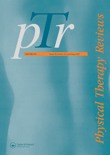
Physical Therapy Reviews
Scope & Guideline
Advancing knowledge in physical therapy and rehabilitation.
Introduction
Aims and Scopes
- Systematic Reviews and Meta-Analyses:
The journal emphasizes the importance of systematic reviews and meta-analyses to synthesize existing evidence on the effectiveness of physical therapy interventions across diverse conditions, ensuring that practitioners have access to high-quality, evidence-based guidelines. - Interdisciplinary Approaches:
It promotes interdisciplinary collaboration by exploring how physical therapy intersects with other health professions, providing a holistic perspective on patient care and rehabilitation. - Focus on Patient-Centered Care:
The journal consistently highlights themes around patient-centered care, exploring factors influencing patient outcomes, adherence to treatment, and overall satisfaction with rehabilitation services. - Emerging Technologies and Innovations:
There is a notable focus on the integration of new technologies such as telerehabilitation, virtual reality, and mobile health apps, reflecting the evolving landscape of physical therapy practice. - Psychosocial Aspects of Rehabilitation:
Research on the psychosocial factors influencing rehabilitation outcomes is a core area, recognizing the importance of mental health and social support in the recovery process. - Diversity and Inclusion in Health Care:
The journal addresses issues of cultural safety and inclusivity, emphasizing the need for culturally responsive practices in physical therapy to better serve diverse populations.
Trending and Emerging
- Telerehabilitation and Remote Care:
The increasing focus on telerehabilitation highlights the growing importance of remote care solutions, especially following the COVID-19 pandemic, which has necessitated innovative approaches to delivering physical therapy. - Holistic and Biopsychosocial Models:
There is a robust trend towards incorporating holistic and biopsychosocial models in physical therapy research, emphasizing the interplay between physical, psychological, and social factors in rehabilitation. - Technology-Enhanced Rehabilitation:
Emerging themes around the use of technology, including virtual reality and mobile health applications, reflect a significant trend towards enhancing rehabilitation practices through innovative tools. - Focus on Quality of Life and Patient Outcomes:
An increasing number of studies are prioritizing quality of life and patient-reported outcomes, indicating a shift towards measuring therapy effectiveness through the lens of patient satisfaction and functional improvement. - Cultural Safety and Competence:
The journal is witnessing a rise in research addressing cultural safety and competence in physical therapy, highlighting the need for practitioners to be aware of and responsive to diverse cultural backgrounds.
Declining or Waning
- Traditional Rehabilitation Techniques:
There has been a noticeable decrease in the publication of papers focusing solely on traditional rehabilitation techniques without the integration of newer methodologies or technologies, indicating a shift towards more innovative approaches. - Basic Anatomy and Kinesiology Education:
Research centered on fundamental topics in anatomy and kinesiology as standalone subjects appears to be declining, as the focus shifts to more applied practice and integration of these concepts into clinical settings. - Single-Condition Focus Studies:
Studies that concentrate solely on a single condition, without considering comorbidities or broader patient contexts, are becoming less common, as there is a growing awareness of the complexity of patient needs. - Conventional Pain Management Approaches:
There is a waning interest in conventional pain management strategies that do not incorporate a biopsychosocial model or innovative therapies, suggesting a move towards more comprehensive pain management frameworks.
Similar Journals
Journal of Pediatric Rehabilitation Medicine
Championing Excellence in Pediatric Rehabilitation MedicineJournal of Pediatric Rehabilitation Medicine is a leading academic platform published by IOS PRESS, dedicated to advancing knowledge in the fields of pediatrics, rehabilitation, and physical therapy. With an ISSN of 1874-5393 and an E-ISSN of 1875-8894, this journal has carved a niche within the biomedical community, focusing on therapeutic innovations and evidence-based practices in pediatric rehabilitation. Recognized for its scholarly contributions, it holds a prestigious Q3 ranking in Pediatrics and Q2 rankings in both Physical Therapy and Rehabilitation categories, indicating its impact and relevance in the respective fields. Operating out of the Netherlands, the journal provides a comprehensive open access model that ensures that research is easily accessible to professionals, students, and researchers alike. With converged years spanning from 2007 to 2024, the journal continues to be an essential resource for those dedicated to enhancing the quality of life for children with disabilities and rehabilitation needs, fostering collaboration between clinicians and researchers through high-quality research dissemination.
EXERCISE AND SPORT SCIENCES REVIEWS
Advancing knowledge in kinesiology and sports science.Exercise and Sport Sciences Reviews is a premier journal published by Lippincott Williams & Wilkins, dedicated to advancing the field of kinesiology and sports science. With a history dating back to 1973 and an esteemed reputation, this journal maintains a robust impact factor and is recognized in the top quartile for its categories, including Orthopedics and Sports Medicine, Physical Therapy, Sports Therapy and Rehabilitation, and Sports Science. Researchers and professionals in the areas of exercise physiology, rehabilitation, and sports medicine rely on this authoritative source for cutting-edge reviews and meta-analyses that inform clinical practices and improve athletic performance. Although the journal is not Open Access, its substantial contributions to evidence-based practices solidify its importance in guiding future research and policy in the health sciences. The insights shared within its pages are essential for professionals looking to stay at the forefront of their fields, encouraging the advancement of science through comprehensive literature reviews and critical discussions of contemporary issues.
Brazilian Journal of Physical Therapy
Transforming Research into PracticeBrazilian Journal of Physical Therapy (ISSN: 1413-3555; E-ISSN: 1809-9246), published by the ASSOCIACAO BRASILEIRA PESQUISA POS-GRADUACAO FISIOTERAPIA-ABRAPG-FT, stands at the forefront of contemporary research in physical therapy and rehabilitation. Hailing from Brasil, this esteemed journal has achieved remarkable recognition, proudly ranking in the Q1 quartile for Orthopedics and Sports Medicine, as well as Physical Therapy, Sports Therapy, and Rehabilitation, according to 2023 metrics. With a commendable Scopus ranking—positioned #10 out of 161 in Medicine Rehabilitation and #32 out of 247 in Health Professions Physical Therapy—this journal serves as a vital resource for researchers, clinicians, and students alike. It delivers cutting-edge research and innovative clinical practices, fostering advancements in treatment strategies and rehabilitation methodologies over its coverage span from 2007 to 2024. Although it operates under a traditional accessibility model, the journal's commitment to disseminating knowledge enhances the academic landscape of physical therapy and is indispensable for those dedicated to improving patient outcomes.
Physical Therapy
Innovating Therapeutic Techniques for Optimal Patient Care.Physical Therapy is a leading journal in the field of rehabilitation sciences, published by Oxford University Press Inc. Renowned for its rigorous peer-reviewed articles, the journal covers a broad range of topics within physical therapy, sports therapy, and rehabilitation, making it a vital resource for researchers, clinicians, and students. With an impressive impact factor and ranking—Q1 in its category (Physical Therapy, Sports Therapy and Rehabilitation) and ranked 19 out of 247 in Scopus—this journal stands at the forefront of advancing knowledge and practice in this vital health discipline. The journal has maintained its dedication to publishing original research, systematic reviews, and clinical studies since its inception in 1964, contributing significantly to evidence-based practices in the field. With a commitment to enhancing patient care and fostering professional development, Physical Therapy remains an essential platform for the dissemination of cutting-edge research and innovative therapeutic techniques.
PHYSICAL & OCCUPATIONAL THERAPY IN PEDIATRICS
Enhancing health outcomes for children through rigorous research.PHYSICAL & OCCUPATIONAL THERAPY IN PEDIATRICS is a leading academic journal published by Taylor & Francis Inc, focusing on the dynamic fields of pediatric therapy and rehabilitation. With a distinguished history spanning from 1981 to 2024, this journal provides researchers, practitioners, and students with critical insights and advancements in physical and occupational therapy tailored to the unique needs of children. Renowned for its high impact factor and strong rankings, including Q1 in Occupational Therapy and impressive placements in related health categories, it serves as a vital resource for evidence-based practices. Although it operates on a subscription basis, the journal's commitment to advancing knowledge in rehabilitation methods promotes improved health outcomes for children, making it indispensable for professionals dedicated to pediatric care and therapy.
PHYSIOTHERAPY THEORY AND PRACTICE
Connecting Research and Clinical Practice in RehabilitationPHYSIOTHERAPY THEORY AND PRACTICE is a leading journal within the realm of physical therapy, sports therapy, and rehabilitation, published by Taylor & Francis Inc. With an ISSN of 0959-3985 and an E-ISSN of 1532-5040, this esteemed journal focuses on the interdisciplinary approaches and clinical practices that advance the science and application of physiotherapy. Ranking in the top 33% of its category as indicated by its Q2 status in the 2023 category quartiles, it serves as an essential conduit for innovative research and evidence-based practices. The journal has been a vital resource since its inception in 1985, continuing to attract contributions that explore the latest developments in rehabilitation and therapy strategies. Although currently not an Open Access journal, PHYSIOTHERAPY THEORY AND PRACTICE remains pivotal in shaping the landscape of health professions, providing insightful articles that empower researchers, practitioners, and students to enhance patient care and treatment strategies in an evolving field.

Frontiers in Rehabilitation Sciences
Transforming insights into impactful rehabilitation practices.Frontiers in Rehabilitation Sciences, published by FRONTIERS MEDIA SA, is an innovative open-access journal that has been committed to advancing the discipline of rehabilitation science since its inception in 2021. The journal aims to serve as a platform for researchers, clinicians, and students interested in disseminating high-quality research and insights that drive practice and policy in rehabilitation and physical therapy. With an E-ISSN of 2673-6861, it fosters interdisciplinary collaboration, tackling topics that range from therapeutic interventions to sports rehabilitation and beyond. As part of the Frontiers family, the journal employs cutting-edge open-access policies that ensure widespread dissemination and visibility of research findings. Although it is currently ranked within the lower quartiles based on Scopus rankings, the journal provides an invaluable opportunity for emerging scholars to publish their work in a rapidly evolving field. By sharing knowledge and fostering dialogue among scientists and practitioners alike, Frontiers in Rehabilitation Sciences plays a crucial role in shaping the future of rehabilitation methodologies and improving patient outcomes.
Musculoskeletal Science and Practice
Shaping the future of therapeutic interventions in musculoskeletal science.Musculoskeletal Science and Practice is a premier academic journal published by Elsevier that focuses on the latest advancements in the field of physical therapy, sports therapy, and rehabilitation. With an ISSN of 2468-7812 and an impressive ranking in the Q1 category for 2023, this journal stands out among its peers, being positioned at #69 out of 247 in Scopus rankings within the Health Professions sector, demonstrating a significant impact factor that reflects its importance in the domain. As a dedicated Open Access platform, it aims to disseminate high-quality research and clinical practices to enhance rehabilitation outcomes for patients. The journal, established in the UK and converging its focus from 2017 to 2024, serves as an invaluable resource for professionals, researchers, and students, enabling them to stay informed about innovative practices and evidence-based strategies in musculoskeletal health. With the increasing demands for effective rehabilitation methods in today's healthcare landscape, Musculoskeletal Science and Practice plays a crucial role in shaping the future of therapeutic interventions and advancing the knowledge base in the field.
Frontiers in Sports and Active Living
Pioneering insights into sports medicine and rehabilitation.Frontiers in Sports and Active Living, published by FRONTIERS MEDIA SA, is a pioneering open-access journal that has been at the forefront of research since its establishment in 2019. Operating from its prestigious base in Lausanne, Switzerland, this journal stands out with its commitment to disseminating cutting-edge research across various disciplines, including Anthropology, Orthopedics and Sports Medicine, and Public Health, among others. With consistently high rankings—achieving Q1 status in its category for Anthropology and Q2 in several related fields—it serves as an essential resource for scholars and practitioners alike. The journal's open-access model not only enhances visibility but also fosters collaboration and innovation in the domains of physical therapy, sports therapy, and rehabilitation. As it continues to evolve, Frontiers in Sports and Active Living strives to provide a vibrant platform for academic excellence, encouraging interdisciplinary dialogue that can significantly advance our understanding of active living and its impacts on health and society.
Topics in Stroke Rehabilitation
Advancing knowledge in stroke rehabilitation.Topics in Stroke Rehabilitation, published by Taylor & Francis Ltd, stands as a premier academic journal offering cutting-edge research and insights in the fields of rehabilitation, neurology, and community care. With an impressive impact factor reflecting its strong scholarly influence, this journal not only maintains a distinguished Q1 ranking in Community and Home Care and Rehabilitation but is also recognized in the Q2 category for Clinical Neurology, showcasing its relevance across multiple disciplines. Covering a comprehensive range of topics from neurorehabilitation techniques to patient-centered care strategies, Topics in Stroke Rehabilitation serves as an essential resource for researchers, healthcare professionals, and students dedicated to enhancing the quality of life for individuals recovering from stroke. With an accessible archive dating back to 1996 and continuous publication through 2024, this journal invites collaboration and discourse, fostering advancements in both theoretical knowledge and practical applications within the realm of stroke rehabilitation.