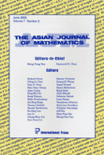
Asian Journal of Mathematics
Scope & Guideline
Elevating Mathematical Understanding Globally
Introduction
Aims and Scopes
- Pure and Applied Mathematics:
The journal focuses on both pure mathematical theories and their applications in various scientific domains, ensuring a comprehensive exploration of mathematical concepts. - Geometry and Topology:
Research in geometry, including differential geometry, algebraic geometry, and topology, is a core area, highlighting the intricate relationships between shapes, spaces, and their properties. - Algebra and Number Theory:
Algebraic structures, including groups, rings, and fields, along with number theory, are significant themes, fostering advancements in mathematical foundations and their implications. - Analysis and PDEs:
The journal emphasizes real and complex analysis, as well as partial differential equations (PDEs), which are crucial for understanding dynamic systems and various mathematical models. - Mathematical Physics:
There is a notable focus on mathematical physics, exploring the mathematical frameworks that underpin physical theories, particularly in quantum mechanics and relativity. - Mathematical Modelling and Computation:
The journal encourages research on mathematical modeling and computational techniques, promoting the integration of mathematics with practical applications in science and engineering.
Trending and Emerging
- Algebraic Geometry and Moduli Spaces:
Recent publications indicate a significant focus on algebraic geometry, particularly concerning moduli spaces, reflecting an ongoing interest in understanding geometric structures and their classifications. - Geometric Analysis and PDEs:
There is an increasing trend in papers addressing geometric analysis, especially those involving partial differential equations, which are essential for studying geometric properties of manifolds. - Nonlinear Dynamics and Mathematical Physics:
The intersection of nonlinear dynamics and mathematical physics is gaining traction, highlighting the relevance of mathematics in understanding complex physical systems. - Complex and Algebraic Structures:
Emerging research on complex structures and their algebraic implications suggests a growing interest in the interplay between algebra and geometry, particularly in higher-dimensional contexts. - Machine Learning and Statistical Methods:
The integration of machine learning techniques and statistical methods into mathematical research is becoming more prevalent, reflecting the increasing importance of data-driven approaches in mathematics.
Declining or Waning
- Classical Analysis Techniques:
There has been a noticeable decrease in papers focusing on classical analysis techniques, suggesting a shift towards more modern or computational methods in analysis. - Elementary Number Theory:
Research in elementary number theory appears to be waning, possibly due to a growing interest in more complex and abstract algebraic structures. - Discrete Mathematics:
The frequency of publications related to discrete mathematics has decreased, which may reflect a broader trend towards continuous mathematics and applications in real-world scenarios. - Finite Geometries:
Topics specifically focused on finite geometries seem to be less prominent, indicating a potential narrowing of interest in this specialized area. - Mathematical History and Philosophy:
Papers discussing the historical and philosophical aspects of mathematics have become less common, possibly as the journal emphasizes more contemporary and applied research.
Similar Journals
Turkish Journal of Mathematics
Advancing Mathematical Frontiers with Rigorous ResearchTurkish Journal of Mathematics is a prestigious academic publication dedicated to the advancement of mathematical research across a variety of subfields. Established in 1995 and published by the Tubitak Scientific & Technological Research Council Turkey, this journal has built a solid reputation, especially noted for its significant contributions to the field over the years, with its convergence spanning from 1995 to 2002 and again from 2006 to 2024. The journal, which holds a commendable Q2 ranking in Mathematics (miscellaneous) and is positioned in the 66th percentile of Scopus rankings for General Mathematics, aims to disseminate high-quality original research, reviews, and innovative methodologies to advance both theoretical and applied mathematics. Researchers, professionals, and students alike will find invaluable resources within its pages, providing insights that are pivotal for academic and practical applications in mathematics. Although it does not currently offer open access options, the journal remains an essential platform for those looking to engage with the forefront of mathematical inquiry.
Tsukuba Journal of Mathematics
Cultivating a Community of Mathematical ExcellenceTsukuba Journal of Mathematics is a distinguished publication dedicated to advancing the field of mathematics through the dissemination of innovative research and comprehensive studies. Published by the University of Tsukuba, Department of Mathematics, this journal serves as a vital platform for mathematicians, researchers, and students to engage with cutting-edge mathematical theories and methodologies. Although currently not available as an open-access journal, it maintains a strong academic presence, contributing significantly to the global mathematical landscape. The journal invites submissions across various branches of mathematics, aiming to foster scholarly communication and collaboration. The ISSN 0387-4982 and the E-ISSN 2423-821X further establish its credibility and accessibility among the academic community, supporting its critical objective of facilitating high-quality research output. Situated in Tsukuba, Japan, a hub for scientific research and development, the Tsukuba Journal of Mathematics is committed to bridging gaps in mathematical knowledge and encouraging exploration of novel ideas.
JOURNAL DE MATHEMATIQUES PURES ET APPLIQUEES
Uniting Theory and Application in MathematicsJOURNAL DE MATHEMATIQUES PURES ET APPLIQUEES, published by Elsevier, serves as a pivotal resource for scholars and practitioners in the field of mathematics. With an ISSN of 0021-7824 and E-ISSN of 1776-3371, this esteemed journal is at the forefront of disseminating crucial research from 1997 to 2024. It is recognized for its prestigious Q1 rankings in both Applied Mathematics and Miscellaneous Mathematics categories in 2023, highlighting its significant influence in these domains. It holds impressive Scopus ranks—35th out of 399 in General Mathematics and 126th out of 635 in Applied Mathematics, placing it within the top percentiles of academic publications. Although it does not currently offer open access options, the journal's commitment to high-quality, peer-reviewed research ensures that it remains a crucial asset for ongoing developments in mathematical theory and application. Notably, with its headquarters in Amsterdam, the journal attracts a global readership eager to explore the latest advancements and applications in mathematics.

Bulletin of the Institute of Mathematics Academia Sinica New Series
Exploring Innovative Theories, Bridging Global Knowledge.The Bulletin of the Institute of Mathematics Academia Sinica New Series is a prestigious international journal dedicated to the dissemination of high-quality research in the field of mathematics. Published by ACAD SINICA, this scholarly journal serves as a vital platform for researchers, professionals, and students alike to explore innovative mathematical theories, methodologies, and applications. With an ISSN of 2304-7909 and an E-ISSN of 2304-7895, the journal is committed to maintaining rigorous academic standards while fostering an environment of open discourse and collaboration within the mathematical community. Though specific impact metrics are still being developed, the journal is poised to contribute significantly to the advancement of mathematical knowledge, encouraging groundbreaking studies and interdisciplinary approaches. Researchers are invited to share their insights and benefit from this important resource, which supports the global advancement of mathematics from its base in Beijing, People's Republic of China.
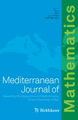
Mediterranean Journal of Mathematics
Exploring Innovative Solutions in MathematicsThe Mediterranean Journal of Mathematics, published by SPRINGER BASEL AG, is a prominent platform dedicated to the advancement of mathematical research and education. Since its inception in 2004, this journal has been pivotal in disseminating high-quality research across various fields of mathematics, currently holding a notable Q2 ranking in the miscellaneous mathematics category as of 2023. With its ISSN 1660-5446 and E-ISSN 1660-5454, the journal enjoys a respected position in the academic community, evident by its Scopus rank of 129 out of 399 in General Mathematics, placing it in the 67th percentile. While primarily a subscription-based journal, it remains committed to providing a comprehensive resource for researchers, professionals, and students, fostering dialogue and exploration within the mathematical sciences. The Mediterranean Journal of Mathematics, based in Basel, Switzerland, continues to contribute significantly to the evolution of mathematical theory and practice, marking its relevance as we approach its 20th anniversary in 2024.
TRANSACTIONS OF THE AMERICAN MATHEMATICAL SOCIETY
Unveiling Insights in the Mathematical RealmTRANSACTIONS OF THE AMERICAN MATHEMATICAL SOCIETY, published by the American Mathematical Society, is a premier journal in the field of mathematics that has been contributing to the advancement of mathematical knowledge since 1900. With an ISSN of 0002-9947 and an E-ISSN of 1088-6850, this journal holds a prestigious position in the academic landscape, evidenced by its Q1 rankings in both Applied Mathematics and Miscellaneous Mathematics categories as of 2023. With a Scopus ranking of #97 in General Mathematics and a percentile standing of 75th, the journal is recognized for its rigorous peer-review process and the quality of the research it publishes. Though it does not currently offer open access options, it essentially serves as a vital resource for researchers, professionals, and students seeking critical insights and developments in mathematical theory and applications. The Transactions aim to publish high-quality research articles that foster the exchange and dissemination of ideas, supporting the growth of both theoretical and applied mathematics within the global scholarly community.
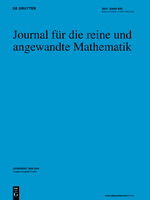
JOURNAL FUR DIE REINE UND ANGEWANDTE MATHEMATIK
Bridging Theory and Application in MathematicsJOURNAL FUR DIE REINE UND ANGEWANDTE MATHEMATIK is a prestigious publication in the field of mathematics, established in 1826 and proudly published by WALTER DE GRUYTER GMBH, a respected name in academic publishing. Renowned for its rigorous peer-review process, this journal focuses on both pure and applied mathematics, making significant contributions to various mathematical domains. With an impressive impact factor positioning it in the Q1 quartile for both applied mathematics and miscellaneous mathematics categories, the journal ranks 83rd out of 399 in General Mathematics and 282nd out of 635 in Applied Mathematics according to Scopus. The journal does not currently offer open access options but is widely available through institutional subscriptions. Its rich history and ongoing commitment to excellence position the JOURNAL FUR DIE REINE UND ANGEWANDTE MATHEMATIK as an essential resource for researchers, professionals, and students aiming to stay abreast of the latest developments in mathematical theory and practice.

BOLETIN DE LA SOCIEDAD MATEMATICA MEXICANA
Pioneering Insights in Diverse Mathematical FieldsBOLETIN DE LA SOCIEDAD MATEMATICA MEXICANA, published by Springer International Publishing AG, is a pivotal journal in the field of mathematics, particularly recognized for its contributions to the miscellaneous mathematics category, holding a commendable Q2 ranking as of 2023. With an ISSN of 1405-213X and an E-ISSN of 2296-4495, the journal serves as a platform for disseminating high-quality research and innovations from both national and international scholars. Operating from Switzerland, the journal encompasses a broad range of topics within mathematics, supporting the development and communication of mathematical knowledge. Although it is not open access, it remains a respected source for researchers, professionals, and students seeking to deepen their understanding of mathematical concepts and applications. Published continuously and rigorously since its converged years, BOLETIN DE LA SOCIEDAD MATEMATICA MEXICANA plays a crucial role in advancing mathematical discourse and collaboration across disciplines.
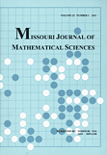
Missouri Journal of Mathematical Sciences
Elevating Mathematical Insights for Tomorrow's ChallengesThe Missouri Journal of Mathematical Sciences, published by the CENTRAL MISSOURI STATE UNIVERSITY, DEPARTMENT OF MATHEMATICS & COMPUTER SCIENCE, serves as an essential platform for disseminating innovative research and advancements in the field of mathematics. Since its inception in 2001, this journal has provided a space for scholars, professionals, and students to exchange ideas and present their findings, contributing to the growing body of knowledge in mathematics. Despite its current category quartile ranking of Q4 in Mathematics (miscellaneous), the journal aims to enhance its impact further, encouraging contributions that push the boundaries of mathematical sciences. Although it operates without an open-access model, it is dedicated to fostering academic discourse and making a meaningful impact through its publications. Researchers interested in exploring mathematical concepts will find this journal to be a valuable resource as it continues to evolve through the years up to 2024, aiming to attract high-quality submissions that showcase significant and practical advancements in mathematics.
PROCEEDINGS OF THE INDIAN ACADEMY OF SCIENCES-MATHEMATICAL SCIENCES
Catalyzing Growth in the Mathematical CommunityPROCEEDINGS OF THE INDIAN ACADEMY OF SCIENCES-MATHEMATICAL SCIENCES is a premier journal published by Springer India, dedicated to advancing the field of mathematics through the dissemination of high-quality research. With its foundation dating back to 1978, the journal serves as a pivotal platform for researchers, professionals, and students alike, fostering a vibrant academic community focused on the latest developments in mathematical sciences. Although currently positioned in the Q3 category for Mathematics (miscellaneous) with a Scopus rank of #340/399, the journal holds immense potential for growth and wider recognition within the academic sphere. It features articles that span various mathematical disciplines, encouraging innovative ideas and methodologies that contribute significantly to the field. The journal's contributions are especially relevant in the context of expanding mathematical applications in science and technology. Though it operates without an Open Access option, the journal remains an invaluable resource for anyone engaged in mathematical research, offering insights that inspire future studies and collaborations.