
BOLETIN DE LA REAL ACADEMIA ESPANOLA
metrics 2024
Bridging Theory and Practice in Language Studies
Introduction
BOLETIN DE LA REAL ACADEMIA ESPANOLA, published by the Real Academia Española, serves as a central conduit for scholarly discourse in the fields of Linguistics and Language. With an ISSN of 0210-4822 and an E-ISSN of 2445-0898, this esteemed journal has been disseminating impactful research since its inception in 2003. As a recognized Q2 journal in Linguistics and Language for 2023, it ranks in the 45th percentile in Arts and Humanities and 42nd percentile in Social Sciences according to Scopus metrics, reflecting its solid position in academic circles. Although not an open-access journal, it remains a crucial resource for those engaged in the vibrant study of language, providing insights that inform both theoretical frameworks and practical applications. Researchers, professionals, and students alike will find prominent studies and discussions that contribute to the evolution of linguistic scholarship. The journal is published in Madrid, Spain—an environment rich in linguistic heritage that further enhances its significance in the global academic community.
Metrics 2024
 0.170.200.207
Metrics History
Rank 2024
Scopus
JCI (Web Of Science)
Quartile History
Similar Journals
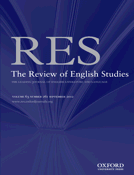
REVIEW OF ENGLISH STUDIES
Charting New Territories in English Literature and LanguageREVIEW OF ENGLISH STUDIES, published by Oxford University Press, is a prestigious journal that has been advancing the fields of Literature and Literary Theory as well as Linguistics and Language since its inception in 1925. With an impressive impact factor and a commendable ranking, placing it in the Q1 and Q2 categories across relevant disciplines, the journal serves as a vital platform for researchers, scholars, and students alike. Covering a wide range of topics from classical literature to contemporary linguistic analysis, REVIEW OF ENGLISH STUDIES is committed to fostering scholarly discourse and promoting innovative research methodologies. Although it does not offer open access, the journal is highly regarded for its rigorous peer-review process and high-quality publications, making it an essential resource for anyone engaged in English studies. For researchers seeking to keep abreast of the latest developments in the field, this journal stands as an indispensable guide and repository of knowledge.

Philologica Canariensia
Unlocking the potential of literary and linguistic research.Philologica Canariensia is a distinguished academic journal published by the University of Las Palmas de Gran Canaria, focusing on the vibrant fields of Literature and Literary Theory as well as Linguistics and Language. With an impact factor that positions it in the Q1 and Q2 quartiles in its respective categories as of 2023, the journal has established itself as an important platform for scholarly communication and research. Since transitioning to Open Access in 2014, it has broadened its reach, allowing researchers, professionals, and students from around the globe to access high-quality publications without barriers. With a commendable presence in Scopus rankings, including a rank of #309 out of 1106 in Literature and Literary Theory, Philologica Canariensia aims to foster an interdisciplinary dialogue and advance knowledge in the humanities. The journal's commitment to publishing innovative research makes it an essential resource for anyone engaged in exploring linguistic and literary phenomena.

RILCE-Revista de Filologia Hispanica
Championing Excellence in Linguistic and Literary ResearchRILCE-Revista de Filologia Hispanica is a distinguished academic journal published by the Universidad de Navarra, serving as a pivotal platform for scholarship in the field of Hispanic Philology. Established in 2008 and ongoing through 2024, RILCE stands out in the academic community with a robust reputation reflected in its 2023 ranking; it holds Q2 status in Linguistics and Language and Q1 in Literature and Literary Theory. The journal is indexed in Scopus, where it ranks 165th out of 1106 in Literature and Literary Theory, showcasing its significant impact with an 84th percentile ranking. Located in Pamplona, Spain, RILCE aims to foster critical dialogues and disseminate innovative research that advances the understanding of linguistic and literary studies, making it an essential resource for researchers, professionals, and students alike. Although specific open access options may be limited, RILCE remains committed to enriching the academic dialogue within its disciplines.

Nueva Revista Filologia Hispanica
Exploring the Depths of Hispanic LinguisticsNueva Revista Filologia Hispánica, published by COLEGIO MEXICO, A C, DEPT PUBLICACIONES, has been a pivotal resource in the field of Hispanic philology since its establishment in 1966, transitioning to an open-access model that enhances the accessibility of scholarly works in the area. With an ISSN of 0185-0121 and an E-ISSN of 2448-6558, the journal is housed in Mexico City and aims to publish innovative research that contributes to the understanding of the linguistic and cultural dynamics of the Spanish language. It consistently ranks in the Q3 category of Linguistics and Language for 2023, reflecting its commitment to academic excellence as demonstrated by its Scopus ranking in both Arts and Humanities and Social Sciences. With converged years from 2011 to 2024, the journal encourages contributions that inspire further discourse among researchers, professionals, and students, thus solidifying its importance as a scholarly platform in the linguistics landscape.

Verba-Anuario Galego de Filoloxia
Celebrating the Richness of Language through Rigorous ResearchVerba-Anuario Galego de Filoloxia is a prominent academic journal published by UNIV SANTIAGO COMPOSTELA, dedicated to advancing the field of linguistics and language studies. Hailing from Spain, this journal provides a vital platform for researchers, educators, and students interested in Galician philology and its broader linguistic implications. Although it operates under traditional access models, the journal’s commitment to quality research is reflected in its categorization within Q3 in Linguistics and Language for 2023, showcasing its significant contributions to the field. Encompassing a convergence period from 2017 to 2024, Verba garners attention in both the Arts and Humanities and Social Sciences domains, with its Scopus rankings highlighting its moderate impact within these categories. By nurturing scholarly dialogue and disseminating innovative studies, Verba-Anuario Galego de Filoloxia plays a crucial role in promoting linguistic research, making it an essential resource for professionals and academic institutions striving to explore the complexities of language and philology.

Listy Filologicke
Fostering Excellence in Humanities and Social Sciences Research.Listy Filologicke is a distinguished academic journal published by the Institute of Classical Studies at the Academy of Sciences of the Czech Republic, focusing on the interdisciplinary fields of History, Linguistics and Language, and Literature and Literary Theory. With an ISSN of 0024-4457 and an E-ISSN of 2570-9410, this journal has been a pivotal platform for scholarly discourse since its convergence years began in 2003. Notably, it holds a Q3 classification in History and Linguistics and Language, and a Q2 in Literature and Literary Theory as of 2023. Its rankings within Scopus illustrate its relevance and impact in academia, with noteworthy positions in the Arts and Humanities and Social Sciences categories. Researchers, professionals, and students will find Listy Filologicke an invaluable resource for exploring cutting-edge research, critical analyses, and discourse that contribute significantly to their respective fields. Based in the heart of the Czech Republic, it continues to promote scholarly excellence and foster international collaboration.

Revista Argentina de Historiografia Linguistica
Bridging historical insights with contemporary linguistics.Revista Argentina de Historiografia Linguistica, an esteemed academic journal based in Argentina, is dedicated to advancing the field of linguistic historiography. Published by the REVISTA ARGENTINA HISTORIOGRAFIA LINGUISTICA-RAHL, this journal serves as a vital platform for researchers, professionals, and students interested in the study of language history and the evolution of linguistic thought. With a commitment to open access, it promotes widespread dissemination of knowledge, ensuring that valuable insights reach a global audience. The journal aims to publish high-quality, peer-reviewed articles that explore various dimensions of linguistics, including historical language development, sociolinguistics, and language policy. By engaging with a diverse array of topics and methodologies, Revista Argentina de Historiografia Linguistica not only enhances academic discourse within the linguistics community but also fosters interdisciplinary collaboration, making it indispensable for those seeking to deepen their understanding of linguistic heritage and its contemporary significance.

Janus-Estudios Sobre El Siglo de Oro
Fostering dialogue on timeless cultural treasures.Janus-Estudios Sobre El Siglo de Oro is a distinguished academic journal dedicated to the exploration and analysis of the Golden Age of Spanish literature and culture. Published by SIELAE in collaboration with the University of Coruña, Faculty of Philology, this journal boasts a remarkable impact factor with a Q1 ranking in Literature and Literary Theory, demonstrating its significance in the field. Since its inception in 2012, Janus has maintained an open access publishing model, ensuring that groundbreaking research is accessible to scholars, professionals, and students alike. The journal covers a diverse range of topics within the realm of Arts and Humanities, with an admirably ranked performance in both literature and its associated interdisciplinary studies. With a commitment to showcasing critical insights and innovative research, Janus aims to contribute significantly to the scholarly discourse surrounding the Golden Age, making it an invaluable resource for anyone interested in this rich cultural period.

Archivum
Cultivating a Collaborative Environment for Linguistic InquiryArchivum, published by UNIV OVIEDO in Spain, stands as a vital resource in the fields of Linguistics and Language as well as Literature and Literary Theory. With an impact factor reflective of its commitment to scholarly excellence, this journal has proudly maintained an Open Access model since 1951, ensuring that its rich repository of knowledge is freely available to researchers, professionals, and students alike. Covering a converged span from 2019 to 2023, Archivum has strategically positioned itself within the academic milieu, currently categorized in the Q4 for Linguistics and Language and Q3 for Literature and Literary Theory as of 2023. The journal is indexed in Scopus, with rankings that reflect its growing influence, such as #690 in Literature and Literary Theory and #887 in Language and Linguistics. Despite its challenges in visibility, Archivum remains essential for those seeking to engage with contemporary discussions and research within the humanities. Located in the heart of Asturias, it embodies the scholarly spirit of Spain, fostering a collaborative environment for innovation and inquiry in linguistic and literary studies.

Revista Signos
Cultivating Critical Research for Future GenerationsRevista Signos, a prestigious publication by EDICIONES UNIV VALPARAISO, serves as a vital platform for scholars and practitioners in the fields of linguistics, language, literature, and literary theory. With an impact factor underscoring its academic excellence, the journal holds a commendable Q2 ranking in Linguistics and Language and a Q1 ranking in Literature and Literary Theory as of 2023. Its strong performance on Scopus, with ranks placing it in the 97th and 75th percentiles, respectively, illustrates its influential role in shaping contemporary discourse within these domains. Based in Chile, this journal not only disseminates critical research but also fosters intellectual dialogue, making it an essential resource for researchers, students, and professionals alike. Although it operates without open access, its commitment to quality and depth provides invaluable insights into the evolution of language and literature over its convergence years from 2007 to 2024. Engage with Revista Signos to explore the rich tapestry of linguistic and literary scholarship.