
Boletin de la Sociedad Argentina de Botanica
metrics 2024
Fostering innovation in plant biology and ecological studies.
Introduction
Boletin de la Sociedad Argentina de Botanica is a prestigious open-access journal dedicated to advancing the field of botany, with a specific focus on plant science and ecological study. Published by the SOC ARGENTINA BOTANICA since 2005 and based in Argentina, this journal is committed to providing a platform for high-quality research that contributes to the understanding of plant biology, evolution, and ecological interactions. With an ISSN of 1851-2372, it features research articles that are accessible to a global audience, thus promoting collaboration and knowledge sharing among scientists, researchers, students, and the broader academic community. Despite being categorized in the fourth quartile for both Ecology, Evolution, Behavior and Systematics and Plant Science as of 2023, the journal serves as an important resource within its niche, offering insights from the Latin American context. Researchers and professionals are encouraged to utilize this journal as a valuable reference in their studies and contributions to the ongoing discourse in botanical science.
Metrics 2024
 0.210.600.6018
Metrics History
Rank 2024
Scopus
IF (Web Of Science)
JCI (Web Of Science)
Quartile History
Similar Journals
RHODORA
Cultivating Knowledge in BotanyRHODORA, published by the New England Botanical Club Inc, is a prominent journal dedicated to the field of botany, specifically focusing on Horticulture and Plant Science. With a rich history dating back to its founding years and ongoing publication from 1995 to 2024, this journal serves as a vital platform for disseminating research, reviews, and advancements in botanical studies. Though classified in the Q4 quartile for both horticulture and plant science in 2023, RHODORA remains an essential resource for researchers and practitioners, providing insights into plant ecology, conservation, and cultivation practices. While it does not offer Open Access options, the journal's commitment to quality research in a highly specialized field makes it a significant contributor to the botanical sciences, fostering collaboration and innovation among scholars and professionals in the United States and beyond.
Botany
Innovating methodologies for a greener future.Botany is a premier academic journal published by Canadian Science Publishing, dedicated to advancing the understanding of plant sciences and ecological systems. With an ISSN of 1916-2790 and an E-ISSN of 1916-2804, this journal has established itself as a respected publication in the fields of Ecology, Evolution, Behavior and Systematics, and Plant Science, reflected in its 2023 Q2 and Q3 rankings. Covering a wide range of topics, Botany is committed to fostering interdisciplinary research, promoting innovative methodologies, and disseminating significant findings from both theoretical and applied perspectives. Based in Ottawa, Canada, the journal is open access, ensuring that high-quality research is accessible to a global audience, thereby playing a crucial role in the dissemination of knowledge in the scientific community. With convergence years from 2008 to 2024, it continues to evolve alongside the scientific advancements in botanical studies, making it an essential resource for researchers, professionals, and students alike.
Alpine Botany
Elevating Studies of High-Altitude Plant Life.Alpine Botany is a premier scholarly journal published by SPRINGER BASEL AG, dedicated to the field of ecological and botanical research with a specific focus on alpine environments. With an ISSN of 1664-2201 and an E-ISSN of 1664-221X, this journal has established itself as a significant platform for disseminating high-quality research findings, with its latest category rankings placing it in the Q1 quartile for both Ecology, Evolution, Behavior and Systematics as well as Plant Science. Originating from Switzerland, Alpine Botany benefits from its geographical context, fostering a rich exchange of ideas and research advancements relevant to high-altitude flora. The journal operates under an Open Access model, promoting widespread accessibility of its content while accommodating an increasing demand for interdisciplinary studies within the ecological and botanical communities. With a commitment to excellence, Alpine Botany continues to serve as an invaluable resource for researchers, professionals, and students who are keen to explore and understand the complexities of alpine ecosystems.
BOTHALIA
Connecting researchers to the pulse of biodiversity.BOTHALIA is a prominent open-access journal dedicated to advancing the fields of Ecology, Evolution, Behavior, and Systematics, as well as Plant Science. Published by the South African National Biodiversity Institute (SANBI), this journal has been disseminating valuable research since 1978 and has embraced open access since 2014 to enhance the visibility and accessibility of scientific knowledge. With an ISSN of 0006-8241 and E-ISSN of 2311-9284, BOTHALIA plays a pivotal role in promoting biodiversity research in South Africa and beyond. In the recent Scopus rankings, it has been positioned at Q4 in both relevant categories, highlighting its contributions within the broader scientific community, despite being in its growing phase amidst competitive rankings. The journal aims to publish high-quality articles that address critical issues in biodiversity and ecological sciences, making it an essential resource for researchers, professionals, and students committed to understanding and managing our planet's biological heritage.

Mediterranean Botany
Illuminating the Path of Ecological Research in the MediterraneanMediterranean Botany is a distinguished peer-reviewed journal dedicated to the flourishing fields of Ecology, Plant Science, and Ecology, Evolution, Behavior and Systematics. Published by the Universidad Complutense de Madrid, Servicio Publicaciones, this Open Access journal has been disseminating valuable research since 2018, ensuring that findings are accessible to a global audience, with an emphasis on Mediterranean vegetation and biodiversity. With an ISSN of 2603-9109, it contributes significantly to the academic discourse in its category quartiles, recently featuring in Q3 for Ecology and related fields. Notably, Mediterranean Botany ranks within the top half of its category in Scopus, highlighting its relevance and contribution to the scientific community. Researchers, professionals, and students alike will find the journal to be a vital resource for latest discoveries, trends, and conservation strategies in Mediterranean ecosystems, positioning it as an essential platform for advancing knowledge and fostering collaboration within the plant sciences.

JOURNAL OF AQUATIC PLANT MANAGEMENT
Exploring sustainable solutions for aquatic plant challenges.JOURNAL OF AQUATIC PLANT MANAGEMENT is a key scholarly publication focusing on the management and ecological aspects of aquatic plant species. Published by the Aquatic Plant Management Society, Inc, this journal serves as an essential resource for researchers, practitioners, and policymakers involved in aquatic ecology, environmental science, and plant management. Although it does not offer open access, it remains influential in its peer-reviewed contributions to the field. Covering a broad spectrum of topics related to the management of aquatic plants, the journal has established its presence in significant academic databases and is well-regarded in areas such as Agricultural and Biological Sciences and Environmental Science. Despite facing challenges reflected in its Scopus rankings, which position it within the lower percentiles for various categories, the journal continues to strive towards enhancing our understanding of aquatic systems and the interplay of plant species therein. With its inception dating back to 1979, the journal underscores the long-term commitment to advancing knowledge in aquatic plant management.
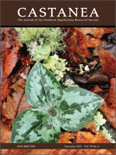
CASTANEA
Advancing Plant Science in the Southern AppalachiansCASTANEA is a distinguished journal published by the SOUTHERN APPALACHIAN BOTANICAL SOCIETY in affiliation with NEWBERRY COLLEGE. With an ISSN of 0008-7475 and an E-ISSN of 1938-4386, this esteemed publication serves as a vital platform for researchers and practitioners in the field of Plant Science. It has been circulating since 1982, and its scope focuses on the study of trees, their ecology, and conservation, thereby contributing significant insights into the biodiversity of the Southern Appalachian region and beyond. Despite its current ranking in the Q4 quartile and the 5th percentile in the Scopus Agricultural and Biological Sciences category, CASTANEA is committed to advancing knowledge and fostering a deeper understanding of plant sciences among academics and students alike. The journal does not currently offer Open Access options, maintaining a traditional subscription model that allows for carefully curated and peer-reviewed content. As you explore the advances in plant biology through CASTANEA, you will find an invaluable resource that supports both emerging and established scholars in their research endeavors.
BOTANICAL REVIEW
Fostering dialogue on ecology and evolution.BOTANICAL REVIEW is a highly esteemed journal published by SPRINGER, renowned for its commitment to advancing the fields of Ecology, Evolution, Behavior and Systematics and Plant Science. Established in 1935, this journal has become a cornerstone for researchers and professionals, reflecting over eight decades of rigorous scholarship. With an impressive impact factor and ranking within the top quartile for both its fields—Q1 in Ecology, Evolution, Behavior and Systematics and Plant Science—BOTANICAL REVIEW remains a key platform for disseminating critical findings and fostering scientific dialogue. Although it is not an open-access journal, its accessibility through institutional subscriptions enhances its reach among the academic community. The journal not only emphasizes the ecological aspects of plant life but also integrates evolutionary context to inform current practices and theories in botany. With a dedication to exploring the complex interactions within botanical sciences, BOTANICAL REVIEW continues to shape the future of plant research.

Acta Botanica Mexicana
Exploring the intricacies of botany and ecology.Acta Botanica Mexicana is a premier journal published by Instituto de Ecología AC, dedicated to advancing research in the fields of ecology, plant science, and biological sciences. With an E-ISSN of 2448-7589, this open-access journal facilitates extensive dissemination of scientific findings, ensuring that knowledge is accessible to researchers, professionals, and students worldwide. Established in 2008, Acta Botanica Mexicana has earned a notable reputation, achieving a Q3 ranking in plant science and a Q4 ranking in ecology and evolution for 2023. This positioning underscores its commitment to publishing high-quality research that addresses vital issues in ecological and botanical studies. With a focus on innovative methodologies and pragmatic solutions, the journal invites contributors to share their insights and findings, thus enriching the academic landscape and fostering collaborations that drive the field forward. The journal is based in Michoacán, Mexico, and serves as a key hub for researchers engaging with the challenges and intricacies of plant and ecological studies.
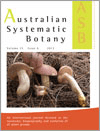
AUSTRALIAN SYSTEMATIC BOTANY
Cultivating Knowledge in Systematic BotanyAustralian Systematic Botany is a prestigious academic journal dedicated to the field of plant science, published by CSIRO PUBLISHING. Established in 1988, this journal has become a vital resource for researchers, professionals, and students focusing on the systematic study of Australian flora. With an impressive track record and convergence extending to 2024, it operates in the Q3 category for Ecology, Evolution, Behavior and Systematics and Q2 for Plant Science as of 2023. The journal holds significant value in the academic community, given its Scopus ranking, which places it in the 61st and 59th percentiles within its respective categories. Although it follows a subscription-based model, the journal remains committed to advancing knowledge in systematic botany, offering critical insights that shape the future of ecological and biological research both in Australia and globally.