
Bajo Palabra-Journal of Philosophy
Scope & Guideline
Fostering Innovative Philosophical Inquiry
Introduction
Aims and Scopes
- Work and Labor Philosophy:
The journal examines the philosophical implications of work, exploring themes of labor exploitation, class consciousness, and gender dynamics within historical and contemporary contexts. - Political Philosophy and Ethics:
A core focus is the analysis of political structures and ethics, including discussions on democracy, human rights, and the philosophical underpinnings of political ideologies. - Interdisciplinary Approaches:
Bajo Palabra promotes interdisciplinary research, integrating perspectives from literature, sociology, and cultural studies to enrich philosophical discussions. - Social Justice and Inclusion:
The journal emphasizes social justice issues, particularly in relation to marginalized communities, exploring themes of identity, gender, race, and economic inequality. - Philosophy of Technology and Modernity:
There is a consistent exploration of the relationship between technology and modern life, including critiques of neoliberalism and discussions on the impact of digitalization on society.
Trending and Emerging
- Precarious Work and Subjectivity:
Increasing attention is being given to the precariousness of work and its implications for subjectivity, particularly in the context of globalization and neoliberal capitalism. - Philosophy of Migration and Borders:
There is a notable rise in discussions surrounding migration, human rights, and the philosophical implications of borders, reflecting global socio-political dynamics. - Ecological Philosophy and Ethics:
Emerging themes in ecological philosophy emphasize the ethical dimensions of environmental concerns, particularly in relation to human agency and responsibility towards nature. - Digital Humanities and Identity:
The intersection of digital humanities with philosophical inquiries about identity and existence is gaining traction, exploring how digitalization affects self-perception and societal interactions. - Feminist and Gender Philosophy:
A growing body of work is focusing on feminist philosophy and gender studies, addressing issues of representation, power dynamics, and social justice from a philosophical perspective.
Declining or Waning
- Traditional Metaphysics:
There appears to be a diminishing focus on traditional metaphysical debates, as contemporary discussions gravitate more towards pragmatic and ethical concerns rather than abstract metaphysical speculation. - Classical Ethical Theories:
While ethical discussions remain important, there is less emphasis on classical ethical theories, such as virtue ethics, as the journal increasingly addresses applied ethics and social justice issues. - Historical Philosophical Texts:
The journal has shifted away from extensive analyses of historical philosophical texts, opting instead for discussions that engage more directly with current social and political issues. - Philosophy of Science:
Interest in the philosophy of science appears to be waning, with fewer papers exploring the epistemological foundations of scientific inquiry and more focus on the implications of scientific developments on society.
Similar Journals
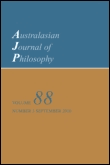
AUSTRALASIAN JOURNAL OF PHILOSOPHY
Inspiring New Perspectives in Philosophical ThoughtAustralasian Journal of Philosophy, published by Routledge Journals, Taylor & Francis Ltd, serves as a premier platform for scholarly discourse in the field of Philosophy. With its origins dating back to 1947, this esteemed journal maintains a rich tradition of fostering high-quality, peer-reviewed research and is recognized for its significant contribution to the philosophy community. Holding a distinguished Q1 ranking in the field for 2023 and standing at #75 out of 806 in the Scopus Arts and Humanities ranking, it occupies a vital niche in advancing philosophical knowledge and inquiry. Although the journal is not open access, it periodically offers articles that contribute to the dissemination of philosophical thought, making it a valuable resource for researchers, professionals, and students alike. The AUSTRALASIAN JOURNAL OF PHILOSOPHY continues to inspire and challenge thinkers worldwide as it presents critical analyses, innovative ideas, and rigorous arguments, ensuring its relevance and importance in contemporary philosophical discussions.
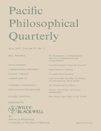
PACIFIC PHILOSOPHICAL QUARTERLY
Innovating Ideas, Inspiring MindsWelcome to the PACIFIC PHILOSOPHICAL QUARTERLY, a leading journal in the field of philosophy, published by Wiley. With an impressive impact factor and ranked in the top 15% of its category (Q1 in Philosophy), this esteemed journal has become a vital source for scholars and practitioners alike. Established in 1996, the journal presents groundbreaking articles that explore contemporary philosophical issues, ensuring its relevance through converged contributions up to 2024. With robust Scopus rankings, including a position of #122 out of 806 in the Arts and Humanities category, the quarterly serves as a platform for innovative ideas and rigorous debates in the philosophical community. Though it does not offer open access, its insights are invaluable for researchers, professionals, and students eager to deepen their understanding of philosophical discourse.
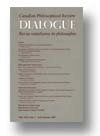
DIALOGUE-CANADIAN PHILOSOPHICAL REVIEW
Connecting Scholars Across Philosophical FrontiersDIALOGUE-CANADIAN PHILOSOPHICAL REVIEW, published by Cambridge University Press, stands as an esteemed platform in the field of philosophy, with a notable impact factor that reflects its scholarly contributions. Established in 1962 and extending its reach into 2024, this journal is indexed under ISSN 0012-2173 and E-ISSN 1759-0949. As part of its commitment to advancing philosophical discourse, DIALOGUE is ranked in the Q2 category for Philosophy in 2023, placing it among the top-tier journals in the discipline. Its Scopus ranking of #338 out of 806 highlights its critical role in shaping contemporary philosophical thought. The journal encourages robust discussions and critical analyses across various philosophical domains, appealing to researchers, professionals, and students alike. Although it does not offer open access, DIALOGUE enriches the academic community by providing valuable insights and fostering dialogue among philosophical scholars in the United Kingdom and beyond.

Enrahonar-Quaderns de Filosofia
Empowering innovative thought in the realm of philosophy.Enrahonar-Quaderns de Filosofia, published by Universitat Autònoma de Barcelona, stands as a significant academic journal in the field of Philosophy, offering open access to a diverse range of philosophical inquiries since its establishment in 1997. With an ISSN of 0211-402X and E-ISSN 2014-881X, it serves as a crucial conduit for scholars to disseminate their research globally. Positioned in the Q3 quartile of Philosophy journals according to 2023 metrics, and ranking #417 out of 806 in Scopus, it reflects a solid standing within the academic community. The journal is committed to advancing philosophical discourse by encouraging critical engagement and interdisciplinary collaboration, ultimately fostering a vibrant dialogue among researchers, professionals, and students. Located in Cerdanyola del Vallès, Barcelona, Spain, it aims to contribute to the European and global philosophical landscape by supporting innovative and rigorous scholarship through its accessible platform.
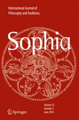
Sophia
Exploring the Depths of Philosophy and FaithSophia, a prestigious journal published by Springer, is a leading platform for the advancement of knowledge in the fields of Philosophy and Religious Studies. Established in 1962, this open-access journal has embraced a global perspective and invites scholarly contributions that explore complex philosophical questions and the intricacies of religious thought. With an impact factor that reflects its significance, Sophia ranks in the top quartiles of its categories on Scopus, specifically Q2 in Philosophy and Q1 in Religious Studies, showcasing its influence and reach within the academic community. With convenient open access options available since 2009, the journal ensures that research disseminates freely, promoting engagement among researchers, professionals, and students alike. Located in the Netherlands and connected to a reputable international network, Sophia remains committed to fostering intellectual dialogue and enriching the discourse surrounding philosophical and religious issues worldwide.
Isegoria
Innovating Perspectives in PhilosophyIsegoria, published by the Consejo Superior Investigaciones Científicas (CSIC)Philosophy, boasting an impressive commitment to disseminating high-quality research since its inception in 1990. With its ISSN 1130-2097 and E-ISSN 1988-8376, Isegoria has emerged as a significant platform for philosophical discourse, particularly noted for its 2023 inclusion in the Q2 quartile of academic rankings in Philosophy. Currently ranked #359 out of 806 journals in the Arts and Humanities category on Scopus, Isegoria captures an audience that values rigorous academic standards and intellectual exploration. Situated in Madrid, Spain, the journal is accessible globally, contributing to vital dialogues and advancing scholarship across diverse philosophical themes and methodologies. Researchers, professionals, and students alike will find Isegoria to be an essential resource for contemporary philosophical inquiry and debate.
REVUE PHILOSOPHIQUE DE LOUVAIN
Engaging Minds Through Critical EssaysREVUE PHILOSOPHIQUE DE LOUVAIN is a distinguished academic journal dedicated to the exploration of philosophical discourse and thought, published by PEETERS in Belgium. With an ISSN of 0035-3841 and E-ISSN 1783-1768, this journal has been a significant contributor to the field of philosophy since its inception in 1973. Although it has been classified in Q4 in the 2023 Philosophy category with a Scopus rank of 488 out of 762, the journal has established a reputation for fostering rigorous dialogue and covering a diverse array of philosophical topics through comprehensive articles and critical essays. Despite a temporary discontinuation in Scopus coverage from 2019 to 2021, REVUE PHILOSOPHIQUE DE LOUVAIN remains a significant platform for scholars, professionals, and students looking to engage deeply with contemporary philosophical issues. The journal's commitment to philosophical inquiry is complemented by its accessible publication model, although it does not currently offer open access options. For those based in or visiting Leuven, Belgium, the journal's office is located at BONDGENOTENLAAN 153, B-3000 LEUVEN, BELGIUM, a hub of intellectual engagement in the heart of Europe.

Eikasia-Revista de Filosofia
Advancing Discourse Across TraditionsEikasia-Revista de Filosofia is a distinguished academic journal dedicated to the exploration and analysis of philosophical thought across various traditions and contemporary debates. Published by EIKASIA EDICIONES S L, this journal serves as a vital platform for scholars, professionals, and students interested in advancing philosophical discourse. With its ISSN 1885-5679, Eikasia is committed to maintaining high academic standards and fostering an open exchange of ideas within the philosophical community. Although the journal currently does not provide open access, it remains a significant resource for those seeking to deepen their understanding of philosophy and its applications in today's world. The journal's rigorous selection process ensures that only high-quality, impactful research is published, making it a valuable asset in the field of philosophy.

Kalagatos-Revista de Filosofia
Illuminating Contemporary and Historical ChallengesKalagatos-Revista de Filosofia is a distinguished academic journal published by UNIV ESTADUAL CEARA-UECE, focusing on a broad spectrum of philosophical inquiries and scholarly discussions. With an ISSN of 1808-107X and an E-ISSN of 1984-9206, this Open Access journal has been dedicated to disseminating high-quality research and fostering critical thought in the field of philosophy since its inception in 2004. Positioned as a vital resource for researchers, professionals, and students alike, Kalagatos encourages dialogues that traverse traditional boundaries in philosophical discourse. With its commitment to accessibility and quality, the journal plays a pivotal role in contributing to the philosophical landscape, making knowledge available to a global audience. The journal seeks to publish original research articles, reviews, and essays that address contemporary and historical philosophical challenges, nurturing a vibrant academic community engaged in meaningful exploration and reflection.
Philosophical Papers
Where Tradition Meets Innovative InquiryPhilosophical Papers, an esteemed journal published by Routledge Journals, Taylor & Francis Ltd, stands as a pivotal resource in the field of philosophy. Having established its presence since 1972, this journal has converged a wealth of intellectual discourse and contributes to the continuous development of philosophical thought until 2024. With a prestigious Q1 category ranking in the arts and humanities, and a notable 86th percentile ranking in Scopus's philosophy category, it underscores its commitment to rigorous scholarship and influential research. Although Open Access options are not currently available, the journal remains a vital platform for philosophers, researchers, and students aiming to engage with pivotal philosophical debates and advancements. Set in the UK, Philosophical Papers exemplifies the intersection of tradition and innovation in philosophical inquiry, making it an indispensable reference for anyone dedicated to exploring the complexities of human thought and existence.