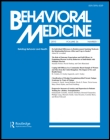
BEHAVIORAL MEDICINE
Scope & Guideline
Bridging Psychology and Medicine for Better Outcomes
Introduction
Aims and Scopes
- Behavioral Interventions and Health Outcomes:
The journal publishes research on various behavioral interventions aimed at improving health outcomes, including physical activity, smoking cessation, and dietary changes. These studies often utilize randomized controlled trials, cohort studies, and qualitative research designs. - Psychosocial Factors in Health:
A significant focus is on understanding how psychosocial factors, such as stress, social support, and emotional well-being, influence health behaviors and outcomes. The journal addresses the interplay between mental health and physical health, particularly in chronic illnesses. - Health Disparities and Equity:
Research exploring health disparities among different racial, ethnic, and socioeconomic groups is prevalent. The journal emphasizes studies that identify barriers to healthcare access and effectiveness, particularly in marginalized populations. - Technology and Digital Health Interventions:
The journal is increasingly featuring studies on digital health interventions, including mHealth applications and telehealth services. These studies evaluate the effectiveness and acceptability of technology-based health interventions. - Community and Environmental Influences on Health:
Papers often investigate the role of community resources, neighborhood characteristics, and environmental factors in shaping health behaviors and outcomes, highlighting the importance of context in health promotion.
Trending and Emerging
- Mental Health and Chronic Disease Management:
There is an increasing emphasis on the interplay between mental health and chronic diseases, especially in the context of stress management and coping strategies. Research exploring how mental health affects chronic illness outcomes is trending upward. - Community-Based Participatory Research (CBPR):
The journal is witnessing a rise in studies employing CBPR methodologies that engage communities in the research process. This approach aims to address health disparities and promote health equity through community involvement. - Culturally Tailored Interventions:
Research focusing on culturally tailored health interventions that address the unique needs of diverse populations is on the rise. This includes studies that adapt health promotion strategies to meet the cultural contexts of specific groups. - Integration of Technology in Health Interventions:
The use of technology, including mobile health applications and telehealth, is becoming increasingly prominent. Studies evaluating the effectiveness of these digital interventions in promoting health behavior change are trending. - Intersectionality in Health Research:
Emerging themes in intersectionality are being explored, particularly how overlapping identities (e.g., race, gender, sexuality) affect health outcomes and behaviors. This trend highlights the importance of considering multiple social determinants in health research.
Declining or Waning
- Traditional Medical Models of Health:
Research primarily focused on traditional medical models that emphasize biological factors over behavioral and psychosocial influences is becoming less common. Instead, the journal is shifting towards more integrative approaches that consider the whole person. - Solely Quantitative Research:
There has been a noticeable decline in the publication of studies that rely exclusively on quantitative methods without incorporating qualitative perspectives. The trend is moving towards mixed-methods research that captures a more comprehensive view of health behaviors. - Single-Disease Focus:
Research that examines health behaviors in isolation, focusing on a single disease without considering comorbidity or the impact of broader health contexts is less frequent. The journal now favors studies that address multiple health conditions and their interrelationships. - Generalized Health Education Programs:
There is a decreasing emphasis on general health education programs that do not address specific behavioral change techniques or tailored interventions. The journal is prioritizing studies that demonstrate a clear application of behavior change theories. - Static Health Communication Strategies:
Papers focusing on traditional, one-way health communication strategies are waning. There is a shift towards more interactive and engaging communication models that leverage social media and community engagement.
Similar Journals
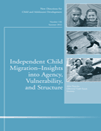
New Directions for Child and Adolescent Development
Advancing understanding in child and adolescent development.New Directions for Child and Adolescent Development, published by Wiley-Hindawi, is a leading journal dedicated to advancing knowledge in the fields of child and adolescent psychology, educational development, and social psychology. With an impressive Q1 ranking in multiple categories—including Developmental and Educational Psychology and Social Psychology—this journal stands at the forefront of research innovation, making significant contributions to understanding developmental processes and challenges faced by children and adolescents. The journal spans a comprehensive publishing history from 1978 to 2023, allowing for a rich dialogue among researchers, practitioners, and students eager to explore emerging trends and methodologies. Researchers can access a wealth of studies and theoretical frameworks, enhancing the journal's stature within the academic community. New Directions for Child and Adolescent Development remains an invaluable resource for anyone committed to improving the lives of younger populations through evidenced-based practices and policies.

Journal of Smoking Cessation
Empowering Change, One Breath at a TimeJournal of Smoking Cessation, published by HINDAWI LTD, serves as a pivotal platform for research and discourse in the field of smoking cessation and related psychology. With an electronic ISSN of 1834-2612, this open-access journal has been disseminating valuable knowledge since 2021, ensuring that researchers, healthcare professionals, and students have unrestricted access to cutting-edge studies and findings. Based in Australia with an international reach, it engages with a diverse audience committed to understanding the complexities of addiction and mental health, notably ranking in the Q3 category of Psychiatry and Mental Health in 2023. Despite a modest Scopus rank (#376 out of 567), the journal continues to contribute significantly to the literature, providing evidence-based insights and practical solutions for smoking cessation interventions. The converged years from 2006 to 2023 reflect a substantial trajectory of scholarship, making it an essential resource for those dedicated to reducing the prevalence of smoking through innovative research and collaboration.
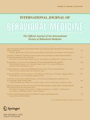
INTERNATIONAL JOURNAL OF BEHAVIORAL MEDICINE
Shaping the Future of Health with Behavioral InsightsInternational Journal of Behavioral Medicine, published by Springer, is a leading academic journal dedicated to the scientific exploration of behavioral factors in health and illness. With a distinguished ISSN of 1070-5503 and an E-ISSN of 1532-7558, the journal has been at the forefront of interdisciplinary research since its inception in 1994, converging towards its upcoming milestone in 2024. Operating from One New York Plaza, Suite 4600, New York, NY 10004, United States, this journal is recognized for its high impact, being ranked in the Q2 category of Applied Psychology with a commendable position of #86 out of 249 in the Scopus rankings, placing it in the 65th percentile. The International Journal of Behavioral Medicine aims to enhance understanding of how behavioral, psychosocial, and cultural factors influence health outcomes, making it an essential resource for researchers, practitioners, and students invested in the relationship between behavior and health. Its rigorous peer-reviewed approach provides a platform for innovative research and discussions that shape the future of behavioral medicine.

Sleep Science
Bridging Research and Practice in Sleep MedicineSleep Science is a premier open-access journal dedicated to advancing the understanding of sleep and its profound impact on health and well-being. Published by THIEME MEDICAL PUBL INC, this journal aims to bridge the gap between research and practice in the fields of Behavioral Neuroscience and Medicine. Since its inception in 2008, Sleep Science has become a vital resource for researchers, healthcare professionals, and students seeking to explore the intricate mechanisms of sleep, its disorders, and treatment methodologies. With a commitment to disseminating high-quality research, the journal features a diverse range of articles covering the latest findings in sleep studies. Notably ranked in the Q3 category in 2023 across Behavioral Neuroscience, Medicine, and Neuroscience (miscellaneous) in Scopus, it provides a platform for scholarly discourse and innovation. The journal's open-access model ensures that critical insights are available to a wide audience, thereby promoting collaborative efforts to improve sleep health globally. For more detailed information, visit 333 SEVENTH AVE, NEW YORK, NY 10001.
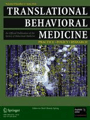
Translational Behavioral Medicine
Elevating Knowledge in Behavioral HealthTranslational Behavioral Medicine, published by Oxford University Press, is a premier academic journal dedicated to advancing the field of behavioral medicine through high-quality research and innovative methodologies. With an ISSN of 1869-6716 and an impressive E-ISSN of 1613-9860, the journal serves as a vital platform for disseminating findings that bridge the gap between laboratory research and clinical practice. Ranking in the prestigious Q1 category for both Applied Psychology and Behavioral Neuroscience, it holds a prominent position within the academic community, as reflected by its Scopus rankings—17th out of 88 in Behavioral Neuroscience and 57th out of 249 in Applied Psychology. Although currently non-Open Access, the journal provides a wealth of knowledge for researchers, professionals, and students interested in the interplay of behavioral science and health. With converged years from 2011 to 2024, Translational Behavioral Medicine continues to be an essential resource for those committed to enhancing our understanding of how behavioral factors contribute to health and illness.
PSYCHOSOMATIC MEDICINE
Unraveling the Complex Interplay of Mind and BodyPsychosomatic Medicine is a leading academic journal dedicated to advancing the understanding of the interplay between psychological and physiological factors in health and illness. Published by Lippincott Williams & Wilkins, this prestigious journal boasts an impact factor that solidifies its reputation within the academic community, sitting in the Q2 quartile for Applied Psychology and Q1 for Developmental and Educational Psychology as well as Q2 in Psychiatry and Mental Health as of 2023. Since its inception in 1945, Psychosomatic Medicine has provided a vital platform for research that explores the complex interactions between mind and body, making significant contributions to medicine and psychology. Researchers, professionals, and students can access high-quality, peer-reviewed studies that inform evidence-based practices and enhance clinical outcomes. With its comprehensive scope and commitment to scholarly excellence, this journal remains crucial for those looking to deepen their understanding of psychosomatic relationships and improve mental health care.

Nature Human Behaviour
Unraveling the complexities of human behavior.Nature Human Behaviour, published by Nature Portfolio in the United Kingdom, stands at the forefront of interdisciplinary research, connecting the fields of Behavioral Neuroscience, Experimental and Cognitive Psychology, and Social Psychology. With its commitment to publishing groundbreaking studies, this prestigious journal is categorized within the Q1 quartiles for 2023, indicating its elite status and significant influence in the academic community. Recognized globally with a remarkable Scopus ranking of #1 in multiple psychology and neuroscience categories, it showcases the highest quality research, thus appealing to students, professionals, and researchers alike. Despite being a subscription-based journal, its impactful scientific discourse continues to shape understanding of human behavior in social contexts. With the ambition to elucidate the complexities of human interaction and cognition, Nature Human Behaviour serves as an essential resource for anyone dedicated to advancing the realm of human behavioral sciences.

ASEAN Journal of Psychiatry
Bridging knowledge and practice in psychiatry across borders.Welcome to the ASEAN Journal of Psychiatry, a pivotal platform dedicated to advancing the field of psychiatry and mental health across the ASEAN region and beyond. Published by the ASEAN Federation of Psychiatry & Mental Health, this journal serves as a vital resource for researchers, clinicians, and students focusing on contemporary mental health challenges, including but not limited to, psychological disorders, therapeutic developments, and public health initiatives. With its ISSN 2231-7791 and E-ISSN 2231-7805, the journal aims to foster innovative research that addresses the unique mental health needs of diverse populations in the ASEAN community. Although currently operating under a non-open access model, it is committed to enhancing knowledge dissemination in psychiatry, facilitating better mental healthcare practices. Join us in this indispensable pursuit of mental wellness and scholarly excellence.
Eating Behaviors
Transforming Perspectives on Eating and Mental WellnessEating Behaviors is a prestigious peer-reviewed journal published by Elsevier, focusing on the interdisciplinary fields of clinical psychology and psychiatry. With an ISSN of 1471-0153 and E-ISSN 1873-7358, this journal serves as a significant platform for researchers, practitioners, and students interested in the psychological and behavioral aspects of eating. It has achieved recognition in the academic community, boasting a 2023 Scopus ranking that places it in the 68th percentile for Clinical Psychology and the 58th percentile for Psychiatry and Mental Health, affirming its impact in these critical domains. Operating in the United Kingdom, Eating Behaviors has established a reputation for publishing innovative research since its inception in 2000, with a convergence period extending to 2024. The journal aims to illuminate the intricate connections between eating patterns and mental health, making it an essential resource for those investigating the behavioral and psychological factors influencing food choices and disorders. While it does not currently offer open access options, the journal remains committed to advancing the scientific dialogue within this crucial area of health and psychology.

Annals of Indian Psychiatry
Transforming Psychiatric Care through Open Access ResearchAnnals of Indian Psychiatry is a premier journal dedicated to the field of mental health and psychiatry, published by Wolters Kluwer Medknow Publications. As an Open Access journal since 2017, it provides a platform for disseminating high-quality research articles, clinical studies, and reviews that address the diverse aspects of psychiatric disorders, treatment methodologies, and mental health policy in India and beyond. The journal aims to bridge gaps in the existing literature, support practitioners with evidence-based insights, and foster dialog among researchers in the psychiatric community. With an emphasis on innovative approaches and culturally relevant practices, the Annals of Indian Psychiatry serves as a vital resource for psychiatrists, psychologists, social workers, and students engaged in clinical practice and academic research. Its commitment to improving mental health outcomes in diverse populations makes it a significant contributor to the global discourse on psychiatric health.