BIOGEOCHEMISTRY
metrics 2024
Illuminating the pathways of biogeochemical processes across ecosystems.
Introduction
BIOGEOCHEMISTRY is an esteemed journal published by Springer, dedicated to advancing the understanding of biogeochemical processes across a range of ecosystems. Since its inception in 1984 and continuing into its converged trajectory through 2024, the journal has established itself as a critical resource in the fields of Earth-Surface Processes, Environmental Chemistry, and Water Science and Technology. With a prestigious Q1 ranking across these categories as of 2023, it ranks among the top journals in its field, reflecting its significant impact on current research and knowledge dissemination. Researchers, professionals, and students alike can benefit from the journal's rigorous peer-reviewed articles that contribute vital insights and innovative research findings. Although currently not an open-access journal, BIOGEOCHEMISTRY remains a leading platform for sharing high-quality scientific work that addresses pressing environmental challenges.
Metrics 2024
 1.393.904.80169
Metrics History
Rank 2024
Scopus
IF (Web Of Science)
JCI (Web Of Science)
Quartile History
Similar Journals
JOURNAL OF FRESHWATER ECOLOGY
Connecting researchers with the pulse of freshwater ecology.JOURNAL OF FRESHWATER ECOLOGY, published by Taylor & Francis Inc, is an esteemed source of research dedicated to advancing the understanding of freshwater ecosystems. Established in 1981, this Open Access journal has provided a platform for innovative studies and groundbreaking articles relevant to the fields of Aquatic Science and Ecology. With its HIndex reflecting a commitment to quality scholarship, the journal is currently classified in the Q3 category for both Aquatic Science and Ecology, Evolution, Behavior and Systematics, indicating its respectable impact within these disciplines. The journal ranks within the 45th percentile in Ecology and the 41st percentile in Aquatic Science on Scopus, highlighting its relevance to a global audience of researchers and practitioners. By facilitating unrestricted access to research findings since 2017, JOURNAL OF FRESHWATER ECOLOGY aims to enrich our understanding of freshwater systems and their conservation, making it an essential resource for those invested in ecological research and environmental sustainability.
APPLIED AND ENVIRONMENTAL MICROBIOLOGY
Fostering Sustainable Practices Through Cutting-Edge ResearchApplied and Environmental Microbiology, published by the American Society for Microbiology, stands as a leading journal in the fields of applied microbiology and environmental science since its inception in 1976. With a prestigious Q1 quartile ranking across multiple categories including Applied Microbiology and Biotechnology, Ecology, and Food Science, this journal consistently disseminates high-impact research that drives innovation and advances our understanding of microbial interactions within our ecosystems and industries. As ranked by Scopus, it exhibits prominent rankings in various related fields, underscoring its critical role in shaping contemporary microbiological research. Researchers, professionals, and students alike can stay abreast of groundbreaking studies while contributing to a vast body of knowledge that spans diverse aspects of microbiology, biotechnology, and ecology, ultimately contributing to sustainable practices. Join the community of dedicated scholars and explore vital research findings that impact both environmental health and technological advancement.
GLOBAL BIOGEOCHEMICAL CYCLES
Leading the charge in interdisciplinary environmental research.GLOBAL BIOGEOCHEMICAL CYCLES, published by the American Geophysical Union, is a leading journal in the field of geochemistry that has gained significant recognition since its inception in 1987. With an impressive impact factor and a Q1 ranking in multiple categories such as Atmospheric Science, Environmental Chemistry, and Global and Planetary Change, it serves as a crucial platform for the dissemination of high-quality research. This journal emphasizes interdisciplinary studies focusing on biogeochemical processes and their implications for global environmental change, attracting contributions from a diverse range of scientific communities. Researchers, professionals, and students engaged in atmospheric sciences, environmental chemistry, and planetary sciences will find invaluable insights and state-of-the-art methodologies within its pages. GLOBAL BIOGEOCHEMICAL CYCLES continues to advance our understanding of the Earth’s systems, thus holding a pivotal position in shaping future environmental policies and sustainability efforts.
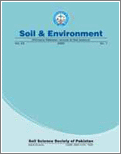
Soil & Environment
Exploring Innovations in Soil and Environmental HealthSoil & Environment is a distinguished open access journal published by the University of Agriculture, Institute of Soil & Environmental Sciences, located in Faisalabad, Pakistan. Established in 2006, this journal has become a vital platform for disseminating pioneering research in the fields of Environmental Science and Soil Science. With an ISSN of 2074-9546, it provides a wealth of knowledge through accessible academic articles, particularly focusing on sustainable practices and innovations that impact soil and environmental health. Although currently categorized in Q4 within both Environmental Science (miscellaneous) and Soil Science, the journal is dedicated to enhancing its influence and visibility as it progresses towards convergence years that span from 2010 to 2024. Researchers, professionals, and students will find Soil & Environment an essential resource for staying informed about the latest developments and methodologies in soil conservation and environmental sustainability. By offering publicly accessible content, the journal aims to foster greater collaboration and knowledge-sharing within the global scientific community.
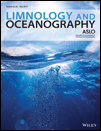
LIMNOLOGY AND OCEANOGRAPHY
Unveiling the Mysteries of Our Water WorldsLimnology and Oceanography is a premier peer-reviewed journal published by Wiley that has been at the forefront of aquatic sciences since its inception in 1956. With an impressive impact factor placing it in Q1 in both Aquatic Science and Oceanography categories, this journal showcases cutting-edge research and studies relevant to the dynamics of freshwater and marine ecosystems. Limnology and Oceanography serves as a vital platform for researchers, professionals, and students to disseminate their findings and foster a deeper understanding of aquatic environments. The journal does not currently offer open access, but it provides a unique opportunity for scholars to contribute to a body of work that influences policy, conservation efforts, and the scientific community at large. With its substantial ranking in Scopus as #12 in Aquatic Science and #9 in Oceanography, Limnology and Oceanography remains a critical resource for advancing knowledge in these vital fields.
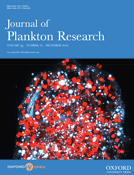
JOURNAL OF PLANKTON RESEARCH
Innovating Understanding of Aquatic EcosystemsJOURNAL OF PLANKTON RESEARCH, published by Oxford University Press, is a premier academic journal dedicated to the study of planktonic organisms and their ecological roles within aquatic ecosystems. Since its inception in 1979, this journal has fostered the dissemination of high-quality research and innovative methodologies, addressing critical issues in aquatic science, ecology, and evolutionary biology. With a commendable impact factor and categorized within Q2 in important categories such as Aquatic Science and Ecology, it is recognized for its contribution to advancing understanding in the field. The journal is indexed in notable databases, ensuring its accessibility to a global audience of researchers and professionals. As it continues to publish groundbreaking studies through to 2024, the JOURNAL OF PLANKTON RESEARCH remains vital for those looking to explore the complexities of planktonic life and its impacts on the environment.
BIOLOGY AND FERTILITY OF SOILS
Exploring the Vital Link Between Life and Soil HealthBIOLOGY AND FERTILITY OF SOILS, published by Springer, is a leading international journal dedicated to advancing the field of soil science with a focus on the intersection of biological processes and fertility management. With its ISSN 0178-2762 and E-ISSN 1432-0789, this journal serves as a key resource for researchers and professionals alike, reflecting its esteemed status in the community, evidenced by its Q1 rankings in Agronomy and Crop Science, Microbiology, and Soil Science. Covering a broad range of topics from soil health to sustainable agricultural practices, the journal's significant impact factor underscores its critical role in driving innovative research in the domain. While not offering Open Access options, it features rigorous peer-reviewed research that spans decades, converging influential studies from 1985 to 2024. Located in Germany with offices in the United States, the journal maintains a strong international presence, providing insights that enhance the understanding and management of soil ecosystems crucial for sustainable agriculture. Researchers aiming to expand their knowledge on soil biology and fertility will find this journal an invaluable asset.

Inland Waters
Transforming Knowledge into Action for Water StewardshipInland Waters, published by TAYLOR & FRANCIS LTD, stands as a prestigious scholarly journal dedicated to the critical examination of freshwater ecosystems and their management. With an ISSN of 2044-2041 and an E-ISSN of 2044-205X, this journal boasts a remarkable Q1 ranking in both Aquatic Science and Water Science and Technology for 2023, reflecting its significant impact in the field. Researchers and professionals can benefit from its comprehensive coverage of cutting-edge research, methodological advancements, and policy implications concerning inland waters. Committed to disseminating valuable knowledge in a vital area of environmental science, Inland Waters aims to foster collaboration and promote innovative solutions for sustainable water management practices. As it continues through its converged years from 2012 to 2024, the journal remains an essential resource for those dedicated to advancing our understanding and stewardship of freshwater environments worldwide.
PROGRESS IN OCEANOGRAPHY
Advancing Knowledge Beneath the WavesPROGRESS IN OCEANOGRAPHY is a pivotal journal published by PERGAMON-ELSEVIER SCIENCE LTD, dedicated to advancing the field of oceanographic research and exploration. With an ISSN of 0079-6611 and an E-ISSN of 1873-4472, this esteemed publication has been disseminating significant findings from 1963 and continues to be a cornerstone in aquatic sciences and geology, holding a distinguished Q1 ranking in both categories as of 2023. The journal primarily focuses on innovative research that contributes to our understanding of ocean processes, marine ecosystems, and the impact of human activities on the oceans. Its exclusive access model facilitates the dissemination of high-quality content that resonates with researchers, professionals, and students alike, ensuring that vital insights are accessible to the global scientific community. With a firm commitment to upholding rigorous scientific standards, PROGRESS IN OCEANOGRAPHY remains an influential platform for the communication of groundbreaking research, providing scholars with invaluable resources to drive future oceanographic studies.
INTERNATIONAL REVIEW OF HYDROBIOLOGY
Fostering Knowledge for a Sustainable Aquatic FutureINTERNATIONAL REVIEW OF HYDROBIOLOGY is a prestigious academic journal dedicated to the dynamic fields of Aquatic Science and Ecology, Evolution, Behavior, and Systematics. Published by a reputable German publisher, this open-access journal ensures that groundbreaking research is readily available to a global audience, fostering collaboration and innovation within the scientific community. With an impressive impact factor and classification within the Q2 category of both Aquatic Science and Ecology, it ranks notably high on Scopus, standing at 211 out of 721 in Ecology and 84 out of 247 in Aquatic Science as of 2023. Covering a broad scope from fundamental hydrobiological research to applied ecological studies, the journal plays a crucial role in advancing knowledge and addressing contemporary environmental challenges. Researchers, professionals, and students will find INTERNATIONAL REVIEW OF HYDROBIOLOGY to be an essential resource for informing their own work and contributing to the global dialogue on aquatic systems and their conservation.