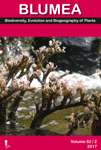
BLUMEA
metrics 2024
Unveiling the complexities of evolution and behavior.
Introduction
BLUMEA is a distinguished peer-reviewed journal published by RIJKSHERBARIUM in the Netherlands, specializing in Ecology, Evolution, Behavior and Systematics as well as Plant Science. With an ISSN of 0006-5196 and an E-ISSN of 0373-4293, this journal has established itself as a vital resource for academics and practitioners alike since its inception in 1993, with plans to continue through 2024. Currently holding a Q2 quartile ranking in both relevant categories, BLUMEA is positioned as a significant contributor to the advancement of knowledge in its fields, generating innovative research that informs sustainable practices and biodiversity conservation. Although it currently does not offer Open Access options, its insights are critical for those involved in plant sciences and ecological research. Positioned within the Scopus database, the journal ranks at the 41st percentile in Plant Science and the 39th percentile in Ecology, reflecting its substantial impact within the academic community. Researchers, students, and professionals who engage with BLUMEA will find it to be an indispensable source for high-quality research and valuable discussions aimed at shaping the future of ecological studies and botanical science.
Metrics 2024
 0.490.600.8030
Metrics History
Rank 2024
Scopus
IF (Web Of Science)
JCI (Web Of Science)
Quartile History
Similar Journals
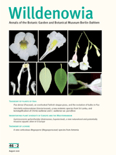
Willdenowia
Connecting researchers to the heart of botanical science.Willdenowia is a prestigious scientific journal published by the Botanischer Garten & Botanische Museum Berlin-Dahlem, dedicated to advancing the field of botany and plant sciences. With an ISSN of 0511-9618, this journal has established itself as a crucial platform for researchers, practitioners, and students interested in ecology, evolution, behavior, systematics, and plant science. The journal boasts an impactful reputation, evidenced by its impressive Q1 and Q2 quartile rankings in Plant Science and Ecology, Evolution, Behavior and Systematics respectively, as well as notable Scopus rankings, placing it within the top quartiles of its categories. Although access is not open, articles published in Willdenowia contribute significantly to the global body of botanical research, making it an essential resource for anyone looking to deepen their understanding of plant biology and related ecological disciplines. The journal has continuously evolved since its inception and aims to facilitate interdisciplinary collaboration and knowledge dissemination in the life sciences.
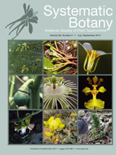
SYSTEMATIC BOTANY
Connecting Taxonomy with Evolutionary InsightsSystematic Botany, published by the American Society of Plant Taxonomists, is an esteemed journal focusing on the diverse fields of plant taxonomy, systematics, and evolution. With an ISSN of 0363-6445 and an E-ISSN of 1548-2324, this journal serves as a critical platform for researchers aiming to advance our understanding of plant biodiversity and evolutionary relationships. Operating since 1994, Systematic Botany has garnered significant recognition, achieving a Q2 ranking in Ecology, Evolution, Behavior and Systematics, and Plant Science categories, and ranking within the top half of Scopus for Genetics. The journal prioritizes publishing high-quality, peer-reviewed research, making it an essential resource for academics, practitioners, and students alike. Although it does not provide open access options, the journal's robust reputation in both American and international botanical research speaks to its pivotal role in disseminating vital scientific knowledge in the field. For those interested in the latest advancements in plant science, Systematic Botany is indispensable.

PHYTON-ANNALES REI BOTANICAE
Nurturing the future of ecological research.PHYTON-ANNALES REI BOTANICAE is a distinguished journal dedicated to the fields of plant science and ecology, published by Ferdinand Berger Soehne. With its origins tracing back to 1994, this journal has carved a niche in disseminating vital research findings and innovative studies pertaining to botany and environmental biology, despite its coverage being discontinued in Scopus since 2016. The journal's impact extends across various disciplines, reflected in its rankings within the categories of Agricultural and Biological Sciences and Environmental Science, underscoring its commitment to advancing knowledge in plant sciences. While it is not an open-access journal, its rigorous peer-review process ensures high-quality research that is valuable for researchers, professionals, and students alike. Located in Horn, Austria, PHYTON serves as a pivotal platform for sharing significant contributions to the field, fostering a deeper understanding of plant biology and ecology.
SYSTEMATICS AND BIODIVERSITY
Fostering innovative methodologies in systematics and biodiversity.Systematics and Biodiversity, published by Taylor & Francis Ltd, is a prominent academic journal that provides a vital platform for advancing research in the fields of ecology, evolution, and plant science. With an ISSN of 1477-2000 and an E-ISSN of 1478-0933, the journal has established itself as a reputable source of scholarly information since its inception in 2003, and continues to publish cutting-edge studies through 2024. Recognized for its rigorous peer-review process, it holds a prestigious position in academic circles, reflected by its Q2 ranking in Ecology, Evolution, Behavior and Systematics and Q1 ranking in Plant Science as of 2023. The journal's contributions are further characterized by its strong performance in Scopus rankings, placing it in the 69th and 68th percentiles in its respective categories. Researchers, professionals, and students alike will find invaluable insights and innovative methodologies within its pages, making Systematics and Biodiversity an essential resource for those dedicated to understanding the complexities of biological diversity and systematics. The journal's impact factors and commitment to high-quality research underscore its significance in shaping the future of ecological and botanical studies.
AUSTRALIAN SYSTEMATIC BOTANY
Advancing the Science of Australian FloraAustralian Systematic Botany is a prestigious academic journal dedicated to the field of plant science, published by CSIRO PUBLISHING. Established in 1988, this journal has become a vital resource for researchers, professionals, and students focusing on the systematic study of Australian flora. With an impressive track record and convergence extending to 2024, it operates in the Q3 category for Ecology, Evolution, Behavior and Systematics and Q2 for Plant Science as of 2023. The journal holds significant value in the academic community, given its Scopus ranking, which places it in the 61st and 59th percentiles within its respective categories. Although it follows a subscription-based model, the journal remains committed to advancing knowledge in systematic botany, offering critical insights that shape the future of ecological and biological research both in Australia and globally.
BOTANICAL JOURNAL OF THE LINNEAN SOCIETY
Fostering Innovation in Botanical Research and TheoryThe Botanical Journal of the Linnean Society, published by Oxford University Press, stands as a premier platform for interdisciplinary research within the realms of Ecology, Evolution, Behavior, and Plant Science. With a notable impact factor reflective of its esteemed reputation, this journal is classified in the Q1 quartile for both Ecology and Plant Science, placing it among the most influential publications in these fields. Since its inception in 1969, and with an anticipated convergence of research extending to 2024, it has become essential for scholars and professionals seeking to engage with cutting-edge studies, theoretical frameworks, and practical applications that drive our understanding of plant biology and ecological systems. The journal’s commitment to excellence is underscored by its robust Scopus rankings—achieving an impressive 83rd percentile in Ecology and a 82nd percentile in Plant Science. This makes the Botanical Journal of the Linnean Society a crucial resource for researchers, educators, and students alike, eager to advance their knowledge and contribute to the evolving discourse in botany and environmental studies.

TELOPEA
Unveiling the Dynamics of Ecosystems and EvolutionTELOPEA is a distinguished scholarly journal published by the Natl Herbarium New South Wales, focusing on the rich fields of Ecology, Evolution, Behavior, and Systematics, as well as Plant Science. With an ISSN of 0312-9764 and an E-ISSN of 2200-4025, the journal has been a significant contributor to the understanding of plant biodiversity and ecosystem dynamics since its inception in 1984, with regular publication resuming in 2006 through to 2024. Residing in the beautiful Australian Botanic Garden at Mount Annan, NSW, TELOPEA operates under a Q3 ranking for both Ecology and Plant Science as of 2023, reflecting its relevance and contribution to these critical scientific disciplines. Though it does not offer open access, the journal remains an essential resource for researchers and professionals seeking to contribute to and stay abreast of the latest developments in plant sciences and ecological research. With a commitment to rigorous peer review and the dissemination of high-quality research, TELOPEA stands as a vital platform for advancing knowledge in the realm of plant ecology and systematics.

PRESLIA
Bridging Research Gaps, Inspiring DiscoveryPRESLIA, published by the Czech Botanical Society, is an esteemed academic journal that has been contributing to the fields of Ecology and Plant Science since its inception in 1979. With an impressive Q1 ranking in both categories for 2023, it stands out among its peers as a vital resource for researchers, professionals, and students alike. The journal is dedicated to disseminating high-quality research that advances our understanding of botanical sciences, encompassing a diverse array of topics from plant ecology to conservation strategies. With a ranking of #110 out of 516 in Plant Science and #103 out of 461 in Ecology on Scopus, PRESLIA consistently maintains a high impact, reflecting its crucial role in shaping contemporary scientific discourse. While traditional access options are available, the journal's commitment to fostering academic collaboration makes it a key player in the global scientific community. Located in Prague, Czech Republic, PRESLIA continues to bridge gaps in research and offers a platform for innovative scholarly communication up until 2024 and beyond.

BRITTONIA
Fostering Knowledge in Botany and Environmental InteractionsBRITTONIA, published by Springer, stands as a reputable journal dedicated to advancing the fields of botany and plant sciences. With a storied history dating back to 1931, this journal has evolved to embrace contemporary research spanning various aspects of plant biology, ecology, and systematics. Focusing on a comprehensive analysis of both ecological interactions and plant systematics, BRITTONIA plays a crucial role in disseminating knowledge among researchers and professionals committed to understanding plant life and its environmental contexts. Despite its open access status being currently unavailable, the journal ensures wide accessibility through institutional subscriptions. In the latest rankings, it proudly holds a Q2 category in Plant Science and a Q3 category in Ecology, Evolution, Behavior, and Systematics, indicating its growing influence and academic rigor. Researchers and students alike will find BRITTONIA an essential resource for the latest findings and discussions in plant sciences.

KOREAN JOURNAL OF PLANT TAXONOMY
Cultivating collaboration in plant taxonomy research.Korean Journal of Plant Taxonomy, published by the Korean Society of Plant Taxonomists, serves as a pivotal platform for researchers and professionals in the fields of plant taxonomy and ecology. With an ISSN of 1225-8318 and a burgeoning E-ISSN of 2466-1546, this journal aims to disseminate high-quality research that contributes to our understanding of plant species diversity, classification, and evolution. Spanning the years from 2018 to 2024, the journal finds its niche within Q3 rankings in both Ecology, Evolution, Behavior and Systematics and Plant Science, reflecting its impactful contributions and relevance in the academic community. The journal's scope encompasses various studies aimed at advancing plant taxonomy in South Korea and globally. By fostering collaboration and sharing groundbreaking research, the Korean Journal of Plant Taxonomy plays a crucial role in shaping the discourse in plant sciences, making it an invaluable resource for students, researchers, and professionals alike, committed to advancing knowledge in this dynamic field.