
BMC Veterinary Research
Scope & Guideline
Championing open access for veterinary excellence.
Introduction
Aims and Scopes
- Animal Health and Disease Management:
Research focused on the prevention, diagnosis, and treatment of diseases affecting domestic and wild animals, including zoonotic diseases that impact both animal and human health. - Comparative and Translational Research:
Studies that leverage findings from animal models to inform veterinary practice and human medicine, highlighting the interconnectedness of animal and human health. - Immunology and Infectious Diseases:
Investigation into the immune responses of various animal species to infectious agents, evaluating vaccine efficacy, pathogen genetics, and disease transmission dynamics. - Nutritional Science and Feed Management:
Research examining the effects of various diets and nutritional supplements on the health, growth, and productivity of livestock and companion animals. - Veterinary Surgery and Anesthesia:
Studies exploring surgical techniques, anesthesia protocols, and postoperative care in veterinary practice, emphasizing improvements in patient outcomes. - Animal Welfare and Behavior:
Research dedicated to understanding animal behavior and welfare, assessing the impact of management practices and environmental factors on animal well-being. - One Health Approach:
Interdisciplinary research that integrates human, animal, and environmental health, addressing shared health challenges and promoting collaborative solutions.
Trending and Emerging
- Precision Veterinary Medicine:
An emerging focus on individualized treatment protocols based on genetic, environmental, and lifestyle factors, enhancing the effectiveness of veterinary care. - Microbiome Research:
A growing interest in the role of the microbiome in animal health, with studies exploring how gut flora impacts disease resistance, digestion, and overall well-being. - Regenerative Medicine and Stem Cell Therapy:
Increasing research into the applications of stem cell therapy and regenerative medicine in treating various conditions, including musculoskeletal injuries and degenerative diseases. - Antimicrobial Resistance:
A rising emphasis on understanding and combating antimicrobial resistance in veterinary medicine, reflecting global health concerns and the need for sustainable practices. - Environmental and Ecological Health:
Research exploring the impact of environmental factors on animal health, including studies on pollution, climate change, and habitat preservation. - Telemedicine and Digital Health:
The integration of technology in veterinary practice, including telemedicine and digital health solutions, to improve access to care and enhance veterinary services. - Behavioral Health and Welfare Assessment:
Growing recognition of the importance of assessing and improving animal welfare through behavioral studies, highlighting the need for humane treatment and management practices.
Declining or Waning
- Traditional Veterinary Practices:
There is a noticeable decrease in research centered around conventional veterinary practices as newer methodologies and technologies gain traction, suggesting a shift towards more innovative and evidence-based approaches. - Basic Anatomy and Histology Studies:
Research focused solely on basic anatomical and histological studies has seen a decline, likely overshadowed by studies that integrate these findings with clinical applications or advanced imaging techniques. - Non-Zoonotic Infectious Diseases:
Investigations into diseases that do not pose a zoonotic risk have decreased, as the emphasis has shifted towards zoonotic diseases that have implications for public health. - Veterinary Pharmacology:
While still relevant, traditional pharmacology studies have become less frequent, as researchers increasingly focus on personalized medicine and pharmacogenomics in veterinary science.
Similar Journals

ACTA VETERINARIA SCANDINAVICA
Transforming veterinary research into global knowledge.ACTA VETERINARIA SCANDINAVICA is a prestigious open-access journal dedicated to advancing the field of veterinary science and promoting interdisciplinary research. Published by BMC since 2001, this journal has become a vital resource for veterinarians, researchers, and students worldwide, with an ISSN of 0044-605X and an E-ISSN of 1751-0147. With a remarkable impact factor reflecting its relevance—ranking in the Q2 quartile for Veterinary (miscellaneous) and Q3 for Medicine (miscellaneous)—ACTA VETERINARIA SCANDINAVICA focuses on a broad spectrum of veterinary topics, ensuring that critical research is available to the academic community and beyond. Located in the United Kingdom, this journal has successfully converged its publishing efforts from 1960 to 2024, highlighting its long-standing commitment to veterinary excellence. Researchers are encouraged to submit their work through the journal’s user-friendly platform, contributing to the ever-evolving landscape of animal health and welfare.
CANADIAN JOURNAL OF VETERINARY RESEARCH-REVUE CANADIENNE DE RECHERCHE VETERINAIRE
Leading the Way in Veterinary Research ExcellenceCanadian Journal of Veterinary Research - Revue Canadienne de Recherche Vétérinaire is a leading publication in the veterinary science community, published by the Canadian Veterinary Medical Association. Established in 1986, the journal serves as a crucial resource for researchers and practitioners alike, covering a broad spectrum of topics pertinent to veterinary medicine and animal health. With a current impact factor placing it in Q2 in the Veterinary (miscellaneous) category, it holds a rank of #85 out of 194 in Scopus for general veterinary research, demonstrating its influence and importance within the field. While the journal is not open access, it remains committed to the dissemination of high-quality research that fosters advancements in veterinary practice and education. Based in Ottawa, Canada, it strives to connect the international community of veterinary researchers and professionals through rigorous peer-reviewed articles that advance knowledge and methodologies in veterinary science.
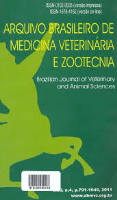
ARQUIVO BRASILEIRO DE MEDICINA VETERINARIA E ZOOTECNIA
Connecting researchers and practitioners in animal care.ARQUIVO BRASILEIRO DE MEDICINA VETERINARIA E ZOOTECNIA, an esteemed publication in the field of veterinary medicine and animal science, has been a vital resource for researchers and professionals since its inception in 1996. Published by the ARQUIVO BRASILEIRO MEDICINA VETERINARIA ZOOTECNIA, this journal is recognized for its open-access model, allowing widespread dissemination of knowledge since 1999. With a 2023 Scopus ranking placing it in the 25th percentile within the veterinary field, ARQUIVO BRASILEIRO is categorized in Q3 in Veterinary (miscellaneous), highlighting its commitment to scholarly excellence. The journal's scope encompasses a diverse range of topics related to veterinary medicine and zootechnics, making it a crucial platform for advancing research and professional practice. Situated in Belo Horizonte, Minas Gerais, Brazil, it serves not only the local community but also an international audience, fostering collaboration and innovation in veterinary sciences. As such, ARQUIVO BRASILEIRO is an invaluable asset for students, researchers, and practitioners looking to stay at the forefront of veterinary research.

Journal of the Hellenic Veterinary Medical Society
Exploring the frontiers of veterinary knowledge and practice.Welcome to the Journal of the Hellenic Veterinary Medical Society, a premier platform dedicated to advancing the field of veterinary medicine through high-quality research and scholarly discourse. Published by the Hellenic Veterinary Medical Society, this journal serves as a vital resource for veterinarians, researchers, and students who are committed to the advancement of animal health and welfare. With an ISSN of 1792-2720 and a recognized status in the community, the journal publishes impactful studies that contribute to the understanding of various veterinary disciplines. Although the journal currently sits in Q3 of the Veterinary (miscellaneous) category with a Scopus ranking of #157/194, it aims to elevate its reach and impact within the scientific community, fostering a culture of innovation and knowledge sharing. The journal strictly adheres to open access principles, ensuring that its findings are readily available to all, thereby promoting collaboration and comprehensive learning. By participating in this esteemed journal, authors and researchers contribute to the rich history and ongoing dialogue of veterinary science that dates back to its founding in 1953. We invite you to explore, engage, and contribute to the growing body of knowledge in veterinary medicine.

Kafkas Universitesi Veteriner Fakultesi Dergisi
Elevating standards in veterinary research and practice.Kafkas Universitesi Veteriner Fakultesi Dergisi is a distinguished open-access journal published by Kafkas University’s Faculty of Veterinary Medicine in Turkey. Established in 1995, this journal has become an invaluable resource for the global veterinary community, disseminating innovative research and advancements in veterinary sciences. With an ISSN of 1300-6045 and an E-ISSN of 1309-2251, it is indexed in Scopus, where it holds a Q3 quartile ranking in the field of veterinary (miscellaneous). This situates the journal at an important crossroads of knowledge sharing, promoting scholarly communication among researchers, practitioners, and students. The journal covers all aspects of veterinary science, ensuring that it is relevant for professionals seeking to stay abreast of emerging trends and findings. With a commitment to open access since its inception, Kafkas Universitesi Veteriner Fakultesi Dergisi plays a crucial role in enhancing the visibility of research conducted in Turkey and beyond, contributing significantly to global veterinary literature.

Journal of Veterinary Science
Elevating Standards in Veterinary Science Research.Journal of Veterinary Science, published by the Korean Society of Veterinary Science, is a distinguished peer-reviewed Open Access journal that has been contributing to the field of veterinary medicine since its inception in 2000. With an E-ISSN of 1976-555X, this journal not only provides critical insights for researchers globally but also maintains a strong presence within the academic community, evidenced by its impressive ranking in the Scopus database, where it stands at 44 out of 194 in the general veterinary category, placing it in the 77th percentile. The journal’s impact factor reflects its rigorous standards and the significance of the research it publishes, all while offering unrestricted access to its content since 2006, which promotes the free exchange of knowledge. Situated in the vibrant academic atmosphere of Seoul, South Korea, the Journal of Veterinary Science aims to advance veterinary research and practice, covering a broad spectrum of topics to inspire students, professionals, and established researchers alike to push the boundaries of veterinary science.
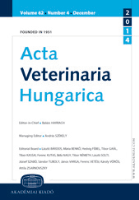
ACTA VETERINARIA HUNGARICA
Transforming knowledge into practice in animal health.ACTA VETERINARIA HUNGARICA is a prestigious academic journal published by AKADEMIAI KIADO ZRT, dedicated to the diverse field of veterinary science. With a history spanning over three decades since its inception in 1983, this journal provides a platform for the dissemination of high-quality research, clinical studies, and reviews that contribute to advancing knowledge in veterinary medicine and animal health. Based in Hungary, it has built a respectable reputation, reflected in its Scopus ranking, where it occupies the 84th position out of 194 in the General Veterinary category, placing it within the 56th percentile. Although the journal is not open access, it continues to attract a global audience of researchers, professionals, and students who are keen on exploring advancements in veterinary science as it converges towards its upcoming year of 2024. Readers will find valuable insights that foster innovation and improve animal care practices across various settings, making ACTA VETERINARIA HUNGARICA an essential resource for anyone involved in the veterinary field.

Abanico Veterinario
Pioneering Insights in Veterinary MedicineAbanico Veterinario is a prominent academic journal dedicated to the field of veterinary science, published by Sergio Martinez Gonzalez. With its ISSN 2007-4204 and E-ISSN 2448-6132, this journal serves as a vital resource for researchers, practitioners, and students interested in the latest advancements and research in veterinary medicine. Although Abanico Veterinario operates on a non-open access model, it provides insightful content that addresses a diverse range of topics such as animal health, veterinary ethics, and innovative practices. The journal aims to promote knowledge sharing and foster collaboration within the veterinary community, ultimately contributing to improved animal care and welfare. With a commitment to excellence and a growing reputation within the field, Abanico Veterinario stands as an essential platform for those seeking to enhance their professional skills and stay abreast of emerging trends in veterinary science.

Iranian Journal of Veterinary Research
Fostering Knowledge in Animal Science and ZoologyWelcome to the Iranian Journal of Veterinary Research (IJVR), a prestigious platform dedicated to advancing the field of veterinary science. Published by Shiraz University, this journal plays a pivotal role in disseminating high-quality research findings amid a vibrant academic community. With its ISSN 1728-1997, and a convergence of studies from 2008 to 2024, IJVR serves as an essential resource for veterinarians, researchers, and students interested in Animal Science and Zoology. Recognized in the Q3 quartile for both Animal Science and Veterinary categories, it holds a respectable position with Scopus rankings placing it in the 54th percentile among general veterinary journals. Although it currently lacks an open access model, the journal ensures that cutting-edge veterinary research is presented with rigor and relevance, fostering knowledge that contributes to animal health and welfare. With its strategic focus on innovative methodologies, clinical practices, and the biological sciences, the IJVR is set to become your go-to source for critical advancements in veterinary research.
TIERAERZTLICHE PRAXIS AUSGABE GROSSTIERE NUTZTIERE
Exploring the intersection of research and practical veterinary applications.TIERAERZTLICHE PRAXIS AUSGABE GROSSTIERE NUTZTIERE is a pivotal journal in the field of veterinary science, focusing specifically on large animals and food production animals. Published by GEORG THIEME VERLAG KG, this journal has been a resource for veterinary professionals since its inception in 1996, delivering current research and practical insights to its readership through 2024. Despite its classification in the Q4 quartile for both Food Animals and Veterinary (miscellaneous) categories, the journal provides an essential platform for emerging studies, contributing to the interdisciplinary dialogue around veterinary practices. Researchers and practitioners benefit from the journal’s commitment to advancing knowledge, despite its modest rankings in Scopus where it stands at rank #150 in General Veterinary and #32 in Food Animals. While not currently offering Open Access options, the journals’ significant body of work remains an invaluable asset for those dedicated to enhancing animal health and welfare. TIERAERZTLICHE PRAXIS serves as a cornerstone for academic exploration and practical application in the veterinary field, fostering a deeper understanding of the complexities involved in animal care and management.