BMJ Supportive & Palliative Care
Scope & Guideline
Championing excellence in palliative research.
Introduction
Aims and Scopes
- Palliative Care Research:
The journal publishes original research that explores various aspects of palliative care, including interventions, patient outcomes, and the effectiveness of different treatment modalities. - Symptom Management:
A significant focus on studies addressing symptom burden related to serious illnesses, including pain management, psychological distress, and supportive care strategies. - Quality of Life Assessments:
Research that evaluates quality of life in patients receiving palliative care, examining factors that influence well-being and patient satisfaction. - Interdisciplinary Approaches:
Encourages collaboration among healthcare professionals, integrating insights from nursing, medicine, psychology, and social work to enhance palliative care delivery. - Ethics and Policy in Palliative Care:
Exploration of ethical dilemmas, legal issues, and policy implications surrounding palliative care and end-of-life decision-making. - Innovative Care Models:
Studies on new models of care and interventions, including telehealth and digital health solutions, that aim to improve access to palliative care.
Trending and Emerging
- Digital Health and Telemedicine:
An increasing number of studies focus on the integration of digital health technologies and telemedicine into palliative care, particularly in response to the COVID-19 pandemic. - Holistic and Integrative Approaches:
Emerging themes explore holistic care models that integrate psychological, social, and spiritual care alongside traditional medical interventions. - Patient and Caregiver Experiences:
Research is increasingly highlighting the experiences, needs, and preferences of patients and their families, emphasizing the importance of shared decision-making. - Cultural Competence in Palliative Care:
There is a growing emphasis on understanding and addressing cultural differences in palliative care delivery, ensuring that care is tailored to diverse populations. - Research on Social Determinants of Health:
An emerging focus on how socioeconomic factors impact access to palliative care and patient outcomes, aiming to address health disparities.
Declining or Waning
- Traditional Pharmacological Interventions:
There has been a noticeable decrease in studies focusing solely on traditional medications for symptom management, as newer integrative and holistic approaches gain traction. - Single-Disease Focus:
Research concentrating on palliative care for specific diseases (e.g., cancer alone) appears to be waning, with a broader emphasis on multi-morbidity and comprehensive care for diverse patient populations. - Inpatient Care Models:
Interest in traditional inpatient palliative care models has declined as there is a growing trend toward home-based and community palliative care solutions. - Elderly-Centric Studies:
Research specifically targeting palliative care in elderly populations has seen a reduction, possibly due to a broader focus on age-inclusive studies that encompass various demographics.
Similar Journals
Current Oncology Reports
Advancing the Frontiers of Cancer ResearchCurrent Oncology Reports is a prestigious academic journal dedicated to the field of oncology, published by Springer and based in the United States. With an impressive impact factor and ranking as a Q1 journal in the 2023 category of Oncology, it positions itself among the top-tier publications within the discipline. Established in 1999, the journal has been a vital resource for researchers, professionals, and students alike, providing comprehensive insights and the latest advancements in cancer research and treatment. Through its rigorous peer-review process, Current Oncology Reports disseminates high-quality original articles, reviews, and clinical studies that foster collaboration and innovation in the oncology community. Although it currently operates under a subscription model, the journal remains committed to accessibility, ensuring that critical findings reach a broad audience. As such, it serves as an essential platform for those dedicated to the fight against cancer, making significant contributions to the evolving landscape of oncology.

ONCOLOGY REPORTS
Connecting Knowledge and Innovation in Cancer CareOncology Reports is a distinguished journal dedicated to advancing knowledge in the field of oncology. Published by Spandidos Publications Ltd, this journal has been a cornerstone in cancer research since its establishment in 1994 and is set to continue its impactful contributions until 2024. With ISSN 1021-335X and E-ISSN 1791-2431, it ranks in the Q2 category in Cancer Research, Medicine (Miscellaneous), and Oncology as of 2023, reflecting its solid standing in the academic community. The journal's current Scopus rankings position it notably within Medicine (Oncology) (#74/404, 81st percentile) and Biochemistry, Genetics and Molecular Biology (Cancer Research) (#67/230, 71st percentile), underscoring its rigorous peer-review process and the quality of its published research. Although not an open-access journal, Oncology Reports remains committed to disseminating vital information to researchers, professionals, and students, ensuring they stay at the forefront of developments in cancer studies. Its comprehensive scope promotes a multidisciplinary approach, encompassing clinical and experimental aspects of oncology, thus serving as an essential resource for those striving to understand and combat cancer.
Palliative Medicine Reports
Empowering practitioners with cutting-edge insights.Palliative Medicine Reports, published by MARY ANN LIEBERT, INC, is an esteemed Open Access journal dedicated to advancing the field of palliative care and pain management. Since its inception in 2020, this journal has established itself as an important platform for researchers and practitioners in the domains of Advanced and Specialized Nursing, Anesthesiology, and Pain Medicine. With an impressive Q2 ranking in both Advanced and Specialized Nursing and Anesthesiology and Pain Medicine, and a Q3 ranking in the Health (Social Science) category, it stands out as a reputable resource for disseminating high-quality research. The journal fosters an interdisciplinary approach, aiming to bridge gaps in knowledge and practice related to palliative care and the holistic needs of patients experiencing serious illness. Researchers, clinicians, and scholars are encouraged to contribute their work, benefitting from the journal's broad visibility and rigorously peer-reviewed process, ensuring that critical advancements in the field receive the attention they deserve.
CLINICS IN GERIATRIC MEDICINE
Empowering Insights for Elderly HealthCLINICS IN GERIATRIC MEDICINE, published by W B SAUNDERS CO-ELSEVIER INC, is a highly regarded journal in the field of geriatric medicine, with an impressive impact factor that underscores its significance in advancing the understanding of health issues among the elderly. Since its inception in 1985, the journal has served as a crucial resource for researchers, healthcare professionals, and students dedicated to improving geriatric care. As recognized leaders in the field, this journal is positioned in the Q1 quartile for Geriatrics and Gerontology, ranking #22 out of 116 in Scopus, placing it within the 81st percentile for scholarly impact. Although it is not an open-access publication, it provides unparalleled insights into current research trends, clinical practices, and innovative solutions for geriatric challenges. This comprehensive platform is essential for those committed to enhancing the quality of life for older adults and shaping the future of geriatric medicine.
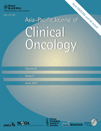
Asia-Pacific Journal of Clinical Oncology
Transforming cancer treatment with collaborative knowledge.Asia-Pacific Journal of Clinical Oncology is an essential publication within the field of medical oncology, dedicated to advancing the understanding and treatment of cancer through rigorous research and innovative clinical practices. Published by WILEY, this journal has established itself as a significant resource for researchers, healthcare professionals, and students interested in the latest findings across the Asia-Pacific region and beyond. With a respectable impact factor and categorized within the Q2 and Q3 quartiles of Medicine (miscellaneous) and Oncology respectively, the journal aims to disseminate knowledge on diverse aspects of clinical oncology, promoting the improvement of patient care and treatment outcomes. The Asia-Pacific Journal of Clinical Oncology, operating from the United Kingdom, invites contributions that highlight significant findings and advancements in oncology, making it a crucial platform for collaboration and knowledge sharing in this vital field of medicine.
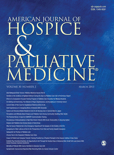
American Journal of Hospice & Palliative Medicine
Transforming the landscape of hospice care through evidence-based research.The American Journal of Hospice & Palliative Medicine, published by SAGE Publications Inc, is a leading peer-reviewed journal dedicated to advancing the field of hospice and palliative medicine. With its ISSN 1049-9091 and E-ISSN 1938-2715, the journal has been a vital resource since its inception in 1984, aiming to provide comprehensive insights into clinical practices, innovations, and research findings that enrich the quality of life for patients with serious illnesses. It holds a prestigious position as a Q2 journal in the field of medicine (miscellaneous), ranked #139 out of 636 in General Medicine with an impressive 78th percentile standing according to Scopus. The journal does not currently operate under an Open Access model, ensuring rigorous review and quality control of its content. Researchers, clinicians, and students are encouraged to engage with the latest developments and evidence-based practices in palliative care as the journal continues to shape discussions and policies in this critical area of healthcare.
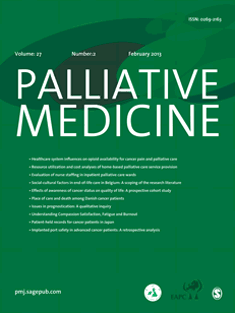
PALLIATIVE MEDICINE
Transforming Patient Support with Evidence-Based InsightsPalliative Medicine is a premier journal dedicated to advancing the field of palliative care, published by SAGE Publications Ltd. Established in 1987 and continuing through 2024, this esteemed journal focuses on the integration of pain management and comprehensive care for patients with life-limiting illnesses. With its impressive impact factor and a prestigious Q1 ranking in both Anesthesiology and Pain Medicine, as well as in Medicine (miscellaneous), it stands as a critical resource for researchers, healthcare professionals, and students engaged in this vital area of medicine. The journal emphasizes original research, reviews, and clinical studies that contribute to the understanding and practice of palliative care, promoting improved quality of life and support for patients and their families. Although not open access, articles are accessible through institutional subscriptions, ensuring the dissemination of knowledge to a wide audience. Whether you are a seasoned researcher or an emerging professional in the field, Palliative Medicine remains an invaluable platform for scholarly exchange and innovation.
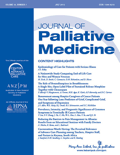
JOURNAL OF PALLIATIVE MEDICINE
Innovating palliative practices for enhanced patient quality of life.Welcome to the Journal of Palliative Medicine, a distinguished peer-reviewed publication dedicated to advancing the field of palliative care. Published by Mary Ann Liebert, Inc., this journal serves as a vital resource for researchers, healthcare professionals, and students in the disciplines of anesthesiology, nursing, and general medicine. With an impressive track record since its inception in 1998, the journal has achieved Q1 status in both Anesthesiology and Pain Medicine, as well as in Nursing (Miscellaneous), reflecting its scholarly impact within the academic community. The impact factor and rank underscore its significance, with the journal positioned at the 75th percentile in General Nursing and the 65th percentile in Anesthesiology and Pain Medicine according to Scopus rankings. Though the journal follows a subscription model, it remains committed to disseminating critical research that improves patient care and quality of life for those facing serious illnesses. As the field continues to evolve, the Journal of Palliative Medicine remains a cornerstone for fostering innovation and education in palliative practices, underscoring the importance of compassionate care.
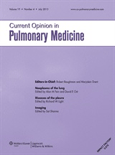
CURRENT OPINION IN PULMONARY MEDICINE
Connecting Experts in Pulmonary ExcellenceCurrent Opinion in Pulmonary Medicine, published by Lippincott Williams & Wilkins, is a vital resource for professionals in the field of pulmonary and respiratory medicine. With a robust ISSN of 1070-5287 and an E-ISSN of 1531-6971, this journal has been converging insightful research and expert opinions since 1995. It currently holds a respectable Q2 category ranking in the 2023 Scopus rankings for pulmonary and respiratory medicine, placing it within the 74th percentile of its field. The journal provides an excellent platform for clinicians, researchers, and students to keep abreast of the latest developments, trends, and therapeutic advances, ensuring that it remains an essential component of ongoing education and scholarship in respiratory health. While not open access, the journal offers various subscription options to facilitate access to cutting-edge pulmonary research. Located in Philadelphia, Pennsylvania, Current Opinion in Pulmonary Medicine continues to shape the future of respiratory medicine through its commitment to high-quality content and academic excellence.

Medycyna Paliatywna-Palliative Medicine
Exploring Innovative Approaches to Quality of LifeMedycyna Paliatywna-Palliative Medicine is a vital academic journal dedicated to advancing the field of palliative care, published by TERMEDIA PUBLISHING HOUSE LTD. With its ISSN 2081-0016 and E-ISSN 2081-2833, this journal serves as a reputable source of high-quality research and compelling insights for scholars, healthcare professionals, and students committed to improving the quality of life for patients with serious illnesses. Although it does not currently offer Open Access, Medycyna Paliatywna ensures that articles published within its pages undergo rigorous peer review, reflecting the highest standards in medical research. The journal aims to contribute to the ongoing dialogue in palliative medicine, encouraging innovative practices, sharing evidence-based strategies, and fostering collaboration among healthcare providers. By disseminating important findings and clinical insights, Medycyna Paliatywna plays a crucial role in shaping the future direction of palliative care, making it an essential resource for anyone involved in this critical field.