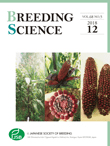
BREEDING SCIENCE
metrics 2024
Pioneering Innovations in Plant Breeding
Introduction
BREEDING SCIENCE is a premier journal published by the Japanese Society of Breeding, dedicated to the advancement of knowledge in the disciplines of agronomy, plant science, and genetics. Established in 1993, this influential publication has consistently contributed to the global research community, showcasing high-quality studies that intersect innovative breeding techniques with pressing agricultural challenges. With an esteemed Scopus rank placing it in the top quartile of Agronomy and Crop Science and the second quartile in Plant Science, BREEDING SCIENCE is essential reading for researchers, professionals, and students alike. The journal's reach and rigor are evidenced by its significant presence in leading academic databases, providing insights and advancements that are critical for improved crop production and sustainable practices. Although it does not currently offer open access options, the depth and relevance of its content ensure that it remains a vital resource for those committed to exploring the evolution and impact of breeding science. For further information, readers are encouraged to connect directly with the journal via its administrative office located at the University of Tokyo's Graduate School of Agricultural and Life Sciences.
Metrics 2024
 0.642.002.4065
Metrics History
Rank 2024
Scopus
IF (Web Of Science)
JCI (Web Of Science)
Quartile History
Similar Journals
GENETIC RESOURCES AND CROP EVOLUTION
Transforming Agriculture with Cutting-Edge Genetic ResearchGENETIC RESOURCES AND CROP EVOLUTION is a leading academic journal dedicated to the exploration and advancement of genetic resources in agriculture, evolutionary biology, and plant science. Published by Springer in the Netherlands since 1992, this journal aims to foster a greater understanding of the genetic basis of crop evolution and diversity. With a robust impact reflected in its Q2 status in multiple categories, including Agronomy, Ecology, and Plant Science, it ranks impressively within the top quartiles of its fields. As of 2023, it continues to be an essential resource for researchers, professionals, and students who seek to enhance sustainable crop production and biodiversity conservation through innovative genetic methodologies. The journal promotes high-quality, peer-reviewed research that contributes valuable insights into the genetic adaptation of crops in response to environmental changes. While the journal is not open access, its esteemed reputation ensures that the insights it provides reach a wide audience eager to address some of today's most pressing agricultural challenges.

AMERICAN JOURNAL OF POTATO RESEARCH
Fostering Global Research in Potato AgricultureAMERICAN JOURNAL OF POTATO RESEARCH is a prominent scholarly journal dedicated to the field of potato research, encompassing vital areas of Agronomy and Crop Science. Published by SPRINGER, this journal holds an impactful presence in the scientific community, as evidenced by its placement in the Q2 quartile of both Agronomy and Plant Science categories for 2023. With a Scopus rank of #145 out of 406 in Agricultural and Biological Sciences, it offers a significant platform for researchers, professionals, and students alike. Covering diverse topics from cultivation techniques to pest management, the journal aims to advance understanding and innovation in potato science, facilitating the sharing of cutting-edge research and fostering collaboration among scholars. Accessible to a global audience, the journal encourages the dissemination of knowledge through its open-access options. Since its inception in 1998, the AMERICAN JOURNAL OF POTATO RESEARCH has been committed to contributing valuable insights that drive the industry forward and support sustainable agricultural practices.
CANADIAN JOURNAL OF PLANT SCIENCE
Fostering Collaboration in Plant Research ExcellenceCanadian Journal of Plant Science (ISSN: 0008-4220, E-ISSN: 1918-1833) is a prestigious publication dedicated to advancing research in the fields of agronomy, horticulture, and plant science. Published by Canadian Science Publishing, this journal has been a cornerstone in the Canadian and international scientific community since its inception in 1973. With a solid presence in reputable databases, it ranks in the Q3 category for multiple disciplines as of 2023, reflecting its impact and relevance within the agricultural sciences. The journal serves as a vital resource for researchers, professionals, and students, encouraging the dissemination of innovative findings and fostering collaboration across disciplines. Although it is not an open-access journal, subscribers gain exclusive access to a wealth of knowledge, with articles aiming to enhance the understanding of plant systems and contribute to sustainable agricultural practices. The Canadian Journal of Plant Science remains committed to supporting the growth of plant-related research and its practical applications in today's changing environmental landscape.
THEORETICAL AND APPLIED GENETICS
Elevating the standards of genetic research since 1933.THEORETICAL AND APPLIED GENETICS, published by Springer, is a premier journal that has significantly contributed to the fields of Agronomy, Crop Science, Biotechnology, and Genetics since its inception in 1933. With a solid reputation reflected in its Q1 ranking across multiple disciplines for 2023, this journal provides a vital platform for the dissemination of high-quality research that advances our understanding of genetic principles and their applications in agriculture and biology. The journal's indexed status and high impact factor indicate its vital role in shaping contemporary genetic research, marking it as an essential resource for researchers, professionals, and students seeking to stay at the forefront of these dynamic fields. Although it currently does not offer Open Access options, the journal ensures that quality studies are accessible through institutional subscriptions, supporting an informed community of scientists dedicated to innovation in genetics and applied biological sciences.

Pesquisa Agropecuaria Tropical
Advancing agricultural knowledge for a sustainable future.pesquisa Agropecuaria Tropical is a premier Open Access journal dedicated to advancing the knowledge and practices within the field of agronomy and crop science. Since its inception in 1971, this peer-reviewed journal, published by the Universidade Federal de Goiás, has played a pivotal role in disseminating high-quality research from Brazil and beyond. Operating under an Open Access model, it ensures that scholarly articles are freely accessible, thereby fostering greater collaboration and innovation. With a Scopus ranking placing it in the 32nd percentile among its peers in agricultural and biological sciences, and a current classification in the Q3 category of agronomy and crop science, the journal serves as an essential resource for researchers, professionals, and students alike. As it continues its publication journey from 2010 to 2024, it remains committed to contributing valuable insights and advancements in the agricultural sector, ultimately influencing sustainable practices and food security.
Rice
Advancing global food security through innovative rice research.Rice, an esteemed journal published by Springer, is at the forefront of scientific research in the fields of Agronomy, Plant Science, and Soil Science. With its ISSN 1939-8425 and E-ISSN 1939-8433, the journal offers open access since 2012, ensuring that vital research findings are widely accessible to researchers, professionals, and students globally. Based in the United States, the journal has established itself as a pivotal resource, reflected in its impressive rankings—Q1 across multiple categories in 2023, including Agronomy, Plant Science, and Soil Science. With Scopus rankings positioning it in the top tiers of agricultural and biological sciences, Rice continues to foster innovative dialogue and advances in agricultural research. The journal's objectives focus on disseminating high-quality research that contributes significantly to the understanding and sustainable management of rice production, supporting global food security and agricultural practices. Researchers in this domain will find Rice to be an invaluable resource for cutting-edge findings and collaborative opportunities.

Vavilovskii Zhurnal Genetiki i Selektsii
Connecting Theory and Practice in Genetic ResearchVavilovskii Zhurnal Genetiki i Selektsii, with ISSN 2500-0462 and E-ISSN 2500-3259, is a distinguished open-access journal published by the Russian Academy of Sciences, Institute of Cytology and Genetics. Since transitioning to open access in 2013, the journal has been dedicated to advancing research and discourse in the fields of genetics and selection, particularly within agricultural and biological sciences. With a current ranking of Q2 in Agricultural and Biological Sciences and Q3 in Biochemistry, Genetics and Molecular Biology according to Scopus, it serves as a pivotal platform for researchers, professionals, and students to disseminate their findings and collaborate on innovative ideas. The journal, housed in the vibrant academic environment of Novosibirsk, Russia, publishes a diverse range of articles that contribute to the ongoing evolution of genetic studies and practical applications in agriculture. Its commitment to quality and accessibility ensures it plays an essential role in the global scientific community, fostering knowledge that bridges theoretical research and practical implementation.
Plant Genetic Resources-Characterization and Utilization
Utilizing Genetic Insights to Sustain Our EcosystemPlant Genetic Resources-Characterization and Utilization, published by Cambridge University Press, is an esteemed journal in the field of plant science, particularly focusing on the genetic resources crucial for agriculture and crop improvement. With an ISSN of 1479-2621 and an E-ISSN of 1479-263X, this journal serves as a vital platform for researchers aiming to advance the understanding of genetic variation and its applications in plant breeding and conservation. The journal boasts an impressive positioning within its categories, achieving Q2 in Agronomy and Crop Science, Q4 in Genetics, and Q3 in Plant Science as of 2023, which reflects its commitment to publishing high-quality research. Although primarily subscription-based, the journal is accessible to institutions and individuals seeking to stay at the forefront of innovations in plant genetic resources. Researchers, professionals, and students alike will find valuable insights into the latest methodologies, findings, and implications for sustainable agriculture and ecosystem management in its pages. As a key resource for advancing knowledge and practical applications in its field, Plant Genetic Resources-Characterization and Utilization continues to significantly contribute to the scientific community and the understanding of plant biodiversity.

Crop Breeding and Applied Biotechnology
Bridging science and practice for a greener tomorrow.Crop Breeding and Applied Biotechnology is a prominent open-access journal published by the Brazilian Society of Plant Breeding that has been dedicated to advancing research in the fields of Agronomy, Crop Science, and Biotechnology since its inception in 2001. With an ISSN of 1984-7033 and an E-ISSN of 1518-7853, this journal is widely recognized within the academic community, evidenced by its Q2 ranking in Agronomy and Crop Science and Q3 ranking in Biotechnology for 2023. The journal serves as a vital platform for researchers, professionals, and students, facilitating the exchange of innovative ideas and studies in crop breeding techniques, genetic improvements, and applied biotechnological advancements. Housed at the Federal University of Viçosa, Brazil, it not only enhances global collaboration among scientists but also contributes to the sustainable development of agricultural practices. As a peer-reviewed journal with a significant indexing presence, it ensures high visibility and accessibility of quality research to the global scientific community.

HORTICULTURAL SCIENCE
Cultivating Knowledge, Growing Innovation.HORTICULTURAL SCIENCE is a premier scholarly journal published by the Czech Academy Agricultural Sciences, focusing on the myriad facets of horticulture, including plant breeding, cultivation techniques, and sustainable practices. With a robust Open Access model established since 2002, it aims to disseminate high-quality research to a global audience, fostering collaboration and innovation within the field. Located in the heart of Prague, Czech Republic, the journal boasts an impressive Q2 ranking in Horticulture as reported in 2023, placing it within the top tier of its discipline. Furthermore, it ranks 52nd out of 115 in the scope of Agricultural and Biological Sciences, reflecting its growing influence and reach in horticultural research. The journal is an essential resource for researchers, professionals, and students alike, aiming to advance knowledge and practices in horticulture through original research articles, reviews, and case studies. With its commitment to academic rigor and relevance, HORTICULTURAL SCIENCE stands as a vital contribution to the ongoing discourse in horticultural studies.