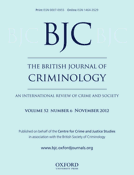
BRITISH JOURNAL OF CRIMINOLOGY
Scope & Guideline
Exploring the complexities of crime and justice.
Introduction
Aims and Scopes
- Interdisciplinary Approaches to Crime and Justice:
The journal emphasizes the importance of interdisciplinary research, integrating insights from sociology, psychology, law, and public policy to understand the multifaceted nature of crime and its implications. - Critical Examination of Penal Systems:
A consistent focus on critical analyses of penal systems and practices, including issues related to incarceration, punishment, and rehabilitation, highlighting the social, political, and economic contexts of these systems. - Exploration of Vulnerability and Marginalization:
Research that addresses the experiences of marginalized groups, including women, ethnic minorities, and economically disadvantaged individuals, in the context of crime and criminal justice. - Impact of Technology and Digital Culture:
An emerging area of focus on the impact of technology on crime, including cybercrime, digital surveillance, and the role of social media in shaping public perceptions of safety and justice. - Global Perspectives on Criminology:
The journal includes a global perspective, investigating crime and justice issues across different cultural and geographical contexts, particularly in relation to globalization and transnational crime.
Trending and Emerging
- Intersectionality in Crime Analysis:
A significant trend is the application of intersectional frameworks to understand how various social identities (e.g., race, gender, class) interact to shape experiences of crime and victimization, providing a nuanced analysis of systemic inequalities. - Environmental and Green Criminology:
Emerging research focusing on environmental crimes, climate change, and the intersection of ecological issues with criminology is gaining attention, highlighting the urgent need for a criminological response to environmental degradation. - Impact of COVID-19 on Crime and Justice:
The pandemic has spurred a wave of research examining its effects on crime rates, policing practices, and the experiences of incarcerated individuals, reflecting a timely and relevant focus in the field. - Digital Crime and Cybersecurity:
As technology evolves, there is an increasing emphasis on digital crime, cybersecurity, and the implications of digitalization for law enforcement and public safety, indicating a shift towards understanding crime in the digital age. - Community and Restorative Justice Approaches:
Growing interest in community-based and restorative justice models reflects a trend towards exploring alternative approaches to traditional punitive measures, emphasizing healing and social reintegration.
Declining or Waning
- Traditional Crime Types:
There has been a noticeable decline in research focused solely on traditional crime types, such as theft and burglary, as the journal increasingly prioritizes complex social issues and systemic factors influencing crime. - Historical Criminology:
Although historical perspectives remain valuable, there is a waning interest in purely historical criminological studies, with more emphasis placed on contemporary issues and their implications for current policy and practice. - Punitive Approaches to Crime Control:
Research advocating for punitive measures as primary responses to crime appears to be decreasing, with a shift towards restorative justice and rehabilitation models gaining traction.
Similar Journals

JOURNAL OF CRIME & JUSTICE
Advancing Understanding in Crime and JusticeJOURNAL OF CRIME & JUSTICE, published by TAYLOR & FRANCIS INC, is a leading scholarly journal in the field of law, with an impressive Q1 ranking in the category of Social Sciences (law) and a robust impact factor reflecting its significant influence in the academic community. With a history spanning from 1984 to 2024, this journal serves as a crucial platform for researchers, practitioners, and students to explore and disseminate new insights related to crime and justice issues, including policy analysis, legal frameworks, and sociological perspectives. Based in the United Kingdom, the journal aims to foster interdisciplinary dialogue and is a vital resource for those engaged in the ever-evolving fields of criminology and law. Although it does not offer open access, the journal is accessible through institutional subscriptions, ensuring that essential research remains within reach for scholars committed to advancing their understanding of complex justice systems.

PSYCHOLOGY CRIME & LAW
Illuminating the Psychology Behind Criminal JusticePSYCHOLOGY CRIME & LAW, published by Routledge Journals, Taylor & Francis Ltd, is a premier academic journal dedicated to the intersection of psychology, criminology, and the law. With an ISSN of 1068-316X and an E-ISSN of 1477-2744, this journal provides a critical platform for the dissemination of cutting-edge research and innovative methodologies in the fields of psychology, forensic medicine, and legal studies. Spanning over three decades (1994 to 2024), it holds impressive Scopus rankings, placing it in Q1 and Q2 quartiles for its contributions to law and forensic medicine, highlighting its standing within the academic community. PSYCHOLOGY CRIME & LAW is particularly noted for addressing contemporary issues at the crossroads of human behavior and legal standards, making it essential reading for scholars, practitioners, and students alike. While the journal is not open access, it offers valuable insights into a variety of topics, from criminal psychology to the implications of mental health in legal contexts, ensuring that it remains an influential resource for those engaged in research and professional practice.
CRIMINOLOGY
Advancing the Frontiers of Criminological Knowledge.CRIMINOLOGY, published by WILEY, stands as a leading journal in the fields of Law and Forensic Medicine, with an impressive impact factor that places it in the Q1 quartile for both categories. With its ISSN 0011-1384 and E-ISSN 1745-9125, this esteemed journal has been at the forefront of advancing knowledge and understanding in criminological theories and practices since its inception in 1963, and continues to be relevant through 2024. As of 2023, CRIMINOLOGY is ranked #19 in Social Sciences_ Law and #19 in Medicine_ Pathology and Forensic Medicine, positioning it within the top 2% of its field, making it an essential resource for researchers and professionals alike. Despite not offering open access, it provides invaluable insights into the complexities of crime, law enforcement, and societal impacts, thus shaping the future of criminological research and policy.
Journal of Contemporary Criminal Justice
Pioneering Research for a Just Tomorrow.Journal of Contemporary Criminal Justice is a leading academic publication within the field of criminal justice, published by SAGE Publications Inc. This esteemed journal, bearing the ISSN 1043-9862 and E-ISSN 1552-5406, has been contributing significantly to the discourse on contemporary issues in justice systems since its inception in 1978. Renowned for its rigorous peer-reviewed articles, the journal holds an impressive 2023 ranking within the Q1 quartile in Law, further affirmed by its Scopus rank of #110 out of 1025 in the field of Social Sciences - Law, placing it in the 89th percentile. Though not an open access journal, it provides a vital platform for scholars, practitioners, and students seeking to explore and disseminate pioneering research and practical insights into the evolving criminal justice landscape. The journal covers a wide array of topics, from policy analysis to sociological perspectives, ensuring its relevance across multiple disciplines. With a commitment to advancing the understanding of justice in contemporary society, the Journal of Contemporary Criminal Justice is an essential resource for anyone engaged in the fields of criminology, criminal law, and social policy.

International Journal of Cyber Criminology
Advancing the discourse on cybercrime and digital justice.International Journal of Cyber Criminology is a premier open-access journal dedicated to advancing the field of cyber criminology, publishing cutting-edge research that addresses the intricate relationship between technology and crime. Established in 2007 and published under the esteemed guidance of K Jaishankar, this journal serves as a fundamental resource for researchers, professionals, and students engaged in the study of cybercrime, online security, and digital justice. With an impressive ranking in the Q2 quartile in Law and a notable 81st percentile in Scopus Ranks, it reflects its commitment to high-quality scholarship and impact within the academic community. The journal aims to foster interdisciplinary dialogue and innovative solutions to contemporary cybercrime challenges while supporting free access to knowledge. Hailing from Manonmaniam Sundaranar University in Tamil Nadu, India, the International Journal of Cyber Criminology exemplifies a global perspective on issues affecting society in the digital age, making it an essential publication for those seeking to understand and combat cyber threats.

Russian Journal of Criminology
Unveiling innovative research in criminology and social sciences.Russian Journal of Criminology (ISSN: 2500-4255, E-ISSN: 2500-1442) is an esteemed academic publication hosted by Baikal State University, dedicated to advancing the field of criminology. As a pivotal resource within the domains of law and social sciences, this journal offers a platform for scholars to disseminate innovative research, critical analyses, and comprehensive studies relevant to contemporary criminological issues. Although coverage has been discontinued in Scopus from 2020, the journal continues to provide valuable insights essential for professionals and researchers alike, with a focus on sociological and political perspectives on crime and justice systems. With its unique Russian context, the journal encourages a diverse array of submissions, facilitating a cross-cultural dialogue on criminology that contributes to global scholarship. Despite its current ranking of 478 out of 685 in law and 908 out of 1243 in sociology and political science, the Russian Journal of Criminology remains a vital resource for those seeking to explore the complexities of criminological phenomena and to further the academic discourse in this critical area of study.
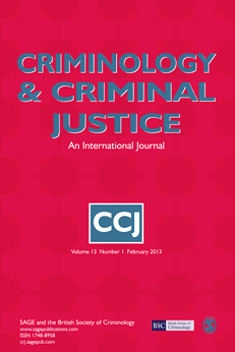
Criminology & Criminal Justice
Navigating Trends and Challenges in Crime and JusticeCriminology & Criminal Justice is a leading academic journal published by SAGE Publications Ltd that serves as an essential resource for scholars, practitioners, and students in the field of criminology and legal studies. With its ISSN 1748-8958 and E-ISSN 1748-8966, this journal has established itself as a crucial platform for innovative research, analysis, and discourse, consistently maintaining a prestigious Q1 ranking in Law. Spanning a diverse range of topics within criminology and criminal justice, it promotes interdisciplinary perspectives that reflect current trends and challenges within the domain. With a notable 93rd percentile ranking in Scopus, the journal ensures that its publications meet rigorous academic standards, fostering the advancement of knowledge and practice in the field. Based in the United Kingdom and catering to a global audience, this journal enhances scholarly communication and collaboration, making it an indispensable tool for those dedicated to unraveling the complexities of crime and justice.
Derecho Penal y Criminologia
Exploring the Intersection of Law and SocietyDerecho Penal y Criminología is a distinguished academic journal published by UNIV EXTERNADO COLOMBIA, dedicated to advancing the fields of criminal law and criminology. Since its inception in 1999, this Open Access journal has provided a platform for researchers, practitioners, and students to share innovative ideas, empirical studies, and critical analyses pertinent to contemporary issues in these fields. With a commitment to disseminating valuable research without barriers, the journal serves as an essential resource for those looking to deepen their understanding of criminal justice processes and criminological theories. Although the H-index and specific rankings remain to be detailed, the journal is positioned as a vital contributor to ongoing discussions and developments in penal law and criminology, making it a must-read for professionals seeking to engage with the latest scholarly work. The journal welcomes submissions and encourages robust dialogue among its readership in the quest for justice and effective legal reform.
Monatsschrift fur Kriminologie und Strafrechtsreform
Fostering Critical Dialogue in Criminology and Law.Monatsschrift für Kriminologie und Strafrechtsreform is a prestigious academic journal dedicated to advancing the fields of criminology and legal reform. Published by WALTER DE GRUYTER GMBH in Germany, this journal boasts a significant history since its inception in 1943, continually evolving its focus and scope from 2010 to 2024 to address contemporary issues in law and criminal justice. With an impressive Q2 rating in Law and a ranking in the 46th percentile among social sciences law journals, it serves as a vital resource for researchers, practitioners, and students alike. By publishing innovative articles, critical reviews, and comprehensive studies, the journal aims to foster academic discourse and propel discussions surrounding legislative reforms and criminological theories. Although it does not currently offer open access, readers can obtain valuable insights that contribute to both academic scholarship and practical applications in the legal field, thereby enhancing the understanding of complex societal dynamics related to crime and law enforcement.
JOURNAL OF QUANTITATIVE CRIMINOLOGY
Leading the Charge in Quantitative Crime StudiesJOURNAL OF QUANTITATIVE CRIMINOLOGY, published by Springer/Plenum Publishers, serves as a premier outlet for cutting-edge research in the fields of law and forensic medicine. With an impressive impact factor and ranked in the top quartile (Q1) of both Law and Pathology and Forensic Medicine categories in 2023, this journal excels in providing empirical analyses and quantitative assessments that address critical issues in criminological research. Since its inception in 1985, the journal has maintained a reputation for excellence, evidenced by its high standing in Scopus rankings—21st out of 1025 in Social Sciences (Law) and 23rd out of 208 in Medicine (Pathology and Forensic Medicine). Although currently not an open access publication, it offers several subscription-based access options to reach a wide array of academics and professionals dedicated to the advancement of criminological and forensic inquiries. Researchers, professionals, and students will find the JOURNAL OF QUANTITATIVE CRIMINOLOGY an invaluable resource, as it fosters interdisciplinary collaboration and methodological rigor in understanding crime and criminal behavior.