
JOURNAL OF CRIME & JUSTICE
Scope & Guideline
Fostering Interdisciplinary Dialogue on Crime
Introduction
Aims and Scopes
- Interdisciplinary Perspectives on Crime:
The journal integrates insights from criminology, sociology, law, and cultural studies to provide a holistic understanding of crime and justice issues. - Focus on Global South and Indigenous Issues:
A significant emphasis is placed on issues pertinent to the Global South, including perspectives from indigenous communities, which enrich the discourse around justice and crime. - Critical Examination of Power Structures:
Articles often explore the intersections of power, race, gender, and class, critically assessing how these factors influence crime and justice systems. - Innovative Methodological Approaches:
The journal encourages diverse methodologies, including qualitative research, ethnography, and participatory action research, to capture the complexities of crime and justice. - Emerging Trends in Criminology:
It highlights new and evolving themes in the field, such as green criminology, digital crime, and the impact of social media on crime and justice.
Trending and Emerging
- Pacific and Indigenous Criminology:
Recent publications emphasize the development of criminological frameworks specific to Pacific and Indigenous contexts, marking a significant shift towards localized understandings of crime and justice. - Green Criminology:
The rise of environmental concerns has led to increased publications on green criminology, focusing on environmental harms and justice, particularly in relation to climate change and resource exploitation. - Gender-Based Violence and Feminist Perspectives:
There is a growing focus on gender-based violence, with an emphasis on feminist criminological approaches that critique existing legal frameworks and advocate for justice for marginalized groups. - Digital and Cyber Crime:
The emergence of digital technologies has prompted an increase in research addressing cybercrime, surveillance, and the implications of technology on crime and justice. - Social Justice and Human Rights:
The journal is increasingly prioritizing themes related to social justice and human rights, reflecting a broader commitment to addressing systemic inequalities within crime and justice systems.
Declining or Waning
- Traditional Criminological Theories:
There is a noticeable reduction in publications centered around classical criminological theories, as newer frameworks that focus on social justice and critical perspectives gain traction. - Focus on Western-centric Perspectives:
The journal has shifted away from predominantly Western-centric analyses, opting instead to amplify voices from the Global South and marginalized communities. - Static Legalistic Approaches:
Research that strictly adheres to traditional legalistic frameworks is becoming less frequent, as the journal favors more dynamic, context-sensitive analyses. - Overemphasis on Quantitative Studies:
There appears to be a waning interest in purely quantitative studies, as the journal increasingly values qualitative insights that offer deeper contextual understanding.
Similar Journals

Russian Journal of Criminology
Contributing to global scholarship with a focus on Russian insights.Russian Journal of Criminology (ISSN: 2500-4255, E-ISSN: 2500-1442) is an esteemed academic publication hosted by Baikal State University, dedicated to advancing the field of criminology. As a pivotal resource within the domains of law and social sciences, this journal offers a platform for scholars to disseminate innovative research, critical analyses, and comprehensive studies relevant to contemporary criminological issues. Although coverage has been discontinued in Scopus from 2020, the journal continues to provide valuable insights essential for professionals and researchers alike, with a focus on sociological and political perspectives on crime and justice systems. With its unique Russian context, the journal encourages a diverse array of submissions, facilitating a cross-cultural dialogue on criminology that contributes to global scholarship. Despite its current ranking of 478 out of 685 in law and 908 out of 1243 in sociology and political science, the Russian Journal of Criminology remains a vital resource for those seeking to explore the complexities of criminological phenomena and to further the academic discourse in this critical area of study.
Journal of Criminology
Transforming insights into impactful policy.Journal of Criminology, published by SAGE Publications Ltd, serves as a leading platform for scholarly discourse in the field of criminology, exploring the complexities of crime, justice, and social control. With an ISSN of 2633-8076 and an E-ISSN of 2633-8084, this open-access journal has quickly established itself, achieving a prestigious Q1 ranking in Law as per the 2023 Category Quartiles. Spanning a converged timeframe from 2021 to 2024, the journal primarily focuses on promoting innovative research and critical analyses that inform policy and practice within the legal frameworks and criminological theories. Its impactful contributions are evidenced by its impressive Scopus Rank of #104 out of 1025 in Social Sciences Law, placing it at the 89th percentile among its peers. Positioned in the heart of London at 1 Olivers Yard, 55 City Road, London EC1Y 1SP, England, the Journal of Criminology is dedicated to advancing knowledge and understanding in a rapidly evolving discipline, making it an invaluable resource for researchers, professionals, and students alike.
Criminology & Criminal Justice
Empowering Knowledge for a Just SocietyCriminology & Criminal Justice is a leading academic journal published by SAGE Publications Ltd that serves as an essential resource for scholars, practitioners, and students in the field of criminology and legal studies. With its ISSN 1748-8958 and E-ISSN 1748-8966, this journal has established itself as a crucial platform for innovative research, analysis, and discourse, consistently maintaining a prestigious Q1 ranking in Law. Spanning a diverse range of topics within criminology and criminal justice, it promotes interdisciplinary perspectives that reflect current trends and challenges within the domain. With a notable 93rd percentile ranking in Scopus, the journal ensures that its publications meet rigorous academic standards, fostering the advancement of knowledge and practice in the field. Based in the United Kingdom and catering to a global audience, this journal enhances scholarly communication and collaboration, making it an indispensable tool for those dedicated to unraveling the complexities of crime and justice.
JOURNAL OF CRIMINAL JUSTICE
Leading the way in peer-reviewed criminal justice scholarship.The JOURNAL OF CRIMINAL JUSTICE, published by Elsevier, stands at the forefront of interdisciplinary research at the nexus of law, psychology, and sociology. With an impressive impact factor and consistently ranking in the Q1 category across multiple disciplines, including Applied Psychology and Law, this journal serves as a vital platform for exploring critical issues in criminal justice policy, behavior, and system effectiveness. Since its inception in 1973, the journal has evolved its scope to encompass contemporary challenges and innovative responses within the field. Researchers, professionals, and students can benefit from access to high-quality, peer-reviewed articles that not only reflect current trends but also drive future discourse. Though currently not open access, the journal's rigorous standards ensure that all published works contribute significantly to advancing knowledge and practice in criminal justice and related areas.
Critical Criminology
Redefining Justice through Interdisciplinary Inquiry.Critical Criminology is an esteemed academic journal published by Springer, focusing on the interdisciplinary examination of crime and justice through a critical lens. With its ISSN 1205-8629 and E-ISSN 1572-9877, this journal provides a platform for innovative research that challenges mainstream criminological perspectives and explores the socio-political dimensions of crime. Recognized for its scholarly rigor, it holds a prestigious Q1 ranking in Law and a Q2 ranking in Sociology and Political Science, showcasing its vast influence in the field. The journal serves as an essential resource for researchers, practitioners, and students interested in the complexities of crime and the multitude of factors influencing criminal behavior. Although it operates under a subscription model, its significance is underscored by high performance metrics, including a remarkable 88th percentile rank in the Law category of Scopus, affirming its critical role in advancing criminological scholarship. Based in the Netherlands, Critical Criminology continues to attract contributions that shed light on contemporary issues and pursue paths of social justice and reform.
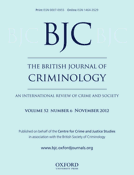
BRITISH JOURNAL OF CRIMINOLOGY
Advancing criminological insights for a just society.The British Journal of Criminology is a premier peer-reviewed journal published by Oxford University Press, dedicated to advancing the field of criminology through rigorous research and scholarly discourse. With an ISSN of 0007-0955 and an E-ISSN of 1464-3529, this esteemed publication has been at the forefront of criminological studies since its inception in 1960, continuing to provide vital insights into crime, justice, and societal impacts suited for both academics and practitioners alike. The journal is recognized for its high academic standards, proudly positioned in the Q1 category across multiple scholarly disciplines, including Arts and Humanities, Law, Pathology and Forensic Medicine, and Social Psychology as per the 2023 evaluations. While it does not offer open access, the journal remains a critical resource for researchers and professionals seeking to deepen their understanding of criminological theory and practice. With a strong commitment to promoting interdisciplinary approaches, the British Journal of Criminology aims to foster innovative research that addresses contemporary challenges within the realms of crime and justice.

JOURNAL OF CRIMINAL LAW & CRIMINOLOGY
Exploring the Intersection of Law and SocietyJournal of Criminal Law & Criminology, published by Northwestern University, is a premier scholarly journal dedicated to advancing the understanding of criminal law and criminological theories. Established in 1974, it has a strong history of publishing rigorous empirical research and critical analyses, contributing significantly to the discourse in legal and criminal justice studies. With an impressive impact factor and recognized as a Q1 journal in Law, it ranks favorably within the Scopus database, positioned in the top 25% of its category. This journal is essential for academics, legal practitioners, and students seeking insightful perspectives and developments in contemporary criminal justice issues. Although not open access, it provides a wealth of resources and discussions, making it an invaluable asset for anyone engaged in the study of law and criminology.
CANADIAN JOURNAL OF CRIMINOLOGY AND CRIMINAL JUSTICE
Shaping Policies Through Rigorous ScholarshipCanadian Journal of Criminology and Criminal Justice is a premier peer-reviewed journal published by University of Toronto Press Inc., focusing on the vibrant fields of criminology and criminal justice. With an ISSN of 1707-7753 and an E-ISSN of 1911-0219, this journal serves as a key platform for interdisciplinary scholarship that aims to advance understanding and improve practices within the field. As a testament to its impact, it is classified in the Q2 quartile for both Law and Social Sciences (miscellaneous) categories as of 2023, reflecting its esteemed position within academic research, ranked #371 out of 1025 in Social Sciences - Law and #290 out of 604 in Social Sciences - Miscellaneous. Spanning from 2003 to 2024, this journal's content encompasses a wide array of topics and contributes to crucial dialogues concerning crime, justice policies, and societal implications. Though it is not an open access journal, researchers, professionals, and students will find a wealth of knowledge that is instrumental for developing impactful criminological studies and informing policy-making in the Canadian context and beyond. Based in Canada at Journals Division, 5201 Dufferin St, Downsview, Toronto, ON M3H 5T8, it stands as an essential resource for those engaged in criminology and criminal justice research.
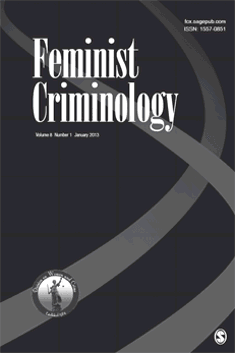
Feminist Criminology
Exploring Gendered Dimensions of Crime.Feminist Criminology is a pioneering academic journal published by SAGE Publications Inc. that focuses on the intersection of feminist theory and criminal justice. With an ISSN of 1557-0851 and an E-ISSN of 1557-086X, this UK-based journal serves as a vital platform for scholars and practitioners dedicated to exploring gendered experiences within the realm of crime and justice. Recognized for its significant contribution to the field, it boasts a remarkable Q1 ranking in both Gender Studies and Law categories for 2023, indicating its prestigious status amongst top-tier journals. The journal is indexed in Scopus, where it holds an impressive ranking, placing it in the 94th percentile for Social Sciences Law and the 90th percentile for Social Sciences Gender Studies. Open access options are currently unavailable, enhancing the journal's exclusivity for its academic audience. With a focus on innovative research from 2006 to 2024, Feminist Criminology aspires to challenge conventional understandings of crime through critical feminist perspectives, making it an essential resource for those engaged in gender studies, criminology, and law.
Global Crime
Illuminating the Intersections of Law and SocietyGlobal Crime is a leading scholarly journal published by Routledge Journals, Taylor & Francis Ltd, focusing on the multifaceted dimensions of crime and justice on a global scale. With an ISSN of 1744-0572 and E-ISSN of 1744-0580, this journal serves as a critical platform for researchers, practitioners, and policymakers interested in the intersection of legal studies, political science, and sociological perspectives. The journal boasts a prestigious Q1 ranking in Law and notable Q2 rankings in Political Science and International Relations, as well as Sociology, highlighting its influential role in shaping academic discourse. In 2023, it ranked #88 out of 1025 journals in Law, placing it in the 91st percentile, thus ensuring its status as an essential resource for those engaged in advanced research. While it does not currently offer open access options, Global Crime continuously seeks to illuminate the complexities of crime, fostering a better understanding through comprehensive studies, critical analyses, and innovative approaches. By converging insights from various disciplines, the journal aims to facilitate dialogue among academics and practitioners alike, ultimately advancing the field of criminal justice globally.