BRITISH JOURNAL FOR THE PHILOSOPHY OF SCIENCE
metrics 2024
Unraveling the Philosophical Threads of Scientific Inquiry
Introduction
The British Journal for the Philosophy of Science, published by University of Chicago Press, stands as a leading journal in the fields of philosophy and history of science. With its ISSN 0007-0882 and E-ISSN 1464-3537, this esteemed publication has been pivotal in advancing philosophical discussions surrounding scientific practice since its inception in 1950. Covering a diverse range of topics and critical analyses, it holds an impressive track record within the academic community, consistently achieving Q1 rankings across several categories, including History, Philosophy, and History and Philosophy of Science. With a Scopus rank placing it in the top percentiles of its respective fields, the journal is recognized not only for its academic rigor but also for its role in shaping contemporary philosophical discourse. While it is not an open-access journal, the British Journal for the Philosophy of Science provides essential insights and fosters critical thinking, making it an indispensable resource for researchers, professionals, and students dedicated to the nuanced interplay between science and philosophy.
Metrics 2024
 1.453.202.7066
Metrics History
Rank 2024
Scopus
IF (Web Of Science)
JCI (Web Of Science)
Quartile History
Similar Journals

Constructivist Foundations
Navigating the Frontiers of Constructivist ResearchConstructivist Foundations is a distinguished academic journal dedicated to exploring the intersection of constructivist theories and interdisciplinary applications. Established in 2010 and published by ALEXANDER RIEGLER in Belgium, this journal aims to provide researchers, educators, and professionals with a platform to disseminate innovative ideas about learning, cognition, and scientific philosophy. With a focus on artificial intelligence, cognitive neuroscience, education, and the history and philosophy of science, Constructivist Foundations has made strides in contributing to meaningful discussions within these Q2 and Q3 ranked fields. Although it currently holds a Q4 status in several areas, it plays a crucial role in fostering knowledge and dialogue among scholars, thereby enhancing the understanding of constructivist principles across various domains. With robust academic engagement and open access options, this journal continues to shape the future of educational and cognitive research.

Spontaneous Generations-Journal for the History and Philosophy of Science
Exploring the Intersection of Science, History, and PhilosophySpontaneous Generations: Journal for the History and Philosophy of Science is a dedicated publication focusing on the rich fields of history and philosophy within the scientific domain. Published by the Institute for the History and Philosophy of Science and Technology, this journal provides a vital platform for scholars, researchers, and students to explore and disseminate ideas that bridge the historical context and philosophical inquiries of scientific practices. With its commitment to open access, Spontaneous Generations ensures that groundbreaking research is widely available, fostering an environment of collaboration and knowledge sharing. Aiming to engage a diverse audience, this journal is pivotal for those looking to understand the evolution of scientific thought and its implications on contemporary issues, making it an essential resource in the academic community.

Metode Science Studies Journal
Bridging Disciplines for a Deeper Understanding of ScienceMetode Science Studies Journal, published by UNIV VALENCIA, BOTANICAL GARDEN UV, is an esteemed open-access journal dedicated to advancing scholarly discourse in the fields of history and philosophy of science and multidisciplinary studies. Since its inception in 2013, the journal has positioned itself as a vital resource for researchers, professionals, and students, fostering an environment for innovative research and cross-disciplinary dialogue. Based in the vibrant city of Valencia, Spain, this journal aims to publish high-quality articles that explore the intricate relationships between scientific practices and philosophical inquiries. With a current impact factor demonstrating its relevance in the academic community, the journal is indexed in Scopus, ranking in the 52nd percentile for history and philosophy of science and the 33rd percentile for multidisciplinary studies. Scholars can access a breadth of research outputs that span from 2015 to 2024, thereby contributing significantly to the intellectual landscape of the respective fields.
Nuncius-Journal of the History of Science
Illuminating the Past, Inspiring Future InquiryNuncius - Journal of the History of Science, published by BRILL, is a vital resource dedicated to the exploration and analysis of the intricate relationship between science and its historical context. Established with the goal of fostering scholarly discussion, this journal serves as a platform for researchers and historians to present their findings and interpretations regarding the evolution of scientific thought. With an impact factor reflective of its academic rigor and ranked in the Q3 category in the field of History and Philosophy of Science, it offers a rich archive of articles spanning converged years from 1986 to 2024. Nuncius encourages submissions that advance the understanding of science's impact on society, culture, and its philosophical underpinnings, making it a key reference for those engaged in the histories that define modern scientific inquiry. Situated in the scholarly landscape of the Netherlands, Nuncius remains an essential read for professionals, students, and academics seeking to deepen their knowledge in this significant field.

Foundations of Science
Illuminating the Philosophical Foundations of DiscoveryFoundations of Science is a renowned academic journal published by SPRINGER, dedicated to the interdisciplinary exploration of both the historical and philosophical dimensions of science. Established in 1995 and based in the Netherlands, this journal has carved out a significant niche within the History and Philosophy of Science and Multidisciplinary fields, holding an impressive Q2 ranking in both categories as of 2023. The journal's rigorous peer-review process ensures the dissemination of high-quality research, supported by its Scopus rankings, which place it in the top 15% of its peer group in History and Philosophy of Science and the top 28% in Multidisciplinary studies. Although not an open-access journal, Foundations of Science remains accessible through various academic channels, making its vital contributions to the discourse surrounding scientific foundations available to a broad audience. By fostering dialogue across disciplines, it plays a crucial role in advancing the understanding of science's philosophical underpinnings and its historical development, making it an essential resource for researchers, professionals, and students alike.
Journal for General Philosophy of Science
Unraveling the Philosophical Threads of Scientific PracticeJournal for General Philosophy of Science, published by Springer, stands as a pivotal resource in the fields of History and Philosophy of Science, as well as general Philosophy. With an impressive Q1 ranking in its categories and a solid reputation reflected in its Scopus rankings, this journal provides a robust platform for scholarly discourse and advancement in philosophical inquiry regarding science. The journal's commitment to quality is evident, catering to researchers, professionals, and students interested in the critical examination of scientific methods, theories, and their implications. While it operates on a subscription basis, the journal is dedicated to fostering a deeper understanding of philosophical issues surrounding scientific practices from 1980 through 2024. Operating out of the picturesque Netherlands, specifically from VAN GODEWIJCKSTRAAT 30, 3311 GZ DORDRECHT, the journal continues to encourage innovative thinking and interdisciplinary dialogue, underscoring its significance in academia today.
Axiomathes
Transforming Mathematical Rigor into Philosophical InquiryAxiomathes is a distinguished interdisciplinary journal that rigorously explores the intersections of Mathematics and Philosophy, offering a unique platform for innovative research and discourse since its inception in 1993. Published by Springer, this journal is based in the Netherlands and has garnered a significant reputation in the academic community, as evidenced by its 2023 Scopus rankings, where it stands at Rank #198/806 in Philosophy and Rank #51/90 in Mathematics (miscellaneous). With a focus on advancing theoretical frameworks and fostering critical discussions, Axiomathes aims to bridge the gap between mathematical theories and philosophical implications, making it an essential resource for researchers, professionals, and students alike. The journal is available in both print and open access formats, ensuring broad accessibility and engagement with its content. By continually adapting to the evolving landscapes of these disciplines, Axiomathes remains a vital contributor to academic discourse and knowledge dissemination in the fields of Mathematics and Philosophy.

Epistemology & Philosophy of Science-Epistemologiya i Filosofiya Nauki
Connecting Minds: Where Philosophy Meets ScienceEpistemology & Philosophy of Science-Epistemologiya i Filosofiya Nauki is a prestigious journal published by the Russian Academy of Sciences - Institute of Philosophy, dedicated to advancing the discourse in the fields of epistemology, philosophy of science, and related disciplines. With a distinguished presence in academia, this journal is recognized for its exceptional contributions, evident through its categorization as a Q2 journal in Arts and Humanities and Philosophy, and a Q1 journal in Cultural Studies. Covering an expansive scope from 2017 to 2023, it facilitates a vital dialogue among scholars and professionals aiming to explore the intersections of knowledge, culture, and education. Although currently not open access, the rigorous peer-review process ensures that only high-quality research is published, enriching the intellectual landscape. The journal's commendable rankings in Scopus, particularly in Arts and Humanities and History and Philosophy of Science, reflect its commitment to scholarly excellence. For researchers, educators, and students, Epistemology & Philosophy of Science serves as an essential resource for understanding and contributing to the ongoing philosophical dialogues that shape our comprehension of scientific inquiry.

Filozofia Nauki
Illuminating Ideas that Shape Scientific UnderstandingFilozofia Nauki is a distinguished academic journal published by the Institute of Philosophy at Warsaw University, Poland, with a dedicated focus on the interdisciplinary realms of Philosophy and the History and Philosophy of Science. Since its transition to Open Access in 2020, the journal has broadened its reach, allowing scholars worldwide to engage with its content without barriers. The journal boasts an important standing in the academic community, currently ranked Q2 in Philosophy and Q3 in History and Philosophy of Science as of 2023, reflecting its impact and relevance. With an H-Index indicating its citation influence, the journal aims to foster critical discourse, sharing innovative research and ideas that push the boundaries of knowledge in these fields. Its Scopus rankings, with a percentile of 58th in Philosophy and 41st in the History and Philosophy of Science, further highlight its growing prestige. As it continues to publish cutting-edge research, Filozofia Nauki stands as a vital resource for researchers, professionals, and students committed to exploring the philosophical dimensions of scientific inquiry, ensuring a robust forum for discussion and discovery.
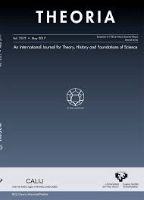
THEORIA-REVISTA DE TEORIA HISTORIA Y FUNDAMENTOS DE LA CIENCIA
Unveiling the Past to Illuminate the Future of ScienceTHEORIA-REVISTA DE TEORIA HISTORIA Y FUNDAMENTOS DE LA CIENCIA, published by the Servicio Editorial Universidad del País Vasco, is a leading open access journal dedicated to advancing the fields of History, Philosophy of Science, and related disciplines since its inception in 2003. With a robust impact factor placing it in the esteemed Q1 and Q2 quartiles in its respective categories, this journal serves as a crucial platform for researchers, professionals, and students who are engaged in profound discussions and analyses of scientific foundations and historical contexts. Based in Spain, THEORIA has consistently demonstrated its commitment to scholarly excellence, achieving notable rankings in Scopus, particularly in the fields of Arts and Humanities, where it holds a rank of #169 in Philosophy and #59 in History and Philosophy of Science. The journal not only allows immediate open access to its diverse range of articles, fostering global knowledge dissemination, but also aims to bridge connections across varied philosophical inquiries and historical explorations within science. Join the dialogue today in shaping the future understanding of our scientific heritage.