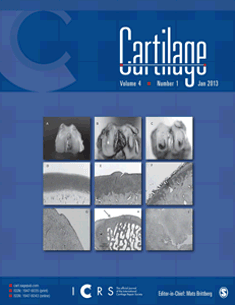
Cartilage
Scope & Guideline
Exploring the multidisciplinary impact of cartilage science.
Introduction
Aims and Scopes
- Cartilage Regeneration and Repair:
Research focusing on innovative techniques and materials for regenerating damaged cartilage, including autologous chondrocyte implantation, stem cell therapies, and bioengineered scaffolds. - Pathophysiology of Cartilage Disorders:
Studies investigating the biological and molecular mechanisms underlying cartilage degeneration, including the role of inflammatory mediators, oxidative stress, and genetic factors in osteoarthritis and other cartilage diseases. - Clinical Outcomes and Evidence-Based Practices:
Assessment of clinical outcomes following various cartilage repair techniques and interventions, emphasizing the importance of evidence-based approaches to treatment in clinical practice. - Biomechanics and Imaging Techniques:
Research exploring the mechanical properties of cartilage, imaging modalities for evaluating cartilage health, and the impact of biomechanical factors on cartilage degeneration and repair. - Translational Research and Novel Therapies:
Studies that bridge laboratory findings with clinical applications, focusing on novel therapeutic strategies such as gene therapy, growth factors, and biomaterials for cartilage repair.
Trending and Emerging
- Biologics and Regenerative Medicine:
An increasing number of studies focus on the use of biologics, such as platelet-rich plasma, stem cells, and exosomes, for promoting cartilage repair and regeneration, emphasizing their potential in clinical applications. - Advanced Imaging Techniques:
There is a growing trend toward utilizing advanced imaging modalities, including MRI and 3D imaging techniques, to assess cartilage health and repair in both preclinical and clinical settings. - Personalized Medicine Approaches:
Research is increasingly focused on personalized medicine strategies, including the identification of patient-specific biomarkers and tailored treatment plans based on individual cartilage pathology. - Microenvironment and Extracellular Matrix Dynamics:
Emerging studies are investigating the influence of the cartilage microenvironment and extracellular matrix composition on chondrocyte behavior and cartilage repair mechanisms. - Multidisciplinary Approaches to Cartilage Health:
There is a trend towards interdisciplinary research that integrates engineering, materials science, and molecular biology to develop novel strategies for cartilage restoration and maintenance.
Declining or Waning
- Traditional Surgical Techniques:
There has been a noticeable decrease in publications focusing on classical surgical methods for cartilage repair, such as microfracture, as newer, less invasive techniques gain popularity and demonstrate improved outcomes. - Basic Histological Studies:
Research centered solely on basic histological analyses of cartilage without accompanying functional or clinical outcomes is becoming less frequent, as the field increasingly emphasizes translational and clinically relevant studies. - Pharmacological Interventions:
Studies solely examining pharmacological treatments for cartilage disorders, such as NSAIDs or traditional disease-modifying osteoarthritis drugs (DMOADs), are declining as interest shifts toward regenerative medicine and biologics. - Animal Models in Isolation:
Research focusing exclusively on animal models without direct clinical relevance or translation to human conditions is waning as the field seeks more applicable and human-relevant studies.
Similar Journals
JOURNAL OF ORTHOPAEDIC RESEARCH
Advancing Orthopedic Science for Better Patient CareThe JOURNAL OF ORTHOPAEDIC RESEARCH, published by WILEY, stands as a premier peer-reviewed journal in the field of orthopedics and sports medicine, showcasing high-impact research with a notable impact factor and categorized in the top Q1 quartile for 2023. Since its inception in 1983, this journal has continuously evolved to meet the needs of a dynamic scientific community, serving as a vital resource for researchers, clinicians, and students engaged in the study and practice of orthopedics. With commendable rankings, positioned at Rank #47 out of 321 in the Medicine Orthopedics and Sports Medicine category, and boasting a remarkable 85th percentile in Scopus rankings, it highlights groundbreaking studies and advances in orthopedic science. While not an open-access journal, it provides diverse access options to ensure that its contributions are available to a broad academic audience. The journal plays a crucial role in disseminating innovative ideas and fostering collaboration within the orthopedic research community, thereby promoting improved patient care and outcomes in musculoskeletal health.

Stem Cell Research & Therapy
Advancing the Frontiers of Regenerative MedicineStem Cell Research & Therapy is an esteemed international journal published by BMC, specializing in the rapidly advancing fields of stem cell research and regenerative therapies. Since its inception in 2010, the journal has embraced an Open Access model, ensuring that vital research is readily accessible to a global audience. With a significant impact in the scientific community, it holds Q1 quartile rankings in prestigious categories such as Biochemistry, Genetics and Molecular Biology, Cell Biology, and Molecular Medicine, highlighting its critical role in promoting groundbreaking research. The journal’s high Scopus rankings—placing it in the top echelons of its fields—reflect its commitment to publishing high-quality, peer-reviewed studies that advance our understanding of stem cell biology and therapeutic applications. Aimed at researchers, healthcare professionals, and students alike, Stem Cell Research & Therapy is an indispensable resource for those dedicated to the exploration and innovation within this transformative area of science.
CURRENT NEUROVASCULAR RESEARCH
Unraveling the Complexities of Neurovascular RelationshipsCURRENT NEUROVASCULAR RESEARCH is an esteemed peer-reviewed journal published by Bentham Science Publishers Ltd, focusing on the intricate relationships within the realms of cellular and molecular neuroscience, developmental neuroscience, and neurology. With an ISSN of 1567-2026 and an E-ISSN of 1875-5739, this journal has been contributing to the field since its inception in 2004 and is poised to continue through 2024. As a resource dedicated to disseminating innovative research findings, CURRENT NEUROVASCULAR RESEARCH is recognized within Category Quartiles as Q3 in multiple fields, including Neurology (clinical) and Developmental Neuroscience. Although classified in the Q4 category for Cellular and Molecular Neuroscience, the journal maintains a crucial role in fostering academic discourse and advancing our understanding of neurovascular dynamics. Researchers, professionals, and students will find valuable insights in this journal, offering access to a diverse range of studies that highlight cutting-edge developments in the field.
Regenerative Medicine
Charting New Territories in Regenerative MedicineRegenerative Medicine, published by Taylor & Francis Ltd, is a pivotal journal within the field of biomedical research, focusing on the innovative advances in regenerative and restored functions in human health. With an ISSN of 1746-0751 and an E-ISSN of 1746-076X, this esteemed journal boasts a commendable impact factor within its categories, notably holding the Q2 status in Embryology and Q3 in Biomedical Engineering as of 2023. Covering a broad spectrum of topics from stem cell research to tissue engineering, it serves as a crucial platform for interdisciplinary collaboration among researchers, professionals, and students dedicated to the regeneration of tissues and organs. Given its comprehensive scope from 2006 to 2024, the journal continues to attract high-quality manuscripts that advance the frontiers of knowledge in regenerative medicine. Researchers and practitioners alike are encouraged to engage with the latest findings and methodologies disseminated in this vital publication.
Bone & Joint Research
Unlocking new possibilities in orthopedic and sports medicine.Bone & Joint Research is a prestigious open access journal published by the British Editorial Society of Bone & Joint Surgery, which has been serving the orthopedic and surgical community since its inception in 2012. With an impact factor reflecting its high standards and relevance within the field, this journal boasts impressive Scopus rankings, positioning it in the Q1 category for both Orthopedics and Sports Medicine and Surgery as of 2023. Located in the United Kingdom, the journal aims to disseminate cutting-edge research, clinical studies, and innovative approaches to treatment in musculoskeletal health, making it an indispensable resource for researchers, healthcare professionals, and students alike. The journal encourages a collaborative discourse that fosters advancements in the understanding and treatment of bone and joint diseases, fulfilling its mission to enhance patient outcomes and improve the quality of care.
Osteoarthritis and Cartilage
Unveiling Breakthroughs in Joint HealthOsteoarthritis and Cartilage, published by ELSEVIER SCI LTD, stands as a leading journal in the fields of Biomedical Engineering, Orthopedics and Sports Medicine, and Rheumatology. With an impressive impact factor reflective of its significant contribution to these domains, the journal has established a prominent place within the academic community since its inception in 1993. As evidenced by its Q1 quartile rankings across multiple categories, the journal is recognized for its high-quality peer-reviewed research that pushes the boundaries of knowledge regarding osteoarthritis and related cartilage disorders. Its rankings in Scopus, placing it among the top 2% of journals in Orthopedics and Sports Medicine and the top 7% in Rheumatology, further underscore its pivotal role in advancing clinical and biomechanical understandings of joint health. While open access options are not currently available, the journal encourages submissions that explore innovative solutions and therapeutic approaches to musculoskeletal conditions, fostering a collaborative environment among researchers, professionals, and students alike. Situated in the heart of London, it serves as a critical repository for cutting-edge research shaping the future of patient care and bone health.

CIRCULATION RESEARCH
Leading the way in cardiovascular research since 1953.CIRCULATION RESEARCH is a premier journal dedicated to advancing the field of cardiovascular science, focusing on innovative research in cardiology and physiology. Published by Lippincott Williams & Wilkins, this esteemed journal has been a cornerstone of cardiovascular research since its inception in 1953, maintaining rigorous standards of scholarly excellence. With an impressive impact factor and ranking in the top quartiles for both Cardiology and Cardiovascular Medicine (Q1) and Physiology (Q1), it holds a significant position in the Scopus database. This journal features cutting-edge studies aimed at understanding the mechanisms of cardiovascular health and disease, promoting the translation of research into clinical practice. Weekly issues provide practitioners and researchers alike with vital insights to keep abreast of the latest developments. Although it does not offer open access, CIRCULATION RESEARCH remains vital for professionals striving to enhance their knowledge and impact in the ever-evolving landscape of cardiovascular medicine.

INTERNATIONAL JOURNAL OF EXPERIMENTAL PATHOLOGY
Exploring the Frontiers of Pathological ResearchINTERNATIONAL JOURNAL OF EXPERIMENTAL PATHOLOGY, published by Wiley, is a leading peer-reviewed journal dedicated to the field of experimental pathology. With an ISSN of 0959-9673 and E-ISSN 1365-2613, the journal has been a vital resource for researchers and professionals since its inception in 1990, covering a broad spectrum of topics within pathology, cell biology, and molecular biology. The journal's relevancy is underscored by its Q2 ranking in Pathology and Forensic Medicine and Q3 rankings in both Cell Biology and Molecular Biology, as of 2023, reflecting its significant contribution to the scientific community. Although it does not currently offer open access options, readers can benefit from its insightful research articles and reviews that guide advancements in diagnostic pathology and therapeutic strategies. As the journal continues to evolve, it remains committed to facilitating the exchange of innovative ideas and findings that drive progress in experimental pathology and related fields, making it an indispensable platform for scientists, clinicians, and students alike.
Biomedical Engineering Online
Exploring cutting-edge solutions for modern medical challenges.Biomedical Engineering Online, published by BMC, is an esteemed open-access journal in the United Kingdom that has been advancing the field of biomedical engineering since its inception in 2002. With a commitment to disseminating high-quality research, the journal encompasses a broad scope, including innovative studies in biomaterials, imaging technologies, and medical applications. Recognized within the Q2 quartile for various categories such as Biomaterials and Biomedical Engineering, it ranks favorably among its peers: Rank #58 out of 333 in Radiology, and Rank #15 out of 63 in Radiological and Ultrasound Technology in the Scopus database. These rankings, coupled with an open-access model, ensure that critical advancements in medical technology are accessible to researchers, health professionals, and students globally. As it continues through its converged years from 2002 to 2024, Biomedical Engineering Online remains an invaluable resource for anyone involved in the cutting-edge intersection of engineering and medicine.

Biomedical Engineering-Biomedizinische Technik
Advancing Biomedical Innovation for a Healthier TomorrowBiomedical Engineering-Biomedizinische Technik, published by WALTER DE GRUYTER GMBH, serves as a pivotal platform for advancing knowledge in the field of biomedical engineering and medicine since its inception in 1956. With an ISSN of 0013-5585 and an E-ISSN of 1862-278X, this peer-reviewed journal offers accessible insights into innovative research and technological advancements that are reshaping healthcare practices and biomedical applications. Although rated in the Q3 category for both Biomedical Engineering and Miscellaneous Medicine in 2023, the journal's impact factor and growing reputation demonstrate its vital role in fostering academic dialogue and collaboration. The journal is based in Germany, while its scope encompasses a diverse range of topics, thus bridging the gap between engineering and medical disciplines. Researchers, professionals, and students alike are encouraged to engage with the content that not only highlights contemporary challenges but also presents groundbreaking solutions in biomedical technology.