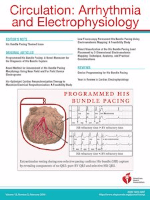
Circulation-Arrhythmia and Electrophysiology
Scope & Guideline
Innovative findings shaping the future of cardiovascular medicine.
Introduction
Aims and Scopes
- Atrial Fibrillation and Related Disorders:
The journal emphasizes research on atrial fibrillation (AF), including its mechanisms, epidemiology, and innovative treatment strategies such as catheter ablation and pharmacological interventions. - Electrophysiological Mechanisms:
Research into the underlying electrophysiological mechanisms of various arrhythmias, including ventricular tachycardia and atrial fibrillation, is a key focus area. - Innovative Ablation Techniques:
The journal publishes studies on novel ablation techniques, such as pulsed field ablation, cryoballoon, and radiofrequency ablation, assessing their efficacy and safety in treating arrhythmias. - Technological Advancements:
There is a consistent focus on technological advancements in cardiac monitoring and intervention, including the use of artificial intelligence and machine learning in electrophysiology. - Patient-Centered Outcomes:
The journal addresses the importance of patient-reported outcomes and quality of life measures in evaluating the impact of arrhythmia treatments. - Congenital Heart Disease and Arrhythmias:
Research related to arrhythmias in patients with congenital heart disease, focusing on unique challenges and treatment approaches in this population.
Trending and Emerging
- Pulsed Field Ablation:
Pulsed field ablation is emerging as a significant theme, with studies focusing on its efficacy, safety, and comparative outcomes against traditional ablation techniques. - Artificial Intelligence and Machine Learning:
There is a growing trend in utilizing artificial intelligence and machine learning for predictive analytics in arrhythmia management, enhancing diagnostic and therapeutic decision-making. - Wearable Technology and Remote Monitoring:
Research on wearable devices and remote monitoring technologies is trending, particularly in their role in detecting arrhythmias and improving patient outcomes through continuous monitoring. - Cardiac Resynchronization Therapy:
The efficacy of cardiac resynchronization therapy, particularly in complex patient populations, is gaining attention, exploring its impact on heart failure and arrhythmia management. - Patient-Centered Research:
There is an increasing focus on patient-centered research, emphasizing quality of life, patient preferences, and outcomes related to arrhythmia treatments. - Ethical and Sociocultural Aspects of Arrhythmia Care:
Emerging discussions around the ethical implications of arrhythmia treatments and the impact of social determinants of health on patient outcomes are gaining importance.
Declining or Waning
- Traditional Pharmacological Treatments:
There has been a noticeable decline in the focus on traditional antiarrhythmic drug studies, as newer technologies and methods, such as catheter ablation, gain favor in clinical practice. - Invasive Diagnostic Procedures:
Research on invasive diagnostic techniques has waned, likely due to advancements in non-invasive imaging and monitoring technologies that offer safer and more effective alternatives. - Epidemiological Studies Without Intervention Focus:
While epidemiological studies remain important, there is a decreasing trend in papers that do not connect findings to specific interventions or clinical applications. - Basic Science Research in Isolated Models:
Research focusing on basic science in isolated models has diminished, as the journal increasingly prioritizes translational studies that bridge laboratory findings with clinical applications. - Older Devices and Techniques:
The exploration of older cardiac devices and techniques (e.g., traditional pacemakers) has decreased, reflecting a shift towards newer, more innovative technologies.
Similar Journals

Journal of Vascular Surgery-Venous and Lymphatic Disorders
Pioneering advancements in venous and lymphatic disorders.The Journal of Vascular Surgery-Venous and Lymphatic Disorders, published by Elsevier, is a distinguished peer-reviewed journal dedicated to advancing the knowledge and practice of vascular surgery with a particular focus on venous and lymphatic conditions. With an ISSN of 2213-333X and a robust impact factor, this journal ranks Q2 in Cardiology and Cardiovascular Medicine and Q1 in Surgery, reflecting its high relevance and contribution to the field. Covering a wide spectrum of topics from innovative surgical techniques to the latest developments in venous and lymphatic disorders, the journal serves as a vital resource for researchers, clinicians, and students alike. It not only disseminates cutting-edge research but also promotes best practices and interdisciplinary collaboration within the cardiovascular domain. The journal is accessible to a global audience, ensuring that impactful findings reach practitioners and researchers everywhere, further elevating the standards of patient care and surgical excellence.

Cardiology Journal
Championing open access to vital cardiology research.Cardiology Journal, published by VIA MEDICA, stands as a prominent resource in the field of cardiology and cardiovascular medicine, with an ISSN of 1897-5593 and an E-ISSN of 1898-018X. Recognized for its Open Access model established since 1994, this journal facilitates widespread dissemination of critical research findings, allowing practitioners and researchers globally to access valuable insights without barriers. Based in Poland, with an address at UL SWIETOKRZYSKA 73, 80-180 GDANSK, it has achieved a respectable Q2 classification in 2023 for both Cardiology and Miscellaneous Medicine categories, reflecting its influence and quality within the scholarly community. With a Scopus ranking placing it at #117 out of 387 in Cardiology, it lies within the 69th percentile, underpinning its commitment to advancing knowledge in cardiovascular health. The journal’s converged years extending from 2006 to 2024 ensure it captures ongoing developments in a rapidly evolving field. As such, the Cardiology Journal serves as an indispensable platform for researchers, professionals, and students dedicated to exploring the frontiers of cardiac science and improving patient care.
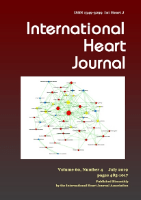
International Heart Journal
Elevating Understanding of Heart Disease WorldwideInternational Heart Journal, published by INT HEART JOURNAL ASSOC, serves as a pivotal platform for research and discourse in the fields of cardiology and cardiovascular medicine. With its ISSN 1349-2365 and E-ISSN 1349-3299, this esteemed journal is based in Japan and is located at the University of Tokyo, Graduate School of Medicine, Department of Cardiovascular Medicine. Since its inception in 2005, International Heart Journal has blossomed into a respected publication with an impact factor that signifies its growing relevance, ranking in the Q3 category of both cardiology and miscellaneous medicine as of 2023. This journal not only disseminates vital research findings but also fosters collaboration among researchers and healthcare professionals. Notable for its Open Access options, it ensures the availability of its content to a broader audience, thereby enhancing knowledge transfer and innovation in cardiovascular care. With an ongoing commitment to improve clinical practice and patient outcomes, the journal continues to be an essential resource for those dedicated to advancing the understanding of heart health and disease.
HEART AND VESSELS
Championing Excellence in Heart and Vascular ResearchHEART AND VESSELS is a prominent peer-reviewed journal published by SPRINGER, dedicated to advancing the fields of cardiology and cardiovascular medicine. With its ISSN 0910-8327 and E-ISSN 1615-2573, this esteemed journal encompasses a broad range of topics pertinent to heart health, vascular function, and associated therapies, making it an essential resource for researchers, clinicians, and healthcare professionals alike. Based in Japan and operating since 1985, HEART AND VESSELS has consistently maintained a Q2 ranking in the 2023 category quartiles, highlighting its relevance and impact in the cardio domain. Although it does not offer open access, the journal ensures high-quality publications that contribute significantly to the academic and clinical understanding of cardiovascular health. With over three decades of continuous scholarly contribution, HEART AND VESSELS serves as a vital platform for disseminating cutting-edge research and fostering innovative practices in the management of cardiovascular diseases.
ACTA CARDIOLOGICA
Uniting professionals through groundbreaking cardiac studies.ACTA CARDIOLOGICA is a distinguished journal published by TAYLOR & FRANCIS LTD, focusing on the dynamic fields of Cardiology and Cardiovascular Medicine. Established in 1946, the journal has maintained a significant presence in the academic community, providing a platform for cutting-edge research and clinical studies that aim to address challenges in cardiovascular health. With its Q3 rating in both Cardiology and General Medicine categories, it showcases a robust compilation of articles that reflect the evolving landscape of cardiac care. Although ACTA CARDIOLOGICA is not an Open Access journal, it continues to serve a vital role for researchers, professionals, and students dedicated to advancing knowledge in cardiovascular health. This journal, with an ISSN of 0001-5385 and E-ISSN of 1784-973X, is a critical resource for those looking to stay updated on the latest developments and practices in the specialization, contributing significantly to the field until 2024 and beyond.

Cardiogenetics
Connecting genetic research to clinical practice in cardiology.Cardiogenetics, published by MDPI, is a leading open-access journal dedicated to advancing the field of genetics as it pertains to cardiovascular health and diseases. Since its launch in 2011, this journal has been at the forefront of disseminating high-quality research that explores the genetic underpinnings of cardiovascular conditions, offering a platform for innovative studies, reviews, and case reports. With an ISSN of 2035-8253 and an E-ISSN of 2035-8148, Cardiogenetics aims to bridge the gap between genetic research and clinical application, helping researchers, healthcare professionals, and students stay abreast of the latest advancements and findings. The journal’s commitment to open access ensures that its valuable content is available to a global audience, fostering greater collaboration and knowledge sharing in the cardiovascular genetics community. By contributing to this dynamic field, Cardiogenetics plays a crucial role in improving patient outcomes and paving the way for personalized medicine in cardiology.

JOURNAL OF INTERVENTIONAL CARDIAC ELECTROPHYSIOLOGY
Transforming Cardiac Care Through Cutting-Edge ResearchJOURNAL OF INTERVENTIONAL CARDIAC ELECTROPHYSIOLOGY, published by Springer, serves as a pivotal platform for advancements in the field of cardiac electrophysiology. With an ISSN of 1383-875X and an E-ISSN of 1572-8595, this esteemed journal has carved out its niche since its inception in 1997, continuing to disseminate critical research up to 2024. Ranked in the Q2 category for Cardiology and Cardiovascular Medicine, as well as in Physiology (medical), the journal is positioned among the top 38% and 53% of its respective fields according to Scopus rankings. This presents a unique opportunity for researchers, healthcare professionals, and students to engage with high-impact studies that drive innovation and knowledge in cardiac health. Although not open access, the journal is accessible through various academic databases, making it a valuable resource for those committed to understanding and enhancing interventional practices in cardiology.

Heart International
Exploring innovative insights in cardiology and cardiovascular medicine.Heart International is a prominent open-access journal dedicated to the fields of cardiology and cardiovascular medicine, published by TOUCH MEDICAL MEDIA LTD since 2006. Based in Italy, this journal serves as a vital platform for researchers, clinicians, and students, aiming to disseminate cutting-edge scientific findings and clinical insights that advance the understanding of heart health. With an ISSN of 2036-2579 and an emphasis on accessible content, Heart International ensures that valuable research is available to a wide audience, thereby contributing to the global discourse on cardiovascular issues. Although it currently holds a Q4 quartile ranking in its category and is positioned in the lower percentile for Scopus rankings, the journal is committed to improving its impact through rigorous peer review and high-quality publications. The journal covers a wide array of topics within the cardiology domain, making it an essential resource for those looking to stay abreast of the latest developments in heart research.

JACC-Clinical Electrophysiology
Elevating Knowledge in Cardiology and PhysiologyJACC-Clinical Electrophysiology, published by Elsevier, stands as a leading journal in the fields of Cardiology and Physiology, with an esteemed Q1 ranking in both categories as of 2023. With an ISSN of 2405-500X and E-ISSN 2405-5018, this journal serves as an essential platform for disseminating cutting-edge research, clinical studies, and innovative practices related to electrophysiological aspects of cardiovascular health. Established in 2015, JACC-Clinical Electrophysiology has attracted high-quality submissions, reflected in its strong presence on Scopus, ranking 41st out of 387 in Cardiology and 15th out of 113 in Physiology (medical), placing it in the 89th and 87th percentiles respectively. Though it operates on a subscription model, its commitment to high standards of peer-reviewed scholarship makes it an indispensable resource for researchers, clinicians, and students dedicated to advancing knowledge and practice in electrophysiology and its impact on cardiac care. Join the community of leaders in the field by engaging with the latest findings and discussions published in this prestigious journal.

Heart Rhythm O2
Innovating cardiovascular medicine for a healthier tomorrow.Heart Rhythm O2, published by Elsevier and indexed under ISSN 2666-5018, is a premier Open Access journal that has established itself as a vital platform for the dissemination of innovative research in Cardiology and Cardiovascular Medicine. Since its inception in 2020, this journal has rapidly gained recognition, achieving a distinguished Q1 ranking in its field as of 2023, underscoring its commitment to excellence and quality. Operating from its base in the Netherlands, Heart Rhythm O2 aims to bridge the gap between clinical practice and emerging scientific findings, fostering collaboration among researchers, healthcare professionals, and students globally. With a focus on high-impact original research, review articles, and clinical studies, the journal is dedicated to advancing our understanding of cardiac rhythm management and cardiovascular health. With open access options, it ensures that vital knowledge is freely available, facilitating the ongoing education and engagement of the medical community worldwide.