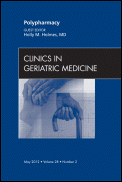
CLINICS IN GERIATRIC MEDICINE
Scope & Guideline
Leading the Way in Geriatric Innovations
Introduction
Aims and Scopes
- Wound Care and Management:
A significant focus on chronic wounds, their management, and the specific challenges faced by older adults, including various types of ulcers and innovative treatment modalities. - Geriatric Emergency Medicine:
Exploration of emergency care practices tailored for older adults, addressing unique physiological responses, common presentations, and transition of care from emergency departments to community settings. - Palliative and End-of-Life Care:
Thorough investigation of palliative care practices for older adults, including symptom management, advanced care planning, and considerations for diverse populations, particularly LGBTQ+ older adults. - Mental Health and Psychosocial Issues:
Addressing the mental health needs of older adults, including the impact of social factors, substance use, and the importance of tailored interventions. - Oral Health in Geriatrics:
Emphasis on the intersection of oral health and overall health in older adults, including the management of oral diseases, implications of polypharmacy, and the importance of dental care. - Cognitive Impairment and Dementia:
Extensive coverage of cognitive health, including diagnostic approaches, management strategies, and the relationship between cognitive impairment and other health conditions. - Nutrition and Aging:
Investigation into the role of nutrition in the health of older adults, addressing issues such as malnutrition, dietary needs, and the impact of nutrition on chronic conditions.
Trending and Emerging
- LGBTQ+ Health Issues:
A notable increase in articles addressing the specific health needs and challenges faced by LGBTQ+ older adults, indicating a growing recognition of diversity and inclusion in geriatric care. - Chronic Wound Management:
A surge in publications related to chronic wounds, highlighting innovative treatment strategies and the need for specialized care in older adults, likely in response to the increasing prevalence of such conditions. - Interdisciplinary Care Models:
Emerging discussions on the importance of interdisciplinary approaches in managing complex health issues among older adults, emphasizing collaboration among healthcare professionals across various specialties. - Mental Health and Well-being:
An increasing focus on the mental health of older adults, particularly in relation to the psychosocial impacts of aging, suggests a trend towards holistic care that encompasses psychological well-being. - Telehealth and Remote Care:
Growing interest in telehealth solutions for older adults, particularly in light of the COVID-19 pandemic, indicates a shift towards more accessible healthcare models.
Declining or Waning
- General Geriatric Health Issues:
Broad topics related to general geriatric health, such as basic preventive care, are less frequently addressed, possibly due to a shift towards more specific issues like wound care and palliative approaches. - Pharmacological Management:
Although polypharmacy remains a concern, less emphasis appears to be placed on general pharmacological management strategies, as the focus shifts towards integrative and holistic approaches. - Traditional Hospital-Based Care:
As the field moves towards more community-based and home care models, traditional hospital-centric topics seem to be receiving less attention in the journal's recent publications. - Basic Research on Aging Mechanisms:
Less attention is given to fundamental biological research on aging mechanisms, as the journal increasingly prioritizes clinical applications and patient-centered care.
Similar Journals
Psychogeriatrics
Pioneering research in geriatric mental health.Psychogeriatrics is a leading peer-reviewed journal published by WILEY, dedicated to advancing the understanding of mental health and geriatric psychiatry. With an ISSN of 1346-3500 and an E-ISSN of 1479-8301, this journal has been integral to the field since its inception in 2005 and continues to publish cutting-edge research until 2024. Recognized for its impact, Psychogeriatrics holds a commendable Q2 quartile ranking in Geriatrics and Gerontology, Gerontology, and Psychiatry and Mental Health as of 2023. The journal's Scopus rankings reflect its significant contribution to Nursing Gerontology, Medicine Psychiatry and Mental Health, and Medicine Geriatrics and Gerontology. Although it operates with no open access options, Psychogeriatrics remains a vital resource for researchers, professionals, and students who are exploring the complexities of mental health in older populations. The journal not only disseminates innovative research but also tackles pressing issues related to the psychological well-being of the elderly, making it essential reading for anyone focused on improving geriatric mental health care.
AUSTRALASIAN JOURNAL ON AGEING
Transforming ageing research into real-world impact.Australasian Journal on Ageing, published by Wiley, is a leading academic journal dedicated to advancing the understanding of ageing processes and promoting health and well-being in older populations. With an ISSN of 1440-6381 and E-ISSN 1741-6612, this journal serves as a vital resource for researchers and practitioners in the fields of Community and Home Care, Geriatrics and Gerontology, and broader Medical disciplines. Since its inception in 1998, the journal has showcased high-quality research and innovative approaches to the challenges of ageing, as evidenced by its Q2 and Q3 rankings across relevant categories in 2023. With a focus on practical implications and interdisciplinary collaboration, the Australasian Journal on Ageing is instrumental in shaping policies and practices that enhance the quality of life for older adults. Notably, it is ranked highly in the Nursing community and maintains a strong position in geriatric research, making it an essential outlet for scholarly work that influences real-world outcomes.

Journal of Frailty & Aging
Bridging research and practice in aging populations.Journal of Frailty & Aging, published by SPRINGER BASEL AG, is a leading platform dedicated to advancing research in the fields of aging, geriatrics, and gerontology. With an ISSN of 2260-1341 and an E-ISSN of 2273-4309, this journal has established itself as a pivotal resource for scholars and practitioners aiming to explore the complexities of frailty and its impact on aging populations. As of 2023, it proudly holds a Q3 classification in Aging and Q2 classifications in both Geriatrics and Gerontology, as well as Physiology (medical), alongside a notable Q1 ranking in Medicine (miscellaneous). The journal's Scopus ranks further reflect its quality and relevance, with rankings as high as #22 in Aging within the Biochemistry, Genetics and Molecular Biology category. The Journal of Frailty & Aging invites contributions that illuminate contemporary challenges and innovations in the field, offering Open Access to enhance the dissemination of knowledge. By publishing rigorous research and impactful reviews, the journal strives to foster a deeper understanding of health and well-being in older adults, making it an essential resource for researchers, healthcare professionals, and students engaged in this vital area of study.
International Journal of Gerontology
Elevating the discourse on aging and its implications.International Journal of Gerontology is a distinguished peer-reviewed journal dedicated to advancing the field of gerontology and addressing the multifaceted challenges associated with aging. Published by the Taiwan Society of Geriatric Emergency & Critical Care Medicine, this innovative journal has been an open-access platform since 2018, ensuring that vital research is accessible to a global audience. With an ISSN of 1873-9598, it serves as a crucial resource for researchers and practitioners focused on the biological, psychological, and social aspects of aging. The journal is indexed in Scopus with a rank of #103/116 in the Medicine category (Geriatrics and Gerontology) as of 2023, placing it in the Q4 quartile—a testament to its evolving impact in the field. Spanning works published from 2007 to 2024, the International Journal of Gerontology facilitates the dissemination of critical research findings and clinical practices that inform and enhance geriatric care and research methodologies.

Aging Medicine
Innovating Care Solutions for Tomorrow’s SeniorsAging Medicine, published by Wiley, is a pivotal open-access journal that has been at the forefront of research dedicated to the aging population since its inception in 2018. With a focus on both geriatric care and gerontology, the journal serves as a crucial resource for researchers, healthcare professionals, and students interested in understanding the complexities of aging and the related medical challenges. Although it holds a Q3 quartile ranking in the fields of Aging and Geriatrics and Gerontology according to the 2023 metrics, the journal continues to effectively disseminate valuable research and insights, helping to bridge gaps in knowledge and practice. With an E-ISSN of 2475-0360, it offers an open-access model that ensures broader accessibility to its published content, thus promoting collaboration and innovation across disciplines. As the journal converges towards 2024, it remains committed to evolving with the dynamics of aging research, making it a significant platform for the exchange of ideas and advancements in this essential field.
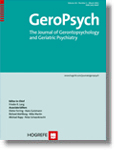
GeroPsych-The Journal of Gerontopsychology and Geriatric Psychiatry
Fostering Insights into the Psychology of AgingGeroPsych - The Journal of Gerontopsychology and Geriatric Psychiatry, published by HOGREFE AG, stands as an essential academic resource in the evolving fields of gerontology and geriatric psychiatry. With a commitment to advancing the understanding of psychological well-being in older adults, the journal provides a platform for high-quality research, discussion, and innovation that caters to researchers, practitioners, and students alike. Although currently not an open-access publication, GeroPsych ensures accessibility through various academic libraries and institutions, fostering a collaborative approach to the complexities of aging and mental health. Recognized within the Q3 category for Geriatrics and Gerontology, and with its impact reflected in Scopus rankings, this journal plays a pivotal role in informing best practices and shaping policies within the interdisciplinary landscape of geriatric care. Spanning research from 2010 to 2024, GeroPsych is positioned as a leading journal for those committed to improving the mental health and psychological resilience of the aging population.
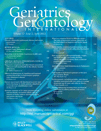
Geriatrics & Gerontology International
Leading the Charge in Aging ResearchGeriatrics & Gerontology International, published by WILEY, is a prestigious academic journal dedicated to advancing the field of geriatric and gerontological research. With a strong focus on the interdisciplinary aspects of aging, this journal has established itself as a leading source of high-quality research, reflected in its impressive impact factor and 2023 Scopus rankings, including a Q1 status in Health (Social Science) and Q2 in both Geriatrics and Gerontology. Since its inception in 2004 and continuous publication from 2008 to 2024, it has fostered a vibrant exchange of ideas among researchers, clinicians, and students alike. The journal serves as a critical resource for innovative studies, reviews, and commentaries that help shape policies and practices affecting the elderly population. It is essential reading for those dedicated to improving the quality of life for older adults and contributes significantly to the understanding of the complexities surrounding aging.
Canadian Geriatrics Journal
Leading the way in geriatric scholarship and practice.Canadian Geriatrics Journal, published by MULTIMED INC, is a prominent platform dedicated to advancing the field of geriatrics and gerontology. With its esteemed status as a Q2 journal in both Geriatrics and Gerontology categories for 2023, it ranks favorably within the academic community, holding a 73rd percentile in Nursing Gerontology and a 59th percentile in Medicine Geriatrics and Gerontology according to Scopus metrics. Since its inception in 2011, the journal has aimed to foster innovation and disseminate pivotal research that addresses the complexities of aging populations. Researchers, healthcare professionals, and students interested in the intricacies of geriatric care will find a wealth of open-access resources that contribute significantly to enhancing practice and care methodologies in Canada and beyond. With its address located at 66 Martin St, Toronto, ON L9T 2R2, Canada, the journal stands as a vital resource for stakeholders in the geriatric field.
Geriatrics
Connecting disciplines to improve elderly health and well-being.Geriatrics is a leading academic journal committed to advancing the understanding and research within the expansive field of gerontology and geriatric medicine. Published by MDPI since 2016 and featuring an Open Access model, this journal aims to disseminate high-quality research that addresses the challenges and opportunities associated with aging populations. Based in Switzerland, Geriatrics has rapidly gained recognition, achieving notable rankings in various categories such as Q2 in Gerontology and Q3 in both Aging and Geriatrics and Gerontology, making its contributions significant within the scholarly community. The journal welcomes original articles, reviews, and case studies, focusing not only on clinical aspects but also on social science perspectives related to health. Researchers and professionals in the field will find this journal a vital resource for the latest insights and trends that are crucial to improving elderly care and enhancing quality of life for aging individuals globally. With its commitment to open access, Geriatrics ensures that crucial research findings are readily available to all stakeholders, thus promoting informed dialogue and collaboration across disciplines.

Geriatrie et Psychologie Neuropsychiatrie du Vieillissement
Empowering Researchers and Clinicians in Aging StudiesGeriatrie et Psychologie Neuropsychiatrie du Vieillissement is a pivotal academic journal dedicated to the multidisciplinary study of aging, encompassing the fields of geriatrics, neuropsychiatry, and psychological health in the elderly population. Published by JOHN LIBBEY EUROTEXT LTD, this journal fosters knowledge dissemination and innovation, contributing to the understanding of the complexities faced by aging individuals. With a broad scope that includes biological psychiatry and neuropsychology, it serves as a vital resource for researchers, healthcare professionals, and students engaged in geriatric medicine and mental health. Although currently classified in the Q4 category across various relevant medical and psychological disciplines, the journal addresses critical topics that are essential for enhancing quality of care and improving patient outcomes. Additionally, the journal is accessible via open access options, promoting wide-ranging readership and collaboration within the academic community. As the field continuously evolves, Geriatrie et Psychologie Neuropsychiatrie du Vieillissement remains commited to pushing the boundaries of research and practice in gerontology and neuropsychiatry.