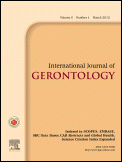
International Journal of Gerontology
Scope & Guideline
Navigating the challenges of aging with cutting-edge research.
Introduction
Aims and Scopes
- Geriatric Health and Disease Management:
Research focused on understanding health issues prevalent in older adults, including chronic diseases, mental health conditions, and their management strategies. - Frailty and Functional Assessment:
Studies exploring frailty as a critical indicator of health status in older individuals, assessing its impact on healthcare outcomes and quality of life. - Cognitive Function and Dementia:
Investigations into cognitive decline, including studies on dementia and mild cognitive impairment, emphasizing early detection and intervention strategies. - Physical Activity and Rehabilitation:
Research examining the effects of physical activity, exercise programs, and rehabilitation on the health and well-being of older adults. - Social Determinants of Health in Aging:
Exploration of the social, economic, and environmental factors that affect health outcomes in older adults, including community engagement and support systems. - Innovations in Geriatric Care:
Studies that introduce new methodologies, technologies, or practices aimed at improving geriatric care and enhancing the quality of life for older adults.
Trending and Emerging
- Impact of COVID-19 on Elderly Populations:
An increasing focus on the effects of the COVID-19 pandemic on older adults, including health outcomes, mental health, and the importance of vaccination and preventive measures. - Telemedicine and Digital Health Solutions:
A surge in research exploring telemedicine and digital health interventions for elderly patients, highlighting their potential to improve access to healthcare services. - Interdisciplinary Approaches to Geriatric Care:
Growing interest in collaborative and interdisciplinary approaches that integrate various fields such as psychology, social work, and healthcare to enhance geriatric care. - Physical Activity and Mental Well-Being:
An emerging emphasis on the connection between physical activity, mental health, and overall well-being in older adults, reflecting a holistic view of health. - Innovative Rehabilitation Techniques:
Research into novel rehabilitation methods, including technology-assisted interventions and community-based programs, that aim to enhance recovery and quality of life for older adults.
Declining or Waning
- Invasive Medical Procedures in Elderly Care:
Decreasing emphasis on invasive procedures and their outcomes in geriatric populations as a focus on non-invasive approaches and holistic care gains traction. - Traditional Pharmacological Interventions:
A waning interest in studies centered solely on pharmacological treatments, with a shift towards integrative approaches that consider lifestyle and social factors alongside medication. - Single-Disease Focus Studies:
A reduction in research focusing exclusively on single diseases in older adults, as there is a growing recognition of multimorbidity and the need for comprehensive care approaches. - Ageism and Stereotypes in Aging:
Although still relevant, the frequency of studies examining ageism and stereotypes in aging is declining as more attention shifts to actionable solutions and interventions.
Similar Journals

Aging Medicine
Bridging Knowledge Gaps in Geriatric MedicineAging Medicine, published by Wiley, is a pivotal open-access journal that has been at the forefront of research dedicated to the aging population since its inception in 2018. With a focus on both geriatric care and gerontology, the journal serves as a crucial resource for researchers, healthcare professionals, and students interested in understanding the complexities of aging and the related medical challenges. Although it holds a Q3 quartile ranking in the fields of Aging and Geriatrics and Gerontology according to the 2023 metrics, the journal continues to effectively disseminate valuable research and insights, helping to bridge gaps in knowledge and practice. With an E-ISSN of 2475-0360, it offers an open-access model that ensures broader accessibility to its published content, thus promoting collaboration and innovation across disciplines. As the journal converges towards 2024, it remains committed to evolving with the dynamics of aging research, making it a significant platform for the exchange of ideas and advancements in this essential field.
Journal of Nutrition Health & Aging
Advancing the science of aging through nutrition.Welcome to the Journal of Nutrition Health & Aging, a prestigious publication dedicated to advancing knowledge in the critical fields of nutrition, gerontology, and geriatrics. Published by Elsevier Science Inc, this journal boasts an impressive impact factor and is recognized in the top quartile (Q1) of multiple categories including Geriatrics and Gerontology, Medicine (miscellaneous), and Nutrition and Dietetics. Since its inception in 1997, it has served as a vital platform for researchers, practitioners, and students alike to disseminate innovative research and practical applications relevant to aging populations. With a Scopus rank placing it in the top 15% of its field, it underscores its commitment to high-quality and impactful scholarship. Although it is not an open access journal, its significant reach ensures that valuable insights will continue to inform best practices and policy decisions in health and nutrition. We invite you to explore and contribute to this vital conversation surrounding health and well-being in older adults.
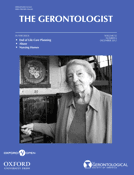
GERONTOLOGIST
Innovating Care for Older AdultsThe GERONTOLOGIST, published by Oxford University Press Inc, is a premier journal in the field of geriatrics and gerontology, with a distinguished history since its inception in 1961. This esteemed journal stands out with its impressive Q1 rankings in prominent categories, including Geriatrics and Gerontology, reflecting its vital role in disseminating innovative research and advancing knowledge within these critical disciplines. With an impact factor that ranks it among the top journals in both Nursing Gerontology and Medicine, the GERONTOLOGIST serves as a key resource for researchers, professionals, and students dedicated to enhancing the health and well-being of older adults. Although it operates under a traditional access model, the journal remains committed to publishing cutting-edge studies that address the complexities of aging and inform evidence-based practices. By fostering a rich dialogue among scholars and practitioners, the GERONTOLOGIST is instrumental in shaping the future of gerontological research and policy.
Clinical Interventions in Aging
Unlocking Potential in Aging ResearchClinical Interventions in Aging is a premier Open Access journal published by DOVE MEDICAL PRESS LTD that has been at the forefront of geriatric research since its inception in 2006. With its core focus on innovative interventions and evidence-based practices to enhance the quality of life for the elderly, this journal serves as a vital resource for researchers, healthcare professionals, and students in the fields of geriatrics and gerontology. The journal boasts a commendable impact factor, achieving a Q2 ranking in Geriatrics and Gerontology and a Q1 ranking in Medicine (miscellaneous) as of 2023, highlighting its significant academic contribution. Notably, its Scopus ranking places it in the top 31% of its category, underscoring the relevance and quality of the research it publishes. With a commitment to advancing knowledge, this journal not only promotes accessibility through its Open Access model but also ensures that cutting-edge studies are readily available to those dedicated to improving geriatric care. Located in Auckland, New Zealand, the journal continues to expand its influence globally, making it an essential platform for discussions surrounding aging and health.
AUSTRALASIAN JOURNAL ON AGEING
Shaping the future of geriatric care.Australasian Journal on Ageing, published by Wiley, is a leading academic journal dedicated to advancing the understanding of ageing processes and promoting health and well-being in older populations. With an ISSN of 1440-6381 and E-ISSN 1741-6612, this journal serves as a vital resource for researchers and practitioners in the fields of Community and Home Care, Geriatrics and Gerontology, and broader Medical disciplines. Since its inception in 1998, the journal has showcased high-quality research and innovative approaches to the challenges of ageing, as evidenced by its Q2 and Q3 rankings across relevant categories in 2023. With a focus on practical implications and interdisciplinary collaboration, the Australasian Journal on Ageing is instrumental in shaping policies and practices that enhance the quality of life for older adults. Notably, it is ranked highly in the Nursing community and maintains a strong position in geriatric research, making it an essential outlet for scholarly work that influences real-world outcomes.

European Journal of Geriatrics and Gerontology
Empowering knowledge to enhance the lives of older adults.Welcome to the European Journal of Geriatrics and Gerontology, a peer-reviewed platform dedicated to advancing knowledge and research in the fields of geriatrics and gerontology. Published by GALENOS PUBL HOUSE, this journal serves as a critical resource for researchers, healthcare professionals, and students who are involved in the care, treatment, and study of elderly populations. Since its inception in 2019 and running through 2024, the journal aims to foster interdisciplinary collaboration and disseminate innovative research that addresses the unique challenges faced by older adults. With an ISSN of 2687-2625, the journal is classified in the Q4 quartile of the Geriatrics and Gerontology category, signifying its emerging influence within the academic community, despite its current Scopus ranking of #113 out of 116, reflecting a rich opportunity for growth and visibility. Although the journal is not open access, it maintains a commitment to scholarly rigor and quality. Engage with the European Journal of Geriatrics and Gerontology to contribute to and learn from the evolving discourse in aging research.
Journal of Cross-Cultural Gerontology
Bridging Cultures to Enhance Aging ResearchJournal of Cross-Cultural Gerontology, published by SPRINGER, is an influential academic journal that focuses on the complex interactions between culture and aging in a global context. Since its inception in 1986, this journal has committed to exploring the multifaceted aspects of gerontology through an interdisciplinary lens, making it a valuable resource for researchers, healthcare professionals, and students alike. The journal is ranked in the second quartile of both Geriatrics and Gerontology and Health (social science), reflecting its substantial contribution to the field and its commitment to high-quality research. With an impact factor that showcases its relevance within the scholarly community, the journal provides a platform for empirical studies, theoretical discussions, and critical reviews that address the needs and challenges of an aging population across diverse cultural settings. Although it does not currently offer open access, its robust indexing and reputation within the Scopus database—ranking #134 out of 371 in Social Sciences (Health) and #65 out of 116 in Medicine (Geriatrics)—underscore its impact and credibility in the field. By bridging cultural perspectives and gerontological research, the Journal of Cross-Cultural Gerontology stands as a pivotal resource for advancing knowledge and practices in aging-related studies.
Quality in Ageing and Older Adults
Illuminating Pathways to Enhanced Aging ExperiencesQuality in Ageing and Older Adults is an esteemed journal published by Emerald Group Publishing Ltd, dedicated to elucidating the complexities and challenges of aging and the quality of life for older adults. With a focus on critical areas within Care Planning, Community and Home Care, and Gerontology, this journal serves as a vital resource for researchers, healthcare professionals, and students alike. Recognized for its scholarly contributions, it holds a Q2 ranking for Care Planning and Community and Home Care and maintains an impactful presence in Gerontology, further demonstrated by its Scopus rankings. Although the journal does not offer open access, its commitment to advancing knowledge in the field is underscored by its ongoing publication since 2000 and its broad scholarly reach until 2024. By fostering innovative research and practical insights, Quality in Ageing and Older Adults continues to play a crucial role in informing policy, enhancing care practices, and improving outcomes for older individuals.
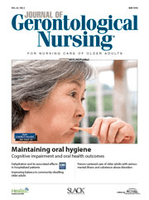
Journal of Gerontological Nursing
Empowering Gerontological ExcellenceThe Journal of Gerontological Nursing, published by SLACK INC, is a leading peer-reviewed journal dedicated to advancing the field of gerontological nursing through innovative research, clinical practice, and educational advancements. Since its inception in 1975, this journal has become a crucial resource for researchers, healthcare professionals, and students interested in the care and management of older adults. With an impact factor that reflects its significance within the disciplines of gerontology and nursing (Category Quartiles: Q3 in Gerontology and Q3 in Nursing), it serves as a platform for disseminating vital findings, best practices, and evidence-based approaches aimed at improving the quality of life for the aging population. While the journal maintains a print-only format, its content is invaluable for those looking to stay ahead in the rapidly evolving landscape of gerontological care. As it continues to publish until 2024, the Journal of Gerontological Nursing invites contributions that foster dialogue and innovation within this essential area of healthcare.

Turkish Journal of Geriatrics-Turk Geriatri Dergisi
Connecting scholars in the field of geriatrics.The Turkish Journal of Geriatrics (Türk Geriatri Dergisi), with ISSN 1304-2947 and E-ISSN 1307-9948, is a distinguished scholarly publication dedicated to the field of geriatrics and gerontology, proudly published by the Turkish Geriatrics Society. Established to foster knowledge and research in the aging population, this journal plays a crucial role in disseminating significant findings and advancements in the medical care of elderly individuals. Since its inception in 1998, the journal has committed to high-quality, peer-reviewed articles that explore diverse aspects of geriatric medicine, contributing vital insights to practitioners and researchers alike. Although it currently holds a Q4 ranking in the category of Geriatrics and Gerontology, the Turkish Journal of Geriatrics is on an upward trajectory, making it an essential resource for those specializing in the care of older adults. Researchers and professionals are encouraged to explore its rich archive and benefit from the open-access publishing model, promoting broader access to impactful research. For those invested in the well-being of the elderly, the Turkish Journal of Geriatrics serves not only as a platform for scholarly communication but also as a catalyst for innovation in geriatric care.