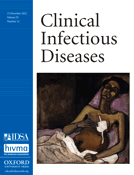
CLINICAL INFECTIOUS DISEASES
Scope & Guideline
Advancing the fight against infectious diseases.
Introduction
Aims and Scopes
- Epidemiology of Infectious Diseases:
The journal emphasizes studies on the epidemiological trends and incidence of various infectious diseases, providing insights into risk factors and population health. - Antimicrobial Resistance:
A core focus is on the mechanisms, prevalence, and clinical implications of antimicrobial resistance, reflecting the urgent need for effective strategies to combat resistant pathogens. - Infectious Disease Management:
Research on the clinical management of infectious diseases, including treatment protocols and outcomes, is a primary area of interest, especially in the context of emerging pathogens. - Vaccination and Preventative Health:
The journal covers studies related to vaccine efficacy, safety, and public health policies aimed at preventing infectious diseases, particularly in the wake of the COVID-19 pandemic. - Clinical Case Studies and Reports:
Inclusion of detailed case studies that illustrate unique challenges or outcomes in infectious disease management contributes to the journal's practical relevance for clinicians. - Emerging and Re-emerging Infections:
Research on newly identified pathogens or those that have returned to prominence, including their epidemiology and clinical impact, is a significant area of publication.
Trending and Emerging
- COVID-19 Research and Impacts:
A significant increase in studies addressing various aspects of COVID-19, including its clinical management, long-term effects, vaccination outcomes, and its interplay with other infectious diseases. - Antimicrobial Stewardship:
There is a growing emphasis on research related to antimicrobial stewardship programs aimed at reducing resistance and optimizing antibiotic use in clinical settings. - Innovative Therapeutic Approaches:
Emerging themes focus on novel therapeutic strategies, including the use of biologics and targeted therapies for managing infectious diseases. - Global Health and Infectious Disease Policy:
Increased attention to the implications of infectious diseases on global health policies, including vaccination strategies and outbreak response plans, is becoming a central theme. - Microbiome Research:
Research exploring the relationship between the microbiome and infectious diseases, particularly its role in disease severity and outcomes, is gaining traction. - Telemedicine and Digital Health in Infectious Diseases:
The rise of telemedicine and digital health solutions for managing infectious diseases, especially during the pandemic, highlights an emerging trend in clinical practice.
Declining or Waning
- Non-communicable Diseases Related to Infectious Agents:
Research linking non-communicable diseases (e.g., cancers) with infectious agents appears to be decreasing, as the focus shifts more towards immediate infectious disease threats and management. - Traditional Infectious Disease Diagnostics:
There is a noticeable decline in publications centered on conventional diagnostic methods, as newer technologies and methodologies emerge and gain traction in the field. - Single Pathogen Focus Studies:
Studies focusing exclusively on individual pathogens without considering broader epidemiological or public health contexts are becoming less frequent, as integrated approaches gain favor. - Longitudinal Studies on Established Infectious Diseases:
Long-term studies on well-established infectious diseases (like tuberculosis or malaria) are less prevalent, possibly due to the immediate focus on emerging infectious diseases and pandemics.
Similar Journals

Infectious Disease Reports
Advancing global health through groundbreaking research.Infectious Disease Reports is a premier open-access journal published by MDPI, dedicated to advancing the field of infectious diseases. Since its inception in 2009, this journal has established itself as a significant platform for disseminating cutting-edge research, reviews, and case studies, critical for global health. With a commendable Q2 ranking in the category of Infectious Diseases and a Scopus rank of #140 out of 344, it is recognized for its impactful contributions to medical research, holding a 59th percentile in its field. The journal aims to provide comprehensive insights into various dimensions of infectious diseases, ranging from epidemiology to novel treatment modalities. As an open-access publication, Infectious Disease Reports ensures that its articles are freely available to a wide audience, fostering collaborative efforts among researchers, healthcare professionals, and students worldwide. With its ongoing commitment to excellence, the journal plays an essential role in shaping the future of infectious disease research.

Journal of Infection and Public Health
Empowering Knowledge for a Healthier TomorrowJournal of Infection and Public Health is a premier open-access journal published by ELSEVIER SCIENCE LONDON, dedicated to advancing knowledge in the fields of infectious diseases, public health, and environmental health. Since its inception in 2008, this esteemed journal has become a cornerstone of research dissemination, especially after transitioning to an open-access model in 2017, allowing wider accessibility to groundbreaking studies. With an impressive impact factor and ranking in the Q1 category for Infectious Diseases and Public Health as of 2023, the journal stands at the forefront of scientific inquiry, boasting a Scopus rank of #22 out of 665 in Public Health, underscoring its influence and reach in the academic community. Researchers, professionals, and students alike will find the journal's rich repository of peer-reviewed articles invaluable for ongoing education and practice in a rapidly evolving field. For contributing to the global understanding of health dynamics, Journal of Infection and Public Health is a vital resource, inviting scholars to explore, engage, and contribute to the crucial discussions shaping our world.

Reviews and Research in Medical Microbiology
Advancing the Frontiers of Medical MicrobiologyReviews and Research in Medical Microbiology is a premier academic journal published by LIPPINCOTT WILLIAMS & WILKINS, focusing on groundbreaking research and comprehensive reviews that advance the understanding of medical microbiology. With an ISSN of 2770-3150 and an E-ISSN of 2770-3169, this journal serves as an essential resource for researchers, healthcare professionals, and students dedicated to the study of pathogens, infectious diseases, and microbial mechanisms affecting health. While the journal currently does not offer open access, its rigorous peer-review process ensures that only high-quality, impactful research is disseminated to the scientific community. The journal aims to bridge gaps in knowledge by presenting cutting-edge studies that explore novel therapeutic strategies, diagnostic methods, and the evolving landscape of microbial resistance. Nestled in the heart of Philadelphia, this journal proudly contributes to the advancement of medical microbiology and is an indispensable platform for the publication of critical findings that shape clinical practices and research trajectories in the field.
Annals of Clinical Microbiology and Antimicrobials
Uniting global voices in the battle against infections.Annals of Clinical Microbiology and Antimicrobials, published by BMC, is a leading open-access journal that has been fostering scientific discourse in the fields of microbiology and infectious diseases since its inception in 2002. With an established reputation for excellence, this journal is positioned in the prestigious Q1 category across multiple disciplines, including Infectious Diseases, Medicine (miscellaneous), and Medical Microbiology as of 2023. This journal serves as a vital platform for researchers, healthcare professionals, and students, promoting the latest advancements in clinical microbiology and antimicrobial research. Access to its invaluable content is open to all, reflecting the commitment to disseminate knowledge universally. The Annals of Clinical Microbiology and Antimicrobials is based in the United Kingdom and continues to pave the way for innovation and discussions that shape the future of clinical practices in microbiology.

CLINICAL MICROBIOLOGY AND INFECTION
Championing Discoveries in Infectious Disease ManagementCLINICAL MICROBIOLOGY AND INFECTION is a leading journal published by Elsevier Science Ltd, dedicated to advancing the field of infectious diseases and clinical microbiology. With its ISSN 1198-743X and E-ISSN 1469-0691, this esteemed journal has maintained its influential presence since 1995, showcasing high-impact research that addresses critical issues in the diagnosis, treatment, and prevention of infections. Ranked in the Q1 quartile for Infectious Diseases, Medicine (miscellaneous), and Microbiology (medical) categories, and boasting impressive Scopus rankings of #12 and #7 respectively, it sits at the forefront of scientific inquiry in these disciplines. Although it is not an Open Access journal, it provides comprehensive access options for institutions and individuals, ensuring the dissemination of vital research findings. As the field of clinical microbiology continues to evolve, CLINICAL MICROBIOLOGY AND INFECTION remains an essential resource for researchers, clinicians, and students aiming to stay informed on the latest developments and breakthroughs in understanding infectious diseases.
Indian Journal of Medical Microbiology
Empowering Researchers Through Accessible KnowledgeIndian Journal of Medical Microbiology, published by Elsevier, is a pivotal peer-reviewed journal dedicated to the field of medical microbiology, providing a vital platform for research and scholarship since its inception in 1986. With an Open Access model established in 2001, it ensures the dissemination of scientific knowledge to a global audience, enhancing accessibility for researchers, professionals, and students alike. The journal's scope spans critical areas including immunology, infectious diseases, and microbiology, with an impressive trajectory marked by converged years of publication allowing for a comprehensive exploration of evolving scientific trends. As of 2023, the journal holds a Q3 ranking in Infectious Diseases and Microbiology (medical) and a Q4 ranking in Immunology and Microbiology categories, reflecting its significant yet growing impact in the field. Researchers seeking to contribute to or stay updated on the latest advancements in medical microbiology will find the Indian Journal of Medical Microbiology a valuable resource, as it consistently bridges the gap between emerging science and clinical application.

Infectious Diseases and Clinical Microbiology
Exploring the frontiers of microbiological science and health.Infectious Diseases and Clinical Microbiology is a pivotal journal dedicated to advancing our understanding of infectious diseases through rigorous scientific research and clinical practices. Published by DOC DESIGN INFORMATICS CO LTD, this journal serves as a vital platform for researchers, healthcare professionals, and students keen on enhancing their knowledge of microbiological sciences and the clinical implications of infectious agents. With an ISSN of 2667-646X, it aims to disseminate significant findings in the field, enriching the scholarly dialogue surrounding infectious diseases. While currently operating under a traditional access model, the journal encourages global collaboration and knowledge sharing, striving to make a meaningful impact in tackling the challenges posed by infectious diseases. Its content aims to bridge the gap between laboratory research and clinical application, making it an essential resource in the contemporary landscape of global health.
JOURNAL OF INFECTIOUS DISEASES
Exploring the Dynamics of Infectious DiseasesThe JOURNAL OF INFECTIOUS DISEASES, published by OXFORD UNIV PRESS INC, is a leading peer-reviewed journal dedicated to advancing the understanding of infectious diseases through high-quality research. With an impressive impact factor reflecting its prominence in the field—ranking in the Q1 category for both Immunology and Allergy and Infectious Diseases—this journal serves as a pivotal platform for researchers, healthcare professionals, and students alike. Its extensive history, spanning over a century since its inception in 1904, highlights its established authority and commitment to the field. Based in the United Kingdom, the journal covers essential topics from clinical management to epidemiological trends, providing vital insights that inform practice and policy. Although the journal is not open access, it remains accessible to a wide audience, ensuring that critical research continues to drive innovation and best practices in infectious disease management.
JOURNAL OF INFECTION
Cultivating Expertise in Medical MicrobiologyJOURNAL OF INFECTION is a premier academic publication in the fields of infectious diseases and medical microbiology, published by W B SAUNDERS CO LTD. With a profound impact factor and established since 1979, this journal serves as a crucial resource for researchers, clinicians, and policy-makers seeking to advance knowledge and understanding of infectious processes and their management. The JOURNAL OF INFECTION holds an impressive position in the academic hierarchy as reflected by its Q1 quartile rankings in both Infectious Diseases and Microbiology (medical) for 2023, further underscored by its Scopus rankings: #2 in Medical Microbiology and #5 in Medical Infectious Diseases, placing it in the 98th percentile overall. While the journal does not offer Open Access options, it provides a comprehensive outlet for innovative research, reviews, and clinical insights that drive the field forward. Published from the United Kingdom, it attracts a global readership keen on staying at the forefront of infectious disease research, making it an essential addition to any academic and clinical library.
Tropical Medicine and Infectious Disease
Exploring the frontiers of infectious disease research.Tropical Medicine and Infectious Disease, published by MDPI, is a leading peer-reviewed journal dedicated to advancing the field of tropical medicine and infectious diseases. With an open access model established since 2016, this journal fosters a collaborative environment for researchers, professionals, and students from around the world to disseminate cutting-edge findings and innovative approaches to public health challenges, particularly in tropical regions. The journal has earned recognition, achieving a Q2 quartile ranking in notable fields including Immunology and Microbiology, Infectious Diseases, and Public Health, Environmental, and Occupational Health in 2023, indicative of its influence and relevance in the scientific community. With a focus on high-quality research, Tropical Medicine and Infectious Disease aims to bridge the gap between basic science and clinical application, providing invaluable insights critical for combating infectious diseases and improving health outcomes in vulnerable populations. The journal’s accessibility and substantial indexing in major databases further solidify its importance as a key platform for impactful research in this essential field.