Contemporary Islam-Dynamics of Muslim Life
Scope & Guideline
Navigating the Nuances of Modern Islamic Discourse
Introduction
Aims and Scopes
- Intersections of Islam and Society:
The journal investigates how Islam interacts with various societal dimensions, including politics, culture, and education, analyzing the implications of these interactions for Muslim communities. - Ethical Practices within Islamic Frameworks:
A focus on ethical considerations in diverse contexts, such as education, healthcare, and social justice, reflecting on how Islamic principles guide moral decision-making. - Gender and Islam:
The journal explores the roles and representations of women in Islamic societies, addressing issues of gender equality, rights, and the intersection of gender with faith. - Cultural Representations of Islam:
Research is dedicated to understanding how Islam is represented in various cultural forms, including media, film, and literature, and the impact of these representations on public perception. - Migration and Identity:
The journal examines the experiences of Muslim migrants and diasporas, focusing on identity formation, adaptation, and the socio-political challenges they face in host countries. - Contemporary Islamic Thought:
An exploration of modern interpretations of Islamic teachings and their relevance in addressing current global issues, including extremism, secularism, and pluralism.
Trending and Emerging
- Impact of COVID-19 on Muslim Communities:
A significant trend is the exploration of how the COVID-19 pandemic has affected Muslim practices, community dynamics, and religious observance, showcasing resilience and adaptation. - Islamophobia and Social Justice:
There is an increased focus on Islamophobia, particularly in Western contexts, with research addressing the implications for identity, community cohesion, and activism among Muslims. - Youth and Modernity in Islam:
Emerging themes around the experiences of Muslim youth, particularly in relation to identity, activism, and cultural engagement, reflect a generational shift in how Islam is practiced and perceived. - Digital Islam and Religious Authority:
The rise of digital platforms has led to studies on how religious authority is negotiated online, indicating a shift towards examining the intersection of technology and faith. - Intersectionality in Gender Issues:
There is a growing emphasis on intersectionality in gender studies within Islam, analyzing how race, class, and culture intersect with gender dynamics in Muslim societies.
Declining or Waning
- Traditional Islamic Jurisprudence:
There appears to be a waning interest in traditional jurisprudential debates as contemporary issues take precedence, with fewer papers focusing on classical interpretations of Sharia. - Rural Islamic Practices:
Research on rural Islamic communities and their specific practices has diminished, possibly overshadowed by urban narratives and issues faced by Muslims in metropolitan settings. - Historic Islamic Movements:
A decline in studies specifically focused on historic Islamic movements suggests a growing preference for contemporary dynamics over historical analysis.
Similar Journals
Indonesian Journal of Islam and Muslim Societies
Empowering voices in the fields of Islamic studies and social sciences.Indonesian Journal of Islam and Muslim Societies (IJIMS) is a leading platform for scholarly discourse in the fields of Islamic studies and social sciences, published by INST AGAMA ISLAM NEGERI-IAIN SALATIGA. Since its establishment in 2011, IJIMS has been dedicated to advancing the understanding of Islamic culture, society, and politics, with an impressive impact reflected in its Q1 ranking in Religious Studies and Q2 in Sociology and Political Science as of 2023. The journal not only ranks among the top in the Scopus database, occupying the 19th position in the Arts and Humanities—Religious Studies category, but it also offers open access to its content, making it readily available to a global audience. This commitment to accessibility ensures that researchers, students, and professionals can engage with high-quality research that informs and shapes contemporary dialogue on Islam and Muslim societies. With a convergence of rich academic contributions through to 2024, IJIMS stands as a vital resource for those looking to explore the complexities of Islam in a modern context.

Intellectual Discourse
Fostering Multidisciplinary DialogueIntellectual Discourse is a distinguished academic journal published by the International Islamic University Malaysia's Press Research Management Center. This journal, with an ISSN of 0128-4878 and E-ISSN of 2289-5639, serves as a vital platform for scholarly work in the fields of Philosophy, Sociology, and Political Science. Since its inception in 2011, it has strived to foster a multidisciplinary dialogue, blending theoretical insights with empirical research. Ranked Q2 in Philosophy and Q3 in Sociology and Political Science as of 2023, Intellectual Discourse is committed to advancing knowledge and understanding through rigorous analysis and innovative perspectives. Researchers and scholars can access its insightful publications to stay abreast of current trends and discussions that shape their fields. With an ongoing commitment to intellectual rigor, the journal positions itself as an essential resource for academics and students aiming to explore complex social phenomena and philosophical inquiries.
Religion State & Society
Investigating the Impact of Religion on Statecraft and SocietyReligion State & Society is a prestigious academic journal published by ROUTLEDGE JOURNALS, TAYLOR & FRANCIS LTD, focusing on the intricate relationships between religion, state, and society. With an ISSN of 0963-7494 and an E-ISSN of 1465-3974, this journal serves as a vital platform for scholars and practitioners in the fields of Religious Studies, Sociology, and Political Science. As a testament to its impact, it holds a Q1 ranking in Religious Studies and a Q2 ranking in Sociology and Political Science as of 2023, reflecting its significant contribution to the academic discourse. Spanning from 1992 to 2024, the journal publishes empirical research, theoretical analyses, and critical reviews that illuminate the dynamic interplay between religion and societal structures. Located in the UK, this journal offers a unique perspective crucial for researchers, professionals, and students seeking to understand the role of religion in contemporary social and political contexts. Although it does not offer Open Access options, the journal's high Scopus rankings—the 33rd percentile in Religious Studies and the 546th in Sociology and Political Science—underscore its credibility and influence in the scholarly community.

Sirnak University Journal of Divinity Faculty
Fostering Interdisciplinary Insights in Religious StudiesWelcome to the Sirnak University Journal of Divinity Faculty, a premier open-access journal dedicated to the exploration of diverse theological, philosophical, and cultural issues within the realm of religious studies. Published by Sirnak University, this journal has been freely accessible since 2010, ensuring that scholars, professionals, and students can engage with high-quality research without barriers. With an emphasis on interdisciplinary approaches and innovative perspectives, the Sirnak University Journal of Divinity Faculty aims to foster academic discourse and contribute to the broader understanding of divinity and related disciplines. Though the journal is relatively new, it strives to establish a significant presence in the field by welcoming original research articles, reviews, and theological reflections from researchers worldwide. Join us in advancing the academic study of divinity and enriching the scholarly community.

Revue des Mondes Musulmans et de la Mediterranee
Opening Doors to Interdisciplinary Research and DialogueRevue des Mondes Musulmans et de la Mediterranee is a premier academic journal published by UNIV PROVENCE, dedicated to the exploration of cultural, historical, and social dynamics within the Muslim worlds and the Mediterranean region. With an ISSN of 0997-1327 and an E-ISSN of 2105-2271, this Open Access journal has been facilitating scholarly communication since 1999, allowing for wider dissemination of research findings. Ranking in the Q4 category across various fields including Cultural Studies, History, Religious Studies, and Sociology and Political Science, it serves as a crucial platform for researchers and professionals interested in interdisciplinary perspectives on Mediterranean and Muslim societies. With its address at CENTRE SAINT-CHARLES, 3, PLACE VICTOR-HUGO, MARSEILLE F-13331, FRANCE, the journal continues to contribute significantly to the academic discourse, fostering insights that intersect multiple social and cultural paradigms. Researchers, students, and scholars involved in the humanities and social sciences will find valuable resources within its pages, enhancing their understanding of this complex and vital area of study.
ISLAM-ZEITSCHRIFT FUR GESCHICHTE UND KULTUR DES ISLAMISCHEN ORIENTS
Advancing Scholarship in Islamic Cultural StudiesISLAM-ZEITSCHRIFT FUR GESCHICHTE UND KULTUR DES ISLAMISCHEN ORIENTS, with ISSN 0021-1818 and E-ISSN 1613-0928, is a prestigious academic journal published by Walter de Gruyter GmbH based in Germany. With a rich history dating back to 1910 and a dedicated focus on the cultural and historical insights of the Islamic Orient, this journal serves as a vital platform for scholars around the globe. It is recognized in the Q2 quartile in both Cultural Studies and History, reflecting its high-impact contributions to the field. The journal features rigorous peer-reviewed articles, making significant advancements in understanding Islamic culture and history. Notably, it holds commendable Scopus Ranks, placing it in the top 65th percentile for History and the 53rd percentile for Cultural Studies. Researchers, professionals, and students interested in the complexities of Islamic heritage will find this journal indispensable for its depth of analysis and breadth of scholarship. While it currently does not offer Open Access, its comprehensive resources are crucial for academic research in these historically rich fields.
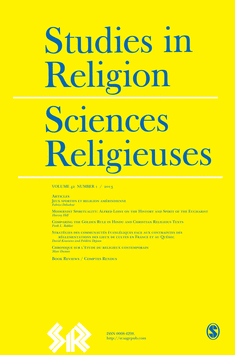
STUDIES IN RELIGION-SCIENCES RELIGIEUSES
Advancing the Frontiers of Religious UnderstandingSTUDIES IN RELIGION - SCIENCES RELIGIEUSES, published by SAGE Publications Ltd, serves as a premier platform for scholarly research in the field of Religious Studies, with an ISSN of 0008-4298 and an E-ISSN of 2042-0587. As a journal with a distinguished history dating back to 1971, it has established itself in the Q1 category of Religious Studies and ranks an impressive 173 out of 644 in Scopus, positioning itself in the 73rd percentile among its peers. The journal not only aims to disseminate innovative research that advances understanding of religious phenomena but also fosters critical dialogue among scholars, professionals, and students alike. Although it does not currently offer Open Access options, its rigorous peer-review process ensures that published articles meet the highest academic standards. Situated in the United States, the journal is committed to maintaining scholarly excellence and relevance in an ever-evolving field of study, making it an essential resource for anyone engaged in the academic exploration of religion.

Journal of Al-Tamaddun
Elevating Scholarly Discourse on Islamic CivilizationWelcome to the Journal of Al-Tamaddun, an esteemed academic publication dedicated to the exploration of Islamic history, culture, and anthropology. Published by UNIV MALAYA, ACAD ISLAMIC STUDIES, this open-access journal has been contributing to scholarly discourse since 2008, allowing comprehensive and unrestricted access to its rich array of research articles. The journal proudly ranks in the upper quartiles of several categories for 2023, including Q1 in History and Religious Studies and Q2 in Anthropology and Cultural Studies, reflecting its significant impact and relevance in these fields. Hailing from Malaysia, the journal serves as a global platform for researchers and scholars, fostering interdisciplinary dialogue and enhancing our understanding of civilization through a critical Islamic perspective. With its Scopus rankings highlighting its standing within arts and humanities, the Journal of Al-Tamaddun aims to propel innovative research and contribute to the development of knowledge across diverse academic landscapes.
JOURNAL OF RELIGION IN AFRICA
Unraveling the Complexities of African Religious PracticesThe JOURNAL OF RELIGION IN AFRICA, published by BRILL, serves as a pivotal academic platform dedicated to the exploration and analysis of religious practices, beliefs, and transformations across the African continent. Since its inception, the journal has developed a rich tapestry of scholarship that spans its convergence years from 1967 to 2024, with a particular focus on the historical and sociocultural dimensions of religion. Holding a distinguished position in its field, it ranks in the Q2 category in both History and Religious Studies for 2023, reflecting its significant impact and quality of research. With Scopus rankings placing it in the 69th percentile of Religious Studies, this journal is essential for researchers, students, and professionals interested in understanding the complexities of African religious dynamics. Although it is not an open-access journal, the rigorous peer-review process ensures that only high-quality manuscripts contribute to the ever-expanding discourse on religion in Africa. The journal's commitment to scholarly excellence makes it a vital resource for anyone seeking to engage deeply with the subject.

Al-Shajarah
Fostering Insightful Discourse on Islamic CivilizationsAl-Shajarah is an esteemed academic journal that serves as a vital platform for scholarly discourse in the fields of Cultural Studies, History, Philosophy, and Religious Studies. Published by the International Islamic University Malaysia and the International Institute of Islamic Thought and Civilization, the journal reflects a profound commitment to advancing understanding and dialogue surrounding Islamic thought and its place in modern society. With an ISSN of 1394-6870 and an evolving publication history since its convergence in 2011, Al-Shajarah offers valuable insights that cater to a broad array of readers, from seasoned researchers to emerging academics. The journal's rigorous peer-review process and commitment to cultural and religious scholarship are underscored by its categorization in the Q3 and Q4 quartiles in critical academic fields, and its Scopus rankings demonstrate its relevance within the global academic landscape. While open access is not currently available, Al-Shajarah remains a crucial resource for those seeking to enrich their understanding of Islamic civilizations and philosophy, providing access to pioneering research that shapes the conversation within these disciplines.