
International Journal of Islamic Thought
Scope & Guideline
Illuminating the Path of Islamic Intellectual Tradition
Introduction
Aims and Scopes
- Islamic Jurisprudence and Ethics:
The journal publishes research that examines Islamic law (Sharia) and ethics in various contexts, including inheritance, criminal law, and wealth management, focusing on both traditional interpretations and contemporary applications. - Cultural and Historical Studies:
Papers often delve into the historical evolution of Islamic thought, cultural interactions, and the impact of Islamic principles on societal structures, as seen in studies of waqf, heritage, and the role of religion in governance. - Interfaith Relations and Religious Coexistence:
The journal emphasizes the importance of dialogue and coexistence among different faiths, exploring themes of tolerance, interfaith dialogue, and the role of Islam in multicultural societies. - Social Issues and Community Development:
Research addressing social challenges faced by Muslim communities, including gender issues, youth engagement, and the role of religious leaders in societal harmony, reflects the journal’s commitment to practical solutions. - Philosophical and Theoretical Analysis:
Theoretical explorations of Islamic philosophy, critical thinking, and the integration of traditional Islamic thought with contemporary issues are a significant focus, promoting intellectual discourse.
Trending and Emerging
- Digital Assets and Islamic Finance:
The exploration of topics such as cryptocurrency from an Islamic perspective highlights an emerging trend in integrating modern financial instruments with Islamic jurisprudence, addressing the needs of contemporary financial planning. - Gender Studies and Women's Rights:
There is a growing focus on gender issues, particularly in relation to Islamic feminism and the role of women in society, indicating a trend towards addressing social justice and women's empowerment within an Islamic framework. - Healthcare and Islamic Ethics:
Research that merges healthcare practices with Islamic ethical principles, such as patient-centered care and the role of hospitals in aligning with Maqasid al-Shariah, showcases an important trend in applying Islamic thought to health and wellness. - Interfaith Dialogue and Religious Pluralism:
The increasing emphasis on religious coexistence and tolerance reflects a significant trend towards fostering understanding and cooperation among different religious communities, particularly in multicultural societies. - Environmental Ethics in Islam:
Emerging themes related to environmental stewardship and sustainability from an Islamic perspective indicate a growing recognition of the importance of ecological issues and their relevance within Islamic teachings.
Declining or Waning
- Historical Biographies and Individual Contributions:
There has been a noticeable reduction in papers focusing on historical figures or biographies, suggesting a waning interest in individual contributions to Islamic thought in favor of broader thematic studies. - Islamic Ritual Practices:
Discussions surrounding traditional Islamic rituals and practices seem to be less prevalent, indicating a shift towards more practical and contemporary applications of Islamic teachings rather than ritualistic focus. - Islamic Mysticism (Sufism):
While Sufism has been a longstanding area of interest, recent publications hint at a decline in studies specifically dedicated to Sufi practices and their implications, as the focus shifts towards more pressing social and ethical issues.
Similar Journals

Bilimname
Cultivating Knowledge Across Disciplines of Faith and SocietyBilimname is a distinguished academic journal published by the ILAHIYAT BILIMLERI ARASTIRMA VAKFI, dedicated to advancing knowledge in the fields of Islamic studies, theology, and social sciences. With its E-ISSN: 2148-5860, this open-access journal provides a platform for researchers, scholars, and students alike to publish and share innovative ideas and groundbreaking research. While specific metrics such as H-Index and Scopus ranks are currently unavailable, Bilimname continues to foster academic discourse and engagement, making it an essential resource for individuals keen on exploring contemporary issues within its scope. Located in Kayseri, Turkey, the journal aims to bridge theoretical insights with practical applications, thereby contributing significantly to the academic community and shaping future research in relevant disciplines.
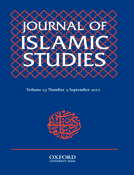
Journal of Islamic Studies
Unveiling Insights into Islamic Heritage and ThoughtJournal of Islamic Studies, published by Oxford University Press, serves as a pivotal platform for the dissemination of research in the dynamic fields of Islamic culture, history, and literature. With an ISSN of 0955-2340 and an E-ISSN of 1471-6917, this esteemed journal has established itself within the upper echelons of academic scholarship, holding a Q1 ranking in Cultural Studies, History, Literature and Literary Theory, and Religious Studies as of 2023. Its distinguished standing among peers is further evidenced by Scopus rankings that place it within the 97th percentile for Literature and Literary Theory and the 91st percentile for both Religious Studies and History. Aimed at researchers, professionals, and students alike, the journal spans a broad temporal focus from 1990 to 1996 and continues from 2009 to 2024, nurturing vital discourse on Islamic studies without the barrier of open access. With its rich repository of articles, the Journal of Islamic Studies remains an essential source for advancing understanding and scholarship in a rapidly evolving academic landscape.

Islamic Africa
Exploring the Rich Tapestry of Islamic Culture in AfricaIslamic Africa, published by BRILL, is a vital academic journal that serves as a scholarly platform dedicated to the exploration of Islamic culture and its multifaceted interactions with the African continent. With a focus on cultural studies, history, literature and literary theory, religious studies, and the social sciences, this journal invites contributions that deepen our understanding of the historical and contemporary dynamics of Islam in Africa. Although categorized in various quartiles, it holds significance as a resource for researchers and students, particularly those engaged in areas ranked within the Q3 and Q4 categories. Since its inception, Islamic Africa has evolved through converged years, actively promoting interdisciplinary dialogue among scholars. With its commitment to high-quality research, this journal aims to illuminate the complexities of Islamic traditions and societies in Africa, fostering a deeper appreciation of their contributions to global cultural heritage.

Al-Shajarah
Navigating the Rich Tapestry of Islamic ThoughtAl-Shajarah is an esteemed academic journal that serves as a vital platform for scholarly discourse in the fields of Cultural Studies, History, Philosophy, and Religious Studies. Published by the International Islamic University Malaysia and the International Institute of Islamic Thought and Civilization, the journal reflects a profound commitment to advancing understanding and dialogue surrounding Islamic thought and its place in modern society. With an ISSN of 1394-6870 and an evolving publication history since its convergence in 2011, Al-Shajarah offers valuable insights that cater to a broad array of readers, from seasoned researchers to emerging academics. The journal's rigorous peer-review process and commitment to cultural and religious scholarship are underscored by its categorization in the Q3 and Q4 quartiles in critical academic fields, and its Scopus rankings demonstrate its relevance within the global academic landscape. While open access is not currently available, Al-Shajarah remains a crucial resource for those seeking to enrich their understanding of Islamic civilizations and philosophy, providing access to pioneering research that shapes the conversation within these disciplines.
Islamic Law and Society
Transforming Understanding of Legal and Societal InteractionsIslamic Law and Society, published by BRILL, is a distinguished academic journal that has been bridging the gap between legal studies and socio-political discourse since its inception in 1994. With an ISSN of 0928-9380 and an E-ISSN of 1568-5195, the journal is recognized for its scholarly contributions in the fields of Law, Sociology, and Political Science, boasting a notable impact factor that positions it within the Q2 category in Law and Q3 in Sociology and Political Science as of 2023. Situated in the Netherlands, it is committed to publishing high-quality, peer-reviewed research that explores the intricate relationship between Islamic legal traditions and contemporary societal issues. The journal's indexed rankings in Scopus reflect its relevance, ranking #502 out of 1025 in Law and #844 out of 1466 in Sociology and Political Science. This makes it an essential resource for researchers, professionals, and students seeking to gain insights into the complexities of Islamic law within global contexts. The journal is accessible through various academic databases, offering a platform for interdisciplinary engagement and research dissemination, crucial for those invested in the dynamics of law and society.

Sirnak University Journal of Divinity Faculty
Advancing Theological Discourse for a Global AudienceWelcome to the Sirnak University Journal of Divinity Faculty, a premier open-access journal dedicated to the exploration of diverse theological, philosophical, and cultural issues within the realm of religious studies. Published by Sirnak University, this journal has been freely accessible since 2010, ensuring that scholars, professionals, and students can engage with high-quality research without barriers. With an emphasis on interdisciplinary approaches and innovative perspectives, the Sirnak University Journal of Divinity Faculty aims to foster academic discourse and contribute to the broader understanding of divinity and related disciplines. Though the journal is relatively new, it strives to establish a significant presence in the field by welcoming original research articles, reviews, and theological reflections from researchers worldwide. Join us in advancing the academic study of divinity and enriching the scholarly community.
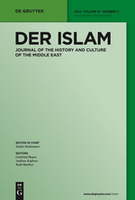
ISLAM-ZEITSCHRIFT FUR GESCHICHTE UND KULTUR DES ISLAMISCHEN ORIENTS
Chronicling the Evolution of Islamic Thought and CultureISLAM-ZEITSCHRIFT FUR GESCHICHTE UND KULTUR DES ISLAMISCHEN ORIENTS, with ISSN 0021-1818 and E-ISSN 1613-0928, is a prestigious academic journal published by Walter de Gruyter GmbH based in Germany. With a rich history dating back to 1910 and a dedicated focus on the cultural and historical insights of the Islamic Orient, this journal serves as a vital platform for scholars around the globe. It is recognized in the Q2 quartile in both Cultural Studies and History, reflecting its high-impact contributions to the field. The journal features rigorous peer-reviewed articles, making significant advancements in understanding Islamic culture and history. Notably, it holds commendable Scopus Ranks, placing it in the top 65th percentile for History and the 53rd percentile for Cultural Studies. Researchers, professionals, and students interested in the complexities of Islamic heritage will find this journal indispensable for its depth of analysis and breadth of scholarship. While it currently does not offer Open Access, its comprehensive resources are crucial for academic research in these historically rich fields.
Contemporary Islam-Dynamics of Muslim Life
Illuminating the Intersection of Culture and FaithContemporary Islam: Dynamics of Muslim Life, a distinguished journal published by SPRINGER, serves as a vital platform for scholarly discourse in the fields of Cultural Studies and Religious Studies, where it proudly holds a Q1 ranking in both categories as of 2023. With an impressive impact factor that reflects its robust academic contributions, the journal is positioned within the 94th percentile in Religious Studies and the 86th percentile in Cultural Studies on Scopus, highlighting its relevance and influence in contemporary research. Access to its cutting-edge articles, rigorously peer-reviewed, is vital for researchers, professionals, and students seeking to comprehend the multifaceted dynamics of Muslim life across various contexts. Established in 2007 and continuing through 2024, this journal not only provides invaluable insights into Muslim communities but also addresses broader social and cultural phenomena, making it an essential resource for anyone interested in understanding the contemporary Islamic landscape.
Journal of Islamic Accounting and Business Research
Exploring the Intersection of Faith and Finance.The Journal of Islamic Accounting and Business Research, published by EMERALD GROUP PUBLISHING LTD, is a leading academic journal dedicated to advancing the field of Islamic accounting and business practices. With its ISSN 1759-0817 and E-ISSN 1759-0825, this journal has established itself as a vital source of scholarly articles from 2010 to 2024, focusing on the integration of Islamic principles within contemporary business and accounting frameworks. Placed in varied quartiles across multiple categories in 2023—Q3 in Accounting and Strategy and Management, and Q2 in Business and International Management—this journal recognizes the dynamic intersection of Islamic economics and modern business theories. Situated in the United Kingdom, it plays a crucial role in supplying researchers, professionals, and students with cutting-edge insights and empirical findings, ensuring that it remains at the forefront of the discourse in its field. Furthermore, with impressive Scopus rankings, it stands out as a key resource for those seeking to explore the complexities and advancements in Islamic financial practices and business strategies.
Indonesian Journal of Islam and Muslim Societies
Connecting global audiences with cutting-edge Islamic studies.Indonesian Journal of Islam and Muslim Societies (IJIMS) is a leading platform for scholarly discourse in the fields of Islamic studies and social sciences, published by INST AGAMA ISLAM NEGERI-IAIN SALATIGA. Since its establishment in 2011, IJIMS has been dedicated to advancing the understanding of Islamic culture, society, and politics, with an impressive impact reflected in its Q1 ranking in Religious Studies and Q2 in Sociology and Political Science as of 2023. The journal not only ranks among the top in the Scopus database, occupying the 19th position in the Arts and Humanities—Religious Studies category, but it also offers open access to its content, making it readily available to a global audience. This commitment to accessibility ensures that researchers, students, and professionals can engage with high-quality research that informs and shapes contemporary dialogue on Islam and Muslim societies. With a convergence of rich academic contributions through to 2024, IJIMS stands as a vital resource for those looking to explore the complexities of Islam in a modern context.