
Contexto-Revista de la Facultad de Arquitectura Universidad Autonoma de Nuevo Leon
Scope & Guideline
Shaping Contemporary Narratives in Architecture
Introduction
Aims and Scopes
- Urban Studies and Territorial Development:
The journal emphasizes research on urban growth patterns, spatial analysis, and the socio-economic factors influencing metropolitan expansion, particularly in the Global South. - Cultural and Historical Perspectives in Architecture:
There is a strong focus on the historical context of architecture, examining how cultural narratives and historical events shape architectural practices and urban environments. - Sustainability and Environmental Design:
The journal consistently addresses sustainability issues, including adaptive reuse, green infrastructure, and the environmental impact of architectural practices. - Community Engagement and Social Dynamics:
Research often highlights the role of community in shaping urban spaces, including themes of social equity, public space usage, and participatory planning processes. - Interdisciplinary Methodologies:
The journal promotes diverse methodologies, such as netnography, hermeneutics, and other analytical frameworks that integrate social sciences with architectural and urban studies.
Trending and Emerging
- Impact of Globalization on Urban Development:
Recent publications explore how economic globalization influences urban territorial expansion, particularly in developing regions, showcasing an increasing interest in the global-local nexus. - Accessibility and Inclusivity in Urban Spaces:
There is a growing emphasis on designing accessible public spaces, particularly for aging populations and individuals with disabilities, reflecting broader societal shifts towards inclusivity. - Digital Urbanism and Technology Integration:
The integration of digital technologies in urban planning and architecture is gaining traction, with studies focusing on virtual environments and the impact of social media on spatial practices. - Interdisciplinary Approaches to Urban Challenges:
An emerging trend is the use of interdisciplinary methodologies to address complex urban challenges, combining insights from sociology, psychology, and environmental studies with architecture. - Social and Environmental Justice in Urban Planning:
There is an increasing focus on the intersections of social justice and environmental sustainability, particularly in the context of urban public spaces and community resilience.
Declining or Waning
- Traditional Architectural Styles:
There appears to be a waning focus on the study of traditional architectural styles in isolation, as newer research trends emphasize contemporary adaptations and sustainability over historical analysis. - Rural Architecture and Development:
Research specifically addressing rural architecture and its challenges has decreased, possibly overshadowed by the pressing issues of urbanization and metropolitan expansion. - Historical Preservation without Modern Context:
There is less emphasis on historical preservation as a standalone topic, with a shift towards integrating historical insights within broader urban and socio-environmental frameworks.
Similar Journals
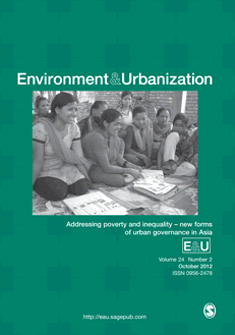
ENVIRONMENT AND URBANIZATION
Exploring the nexus of urban life and environmental health.Environment and Urbanization is a leading interdisciplinary journal published by SAGE Publications Ltd, dedicated to advancing knowledge in the fields of Environmental Science and Urban Studies. With a strong focus on the interactions between urban environments and ecological systems, this journal has established itself as a pivotal resource for researchers, professionals, and students interested in sustainable urban development and environmental management. Since its inception in 1989, Environment and Urbanization has continually provided high-quality, peer-reviewed articles that foster a deeper understanding of contemporary urban challenges, making it a highly cited publication with an impressive impact factor. As evidenced by its Q1 ranking in both Environmental Science (miscellaneous) and Urban Studies for 2023, the journal stands at the forefront of research, boasting notable Scopus rankings in its fields. By remaining committed to publishing cutting-edge research, the journal aims to influence policy and practice across the globe, ultimately aiding in the creation of more resilient and livable urban areas.
City & Society
Illuminating the Future of Urban EnvironmentsCity & Society is a premier academic journal published by WILEY, focusing on the interdisciplinary fields of urban studies and geography, planning, and development. With its ISSN 0893-0465 and E-ISSN 1548-744X, this journal has been a vital platform for scholarly dialogue since its inception in 1987, showcasing significant research contributions in urban sociology and policy analysis. The journal has a commendable 2023 impact factor, categorized in the Q2 quartiles in both Geography and Urban Studies, which reflects its strong positioning among its peers. Notably, it ranks #104 in Urban Studies and #371 in Geography, Planning and Development, as per Scopus metrics. Although not available as an open-access publication, City & Society serves as an essential resource for researchers, professionals, and students engaged in understanding the complexities of urban development, community dynamics, and spatial planning. With a commitment to publishing high-quality, empirical research, the journal continues to attract contributions that enhance the dialogue on contemporary urban issues, making it a must-read for anyone interested in the evolving landscape of urban environments.
Archnet-IJAR International Journal of Architectural Research
Challenging conventions, enriching urban design.Archnet-IJAR International Journal of Architectural Research serves as an esteemed platform within the field of architecture and urban studies, published by Emerald Group Publishing Ltd. With an impressive impact reflected through its Q1 category rankings in both Architecture and Urban Studies, this journal highlights cutting-edge research and innovative practices spanning diverse architectural disciplines. The journal focuses on facilitating interdisciplinary dialogues, making it a vital resource for researchers, students, and professionals keen on advancing their understanding of architectural theories and urban design. With its commitment to quality, evidenced by high scores in various Scopus rankings, including a rank of 9th in Visual Arts and Performing Arts, Archnet-IJAR aims to publish work that not only challenges conventional boundaries but also enriches practical applications in the built environment. Its open-access model ensures wider dissemination of knowledge, fostering collaboration and growth within the international architectural community.

Boletin Academico-Revista de Investigacion y Arquitectura Contemporanea
Empowering Scholars to Transform Architectural Discourse.Boletin Academico-Revista de Investigacion y Arquitectura Contemporanea is a distinguished journal published by SIELAE & UNIV CORUNA, Fac Filologia, focusing on the interconnectivity of contemporary architecture, cultural studies, and visual arts. With an E-ISSN of 2173-6723, this open-access publication serves as an essential resource for researchers, academics, and professionals eager to explore innovative perspectives and methodologies in these dynamic fields. Spanning a commendable period from 2016 to 2023, the journal demonstrates a strong academic footprint, ranked in the Q2 category for both Architecture and Cultural Studies, and holds a prestigious Q1 ranking in Visual Arts and Performing Arts. With Scopus rankings reflecting its growing influence—particularly in Visual Arts and Architecture—Boletin Academico delivers a platform that is not only academically rigorous but also culturally relevant, encouraging discourse that shapes the future of contemporary architectural and artistic practices. The journal’s commitment to open access further enhances its appeal, ensuring that groundbreaking research is readily available to an extensive audience.

Bagh-e Nazar
Fostering Dialogue on Socio-Cultural DynamicsBagh-e Nazar is a distinguished academic journal dedicated to the fields of art, architecture, and urbanism, published by the NAZAR RESEARCH CENTER in Tehran, Iran. With a focus on promoting scholarly research and innovative ideas, this journal serves as a platform for critical discussions and diverse perspectives on contemporary artistic and architectural practices. The journal is indexed under ISSN 1735-9635 and E-ISSN 2251-7197, reflecting its commitment to high academic standards and international visibility. Although currently not open access, it seeks to provide comprehensive insight into the socio-cultural dynamics influencing urban environments and artistic expressions. By bridging theory and practice, Bagh-e Nazar plays a pivotal role in advancing knowledge and fostering dialogue within the vibrant domains of art and architecture, making it an invaluable resource for researchers, professionals, and students alike.
Urban Planning
Pioneering solutions for tomorrow's urban challenges.Urban Planning is a leading academic journal published by COGITATIO PRESS, devoted to advancing the field of urban studies through rigorous research and innovative practice. Established as an Open Access journal in 2016, it offers a platform for scholars and practitioners alike to disseminate knowledge on urban development, spatial planning, and community engagement. With an impressive ranking in the Q1 category for Urban Studies and a notable Scopus rank of #71 out of 279, it reflects the journal's commitment to excellence and influence within its discipline. Based in Lisbon, Portugal, and dedicated to a global audience, Urban Planning encourages interdisciplinary collaboration and seeks to address the pressing challenges faced by urban areas, making it an essential resource for researchers, professionals, and students passionate about shaping sustainable cities. The journal, which contributes to the academic discourse through a robust review process and encourages contributions that engage diverse voices, is set to converge its insights from 2016 to 2025, solidifying its role as a pivotal resource in the urban studies field.

IN BO-Ricerche e Progetti per il Territorio la Citta e l Architettura
Advancing knowledge in architecture and urban studies.IN BO-Ricerche e Progetti per il Territorio la Citta e l Architettura, published by the Department of Architecture at the University of Bologna, serves as a crucial conduit for scholarship in the fields of architecture, urban studies, building and construction, and visual arts. With its commitment to open access since 2008, this journal ensures that innovative research is accessible to a broad audience, fostering collaboration and advancement within these disciplines. Although it currently holds a Q4 ranking in various categories, including Architecture and Urban Studies, it plays a pivotal role in contextualizing contemporary challenges faced in urban development and architectural practice, thereby encouraging critical discourse. The journal publishes original research findings, case studies, and theoretical discussions aimed at enhancing the understanding of the interactions between built environments and social dynamics. Engaging researchers, professionals, and students alike, IN BO is dedicated to not only documenting but also shaping the future of urban and architectural landscapes in Italy and beyond.
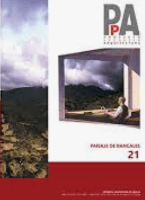
Proyecto Progreso Arquitectura
Advancing architectural discourse for a dynamic future.Proyecto Progreso Arquitectura, an esteemed academic journal published by UNIV SEVILLA, EDITORIAL, is dedicated to advancing the fields of Architecture, Arts and Humanities, History, Urban Studies, and Visual Arts. With an Open Access model since 2010, this journal facilitates the dissemination of innovative research and critical discourse among a global audience, fostering collaboration and insight within the academic community. Operating from Seville, Spain, the journal has successfully carved a niche in the architectural and design studies landscape, currently positioned in the Q3 category in Architecture and Urban Studies, and Q2 in History and Visual Arts as of 2023, demonstrating its growing impact and reputation. With an ISSN of 2171-6897 and an E-ISSN of 2173-1616, it also ranks commendably in Scopus across various disciplines, offering readers an invaluable resource for scholarly articles that contribute to the vibrant dialogues in architecture and its intersection with societal developments. The journal's approach not only encourages academic rigor but also embraces the practical implications of research, making it an essential read for researchers, practitioners, and students alike.

ARCHITECTURAL RECORD
Cultivating Critical Perspectives in the Built EnvironmentARCHITECTURAL RECORD, published by McGraw Hill Inc, stands as a vital resource in the field of architecture and design, offering insightful perspectives and critical analyses that cater to architects, designers, and academia alike. With an ISSN of 0003-858X, this prestigious journal has been a cornerstone for the architectural community, providing a blend of contemporary practices and theoretical frameworks since its inception. Although it is not currently available through Open Access, its rich content contributes to the ongoing dialogue in both the Visual Arts and Performing Arts, as well as Engineering and Architecture disciplines. The journal's historical impact can be seen through its wide readership and influence in shaping architectural discourse, making it a highly regarded publication for professionals and students in the field. As a beacon of innovative practices, ARCHITECTURAL RECORD continues to inspire and educate, even despite its coverage discontinuation in Scopus since 2018.

METU Journal of the Faculty of Architecture
Connecting scholars and practitioners in the realm of architecture.METU Journal of the Faculty of Architecture is a reputable academic publication dedicated to advancing research and discourse in the field of architecture. Published by MIDDLE EAST TECHNICAL UNIVERSITY in Turkey, this journal serves as a vital platform for scholars and practitioners, addressing both theoretical and practical topics relevant to contemporary architectural studies. With an impact factor that positions it in the Q3 category for architecture as of 2023, and a Scopus rank of #133 out of 189 in Engineering Architecture, the METU Journal is an influential resource for innovative ideas and studies. Encompassing a wide range of scholarly articles, it fosters academic collaboration between researchers and professionals, making it essential reading for anyone passionate about the evolution of architecture. Though not open access, it provides crucial insights and rigorous research from 2008 up until 2024, contributing significantly to the global discourse on architectural practices and theories.