
Bulletin KNOB
Scope & Guideline
Exploring Cultural Narratives Through Time
Introduction
Aims and Scopes
- Architectural History:
The journal emphasizes the historical evolution of architecture, documenting significant figures, movements, and styles that have influenced Dutch architecture from the medieval period to contemporary practices. - Urban Studies:
It explores urban development, transformation, and planning, focusing on the historical and contemporary dynamics of cities in the Netherlands and their architectural implications. - Cultural Heritage and Preservation:
The journal highlights the importance of cultural heritage, discussing conservation practices and the role of historical buildings in contemporary society. - Landscape Architecture:
It investigates the relationship between architecture and landscape, examining the design and transformation of landscapes, gardens, and public spaces. - Social and Political Contexts:
The journal analyzes the interplay between architecture, society, and politics, shedding light on how architectural practices reflect and shape social values and political ideologies. - Interdisciplinary Approaches:
Bulletin KNOB promotes interdisciplinary research, integrating perspectives from art history, archaeology, sociology, and environmental studies to enrich the understanding of architectural and urban phenomena.
Trending and Emerging
- Sustainability and Adaptive Reuse:
There is an increasing emphasis on sustainability in architecture, particularly in adaptive reuse projects that transform historical buildings for modern use while preserving their heritage. - Socially Inclusive Design:
Recent publications highlight the importance of designing inclusive spaces that cater to diverse communities, reflecting a growing commitment to social equity in architectural practices. - Impact of Technology on Architecture:
The influence of digital technologies and innovations in architecture is gaining attention, exploring how technology shapes design processes and building practices. - Interdisciplinary Collaboration:
Research that integrates various disciplines, such as sociology, history, and environmental science, is on the rise, indicating a trend towards comprehensive approaches to architectural challenges. - Cultural Heritage and Community Engagement:
There is a notable trend towards engaging communities in heritage conservation efforts, emphasizing the role of local narratives and participatory practices in preserving cultural identity.
Declining or Waning
- Early Modern Architecture:
There appears to be a waning interest in the detailed study of early modern architecture, particularly from the 16th to 18th centuries, as more recent issues focus on contemporary practices and post-war architecture. - Traditional Building Techniques:
Research on traditional building techniques and materials, while still relevant, has become less frequent, possibly overshadowed by discussions on modern and sustainable building practices. - Local Architectural Identity:
Explorations of local architectural identity and vernacular architecture have diminished, suggesting a shift towards broader, more globalized discussions in architectural discourse. - Architectural Theory:
Theoretical discussions surrounding architecture have seen a decline, with more emphasis placed on practical case studies and empirical research rather than theoretical frameworks. - Rural Architecture:
Studies focused on rural architecture and its historical significance are less frequent, indicating a potential shift towards urban-centric research themes.
Similar Journals
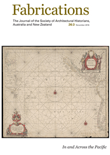
Fabrications-The Journal of the Society of Architectural Historians Australia and New Zealand
Engaging with the Architectural Stories of the Australasian RegionFabrications - The Journal of the Society of Architectural Historians Australia and New Zealand is a vital scholarly platform that explores the rich interplay between architecture and its historical context within the Australasian landscape. Published by Routledge Journals, Taylor & Francis Ltd, this journal serves as a crucial resource for researchers, professionals, and students in the fields of architectural history, urban studies, and visual arts. With an ISSN of 1033-1867 and an E-ISSN of 2164-4756, Fabrications has received recognition for its quality, placing in the Q4 category in Urban Studies and Q2 in Visual Arts and Performing Arts as of 2023. This journal not only welcomes innovative research articles but also encourages the exploration of New Zealand and Australian cultural heritage through diverse architectural narratives. With publications spanning significant years since its inception in 1989, Fabrications continues to provide an open forum for dialogue and discovery, catering to the academic and professional community's growing interest in architectural narratives through a regional lens.

Loggia Arquitectura & Restauracion
Cultivating Insightful Research in Architecture and HeritageLoggia Arquitectura & Restauracion is a pivotal academic journal dedicated to the fields of architecture, conservation, and the visual arts, published by UNIV POLITECNICA VALENCIA, EDITORIAL UPV in Spain. With an ISSN of 1136-758X and an E-ISSN of 2444-1619, this Open Access journal has been providing a platform for scholarly discussions since 1996, enhancing the global dialogue on architectural methods and restoration practices. Boasting a Q3 ranking in both Architecture and Conservation, along with a Q2 ranking in Visual Arts and Performing Arts, the journal reflects a commitment to academic rigor and innovation, as it navigates the convergence of these important fields from 2019 to 2024. The research published in Loggia addresses critical contemporary issues, enriching the knowledge base for academics, practitioners, and students alike. With a current Scopus rank that situates it within the competitive landscape of arts and humanities, Loggia serves as a vital resource for those seeking to explore the intersection of culture, history, and sustainability in architectural practice.
Ge-Conservacion
Innovating Practices for the Preservation of Art and HistoryGe-Conservacion, published by GRUPO ESPANOL I I C, stands as a pivotal journal in the fields of Conservation, Museology, and Visual Arts and Performing Arts, facilitating an open-access platform since 2009. Based in Spain, this journal serves as a vital repository for innovative research and scholarly dialogue, significantly impacting the community with its Q1 and Q2 rankings across several categories in 2023. With an objective to advance multidisciplinary understanding and practices related to cultural heritage conservation, it attracts a diverse readership of researchers, professionals, and students eager to engage with contemporary issues and methodologies. The journal's commitment to accessibility enhances its reach and influence, making it an essential resource for anyone passionate about preserving the integrity and significance of our artistic and historical treasures.

Vestnik Sankt-Peterburgskogo Universiteta-Iskusstvovedenie
Unveiling Insights into Cultural Heritage and CreativityVestnik Sankt-Peterburgskogo Universiteta-Iskusstvovedenie, published by ST PETERSBURG UNIV PRESS, is a distinguished academic journal based in the Russian Federation, focusing on the interconnected disciplines of Conservation, History, Music, and Visual Arts and Performing Arts. With an ISSN of 2221-3007 and E-ISSN of 2542-2243, this journal plays a vital role in disseminating scholarly research and fostering dialogue across these fields. Despite being categorized in the third quartile (Q3) in 2023 across its respective disciplines, its significance lies in publishing emerging research and critical analyses that contribute to the academic discourse. The journal accepts submissions until the converged years spanning 2016 to 2024, making it a relevant platform for current academic inquiry. Although it currently does not offer open access, the journal provides robust insights for researchers, professionals, and students eager to explore the nuances of cultural heritage and artistic expression. As it continues to develop its impact within the arts and humanities, Vestnik Sankt-Peterburgskogo Universiteta-Iskusstvovedenie remains an essential resource for those passionate about understanding and preserving the rich tapestry of artistic endeavors.

Quiroga-Revista de Patrimonio Iberoamericano
Unveiling the Essence of Ibero-American HeritageQuiroga-Revista de Patrimonio Iberoamericano, published by UNIV GRANADA, is a distinguished open-access journal dedicated to the fields of conservation, museology, and the visual and performing arts. Since its inception in 2012, the journal has provided a platform for scholars and practitioners to disseminate innovative research and critical discussions pertinent to Ibero-American heritage. With a growing impact, evidenced by its category quartiles ranking—Q3 in Conservation and Q2 in both Museology and Visual Arts and Performing Arts—as well as its Scopus rankings, Quiroga serves as an essential resource for researchers, professionals, and students who engage with the complexities of cultural preservation and artistic expression. The journal’s commitment to open access ensures the widespread availability of knowledge, fostering academic dialogue and collaboration within the global community. For inquiries, the journal can be reached at their offices located in Granada, Spain.

Rijksmuseum Bulletin
Navigating the Intersection of Art, History, and CommunityThe Rijksmuseum Bulletin, published by the Rijksmuseum Amsterdam, stands as a premier open-access journal in the realm of Visual Arts and Performing Arts, having transitioned to open access in 2012. With its ISSN 1877-8127, the journal is dedicated to exploring the rich tapestry of art history, exhibitions, and cultural discourse, supporting both scholarly research and the general appreciation of the arts. As a significant contributor within the Netherlands and beyond, the Bulletin garners a solid reputation, reflected in its current ranking in the Q3 category of Visual Arts and Performing Arts, with a Scopus rank of #510 out of 667. This engaging platform not only disseminates high-quality research but also fosters collaboration among researchers, professionals, and students, providing insights that highlight the importance of cultural heritage. With converged years spanning from 2011 to 2024, the Rijksmuseum Bulletin is poised to remain a vital source of knowledge within the arts community.
International Journal of Islamic Architecture
Bridging Cultures Through Architectural InnovationThe International Journal of Islamic Architecture, published by INTELLECT LTD in the United Kingdom, is a pivotal scholarly resource dedicated to the exploration of Islamic architecture, design, and cultural expressions within a contemporary framework. With ISSN 2045-5895 and E-ISSN 2045-5909, this journal targets an interdisciplinary audience by bridging the gap between architecture, geography, urban studies, and the arts. Established in 2012, it has swiftly garnered recognition, achieving notable rankings such as Q3 in Architecture and Q2 in Visual Arts and Performing Arts by 2023. Although it currently does not offer open access, its articles are meticulously peer-reviewed, ensuring high academic standards and relevance. Emphasizing the significance of Islamic architectural heritage in global contexts, the journal seeks to foster innovative perspectives and critical discourse, making it an essential platform for researchers, professionals, and students alike to engage with contemporary architectural practices and cultural dialogues.

Zbornik Matice Srpske za Likovne Umetnosti-Matica Srpska Journal for Fine Arts
Fostering Connections Between Art and AcademiaZbornik Matice Srpske za Likovne Umetnosti-Matica Srpska Journal for Fine Arts is a prestigious academic journal published by Matica Srpska, dedicated to the study and exploration of fine arts in Serbia and beyond. With the ISSN 0352-6844, this journal serves as a vital platform for researchers, professionals, and students engaged in the visual arts, fostering a rich dialogue on artistic practices, theory, and history. Although currently not an open access publication, it provides invaluable insights into the artistic developments within the Serbian cultural landscape. The journal's commitment to high-quality scholarship is essential in advancing the study of fine arts, ensuring that the contributions reflect the evolving dynamics of artistic expression and cultural heritage. Whether you are a seasoned scholar or an emerging artist, Zbornik Matice Srpske za Likovne Umetnosti invites you to engage with its rigorous research and to contribute to an ever-growing body of knowledge in the realm of fine arts.

BULLETIN MONUMENTAL
Cultivating Insights in Architectural Preservation.BULLETIN MONUMENTAL, published by the Société Française d'Archéologie Musée Monument Français, stands as a pivotal journal in the field of archaeology and architectural history. With its ISSN of 0007-473X, this journal features a rich compilation of research and insights dedicated to the preservation and study of France's monumental heritage. Although it is not currently open access, its contributions are critical for scholars, professionals, and students interested in the intersection of history, culture, and preservation practices. Covering a continuous period from 2002 to 2016, the journal has played an essential role in documenting advancements in archaeological methodology and conservation efforts, making it an invaluable resource in its field. Researchers seeking to deepen their understanding of architectural monuments in France will find BULLETIN MONUMENTAL a vital source of scholarly articles and field studies.

Art-Sanat
Connecting Scholars Across the Artistic SpectrumArt-Sanat is a distinguished open-access journal published by the Research Institute of Turkology at Istanbul University, focusing on various facets of art history, visual arts, and cultural heritage. Since its open-access launch in 2017, the journal has been dedicated to promoting scholarly communication and disseminating innovative research within the fields of Art History, Archaeology, and Conservation. With an impact factor that highlights its increasing prominence—ranking in the Q1 quartile for History and Visual Arts and Performing Arts—Art-Sanat provides a platform for researchers, professionals, and students to share high-quality studies. The journal's commitment to transparency and accessibility assures that its contributions are available to a global audience, fostering a community of inquiry in the rich and diverse artistic landscapes of Turkey and beyond. With a robust ranking in Scopus, it stands as a noteworthy resource that advances scholarly engagement and interdisciplinary dialogue in the arts and humanities.