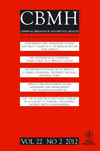
Criminal Behaviour and Mental Health
Scope & Guideline
Investigating the Interplay of Crime and Mental Health
Introduction
Aims and Scopes
- Criminal Justice and Mental Health Interactions:
Research examining how mental health conditions influence interactions with the criminal justice system, including the prevalence of disorders among offenders and their impact on recidivism. - Neurodevelopmental Disorders and Criminal Behaviour:
Focus on how neurodevelopmental disorders, such as ADHD and autism, relate to criminal behavior, and the need for tailored interventions and assessments. - Psychopathy and Criminal Cognitions:
Exploration of psychopathic traits and their relationships with criminal thinking patterns, violent behavior, and substance use disorders. - Mental Health Interventions in Forensic Settings:
Studies evaluating the effectiveness of various mental health interventions within prison and forensic settings, including cognitive-behavioral therapies and other treatment modalities. - Socioeconomic Factors and Crime:
Analysis of the impact of socioeconomic status on criminal behavior, mental health outcomes, and access to services. - Qualitative Research on Offender Experiences:
Utilization of qualitative methodologies to understand the lived experiences of offenders, including their mental health journeys and the social dynamics within prison environments.
Trending and Emerging
- Mental Health Screening in Criminal Justice Settings:
An increasing focus on the importance of screening for mental health disorders in criminal justice settings, particularly among vulnerable populations such as youth and individuals with neurodevelopmental disorders. - Interventions for Neurodiverse Offenders:
Emerging research on tailored interventions for offenders with neurodevelopmental disorders, emphasizing the need for specialized approaches that address their unique challenges. - Impact of Trauma on Offending Behaviour:
A rising interest in understanding how trauma histories, including adverse childhood experiences, influence criminal behavior and mental health outcomes among offenders. - Use of Technology in Mental Health Treatment:
Examination of innovative approaches, such as digital technology and virtual interventions, in delivering mental health services to offenders. - Socioeconomic Disparities in Mental Health and Crime:
Growing attention to how socioeconomic factors, including race and class, intersect with mental health issues to influence criminal behavior and justice outcomes.
Declining or Waning
- Traditional Crime Typologies:
Research focusing on traditional crime typologies (e.g., property crime, violent crime) without consideration of mental health factors seems to be declining, as the journal shifts towards interdisciplinary approaches that integrate mental health perspectives. - General Population Studies:
There has been a noticeable decrease in studies examining mental health issues in the general population that do not directly relate to criminal behavior, indicating a move towards more focused research within criminal justice contexts. - Longitudinal Studies of Non-violent Offenders:
Research specifically targeting non-violent offenders and their mental health trajectories appears to be waning, possibly due to a heightened focus on more severe cases or violent offenders.
Similar Journals

JOURNAL OF FORENSIC PSYCHIATRY & PSYCHOLOGY
Unlocking the Secrets of Forensic Psychiatry and PsychologyJOURNAL OF FORENSIC PSYCHIATRY & PSYCHOLOGY, published by Routledge Journals, Taylor & Francis Ltd, is a pivotal platform for advancing knowledge at the intersection of psychology, psychiatry, and the legal system. With an ISSN of 1478-9949, this esteemed journal has been providing a critical forum since its inception in 2003, continuing through to 2024, to foster interdisciplinary dialogue among researchers, clinicians, and legal professionals. The journal holds a Q3 category ranking in both Clinical Psychology and Psychiatry and Mental Health, reflecting its important contributions to the field. With a focus on empirical research, theoretical perspectives, and case studies, it aims to enhance the understanding of forensic issues while ensuring ethical considerations in psychological assessments and interventions. Although it currently does not provide open access, the journal's rigorous peer-review process assures high-quality publications. Researchers looking to stay at the forefront of forensic psychology will find this publication indispensable for their scholarly work and practical applications.

CHILD PSYCHIATRY & HUMAN DEVELOPMENT
Innovating Insights into Developmental PsychologyCHILD PSYCHIATRY & HUMAN DEVELOPMENT, published by Springer, stands at the forefront of research in the fields of developmental and educational psychology, pediatrics, perinatology, and child psychiatry. With an ISSN of 0009-398X and an E-ISSN of 1573-3327, this esteemed journal has been a vital resource for academics since its inception in 1970. Currently ranked in the Q1 category across its multiple relevant disciplines, it illustrates a significant impact with its Scopus rankings, placing it within the top 13% for pediatrics and child health and the top 18% for developmental psychology. Its comprehensive scope ensures that leading-edge studies, reviews, and discourse are accessible, contributing greatly to the understanding of mental health and developmental processes in children. With no open access option, the journal maintains a commitment to high-quality, peer-reviewed content that is invaluable for researchers, healthcare professionals, and students alike, as they strive to advance their knowledge and practices in child psychology and human development.
Journal of Intellectual Disabilities and Offending Behaviour
Bridging Disciplines to Illuminate Offending PatternsJournal of Intellectual Disabilities and Offending Behaviour, published by EMERALD GROUP PUBLISHING LTD, serves as a pivotal platform for the exploration of interdisciplinary perspectives surrounding the complex interplay between intellectual disabilities and offending behavior. With an ISSN of 2050-8824 and an E-ISSN of 2050-8832, this journal aims to foster insightful discourse and advance knowledge in critical areas including clinical psychology, psychiatric and mental health studies, and forensic medicine. Ranked in the lower quartiles for 2023 across major categories—most notably Q3 in Pathology and Forensic Medicine—this journal seeks to address urgent research gaps and encourage innovative practices that support affected individuals. Although currently operating under a traditional access model, the importance of its contributions to academia cannot be overstated, particularly as it relates to enhancing our understanding of behaviors stemming from intellectual disabilities. Researchers, professionals, and students alike will find valuable resources and a collaborative environment in which to investigate these vital issues, thereby shaping future investigations and interventions.
BEHAVIOUR CHANGE
Exploring the science behind human behavior.BEHAVIOUR CHANGE is a leading journal published by Cambridge University Press, dedicated to advancing knowledge and practice in the domains of clinical psychology and experimental and cognitive psychology. Since its inception in 1984, the journal has established itself as a vital resource for researchers and practitioners, focusing on innovative strategies and empirical research aimed at promoting effective behavior change. With an impact factor that places it in the prestigious Q2 quartile within both fields, it serves as a platform for rigorous studies that explore psychological principles and their applications in real-world contexts. The journal is accessible to an international audience, contributing significantly to the understanding of human behavior and the development of interventions that improve mental health outcomes. Located in the United Kingdom, at Edinburgh Building, Shaftesbury Rd, CB2 8RU Cambridge, England, BEHAVIOUR CHANGE continues to publish high-quality research that not only informs academic discourse but also enhances practical approaches to behavior modification and psychological well-being.

Health & Justice
Empowering Change Through Research in Health and JusticeHealth & Justice, published by SPRINGERNATURE, is an esteemed open-access journal dedicated to the multifaceted intersection of health and legal studies, offering a critical platform for researchers and professionals alike. With an E-ISSN of 2194-7899, this journal has been fostering knowledge dissemination since its inception in 2013 and continues to be pivotal in advancing scholarly discourse in its fields. As of 2023, it proudly occupies a prestigious Q1 ranking in Law and a Q2 ranking in Public Health, Environmental and Occupational Health, reflecting its commitment to high-quality research and its relevance in contemporary debate. Residing in the United Kingdom, the journal covers a broad spectrum of topics related to health policy, legal frameworks pertaining to health care, and social justice issues, making it a vital resource for those aiming to influence practices and policies in these arenas. With an aim to provide accessible knowledge that bridges gaps between law and health disciplines, Health & Justice stands out as an essential source for researchers, students, and professionals navigating these interconnected fields.

Journal of Criminological Research Policy and Practice
Fostering Interdisciplinary Dialogue on CriminologyJournal of Criminological Research Policy and Practice is a pioneering platform dedicated to the exploration and dissemination of knowledge in the interdisciplinary field of criminology. Published by Emerald Group Publishing Ltd, this journal features high-quality research that addresses contemporary issues and innovative practices in areas such as law, public administration, and social psychology. With an ISSN of 2056-3841 and an E-ISSN of 2056-385X, the journal has garnered a notable presence in the academic community, showcasing a Q3 ranking in Law and Sociology & Political Science as of 2023. The journal provides valuable insights for researchers and practitioners alike, advancing the discourse on criminological policy and its implications for society. It serves as an essential resource for those invested in enhancing social justice, informing policy-making, and understanding the complexities of crime within a broader social context. Encompassing research from 2015 to the present and extending into 2024, the journal stands as a critical reference point for future studies and professional practice in criminology.

INTERNATIONAL JOURNAL OF OFFENDER THERAPY AND COMPARATIVE CRIMINOLOGY
Connecting theory and practice in offender rehabilitation.INTERNATIONAL JOURNAL OF OFFENDER THERAPY AND COMPARATIVE CRIMINOLOGY, published by SAGE PUBLICATIONS INC, is a leading journal in the fields of criminology, psychology, and forensic medicine, with a robust legacy dating back to 1966. With ISSN 0306-624X and E-ISSN 1552-6933, this journal presents innovative research and theoretical discussions that seek to improve offender rehabilitation and comparative criminological studies. The journal’s high-impact contributions have garnered it a prestigious Q1 ranking in Arts and Humanities and a Q2 ranking in Pathology and Forensic Medicine as of 2023, making it a valuable resource for scholars and practitioners alike. Researchers will find the journal's commitment to advancing knowledge through empirical evidence and critical analysis particularly compelling, as it addresses contemporary challenges in offender therapy. Though not an Open Access journal, its diverse scope ensures that readers have access to pivotal insights that drive progress and inform policy in justice and rehabilitation systems. With a focus on interdisciplinary approaches, the journal serves as an essential platform for academics, professionals, and students aiming to deepen their understanding of comparative criminology and its applications.
LAW AND HUMAN BEHAVIOR
Advancing Insights at the Intersection of Law and Human BehaviorLAW AND HUMAN BEHAVIOR, published by the Educational Publishing Foundation of the American Psychological Association, is a leading interdisciplinary journal that explores the intersection of law and psychology. Established in 1977, this prestigious journal has garnered a reputation for its rigorous scholarly contributions, evidenced by its impressive impact factor and high rankings in various quartiles, including Q1 in both Arts and Humanities and Law in 2023. With its comprehensive scope encompassing critical issues in legal psychology, jury behavior, and the psychological underpinnings of legal decision-making, the journal serves as a vital resource for researchers, professionals, and students alike. Although not an open-access publication, it provides invaluable insights relevant to practitioners and academics focusing on the nuances of human behavior within legal contexts. With ongoing commitment to advancing research through its convergence of psychological and legal discourse, LAW AND HUMAN BEHAVIOR is indispensable for those aiming to bridge the gap between these crucial fields.

Journal of Forensic Practice
Empowering Practitioners with Cutting-Edge Forensic ResearchThe Journal of Forensic Practice, published by Emerald Group Publishing Ltd, is a leading scholarly resource dedicated to the interdisciplinary domain of forensic science, law, and psychology. With an ISSN of 2050-8794 and an E-ISSN of 2050-8808, this journal serves as an essential platform for disseminating cutting-edge research and innovative practices in the field, spanning from 2013 to 2024. Despite its current impact factor positioning, ranking in quartiles such as Q4 in Applied Psychology and Q2 in Law illustrates its relevance to diverse academic communities, particularly within the United Kingdom and beyond. Researchers, practitioners, and students benefit from the journal's commitment to enhancing the understanding of the intersection between legal frameworks and psychological principles, thereby fostering a more robust forensic practice. The journal is not currently an open-access publication, ensuring a focused and specialized audience while gradually building its reputation across various Scopus categories. As the field of forensic practice evolves, this journal remains a vital source of knowledge, offering insight and guidance to the contemporary challenges faced by professionals in law and forensic sciences.
CANADIAN JOURNAL OF CRIMINOLOGY AND CRIMINAL JUSTICE
Advancing Knowledge in Criminology and JusticeCanadian Journal of Criminology and Criminal Justice is a premier peer-reviewed journal published by University of Toronto Press Inc., focusing on the vibrant fields of criminology and criminal justice. With an ISSN of 1707-7753 and an E-ISSN of 1911-0219, this journal serves as a key platform for interdisciplinary scholarship that aims to advance understanding and improve practices within the field. As a testament to its impact, it is classified in the Q2 quartile for both Law and Social Sciences (miscellaneous) categories as of 2023, reflecting its esteemed position within academic research, ranked #371 out of 1025 in Social Sciences - Law and #290 out of 604 in Social Sciences - Miscellaneous. Spanning from 2003 to 2024, this journal's content encompasses a wide array of topics and contributes to crucial dialogues concerning crime, justice policies, and societal implications. Though it is not an open access journal, researchers, professionals, and students will find a wealth of knowledge that is instrumental for developing impactful criminological studies and informing policy-making in the Canadian context and beyond. Based in Canada at Journals Division, 5201 Dufferin St, Downsview, Toronto, ON M3H 5T8, it stands as an essential resource for those engaged in criminology and criminal justice research.