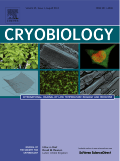
CRYOBIOLOGY
metrics 2024
Pioneering Discoveries in the Impact of Cold on Life
Introduction
CRYOBIOLOGY, published by Academic Press Inc Elsevier Science, is a prominent journal dedicated to the interdisciplinary study of the impact of low temperatures on biological systems. With a long-standing tradition since its inception in 1964, the journal has become a vital resource for researchers and practitioners across various fields including Agricultural and Biological Sciences, Biochemistry, Genetics and Molecular Biology, and Medicine. CRYOBIOLOGY's high impact factor and robust rankings—placing it in the 86th percentile in General Medicine and the 83rd percentile in Agricultural and Biological Sciences—reflect its significant contribution to advancing knowledge in these domains. Researchers gain access to cutting-edge studies and innovative methodologies, making it an essential platform for disseminating research findings. The journal operates without an open access model, ensuring that its dedicated community of readers remains engaged with high-quality, meticulously curated content through subscription-based access. As it moves toward its centennial milestone in 2024, CRYOBIOLOGY continues to nurture academic inquiry and foster collaborations that drive forward the science of cryobiology.
Metrics 2024
 0.552.302.4096
Metrics History
Rank 2024
Scopus
IF (Web Of Science)
JCI (Web Of Science)
Quartile History
Similar Journals

INTERNATIONAL JOURNAL OF MOLECULAR SCIENCES
Bridging Disciplines in Molecular ResearchInternational Journal of Molecular Sciences, published by MDPI, is a premier, open-access journal established in 2000, dedicated to the multifaceted study of molecular sciences. With its base in Switzerland and a commitment to disseminating high-quality research, the journal has rapidly gained recognition, boasting an impressive impact factor and excellent rankings across various categories. In the 2023 Scopus rankings, it achieved Q1 status in Computer Science Applications, Inorganic Chemistry, Organic Chemistry, Medicine, Physical and Theoretical Chemistry, and Spectroscopy, establishing it as a leading source of innovative findings in these fields. Additionally, it holds Q2 status in Catalysis and Molecular Biology, reflecting its broad relevance in contemporary research. The journal's comprehensive scope ensures access to vital advancements, making it an indispensable resource for researchers, professionals, and students eager to stay abreast of developments in molecular sciences.
STRESS-THE INTERNATIONAL JOURNAL ON THE BIOLOGY OF STRESS
Bridging Disciplines in Stress ResearchSTRESS - THE INTERNATIONAL JOURNAL ON THE BIOLOGY OF STRESS, published by Taylor & Francis Ltd, is an esteemed open-access journal dedicated to advancing our understanding of stress and its biological underpinnings. Established in 1996 and continuing until 2024, this journal is pivotal in the exploration of stress across multiple dimensions, including its impact on mental health, neurobiology, and endocrine systems. With an impressive categorization in Q2 and Q3 quartiles across various fields such as Behavioral Neuroscience, Psychiatry, and Physiology, STRESS ranks commendably within its discipline, positioning itself as a vital resource for researchers and professionals alike. As of 2022, the journal's open access policy enhances visibility and accessibility, fostering a broader dissemination of knowledge. The journal invites submissions from a diverse range of disciplines, aiming to bridge gaps across fields and encourage interdisciplinary collaboration. By addressing the multifaceted nature of stress, STRESS remains essential for those eager to contribute to this dynamic and critical area of research.

Journal of Biological Research-Thessaloniki
Elevating the Impact of Biological Research Worldwide.Journal of Biological Research-Thessaloniki, published by Aristotle University of Thessaloniki, is a distinguished academic journal committed to advancing the fields of Agricultural and Biological Sciences and Biochemistry, Genetics and Molecular Biology. As an Open Access journal since 2004, it provides a platform for the rapid dissemination of innovative research that spans diverse biological disciplines. With an impact factor that situates it in the Q2 category for Agricultural and Biological Sciences and Q3 for Biochemistry, Genetics and Molecular Biology as of 2023, the journal demonstrates a significant contribution to its respective fields. Located in Thessaloniki, Greece, it serves a global audience of researchers, professionals, and students eager to access quality scientific content. The journal is dedicated to publishing original research articles, reviews, and critical commentaries, encouraging collaboration and dialogue amongst scientists dedicated to the frontiers of biological research.
BIOCHIMICA ET BIOPHYSICA ACTA-MOLECULAR CELL RESEARCH
Exploring the molecular mechanisms of life.BIOCHIMICA ET BIOPHYSICA ACTA-MOLECULAR CELL RESEARCH is a premier journal published by Elsevier, dedicated to advancing the fields of cell biology and molecular biology. Established in 1982, this influential journal has been at the forefront of scientific research and innovation, currently holding esteemed positions with a Q2 ranking in Cell Biology and a Q1 ranking in Molecular Biology for 2023, reflecting its commitment to high-quality scholarship. With an impressive impact factor, it ranks in the 82nd and 78th percentiles for Molecular Biology and Cell Biology, respectively, amongst its peers. Researchers, professionals, and students will find this journal to be an invaluable resource for exploring the latest discoveries and methodologies in the molecular mechanisms underlying cellular functions. Although it is not an open-access journal, the insights offered in its pages contribute significantly to the scientific community's understanding of cellular and molecular processes, ensuring it remains a vital platform for disseminating cutting-edge research.

Cell Reports Methods
Empowering Researchers with Cutting-Edge TechniquesCell Reports Methods is a cutting-edge journal published by CELL PRESS, focusing on innovative methodologies in the vast fields of biochemistry, genetics, biotechnology, and radiological sciences. Launched in 2021, it has rapidly ascended to attain a Q1 ranking across multiple disciplines in the latest 2023 metrics, reflecting its influential contribution to the scientific community. With an emphasis on practical and rigorous experimental approaches, this journal serves as a vital resource for researchers looking to advance their methodologies and collaborate on significant findings in their respective specialties. Despite not being an open-access publication, Cell Reports Methods ensures broad accessibility through institutional subscriptions, allowing researchers from various backgrounds to engage with high-quality scholarly work. The journal presents a unique platform for sharing insights from interdisciplinary methods that foster innovation and discovery, ultimately shaping the future of scientific research.
GENES & DEVELOPMENT
Innovating Research at the Intersection of Genes and DevelopmentGENES & DEVELOPMENT, published by COLD SPRING HARBOR LAB PRESS, stands as a premier journal in the fields of Developmental Biology and Genetics, boasting a remarkable impact factor that reflects its prestigious position in the academic community—ranking Q1 in both disciplines as of 2023. Since its inception in 1987, this journal has been at the forefront of disseminating cutting-edge research, effectively bridging the gap between laboratory breakthroughs and their applications in health and disease. Researchers and professionals rely on GENES & DEVELOPMENT for its rigorous peer-review process and its commitment to promoting innovative studies that unravel the complexities of gene functions and developmental processes. With Scopus rankings placing it in the top percentile among its peers, this journal serves as a vital resource for students and established scientists alike, aspiring to expand their knowledge and contribute to the ever-evolving landscape of genetic and developmental research.
ACTA PHYSIOLOGIAE PLANTARUM
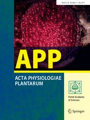
Driving advancements in agricultural productivity and research.ACTA PHYSIOLOGIAE PLANTARUM, published by Springer Heidelberg, is a leading journal dedicated to advancing the fields of Agronomy, Plant Science, and Physiology. With an ISSN of 0137-5881 and an E-ISSN of 1861-1664, this esteemed publication has a significant global outreach, being based in Germany. The journal is recognized for its impactful contributions, currently holding a Q2 ranking in both Agronomy and Crop Science, as well as Plant Science, and a Q3 ranking in Physiology according to 2023 category quartiles. Its Scopus rankings reflect its reputable standing within the academic community, with notable placements in Agricultural and Biological Sciences, further highlighting its importance for researchers and professionals in the field. The objective of ACTA PHYSIOLOGIAE PLANTARUM is to foster robust discussions and disseminate innovative studies that enhance our understanding of plant physiology and its applications. Though not an open-access journal, it provides comprehensive access options for readers keen on exploring cutting-edge research that drives advancements in agricultural productivity and sustainability. Through its dedication to excellence, this journal continues to be a vital resource for advancing knowledge and practices in plant sciences.

CRYOLETTERS
Elevating knowledge in the realms of cryobiology and beyond.CRYOLETTERS is a pioneering journal dedicated to the interdisciplinary fields of agronomy, anatomy, and medicine, with a particular focus on the biological implications of cryobiology and cryopreservation processes. Published in the United Kingdom by CRYO LETTERS, this esteemed journal has been disseminating pivotal research findings since 1993, providing a vital platform for both emerging and established researchers. With an impact factor reflective of its Q3 categorization in Agronomy and Crop Science, Anatomy, and miscellaneous Medicine, CRYOLETTERS is positioned as a significant contributor to the academic discourse in these areas. The journal's commitment to advancing knowledge facilitates crucial advancements in both scientific research and practical applications, making it essential reading for professionals and students alike. While access options vary, the journal upholds rigorous peer-review standards, ensuring that published works meet the highest scholarly criteria.
JOURNAL OF BIOSCIENCES
Pioneering Insights in Agricultural and Biological SciencesJOURNAL OF BIOSCIENCES, published by the Indian Academy of Sciences, has established itself as a pioneering platform in the fields of biosciences, encompassing diverse research areas such as agricultural and biological sciences, biochemistry, genetics, molecular biology, and medicine. With an impressive trajectory since its inception in 1979, the journal has achieved notable recognition, securing a Q1 ranking in Agricultural and Biological Sciences and maintaining its place in the top quartiles for Biochemistry and Medicine as of 2023. With Scopus rankings placing it at #32 in General Agricultural and Biological Sciences and #65 in General Biochemistry, Genetics, and Molecular Biology, the journal reaches the 85th and 70th percentiles respectively, reflecting its impact and relevance in current scientific discourse. Although it does not offer open access, the JOURNAL OF BIOSCIENCES remains crucial for researchers, professionals, and students dedicated to advancing knowledge and innovation within the biosciences, providing a vibrant forum for high-quality research and comprehensive reviews.
BIOLOGY BULLETIN
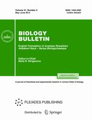
Empowering Research in Genetics and Molecular Biology.BIOLOGY BULLETIN is a prominent academic journal published by PLEIADES PUBLISHING INC, dedicated to advancing the fields of Agricultural and Biological Sciences as well as Biochemistry, Genetics, and Molecular Biology. With an ISSN of 1062-3590 and E-ISSN of 1608-3059, the journal has been a vital resource for researchers and professionals since its commencement in 1996. Located in the United States, BIOLOGY BULLETIN operates within a highly competitive academic landscape, achieving a 2023 ranking in the Q3 quartile for Agricultural and Biological Sciences and Q4 for Biochemistry, Genetics, and Molecular Biology, highlighting its commitment to delivering impactful research despite its challenges. Researchers seeking to publish their findings will find a platform for significant insights, as reflected in its Scopus rankings, where it stands at #183 and #199 out of 221 in its respective categories, showcasing opportunities for growth and visibility. While currently not an open-access publication, BIOLOGY BULLETIN plays a crucial role in facilitating scholarly communication and fostering an understanding of biological sciences, making it an essential read for academics, professionals, and students alike.