Culture Theory and Critique
Scope & Guideline
Advancing Critical Dialogue in Cultural Studies
Introduction
Aims and Scopes
- Interdisciplinary Cultural Critique:
The journal focuses on the critical examination of cultural texts and practices across various mediums, including literature, art, and media, utilizing interdisciplinary approaches to understand their societal implications. - Political and Social Theoretical Engagements:
It engages with contemporary political and social theories, analyzing how they intersect with cultural practices, addressing issues such as neoliberalism, militarism, and identity politics. - Aesthetic and Affective Analysis:
A significant aspect of the journal's scope is the exploration of aesthetics and affect, particularly how they shape and are shaped by cultural experiences and socio-political contexts. - Historical Contextualization:
The journal often situates contemporary cultural critiques within historical frameworks, examining the legacies of past movements and events on current cultural practices. - Focus on Marginalized Voices:
There is a consistent emphasis on amplifying marginalized voices and perspectives, including queer, feminist, and postcolonial critiques, fostering discussions around identity, representation, and power dynamics.
Trending and Emerging
- Militarization and Gaming Culture:
There is an increasing focus on the intersections between militarization and gaming culture, exploring how video games and simulations reflect and critique contemporary warfare and gender dynamics. - Biopolitics and Pandemic Responses:
The COVID-19 pandemic has spurred a surge in discussions around biopolitics, governance, and societal responses, particularly concerning health, security, and the implications for everyday life. - Queer and Trans Studies:
Emerging themes in queer and trans studies are becoming more prominent, with a focus on intersectionality and the complexities of identity within various cultural contexts. - Affect Theory and Cultural Experience:
There is a growing interest in affect theory, particularly how emotions and bodily experiences shape cultural practices and societal interactions, reflecting a broader trend in cultural studies. - Environmental and Ecological Critiques:
Recent publications indicate a rising concern with environmental issues and ecological critiques, engaging with themes of sustainability, species precarity, and the socio-ecological impacts of contemporary culture.
Declining or Waning
- Traditional Literary Criticism:
There has been a noticeable decline in papers focusing solely on traditional literary criticism, as the journal increasingly prioritizes interdisciplinary approaches that incorporate broader cultural and political analyses. - Static Historical Narratives:
Themes that rely on static or uncritical historical narratives are less frequent, indicating a shift towards more dynamic and critical historical engagements that connect past and present cultural phenomena. - Conventional Gender Studies:
While gender remains a vital theme, conventional approaches to gender studies that do not engage with intersectionality or contemporary socio-political contexts are becoming less prevalent. - Purely Theoretical Discourse:
There is a decreasing emphasis on purely theoretical discourse that lacks practical engagement with cultural phenomena, as the journal seeks to balance theory with empirical and experiential insights. - Eurocentric Perspectives:
The journal is moving away from Eurocentric perspectives, reflecting a broader trend towards global and decolonial critiques that prioritize diverse cultural contexts and histories.
Similar Journals
BERLINER JOURNAL FUR SOZIOLOGIE
Connecting scholars to the forefront of sociological discourse.The BERLINER JOURNAL FUR SOZIOLOGIE, published by VS VERLAG SOZIALWISSENSCHAFTEN-GWV FACHVERLAGE GMBH, stands as a significant contribution to the fields of Sociology and Political Science, with a commendable Scopus rank of 575 out of 1466, placing it within the top 60th percentile of journals in its category. Established in Germany, this journal has been a vital platform for scholarly discourse since its inception in 1992, transitioning through various publishing phases and demonstrating a robust commitment to advancing sociological inquiry. The journal's impact is underscored by its current Q3 quartile classification, reflecting its relevance and authority within the academic community. Although not open access, the BERLINER JOURNAL FUR SOZIOLOGIE ensures that readers and researchers can access a wealth of innovative research that informs social theories and practices, making it an essential resource for those engaged in understanding complex social dynamics. The journal continues to welcome submissions that push the boundaries of sociological thought and promote interdisciplinary approaches to contemporary issues.
GLQ-A JOURNAL OF LESBIAN AND GAY STUDIES
Innovating scholarship at the intersection of culture and identity.GLQ: A Journal of Lesbian and Gay Studies, published by Duke University Press, is a pioneering academic journal that has made significant contributions to the critical discourse around LGBTQ+ issues since its inception in 1996. With an ISSN of 1064-2684 and an E-ISSN of 1527-9375, this esteemed publication engages a wide audience of researchers, professionals, and students in cultural studies, gender studies, and queer theory. Ranked in Q2 for Cultural Studies and Q3 for Gender Studies in 2023, GLQ is recognized for its rigorous scholarship and innovative approaches to the study of sexuality and identity. The journal offers an invaluable platform for interdisciplinary dialogue, exploring the complexities of LGBTQ+ lives, cultures, and movements. Although not open access, GLQ remains a vital resource for those looking to stay at the forefront of scholarship in these dynamic fields. Whether you are a seasoned researcher or a newcomer to queer studies, GLQ provides essential insights and fosters ongoing conversations that challenge and expand our understanding of sexuality and gender.
Bulletin of Spanish Studies
Cultivating Academic Excellence in Spanish Cultural DiscourseBulletin of Spanish Studies is a prominent academic journal dedicated to the exploration and discourse of Spanish studies within the diverse realms of Cultural Studies and Literature and Literary Theory. Published by Routledge Journals, Taylor & Francis Ltd, this journal serves as a crucial platform for scholars, researchers, and students to disseminate their findings and engage in scholarly debates related to Spanish literature, culture, and linguistics. With an emphasis on high-quality, peer-reviewed research, the journal holds a reputable Q3 ranking in Cultural Studies and a commendable Q2 ranking in Literature and Literary Theory, reflecting its significant impact within the academic community. The Bulletin is indexed in notable databases, achieving a rank of #314 out of 1106 in Literature and Literary Theory and #738 out of 1304 in Cultural Studies, signaling its vital role in advancing knowledge in these fields. Although it does not currently offer open access options, the journal remains an essential resource for those passionate about the study of Spanish culture and literature from 2010 to 2024 and beyond.
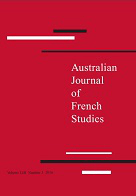
AUSTRALIAN JOURNAL OF FRENCH STUDIES
Connecting Scholars Through the Lens of French HeritageAustralian Journal of French Studies, published by Liverpool University Press, serves as a premier academic platform dedicated to the exploration and dissemination of research in French studies. With a robust history dating back to 1975, this journal focuses on a diverse array of subjects including cultural studies, history, linguistics, and literature, evident from its competitive Q2 and Q3 rankings across various categories in the 2023 quartiles. Although currently not open access, it prides itself on maintaining high scholarly standards, as reflected in its Scopus rankings across multiple disciplines. Through the evaluation of a broad spectrum of interdisciplinary works, the journal aims to foster a deeper understanding of French language and culture among researchers, professionals, and students alike. As it continues to publish valuable insights and foster academic dialogue, the Australian Journal of French Studies remains an essential resource for those interested in the nuances of the Francophone world.
Symploke
Championing Unrestricted Access to KnowledgeSymploke, published by University of Nebraska Press, is a leading interdisciplinary journal in the fields of literary and cultural studies that aims to foster dialogues across a diverse range of scholarly perspectives. With its ISSN 1069-0697 and E-ISSN 1534-0627, the journal is committed to publishing high-quality research that examines the intersections of literature, philosophy, and social theory. As a prominent platform for innovative scholarship, Symploke plays a crucial role in advancing critical discourse, making it an essential resource for researchers, professionals, and students alike. The journal provides unrestricted access to its valuable content, thereby ensuring the dissemination of knowledge without barriers. With an emphasis on in-depth analyses and theoretical contributions, Symploke continually seeks to expand the horizons of contemporary thought and offers a vital forum for voices within the academic community.
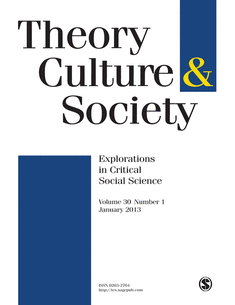
THEORY CULTURE & SOCIETY
Navigating the intricacies of theory and society.THEORY CULTURE & SOCIETY is a leading peer-reviewed journal published by SAGE PUBLICATIONS LTD, dedicated to the exploration and critique of social theory within the broader context of contemporary social sciences. Since its inception in 1982, this esteemed publication has fostered critical dialogue and interdisciplinary research, making significant contributions to the fields of sociology and political science, as evidenced by its impressive performance in the latest Scopus rankings, placing it in the top 20% of journals in both categories. With a strong Q1 classification in 2023, it consistently engages scholars, researchers, and students alike, offering insights and perspective on the dynamic interplay between culture, society, and theory. Although not an open-access journal, its commitment to advancing knowledge makes it an essential resource for those navigating the complexities of social phenomena in a rapidly changing world. Published from the United Kingdom, THEORY CULTURE & SOCIETY stands at the forefront of critical scholarship, making it an indispensable read for anyone interested in the development of contemporary social thought and theory.
CULTURAL CRITIQUE
Navigating the Complexities of Cultural NarrativesCULTURAL CRITIQUE is a premier academic journal published by University of Minnesota Press, dedicated to the interdisciplinary exploration of cultural phenomena through the lenses of anthropology, cultural studies, literature and literary theory, philosophy, and sociology. With its ISSN 0882-4371 and E-ISSN 1460-2458, the journal serves as a vital forum for scholars to engage, debate, and disseminate innovative ideas and methodologies that redefine cultural narratives and critiques. Spanning a publication timeline from 2002 to 2024, CULTURAL CRITIQUE holds significance in various academic categories, achieving Q4 rankings in anthropology and sociology and as high as Q2 in literature and literary theory. Its Scopus rankings further reinforce its value, placing it in the 82nd percentile among literature-related journals. Although it currently does not offer open access, this journal is key for researchers, professionals, and students aiming to deepen their understanding of culturally driven debates in the contemporary landscape.
PUBLIC CULTURE
Illuminating the Complexities of Contemporary Culture.PUBLIC CULTURE is a distinguished journal published by DUKE UNIVERSITY PRESS, known for its critical engagement with contemporary cultural studies and interdisciplinary scholarship. As a leading platform since its inception in 1996, PUBLIC CULTURE examines the intersections of culture, politics, and various social paradigms, fostering dialogue that challenges conventional wisdom and encourages innovative perspectives. With an impact factor that reflects its robust academic contribution, the journal is indexed in Scopus and spans multiple disciplines, ranking within the top quartiles in Arts and Humanities as well as Communication. Although it operates under a traditional subscription model, its scholarly output significantly influences fields within social psychology and related areas, making it an essential resource for researchers, professionals, and students seeking to engage with the dynamic landscape of public culture. With its commitment to publishing high-quality articles that explore the complexities of cultural phenomena, PUBLIC CULTURE remains a vital conduit for scholarly exchange and discovery.
SOUNDINGS
Engaging with Contemporary Issues Through Rigorous InquirySOUNDINGS, published by Penn State University Press, stands as a notable journal within the realms of the arts and humanities, cultural studies, and sociology and political science. With its ISSN 0038-1861 and E-ISSN 2161-6302, this academic periodical has been a platform for critical discourse and innovative research since its inception in the mid-1970s, although it has experienced several convergence periods. Though currently categorized in Q4 within its respective fields, including rankings that reflect its growing influence, SOUNDINGS continues to provide a rigorous space for interdisciplinary dialogue and scholarly reflection. Despite the absence of open access, the journal’s comprehensive articles are vital for researchers, professionals, and students seeking to deepen their understanding of complex cultural and societal dynamics. With its headquarters located at 820 North Univ Drive, U S B 1, Ste C, University Park, PA 16802, SOUNDINGS invites its readership to engage with contemporary issues through a rich lens of academic inquiry.

Altre Modernita-Rivista di Studi Letterari e Culturali
Advancing Critical Discourse in Linguistics and LiteratureAltre Modernita-Rivista di Studi Letterari e Culturali, published by Milano University Press, serves as a significant platform in the fields of Cultural Studies, Linguistics, and Literature. Since its transition to Open Access in 2009, this journal has made strides in democratizing knowledge, ensuring that resources and research are accessible to a broader audience. With an ISSN of 2035-7680, it publishes innovative research and critical discourse aimed at fostering interdisciplinary dialogue within the humanities. Although currently positioned in Q4 and Q3 quartiles, Altre Modernita is steadily contributing to academic conversation, promoting literary analysis, cultural critique, and linguistic exploration. Located in Italy, it invites contributions from scholars worldwide, encouraging a diverse range of perspectives. Altre Modernita remains a valuable resource for researchers, professionals, and students dedicated to understanding the complexities of modern literature and cultural narratives.