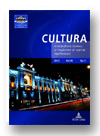
Cultura-International Journal of Philosophy of Culture and Axiology
Scope & Guideline
Illuminating the Nuances of Human Values and Culture.
Introduction
Aims and Scopes
- Interdisciplinary Cultural Studies:
The journal emphasizes an interdisciplinary approach to cultural studies, integrating perspectives from philosophy, sociology, history, literature, and the arts to explore cultural phenomena. - Focus on Latin American Contexts:
A significant portion of the journal's content centers on Latin American cultural and historical contexts, examining the unique sociopolitical and artistic developments in the region. - Art and Aesthetics:
The journal investigates the role of art, including visual arts, music, and performance, in cultural expression and societal reflection, contributing to discussions on aesthetics and cultural identity. - Historical Analysis and Memory Studies:
A core focus is placed on historical narratives and memory studies, exploring how past events shape contemporary cultural understandings and identities. - Philosophical Reflections on Culture:
The journal encourages philosophical reflections that interrogate cultural practices, values, and ideologies, fostering critical discourse on the implications of cultural phenomena. - Censorship and Cultural Production:
Exploration of censorship and its impact on cultural production is a recurring theme, highlighting the tensions between artistic expression and political power.
Trending and Emerging
- Intermediality and Transnationalism:
There is an increasing focus on intermediality and transnational themes, exploring how different cultural forms interact and influence each other across borders, particularly in relation to music, film, and literature. - Cultural Memory and Identity Politics:
Emerging themes related to cultural memory and identity politics are gaining prominence, reflecting contemporary societal issues and the role of culture in shaping identity amidst globalization. - Artistic Activism and Social Change:
The journal is trending towards exploring the intersection of art and activism, examining how cultural practices can engage with and respond to social and political movements. - Digital Culture and New Media:
With advancements in technology, there is a growing interest in the implications of digital culture and new media on traditional cultural practices, highlighting the evolving nature of cultural production. - Gender Studies and Feminist Perspectives:
An increasing number of articles focus on gender studies and feminist perspectives, addressing issues of representation, power dynamics, and the role of women in cultural narratives.
Declining or Waning
- Traditional Literary Criticism:
There seems to be a gradual decline in papers focusing purely on traditional literary criticism, with a shift towards more interdisciplinary approaches that blend literature with philosophy and cultural studies. - Historical Anachronism Studies:
Although historical anachronism was a significant theme in earlier publications, recent issues show a reduced frequency of articles specifically addressing this topic, suggesting a move towards more contemporary analyses. - Focus on Classical Music and Historical Genres:
The journal's engagement with classical music and historical genres, while still present, appears to be less frequent, indicating a potential shift towards popular music and contemporary cultural expressions.
Similar Journals

Beytulhikme-An International Journal of Philosophy
Unveiling Contemporary Philosophical DiscourseBeytulhikme-An International Journal of Philosophy is a distinguished publication dedicated to the exploration and dissemination of philosophical scholarship. Published by Beytulhikme Felsefe Cevresi, this journal serves as a platform for researchers, academics, and students to engage with contemporary philosophical discourses and historical inquiries. With its commitment to open access, Beytulhikme ensures that valuable philosophical insights are readily available to a global audience. The journal welcomes a diverse range of submissions, including theoretical papers, critical reviews, and interdisciplinary work that reflects the dynamic nature of philosophical research today. Located in Ankara, Turkiye, Beytulhikme plays a pivotal role in fostering a deeper understanding of philosophical concepts and methods, thus contributing to the academic community and enriching scholarly dialogue. As a key resource for professionals in the field, Beytulhikme not only encourages innovative thinking but also promotes a comprehensive examination of both Eastern and Western philosophical traditions.

Vestnik Sankt-Peterburgskogo Universiteta-Filosofiya i Konfliktologiya
Cultivating Academic Excellence in Interdisciplinary ResearchVestnik Sankt-Peterburgskogo Universiteta-Filosofiya i Konfliktologiya is a prestigious academic journal published by ST PETERSBURG UNIV PRESS, focusing on the interdisciplinary exploration of philosophy, conflict studies, cultural studies, and religious studies. With its ISSN 2542-2278 and E-ISSN 2541-9382, this journal serves as a vital platform for researchers and scholars looking to disseminate their findings in these dynamic fields. The journal has shown impressive rankings in 2023, achieving Q1 status in Cultural Studies and Religious Studies, alongside Q2 in Philosophy and Q3 in Sociology and Political Science. This positioning, alongside its diverse publication scope since its convergence in 2017, underscores the journal's critical role in advancing scholarly dialogue and research. Though it operates under a closed access policy, the journal remains integral for professionals and students seeking rigorous academic discourse and insights into contemporary issues affecting philosophy and conflictology within a cultural context. Its influence and reach in the academic community contribute significantly to ongoing debates and studies, establishing it as an essential resource for anyone engaged in these disciplines.
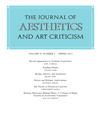
JOURNAL OF AESTHETICS AND ART CRITICISM
Connecting Minds Through Art and PhilosophyThe Journal of Aesthetics and Art Criticism, published by Oxford University Press, stands as a premier platform for scholarly discourse in the realms of music, philosophy, and the visual and performing arts. Established in 1996 and continuing through 2024, this journal has achieved remarkable recognition, being ranked in the Q1 category across several disciplines, and securing prestigious positions in various Scopus rankings: 29th in Music, 50th in Visual Arts and Performing Arts, and 151st in Philosophy, showcasing its essential contribution to arts and humanities scholarship. While not an open-access journal, its rich repository of articles offers invaluable insights for researchers, professionals, and students alike, fostering a deeper understanding of aesthetics and critical theory. The journal's commitment to interdisciplinary approaches opens pathways for innovative dialogue, making it an indispensable resource for anyone engaged in the study and appreciation of the arts.

Philosophies
Connecting minds through open access to knowledge.Philosophies is a leading open-access journal published by MDPI, dedicated to advancing research in the fields of Philosophy and the History and Philosophy of Science. Established in 2016 and located in Switzerland, this journal aims to stimulate scholarly dialogue and innovation by providing a platform for diverse philosophical perspectives and interdisciplinary approaches. With a commendable impact factor and ranking—Q2 in both Philosophy and History and Philosophy of Science in 2023—Philosophies stands out in the academic community with Scopus rankings placing it in the top tiers of its categories (Rank #176/806 in Philosophy and Rank #65/223 in History and Philosophy of Science). Authors and researchers are encouraged to submit their works as this journal continues to foster open access to knowledge, enabling global dissemination and collaboration among experts and enthusiasts alike. Join us in exploring the profound questions that shape our understanding of the world and human experience.
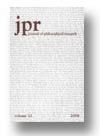
Journal of Philosophical Research
Fostering Insightful Dialogue in PhilosophyThe Journal of Philosophical Research, published by the PHILOSOPHY DOCUMENTATION CENTER, stands as a significant conduit for scholarly dialogue in the field of philosophy. With the ISSN 1053-8364 and E-ISSN 2153-7984, this journal has been instrumental in fostering academic discourse from its inception in 2002. Although not open access, it maintains a robust reputation, evidenced by its Q3 ranking in the philosophy category for 2023 and a commendable position in the Scopus Ranks (Rank #287 out of 806) reflecting the journal's impact factor in the arts and humanities. The journal's rigorous selection process ensures the publication of high-quality, peer-reviewed articles covering a broad spectrum of philosophical inquiries, making it an essential resource for researchers, professionals, and students alike. Situated in Charlottesville, Virginia, it exemplifies the commitment to advancing philosophical understanding and scholarship, while serving as a valuable repository of contemporary philosophical thought.
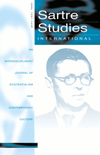
Sartre Studies International
Illuminating Sartre's Legacy for Modern MindsSartre Studies International is an esteemed academic journal dedicated to the exploration of the works and impact of Jean-Paul Sartre within the fields of literature and philosophy. Published by BERGHAHN JOURNALS, this journal provides a rigorous platform for scholars to discuss, critique, and analyze Sartre's contributions, while also engaging with contemporary philosophical discourse. With a recognized presence in Q3 of Literature and Literary Theory and Q4 in Philosophy for the year 2023, the journal highlights its commitment to advancing knowledge and understanding in these disciplines. As part of a thriving academic community, Sartre Studies International aims to facilitate interdisciplinary dialogue and foster scholarly innovation among researchers, professionals, and students alike. Although it is not an open-access publication, its contributions are vital for those looking to deepen their comprehension of Sartrean thought and its relevance to modern academic pursuits.

Cinemas
Cultivating a Dialogue on the Future of Cinematic ArtsCinemas is a leading academic journal dedicated to the exploration and critical analysis of cinematic studies, visual arts, and the dynamic interplay of communication within these fields. Published by Université de Montréal's Program in Bioethics in Canada, this journal serves as a vital platform for researchers, professionals, and students interested in the multifaceted dimensions of cinema and its cultural ramifications. Despite its current positioning in the Q4 quartile of both the Communication and Visual Arts and Performing Arts categories, Cinemas is committed to fostering innovative discourse and scholarship, as evidenced by its inclusion in indexed databases such as Scopus. Covering a range of topics from theoretical frameworks to practical applications within the arts, the journal aims to bridge the gap between academia and the vibrant world of visual storytelling. With a focus on open access, although currently not provided, Cinemas aspires to increase the accessibility of its research to a broader audience, encouraging a rich dialogue that is instrumental to the evolving landscape of cinematic studies.
Trans-Form-Acao
Elevating Philosophical Inquiry Since 1974Trans-Form-Acao is a prominent Open Access journal published by UNESP-MARILIA, dedicated to the field of Philosophy. Since its inception in 1974, the journal has fostered a vibrant academic discourse within the humanities, encouraging scholars to share innovative ideas and critical analyses. With an ISSN of 0101-3173 and an E-ISSN of 1980-539X, it has gained significant recognition in Scopus, ranking #285 out of 806 in the Arts and Humanities category, placing it in the 64th percentile for philosophy journals (2023). The journal's commitment to accessibility and rigorous scholarship has positioned it within the Q3 quartile, reflecting its growing influence and esteem in philosophical studies. Scholarly contributions are welcome across a range of philosophical topics, making it an essential resource for researchers, professionals, and students alike who seek to engage with contemporary philosophical thought. For further details, please refer to their address at AV HYGINO MUZZI FILHO, 737, MARILIA, SP 17525-900, BRAZIL.
Revista de Filosofia La Plata
Bridging Classical Wisdom and Contemporary IssuesRevista de Filosofia La Plata is a distinguished academic journal dedicated to the exploration and dissemination of philosophical thought and research. Published by the Universidad Nacional de La Plata within the Facultad de Humanidades y Ciencias de la Educación, this journal serves as a vital platform for scholars, practitioners, and students interested in various branches of philosophy, including but not limited to ethics, metaphysics, and social philosophy. With its commitment to Open Access, Revista de Filosofia La Plata ensures that valuable philosophical insights and discussions are accessible to a global audience, fostering rigorous debate and academic inquiry. Located in the heart of Buenos Aires, Argentina, this journal not only enhances regional scholarly dialogue but also contributes to the international landscape of philosophical research. Engaging with contemporary and classical philosophical issues, it aims to inspire new perspectives and guide future ethical and theoretical considerations in academia and beyond.
Dao-A Journal of Comparative Philosophy
Advancing Dialogue Across CulturesDao: A Journal of Comparative Philosophy, published by Springer, stands as a preeminent platform in the field of comparative philosophy. Since its inception in 2003, this journal has cultivated an esteemed reputation, evidenced by its Q1 ranking in Philosophy and a commendable position within the top 67th percentile of arts and humanities disciplines according to Scopus metrics. The journal invites scholars to engage in a rich dialogue that reflects the diversity of philosophical thought across cultures, promoting interdisciplinary research and fostering an international academic community. Although it does not offer open access, its rigorous peer-review process ensures that each publication contributes significantly to the advancement of philosophical inquiry. Based in the Netherlands, Dao's commitment to exploring the intersections of Eastern and Western philosophical traditions remains vital during its ongoing coverage from 2007 to 2024. By publishing original research, review articles, and critical essays, Dao plays an essential role in shaping the discourse within the philosophical landscape, serving as a valuable resource for researchers, professionals, and students alike.