Current Opinion in Critical Care
Scope & Guideline
Navigating the complexities of critical care practice.
Introduction
Aims and Scopes
- Long-term Outcomes in Critical Care:
The journal consistently focuses on understanding and improving long-term outcomes for critically ill patients, including those recovering from acute respiratory failure, sepsis, and other severe conditions. - Management of Severe Infections:
There is a core emphasis on the clinical management of severe infections, particularly in the context of antibiotic stewardship, treatment of multidrug-resistant organisms, and the impact of infections in critically ill patients. - Innovative Technologies and Approaches:
The journal explores the role of advanced technologies, such as artificial intelligence and augmented intelligence, in enhancing clinical decision-making and patient management in intensive care settings. - Patient-Centered Care:
A consistent theme is the focus on meeting the complex needs of critically ill patients and their families, with discussions around frailty, rehabilitation, and supportive care strategies. - Nutrition and Metabolism:
The journal addresses nutritional strategies in critical illness, emphasizing personalized approaches to nutrition therapy, metabolic support, and the role of micronutrients. - Emerging Evidence in Cardiogenic Shock:
There is a notable focus on the management of cardiogenic shock, with discussions centered on innovative treatment strategies, hemodynamic monitoring, and the role of mechanical support.
Trending and Emerging
- Impact of COVID-19 on Critical Care Practices:
The pandemic has prompted increased scrutiny of critical care practices, leading to a growing body of literature focused on the management of COVID-19 patients and the long-term implications of the pandemic on critical care delivery. - Artificial Intelligence and Technology Integration:
There is a marked increase in discussions surrounding the use of artificial intelligence and machine learning to improve patient outcomes in critical care, reflecting broader trends in healthcare technology. - Complex Patient Management:
Emerging themes include the management of complex, multifaceted patient needs, particularly in older adults and those with multiple comorbidities, as the journal highlights interdisciplinary approaches to care. - Tailored Nutrition Strategies:
A growing emphasis on personalized nutrition therapy and the impact of micronutrient management on recovery outcomes indicates a shift towards individualized care in the critical care setting. - Research on Long-term Recovery and Rehabilitation:
The journal is increasingly focusing on long-term recovery and rehabilitation strategies for critically ill patients, emphasizing the importance of follow-up care and quality of life post-ICU.
Declining or Waning
- Basic Life Support and Traditional Resuscitation Techniques:
There seems to be a waning focus on traditional resuscitation techniques as the journal increasingly emphasizes advanced technologies and novel therapeutic approaches in critical care. - Generalized Approaches to Patient Care:
The journal has moved away from one-size-fits-all strategies in patient management, particularly in the context of nutrition and metabolic support, signaling a shift towards more personalized care. - Older Perspectives on Infection Management:
Older paradigms surrounding infection management, particularly those that do not incorporate modern antimicrobial stewardship or resistance patterns, appear to be less frequently addressed.
Similar Journals
Medizinische Klinik-Intensivmedizin und Notfallmedizin
Innovative Insights in Intensive and Emergency MedicineMedizinische Klinik-Intensivmedizin und Notfallmedizin, published by SPRINGER HEIDELBERG, is a distinguished journal that serves the fields of critical care, intensive care medicine, emergency medicine, and internal medicine. With an ISSN of 2193-6218 and an E-ISSN of 2193-6226, the journal has established its presence in Germany and has garnered respect within the international medical community. It has demonstrated noteworthy impact, classified in the Q2 and Q3 quartiles across various categories in 2023, including Critical Care and Intensive Care Medicine, Emergency Medicine, and Emergency Nursing. This journal not only showcases cutting-edge research but also offers a platform for sharing innovative practices and clinical developments, thereby facilitating improved patient care and outcomes. As an accessible resource for researchers, professionals, and students dedicated to advancing their knowledge in acute and critical care settings, the journal represents an essential addition to the scholarly landscape in its field.
Journal of Acute Medicine
Transforming acute care with impactful research findings.Journal of Acute Medicine is a pivotal platform for disseminating cutting-edge research within the fields of Critical Care and Intensive Care Medicine and Emergency Medicine. Published by the Taiwan Society of Emergency Medicine in the Netherlands, this journal serves as a vital resource for healthcare professionals and researchers devoted to advancing acute medical practice. With an ISSN of 2211-5587 and an E-ISSN of 2211-5595, the journal features a collection of high-quality articles that focus on the latest developments and challenges facing emergency healthcare systems. Since its inception in 2011, the journal has achieved a respectable Q3 ranking in both critical care and emergency medicine categories, demonstrating its commitment to scholarly excellence. Although it currently does not operate as an open-access publication, the journal provides a critical forum for exchanging knowledge, fostering collaborations, and enhancing clinical practices, ensuring that it remains an essential read for those involved in acute medical care.
Journal of Critical & Intensive Care
Fostering innovation in the realm of intensive care.The Journal of Critical & Intensive Care, published by the esteemed Soc Turkish Intensivists - STI, serves as a vital platform for advancing knowledge and research in the evolving fields of critical care and intensive medicine. Since its inception in 2020, this journal has focused on disseminating high-quality research that addresses the complexities and challenges faced in the intensive care units, positioning itself as a critical resource for healthcare professionals, researchers, and students in Turkey and beyond. Although currently categorized in the Q4 quartile for Critical Care and Intensive Care Medicine, with a Scopus rank of 99 out of 110, the journal is rapidly gaining attention for its scholarly contributions. With an ongoing commitment to open access principles, it aims to enhance accessibility to groundbreaking studies and reviews, promoting collaborative progress in the critical care domain. The Journal of Critical & Intensive Care is not just a publication; it is a catalyst for innovation and knowledge-sharing critical to improving patient outcomes in intensive care settings.
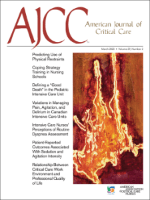
AMERICAN JOURNAL OF CRITICAL CARE
Empowering practitioners with cutting-edge knowledge.Welcome to the American Journal of Critical Care, a premier publication dedicated to advancing the field of critical care nursing and enriching the understanding of critical care practices. Established in 1992 and published by the American Association of Critical Care Nurses, this journal serves as a vital resource for researchers, practitioners, and students alike, providing cutting-edge research, insightful reviews, and evidence-based practices that shape modern critical care. With an impressive impact factor and distinguished rankings—ranking in Q1 for Critical Care Nursing and Q2 for miscellaneous Medicine in 2023—this journal underscores its significance in the healthcare landscape. Although it does not currently offer Open Access, the American Journal of Critical Care remains committed to disseminating high-quality knowledge that drives innovation and improves patient care in critical settings. Join us as we explore the latest advancements and pivotal studies that influence patient outcomes and shape the future of nursing practice.
CLINICAL NUTRITION
Advancing the Science of Nutrition in Clinical CareCLINICAL NUTRITION, published by Churchill Livingstone, is a premier international journal dedicated to advancing the field of nutrition and dietetics, as well as critical care and intensive care medicine. Established in 1982, the journal has consistently delivered high-quality, peer-reviewed research, celebrated for its impact with an impressive Q1 ranking in both Critical Care and Intensive Care Medicine and Nutrition and Dietetics categories as of 2023. With its emphasis on collaborative discourse among researchers, clinicians, and educators, CLINICAL NUTRITION plays a crucial role in shaping dietary practices and interventions that enhance patient care and recovery. Although the journal does not provide open access, its rigorously curated content remains a vital resource for professionals seeking to implement evidence-based nutrition strategies in clinical settings. The journal is situated in the United States, with operations based out of Edinburgh, Scotland. Researchers are encouraged to engage with this influential publication to stay abreast of the latest findings and innovations within these intersecting fields.

Tuberkuloz ve Toraks-Tuberculosis and Thorax
Championing excellence in thoracic disease scholarship.Tuberkuloz ve Toraks (Tuberculosis and Thorax) is a distinguished journal published by the TURKISH ASSOCIATION OF TUBERCULOSIS AND THORAX located in Turkey. Serving as a pivotal platform for researchers and practitioners in the fields of Critical Care, Intensive Care Medicine, and Pulmonary and Respiratory Medicine, this journal has been disseminating vital research since 2003 and is committed to advancing knowledge and clinical practices related to tuberculosis and thoracic diseases. Although currently not an Open Access publication, its relevance is underscored by its rankings within Scopus, including a Q3 category in Critical Care and Intensive Care Medicine and a Q4 in Pulmonary and Respiratory Medicine, reflecting its significant contributions to the academic community. With a mission to foster the exchange of innovative ideas and encourage rigorous scholarly discourse, Tuberkuloz ve Toraks plays an essential role in addressing pressing health challenges associated with respiratory ailments and remains an invaluable resource for researchers, health professionals, and students dedicated to improving outcomes in thoracic health.
Journal of the Intensive Care Society
Elevating Standards in Intensive MedicineThe Journal of the Intensive Care Society, published by SAGE Publications Ltd, serves as a premier platform for disseminating cutting-edge research and advancements in the field of critical care and intensive care medicine. With its ISSN of 1751-1437, this influential journal holds a distinguished position, currently ranked in the Q2 category for Critical Care and Intensive Care Medicine and Q1 in Critical Care Nursing, showcasing its significant impact within the academic community. The journal caters to a diverse audience including researchers, healthcare professionals, and students, by providing insightful articles that inform best practices and enhance patient care in intensive settings. It boasts impressive Scopus ranks, listed as 4th out of 27 in Critical Care Nursing and 32nd out of 110 in the broader category of Critical Care Medicine, reflecting its commitment to excellence. With content available from 2010 through to 2024, the Journal of the Intensive Care Society is essential for those looking to stay at the forefront of critical care innovation and research.
JOURNAL OF CRITICAL CARE
Advancing Critical Care Knowledge for a Healthier TomorrowJOURNAL OF CRITICAL CARE, published by W B SAUNDERS CO-ELSEVIER INC, is a prestigious peer-reviewed journal in the field of critical care and intensive care medicine. With an impressive Q1 classification in 2023, it stands as a leading publication among its peers, ranking #12 out of 110 in the Scopus database, which places it in the 89th percentile of critical care-related journals. Established in 1986 and with a converged timeline extending to 2025, the journal serves as a critical resource for international researchers, healthcare professionals, and students dedicated to advancing practices and understanding within the realm of critical care. Although it does not offer Open Access, the journal provides high-quality, rigorously reviewed articles that address contemporary issues, innovative techniques, and groundbreaking research in critical care medicine. By fostering scholarly dialogue and disseminating new knowledge, the JOURNAL OF CRITICAL CARE is pivotal in shaping the future of intensive patient care and enhancing health outcomes.
Medicina Intensiva
Inspiring Progress in the Realm of Intensive CareMedicina Intensiva is a distinguished journal published by Elsevier España SLU, specializing in the critical care and intensive medicine fields. Since its inception in 1988, this peer-reviewed journal has established itself as a vital resource for healthcare professionals and researchers dedicated to advancing the knowledge and treatment of critically ill patients. With an impact factor ranked in the Q2 category for Critical Care and Intensive Care Medicine, the journal sits at the 50th percentile among its peers, reflecting its reputable standing in the academic community. The scope of the journal encompasses a wide array of topics, from clinical practices to innovative research findings, contributing significantly to the enhancement of patient care in intensive settings. Although the journal does not currently offer Open Access options, its valuable content is accessible to subscribers and institutions, reinforcing its role as an important conduit for disseminating high-quality research. As we continue into 2024, *Medicina Intensiva* remains committed to supporting the medical community through insightful articles and timely reviews that shape the future of intensive care.
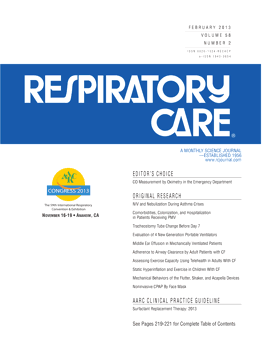
Respiratory Care
Advancing the Frontiers of Respiratory Medicine.Respiratory Care is a leading journal in the fields of Critical Care, Intensive Care Medicine, and Pulmonary and Respiratory Medicine, published by DAEDALUS ENTERPRISES INC. With a history dating back to 1973 and continuing through 2024, this journal serves as a vital platform for disseminating innovative research findings, clinical practices, and advancements in respiratory healthcare. The journal is recognized for its impact, reflected in its impressive Q2 quartile rankings across several categories in 2023, demonstrating its relevance and influence in the medical community. Although it is not an Open Access publication, it provides critical insights and foster discussions aimed at enhancing patient care and treatment protocols for respiratory diseases. The journal is indexed in notable databases, ensuring wide visibility and accessibility of its content to researchers, professionals, and students dedicated to advancing knowledge and practice in respiratory care.