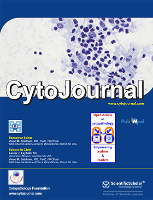
CytoJournal
Scope & Guideline
Advancing the Frontiers of Cytopathology and Forensic Medicine.
Introduction
Aims and Scopes
- Cytopathological Diagnostics:
The journal extensively covers the diagnosis and interpretation of cytological specimens from various body sites, including but not limited to fine-needle aspirations, effusions, and biopsies. - Innovative Techniques and Methodologies:
It highlights advancements in cytological techniques, including immunocytochemistry, liquid-based cytology, and molecular testing, showcasing their impact on diagnostic accuracy. - Clinical Applications and Case Studies:
CytoJournal publishes case studies that illustrate the practical applications of cytopathology in clinical settings, providing insights into diagnostic challenges and resolutions. - Histopathological Correlation:
The journal emphasizes the importance of correlating cytological findings with histopathological results, enhancing the understanding of disease processes and improving diagnostic reliability. - Education and Guidelines:
It serves an educational purpose by providing guidelines and reviews on best practices in cytopathology, supporting both seasoned professionals and trainees in the field.
Trending and Emerging
- Molecular Diagnostics:
There is a growing focus on molecular techniques such as gene methylation and molecular profiling in cytological samples, underscoring their importance in enhancing diagnostic accuracy and personalizing treatment. - Integration of Artificial Intelligence:
The incorporation of artificial intelligence and machine learning in cytopathology is gaining traction, with studies exploring how these technologies can aid in diagnostic processes and improve efficiency. - Specific Cancer Types and Rare Cases:
An increasing number of publications are dedicated to specific cancer types and rare cases, reflecting a trend towards detailed explorations of unique diagnostic challenges and advancements in targeted therapies. - Interdisciplinary Approaches:
Collaborative studies that integrate cytopathology with other disciplines, such as radiology and surgical pathology, are on the rise, highlighting the importance of a multidisciplinary approach in patient care. - Patient-centered Outcomes and Quality Improvement:
There is a noticeable trend towards research that assesses the impact of cytopathology on patient outcomes and the implementation of quality improvement initiatives within cytology laboratories.
Declining or Waning
- Traditional Cytological Techniques:
There is a noticeable decrease in publications focusing on conventional cytology methods as newer, more efficient techniques such as liquid-based cytology and digital imaging gain prominence. - General Reviews on Common Cancers:
The journal has shifted away from broad reviews on common cancers towards more specialized studies, particularly those that delve into specific diagnostic challenges or novel findings. - Non-Malignant Conditions:
Research and publications concerning non-malignant cytological diagnoses appear to be waning, as the focus has moved towards malignancy and diagnostic precision. - Historical Perspectives:
There is a reduction in articles that provide historical perspectives on cytopathology, likely due to the field's rapid evolution and the increasing emphasis on contemporary techniques and findings.
Similar Journals
JOURNAL OF CLINICAL PATHOLOGY
Elevating Standards in Diagnostic ExcellenceJOURNAL OF CLINICAL PATHOLOGY, published by BMJ PUBLISHING GROUP, stands at the forefront of advancements in the field of clinical pathology, offering a platform for groundbreaking research and insights from 1948 to the present. With an impressive impact factor and categorized as Q1 in both Medicine (miscellaneous) and Pathology and Forensic Medicine for 2023, the journal holds a distinguished position in the academic community, ranking 22nd out of 208 journals in its category on Scopus and representing the 89th percentile. While the journal does not currently offer open access, it remains a vital resource for researchers, healthcare professionals, and students seeking to stay current with innovative methodologies, clinical techniques, and diagnostic advancements. Located in London, United Kingdom, the journal aims to bridge the gap between laboratory findings and clinical practice, emphasizing the importance of evidence-based pathology in improving patient care and treatment outcomes. Engage with the JOURNAL OF CLINICAL PATHOLOGY to enhance your understanding and contribute to the evolving landscape of clinical pathology research.
MODERN PATHOLOGY
Elevating Knowledge in Pathology and ForensicsMODERN PATHOLOGY is a premier journal in the field of pathology and forensic medicine, published by Elsevier Science Inc. With an impressive impact factor that places it in the top 1st quartile (Q1) for 2023, and a remarkable rank of 5 out of 208 in its category according to Scopus, it serves as a vital resource for researchers, professionals, and students alike. Established in 1988, the journal focuses on the latest advancements in diagnostic pathology, molecular pathology, and related fields, providing a platform for innovative research that drives the discipline forward. Although it does not operate under an open access model, readers can expect rigorously peer-reviewed publications that contribute to the growing body of knowledge in pathology. With a continuous commitment to excellence and relevance, MODERN PATHOLOGY remains a fundamental avenue for disseminating high-quality scientific research globally, facilitating the growth and development of its field.
CYTOPATHOLOGY
Decoding Cellular Mysteries for Medical ProgressCYTOPATHOLOGY is a pivotal journal published by WILEY, focusing on the dynamic field of cytopathology within the broader medical and pathological sciences. Founded in 1990, this journal has become a crucial resource for researchers, professionals, and students interested in the microscopic examination of cell samples for diagnostic purposes. With an ISSN of 0956-5507 and E-ISSN of 1365-2303, CYTOPATHOLOGY is indexed in Scopus, where it currently holds a rank of #113 in Pathology and Forensic Medicine and #43 in Histology, placing it in the Q3 quartile for multiple categories in 2023. The journal publishes original research, reviews, and clinical studies that advance the understanding and application of cytopathology and its significance in health care. Although not an Open Access journal, its commitment to providing high-quality research makes it an essential platform for disseminating knowledge in the field. Researchers and practitioners looking to stay at the forefront of cytopathology developments will find CYTOPATHOLOGY to be an invaluable resource.
ANNALES DE PATHOLOGIE
Transforming Understanding in Pathology and Forensic MedicineANNALES DE PATHOLOGIE, published by MASSON EDITEUR, stands as a pivotal resource in the field of pathology and forensic medicine, delivering critical insights since its inception in 1981. With an emphasis on advancing understanding and research applications within these domains, the journal is positioned to cater to a diverse audience of researchers, healthcare professionals, and students alike. While currently classified in the Q4 category within the pathway of Pathology and Forensic Medicine, it remains committed to fostering scholarly contributions and innovative research that contribute to the field's growth. Although it does not offer Open Access options, its print and electronic ISSNs (0242-6498 and 2213-008X) ensure availability for readership across global institutions. The Scopus ranking highlights its niche relevance, with a current rank of #189 out of 208 in its category, indicating a promising trajectory for future research endeavors. Published in France, ANNALES DE PATHOLOGIE invites contributions that engage the academic community and advance knowledge in pathology's most pressing matters.
HISTOPATHOLOGY
Advancing the Science of Disease UnderstandingHISTOPATHOLOGY is a premier scholarly journal published by WILEY, targeting the fields of histology, pathology, and forensic medicine. With an ISSN of 0309-0167 and an E-ISSN of 1365-2559, this esteemed journal has maintained a strong academic presence since its inception in 1977. Boasting an impressive Q1 ranking in crucial categories such as Histology and Pathology, it ranks 13th out of 208 in Pathology and Forensic Medicine, and 5th out of 62 in Histology, reflecting its high impact and relevance within the scientific community. HISTOPATHOLOGY serves as a critical platform for disseminating significant research findings, reviews, and advancements in the diagnostic and therapeutic aspects of pathology. Although it does not operate under an open access model, its rigorous peer-review process ensures that published articles uphold the highest standards of scientific integrity. Scholars and practitioners alike benefit from the insights shared in this journal, as it aims to bridge the gap between laboratory science and clinical practice, fostering innovation and enhancing our understanding of disease mechanisms.
Journal of Radiology Case Reports
Transforming Patient Care with Innovative Case InsightsThe Journal of Radiology Case Reports is a pioneering open-access journal dedicated to the publication of original case reports in the field of radiology, providing a crucial platform for the dissemination of valuable clinical insights and advancements in diagnostic imaging. Published by EDURAD since 2008, this journal aims to bridge the gap between clinical practice and ongoing research by showcasing unique cases that can enhance diagnostic accuracy and patient care. With an ISSN of 1943-0922, the journal is committed to excellence, evidenced by its current ranking in the Scopus database, where it stands at position #253 among 333 titles in the field, corresponding to a 24th percentile. The journal is indexed in notable databases and features an HIndex reflective of its ongoing contribution to medical literature. Researchers, professionals, and students can access insightful articles covering diverse case scenarios, thus enriching their knowledge of medical laboratory technology and enhancing their expertise in radiology, nuclear medicine, and imaging. The journal not only provides a wide reach through its open access model but also encourages collaborative research efforts, fostering the rapid circulation of case-based knowledge essential to the evolving landscape of radiological science.
Pathologia
Advancing the Frontiers of PathologyPathologia is a prominent open-access journal dedicated to advancing the field of clinical and experimental pathology, published by ZAPORIZHZHYA STATE MEDICAL UNIVERSITY. Established in 2013, the journal aims to provide a platform for researchers, clinicians, and students to share innovative research, case studies, and reviews that are critical to understanding disease mechanisms and improving diagnostic and therapeutic strategies. With a steady commitment to high-quality research dissemination and accessibility, this journal serves as an essential resource for those in the medical and health sciences fields. Researchers engaging with Pathologia can explore a diverse range of topics, including histopathology, molecular pathology, and laboratory medicine, promoting both scholarly discussion and practical applications. The journal's open-access model ensures that vital research findings are freely available to the global academic community, fostering a collaborative environment that is crucial for the advancement of pathology as a discipline.

PATHOLOGICA
Elevating Research Standards in Pathology and Forensic Sciences.PATHOLOGICA is a leading academic journal dedicated to the field of pathology and forensic medicine, published by PACINI EDITORE. With a rich history dating back to its inception in 1945, the journal has consistently contributed to the advancement of knowledge in these vital areas of medical research and practice. Currently ranked in the Q1 quartile for Pathology and Forensic Medicine and holding an impressive position as #42 out of 208 in the Scopus rankings, it reflects a significant impact within the academic community, boasting an 80th percentile ranking. The journal is committed to publishing high-quality, peer-reviewed articles that explore innovative research findings and clinical advancements, making it an essential resource for researchers, clinicians, and students alike. Though it does not offer open access, PATHOLOGICA continues to foster scholarly communication by disseminating cutting-edge research findings, thus playing a pivotal role in enhancing pathology education and practice worldwide.
ACTA CYTOLOGICA
Illuminating Cellular Pathways for Future DiscoveriesACTA CYTOLOGICA is a premier journal dedicated to the field of cytology, offering a platform for researchers, professionals, and students interested in the intricate study of cellular biology and its applications in the medical domain. Published by KARGER in Switzerland, the journal has been a vital resource since its inception in 1960 and is recognized for its rigorous peer-reviewed articles. With a notable impact factor reflecting its significance—ranked in the Q2 category in both Medicine (miscellaneous) and Pathology and Forensic Medicine, and Q3 in Histology for 2023—ACTA CYTOLOGICA continues to contribute valuable insights into cytological research and its implications for clinical practice. The journal maintains an annual focus on cutting-edge studies and reviews that enhance understanding and methodological advancements in cytology. Although it does not provide open access, it remains an essential read for those involved in histology and pathology, promising to keep them abreast of the latest findings and technological innovations in the field.
JOURNAL OF PATHOLOGY
Pioneering Pathology: Where Research Meets RigorWelcome to the Journal of Pathology, a premier academic publication specializing in the field of pathology and forensic medicine. Established in 1969 and published by Wiley, this journal has garnered significant recognition within the research community, reflected in its impressive ranking of #6 out of 208 in Scopus, placing it in the 97th percentile. The Journal of Pathology serves as a critical platform for disseminating cutting-edge research findings, innovative methodologies, and topical reviews that advance our understanding of diseases and their underlying mechanisms. With no open access charge, this esteemed journal is committed to maintaining the highest standards of scientific rigor and integrity. As a Q1 journal in its category for 2023, it continues to shape the field of pathology and contribute invaluable insights to researchers, medical professionals, and students alike. We invite you to explore the wealth of knowledge encapsulated in each issue and engage with the vibrant discussions that strive to propel the science of pathology forward.