DEMENTIA AND GERIATRIC COGNITIVE DISORDERS
Scope & Guideline
Unraveling the complexities of geriatric cognitive disorders.
Introduction
Aims and Scopes
- Cognitive Function and Aging:
Research on cognitive function in older adults, exploring various factors affecting cognitive aging, including biological, psychological, and social determinants. - Neurodegenerative Diseases:
Investigations into neurodegenerative disorders such as Alzheimer's disease and vascular dementia, focusing on pathophysiology, biomarkers, and clinical outcomes. - Intervention Strategies:
Evaluation of therapeutic interventions, including pharmacological and non-pharmacological approaches, aimed at improving cognitive function and quality of life in older adults. - Caregiver Support and Burden:
Studies addressing the impact of dementia on caregivers, exploring strategies to alleviate caregiver burden and improve support systems. - Health Disparities and Cultural Perspectives:
Research highlighting health disparities in dementia across different populations, emphasizing culturally sensitive practices in dementia care. - Technological Innovations:
Exploration of technological advancements in the assessment and management of cognitive disorders, including machine learning and telehealth applications.
Trending and Emerging
- Machine Learning and Predictive Analytics:
An increasing number of studies are utilizing machine learning techniques to predict cognitive decline and identify at-risk populations, showcasing the integration of advanced data analytics in dementia research. - Impact of Lifestyle Factors:
Research focusing on the influence of lifestyle factors such as diet, exercise, and social engagement on cognitive health is gaining traction, emphasizing preventive strategies in dementia care. - Cultural and Social Determinants of Health:
There is a rising interest in understanding how cultural and social determinants impact cognitive health and dementia, reflecting a broader commitment to health equity in research. - Neuropsychiatric Symptoms in Dementia:
Emerging studies are increasingly addressing the neuropsychiatric symptoms associated with dementia, highlighting their impact on patient care and caregiver burden. - Integration of Technology in Care,:
The use of technology in monitoring and managing dementia, including telehealth and digital interventions, is becoming more prevalent, indicating a shift towards innovative care delivery models.
Declining or Waning
- Traditional Pharmacological Interventions:
There has been a noticeable decline in studies focusing solely on traditional pharmacological treatments for dementia, as the field increasingly explores holistic and non-pharmaceutical management strategies. - Basic Neuroscience Research:
Research that focuses primarily on basic neuroscience without application to clinical practice seems to be waning, as the emphasis shifts towards translational research that directly informs clinical care. - Single-Factor Studies:
The journal has seen fewer studies examining single risk factors for dementia without considering multifactorial approaches, reflecting a growing recognition of the complexity of cognitive disorders.
Similar Journals
Geriatrics & Gerontology International
Enhancing Lives Through Geriatric ResearchGeriatrics & Gerontology International, published by WILEY, is a prestigious academic journal dedicated to advancing the field of geriatric and gerontological research. With a strong focus on the interdisciplinary aspects of aging, this journal has established itself as a leading source of high-quality research, reflected in its impressive impact factor and 2023 Scopus rankings, including a Q1 status in Health (Social Science) and Q2 in both Geriatrics and Gerontology. Since its inception in 2004 and continuous publication from 2008 to 2024, it has fostered a vibrant exchange of ideas among researchers, clinicians, and students alike. The journal serves as a critical resource for innovative studies, reviews, and commentaries that help shape policies and practices affecting the elderly population. It is essential reading for those dedicated to improving the quality of life for older adults and contributes significantly to the understanding of the complexities surrounding aging.

Gerontology and Geriatric Medicine
Transforming elder care through high-quality research.Gerontology and Geriatric Medicine is a distinguished journal published by SAGE Publications Inc, focusing on the vital field of gerontology and geriatrics. With an impressive Q2 ranking in Geriatrics and Gerontology as of 2023, this journal serves as a crucial platform for disseminating high-quality research and innovation related to aging and elderly care. Since embracing an Open Access model in 2015, it has broadened its reach, enabling scholars, researchers, and practitioners worldwide to access valuable insights without barriers. The journal’s scope encompasses a variety of interdisciplinary studies that address the multifaceted aspects of geriatric medicine, making it an essential resource for anyone dedicated to advancing knowledge and practices in this critical domain. With its commitment to enhancing the understanding of aging populations, Gerontology and Geriatric Medicine is poised to contribute significantly to the ongoing discourse and research developments in the care for older adults.
Current Geriatrics Reports
Connecting professionals with the latest developments in geriatrics.Current Geriatrics Reports is a pivotal journal published by SPRINGER, dedicated to disseminating cutting-edge research and insights in the dynamic field of geriatrics and gerontology. Launched in 2014 and ongoing until 2024, this journal plays a critical role in addressing the complex needs and challenges faced by the aging population. Although it currently holds a Q4 quartile ranking in its category and occupies the 84th position out of 116 in the Scopus metrics for Medicine, Geriatrics, and Gerontology, it serves as a vital platform for emerging research that shapes clinical practices and policy-making. Researchers, professionals, and students alike will find Current Geriatrics Reports to be an invaluable resource for staying updated on advancements, best practices, and innovations in geriatric care. While the journal is not open access, it continues to impact the field significantly and enrich contemporary discussions surrounding aging.

Cerebral Circulation-Cognition and Behavior
Pioneering Research at the Intersection of Mind and MovementCerebral Circulation-Cognition and Behavior is an impactful journal published by Elsevier that focuses on the intersections of cerebral circulation, cognitive function, and behavioral science. Since its establishment in 2020, the journal has provided a vital platform for researchers and professionals in the fields of Behavioral Neuroscience, Biological Psychiatry, and Cognitive Neuroscience. With a current classification in the Q3 quartile across several neuroscience categories and a promising trajectory during its converged years (2020-2024), the journal highlights significant advancements in our understanding of the neural underpinnings of behavior. Although it is not open access, its commitment to quality research makes it an essential resource for anyone engaged in neurological, cognitive, and psychiatric studies. As discoveries in these fields continue to grow, Cerebral Circulation-Cognition and Behavior remains dedicated to disseminating influential findings that bridge the gap between cognition, behavior, and neural health.
Canadian Geriatrics Journal
Empowering innovation in aging research and care.Canadian Geriatrics Journal, published by MULTIMED INC, is a prominent platform dedicated to advancing the field of geriatrics and gerontology. With its esteemed status as a Q2 journal in both Geriatrics and Gerontology categories for 2023, it ranks favorably within the academic community, holding a 73rd percentile in Nursing Gerontology and a 59th percentile in Medicine Geriatrics and Gerontology according to Scopus metrics. Since its inception in 2011, the journal has aimed to foster innovation and disseminate pivotal research that addresses the complexities of aging populations. Researchers, healthcare professionals, and students interested in the intricacies of geriatric care will find a wealth of open-access resources that contribute significantly to enhancing practice and care methodologies in Canada and beyond. With its address located at 66 Martin St, Toronto, ON L9T 2R2, Canada, the journal stands as a vital resource for stakeholders in the geriatric field.
Journal of Gerontological Nursing
Innovating Nursing for a Greying WorldThe Journal of Gerontological Nursing, published by SLACK INC, is a leading peer-reviewed journal dedicated to advancing the field of gerontological nursing through innovative research, clinical practice, and educational advancements. Since its inception in 1975, this journal has become a crucial resource for researchers, healthcare professionals, and students interested in the care and management of older adults. With an impact factor that reflects its significance within the disciplines of gerontology and nursing (Category Quartiles: Q3 in Gerontology and Q3 in Nursing), it serves as a platform for disseminating vital findings, best practices, and evidence-based approaches aimed at improving the quality of life for the aging population. While the journal maintains a print-only format, its content is invaluable for those looking to stay ahead in the rapidly evolving landscape of gerontological care. As it continues to publish until 2024, the Journal of Gerontological Nursing invites contributions that foster dialogue and innovation within this essential area of healthcare.
BMC Geriatrics
Advancing knowledge for a healthier aging population.BMC Geriatrics is a leading open-access journal dedicated to advancing the field of geriatrics and gerontology. Published by BMC, this esteemed journal has been at the forefront of research since its inception in 2001, providing a vital platform for sharing innovative studies and insights that address the complexities of aging. With an impressive Q1 ranking in the 2023 category of Geriatrics and Gerontology and a solid Scopus ranking at #40 out of 116, BMC Geriatrics showcases high-impact research that influences clinical practices and policy-making. As a fully open-access publication, it ensures that groundbreaking research is freely available to researchers, practitioners, and students alike, promoting the diffusion of knowledge across the global healthcare community. This journal is crucial for anyone interested in the latest developments in elderly care, health issues affecting aging populations, and innovative interventions designed to improve quality of life among older adults.
Psychogeriatrics
Elevating the discourse on aging and mental health.Psychogeriatrics is a leading peer-reviewed journal published by WILEY, dedicated to advancing the understanding of mental health and geriatric psychiatry. With an ISSN of 1346-3500 and an E-ISSN of 1479-8301, this journal has been integral to the field since its inception in 2005 and continues to publish cutting-edge research until 2024. Recognized for its impact, Psychogeriatrics holds a commendable Q2 quartile ranking in Geriatrics and Gerontology, Gerontology, and Psychiatry and Mental Health as of 2023. The journal's Scopus rankings reflect its significant contribution to Nursing Gerontology, Medicine Psychiatry and Mental Health, and Medicine Geriatrics and Gerontology. Although it operates with no open access options, Psychogeriatrics remains a vital resource for researchers, professionals, and students who are exploring the complexities of mental health in older populations. The journal not only disseminates innovative research but also tackles pressing issues related to the psychological well-being of the elderly, making it essential reading for anyone focused on improving geriatric mental health care.
Alzheimers & Dementia-Translational Research & Clinical Interventions
Innovating Tomorrow's Treatments for Alzheimer's TodayAlzheimer's & Dementia: Translational Research & Clinical Interventions, published by WILEY, is a premier open-access journal that has been at the forefront of innovations in the field of neurology and psychiatry since its inception in 2015. With an impressive impact factor reflecting its high-quality research contributions, this journal has been designated as Q1 in both Neurology (Clinical) and Psychiatry and Mental Health categories for 2023, ranking in the top percentiles of their respective Scopus fields. The journal aims to bridge the gap between research and clinical practice, promoting the translation of scientific discoveries into real-world applications for Alzheimer's disease and other dementias. Positioned in the United States, it is a valuable resource for researchers, clinicians, and students dedicated to advancing knowledge and treatment approaches in these critical areas. With its commitment to open access, the journal ensures that vital research is accessible to a broad audience, fostering collaboration and knowledge sharing across the global scientific community.
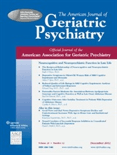
AMERICAN JOURNAL OF GERIATRIC PSYCHIATRY
Championing Mental Wellness: Leading Research in Geriatric PsychiatryAmerican Journal of Geriatric Psychiatry, published by Elsevier Science Inc, stands as a leading journal in the fields of geriatrics and gerontology, as well as psychiatry and mental health, recognized with a Q1 ranking in both categories for 2023. With a robust ISSN of 1064-7481 and E-ISSN 1545-7214, this journal has been a vital resource since its inception in 1993, contributing to the academic discourse surrounding the mental health of older adults. The journal focuses on publishing high-quality research and reviews that address the complexities of psychiatric disorders in geriatric populations, making it essential reading for researchers, professionals, and students dedicated to enhancing the mental well-being of elderly individuals. Notably, it achieves impressive Scopus rankings, sitting at the 5th percentile in Geriatrics and Gerontology and 24th percentile in Psychiatry and Mental Health, underscoring its impact and relevance in the academic community. While it does not offer open access, the journal's comprehensive content is vital for those looking to stay informed on the latest advancements in geriatric psychiatry. For more information, readers can access it via Elsevier's educational platforms.