
EBioMedicine
Scope & Guideline
Pioneering research in genetics and molecular biology.
Introduction
Aims and Scopes
- Clinical and Translational Research:
The journal focuses on studies that bridge the gap between laboratory research and clinical application, highlighting research that leads to the development of new diagnostic tools, treatment strategies, and preventive measures for diseases. - Biomarker Discovery and Validation:
A significant emphasis is placed on the identification and validation of biomarkers that could aid in disease diagnosis, prognosis, and treatment response, particularly in cancer, infectious diseases, and chronic conditions. - Immunology and Infectious Diseases:
Research on the immune response to infections, including the development of vaccines and therapeutic interventions, is a core area of focus, especially in the context of emerging infectious diseases like COVID-19. - Genomics and Personalized Medicine:
The journal publishes studies leveraging genomic data to tailor medical treatments to individual patient profiles, advancing the field of precision medicine across various diseases. - Microbiome Research:
The role of the microbiome in health and disease, including its impact on metabolic disorders, immune response, and treatment outcomes, is a growing area of interest in the journal. - Novel Therapeutics and Drug Development:
Studies investigating new therapeutic approaches, including drug repurposing, nanomedicine, and gene therapies, are highlighted, emphasizing innovative strategies to combat diseases.
Trending and Emerging
- Artificial Intelligence and Machine Learning:
The integration of AI and machine learning in research methodologies is increasingly prominent, with studies focusing on predictive modeling, diagnostic algorithms, and personalized treatment strategies. - Long COVID and Post-Acute Sequelae:
Research addressing the long-term effects of COVID-19, including post-acute sequelae, is rapidly expanding, reflecting the ongoing impact of the pandemic on public health. - Metabolomics and Lipidomics:
There is a growing focus on metabolomic and lipidomic profiling to understand disease mechanisms and identify biomarkers, particularly in metabolic disorders and cancer. - Immunotherapy and Immune Profiling:
Studies exploring immunotherapy, including novel approaches and immune profiling for various cancers, are gaining traction, driven by advances in understanding the immune system. - Microbiome-Health Interactions:
Research on the interactions between the microbiome and various health conditions, including metabolic and autoimmune diseases, is emerging as a significant area of interest. - Genetic and Epigenetic Research:
The exploration of genetic and epigenetic factors influencing disease susceptibility and treatment response is on the rise, particularly in chronic diseases and cancers.
Declining or Waning
- Traditional Pharmacology:
Research focusing solely on traditional pharmacological approaches without considering personalized or genomic strategies is becoming less common, as the field moves towards more tailored therapeutic interventions. - Single-Disease Focus:
There is a noticeable decline in studies that concentrate exclusively on single diseases without considering the broader implications or comorbidities, as interdisciplinary approaches gain traction. - Basic Science Without Clinical Relevance:
Basic research studies that do not translate into clinical applications or relevance are being overshadowed by studies emphasizing translational impact, as the demand for clinically applicable findings increases. - Static Models of Disease:
Research using static models that do not account for dynamic biological processes or the complexity of disease interactions is less favored, with a shift towards more comprehensive and integrated modeling approaches. - Conventional Imaging Techniques:
There is a waning interest in conventional imaging techniques as advanced technologies, including AI-based methods and multimodal imaging, become more prevalent in research design.
Similar Journals

Yakut Medical Journal
Illuminating the path to medical advancements in the North.Yakut Medical Journal is a peer-reviewed academic journal published by the Russian Academy of Sciences, Siberian Branch, dedicated to advancing knowledge in the field of medicine and health sciences. With its ISSN number 1813-1905 and E-ISSN 2312-1017, this journal serves as a vital platform for researchers and professionals in Siberia and beyond, fostering the dissemination of original research, case studies, and reviews that address the unique medical challenges and innovations in this region. Although it operates under a traditional publishing model, Yakut Medical Journal is committed to upholding high academic standards, ensuring all submissions are rigorously peer-reviewed to maintain the integrity of published work. The journal aims to bridge gaps in medical research and practice through its scope, which encompasses a wide range of medical disciplines, thereby engaging a diverse audience including researchers, medical educators, and practitioners looking to stay at the forefront of medical advancements. For those keen on contributing to the field or seeking current insights, Yakut Medical Journal represents a significant addition to the body of scholarly resources available in medical literature.

Immunotherapy Advances
Fostering collaboration and discovery in the world of immunology.Immunotherapy Advances, published by Oxford University Press, stands at the forefront of the rapidly evolving field of immunology and microbe interactions, focusing specifically on novel immunotherapeutic strategies and their clinical applications. Established in 2021, this peer-reviewed journal aims to disseminate high-quality research that contributes to the understanding and advancement of immunotherapeutic techniques, potentially transforming patient care in immunology. With a current Scopus rank of #140 out of 236 in the realm of Immunology, placing it in the 40th percentile, Immunotherapy Advances is positioned to be an integral resource for researchers, healthcare professionals, and students eager to stay updated with groundbreaking findings and methodologies. The journal is dedicated to fostering innovative discussions and collaborations, ensuring open access to vital research that influences treatment paradigms globally.
Welcome to Immuno, a pioneering open-access journal published by MDPI that serves as a key platform for the dissemination of innovative research in the fields of immunology, biochemistry, and genetics. Established in 2021, this journal has rapidly established itself within the academic community, currently ranking in the 53rd percentile in Medicine (miscellaneous) and 50th percentile in Biochemistry, Genetics, and Molecular Biology according to Scopus metrics. With a commitment to advancing our understanding of immune mechanisms and their applications in health and disease, Immuno is dedicated to publishing high-quality peer-reviewed articles that contribute valuable insights to both researchers and practitioners. Positioned in the heart of Switzerland, its global accessibility and diverse editorial board are a testament to its aim to promote knowledge exchange among scientists, practitioners, and students alike. Explore the latest discoveries and advancements in immunological research through Immuno, where your contributions help shape the future of this critical area of study.
Biomarker Insights
Transforming health insights through groundbreaking research.Biomarker Insights, published by SAGE Publications Ltd, is a leading open-access journal dedicated to advancing the field of biomarker research and its applications in health and disease. With an ISSN of 1177-2719 and an E-ISSN of 1177-2719, this journal has been at the forefront of disseminating high-quality scientific findings since its inception in 2006. Based in New Zealand, it has achieved a notable impact within the academic community, ranking in Q2 for Biochemistry (medical) and Molecular Medicine, and Q1 in Pharmacology as of 2023. This positions Biomarker Insights as a critical resource for researchers, professionals, and students alike, looking to explore innovative methodologies and applications in biomarker discovery and validation. With a commitment to open access, the journal ensures that groundbreaking research is readily available to the global community, fostering collaboration and innovation in the ever-evolving field of biomedical sciences.
EXPERT REVIEW OF MOLECULAR DIAGNOSTICS
Advancing the Frontiers of Molecular DiagnosticsEXPERT REVIEW OF MOLECULAR DIAGNOSTICS, published by Taylor & Francis AS, serves as a pivotal platform for facilitating advanced research and discourse in the fields of Genetics, Molecular Biology, Molecular Medicine, and Pathology. With an impressive Impact Factor and a distinguished status as Q2 in multiple categories, along with a prestigious Q1 ranking in Pathology and Forensic Medicine (2023), this journal continues to attract contributions from leading experts and budding researchers alike. The journal aims to address critical developments in molecular diagnostics, providing insightful reviews that propel the understanding and application of diagnostic techniques in various medical contexts. Accessible to a diverse audience in the academic community, the journal emphasizes the importance of molecular diagnostics in both clinical and laboratory settings, promoting innovative methodologies and comprehensive evaluations of emerging technologies. With ongoing convergence of scientific discovery advancing rapidly from 2001 through 2024, EXPERT REVIEW OF MOLECULAR DIAGNOSTICS remains essential for those committed to furthering the fields of molecular diagnostics and healthcare advancements globally.
Annual Review of Pathology-Mechanisms of Disease
Pioneering Research in the Mechanisms of DiseaseAnnual Review of Pathology: Mechanisms of Disease is a premier scholarly journal published by ANNUAL REVIEWS that systematically reviews significant advancements in the field of pathology and the mechanisms underpinning various diseases. With an ISSN of 1553-4006 and an E-ISSN of 1553-4014, the journal has established its importance within the academic community, evidenced by its prestigious Q1 rankings in several categories including medicine, pathology, forensic medicine, and plant science for 2023. Notably, it ranks #1 out of 208 in the pathology and forensic medicine category, placing it in the 99th percentile according to Scopus metrics. Although not an open-access journal, it offers crucial insights to researchers, professionals, and students alike by providing a comprehensive understanding of pathophysiological concepts and emerging trends. The journal continues to be an essential resource for those dedicated to advancing research and practical applications in disease mechanisms.
EXPERIMENTAL AND MOLECULAR MEDICINE
Advancing the frontiers of molecular medicine.EXPERIMENTAL AND MOLECULAR MEDICINE, published by SpringerNature, is a premier open-access journal that has been at the forefront of biomedical research since its establishment in 1996. With a focus on innovative studies in biochemistry, molecular biology, and clinical biochemistry, the journal has consistently maintained a distinguished position within the top quartile (Q1) across multiple categories, underscoring its significant impact in these fields. The journal offers researchers and practitioners a platform for high-quality, peer-reviewed articles that advance our understanding of molecular mechanisms underlying health and disease. As a crucial resource for scholars seeking to explore cutting-edge research and practical advancements, its inclusion in relevant databases such as Scopus reflects an exceptional ranking with notable percentiles—placing it among the best in biomedical sciences. With a commitment to open access, EXPERIMENTAL AND MOLECULAR MEDICINE ensures that findings are readily available to the global academic community, facilitating collaboration and innovation in molecular medicine.
MedComm
Championing Transparency in Scientific PublishingMedComm is a distinguished Open Access journal published by Wiley, located in the United States. Since its inception in 2020, it has rapidly established itself as a leading platform for cutting-edge research in the fields of Biochemistry, Cell Biology, Drug Discovery, Genetics, Immunology and Allergy, and Oncology, achieving a prestigious Q1 category ranking across multiple disciplines in 2023. MedComm is committed to providing a rigorous and transparent peer-review process, ensuring the publication of high-quality articles that advance the frontiers of medical science. With its remarkable Scopus ranking, the journal serves as an invaluable resource for researchers, professionals, and students looking to stay abreast of important developments in the life sciences. The open access model facilitates widespread dissemination of scholarly work, fostering collaboration and innovation within the global scientific community. Researchers interested in submitting their work or exploring the latest findings are encouraged to engage with this pivotal journal during the converged years from 2020 to 2024.
JCI Insight
Transforming Research into Health SolutionsJCI Insight, published by the American Society for Clinical Investigation, stands as a vital resource in the field of medicine, having achieved a prestigious Q1 rating in the 2023 category for miscellaneous medicine. With an impressive Scopus rank of 27 out of 636, placing it in the 95th percentile, this journal emphasizes the dissemination of high-quality, peer-reviewed research that pushes the boundaries of clinical and translational science. Since becoming an Open Access journal in 2020, JCI Insight has expanded its reach, providing researchers, professionals, and students around the globe with unfettered access to groundbreaking studies and reviews. The journal focuses on a wide spectrum of topics relevant to the medical community, making it an essential platform for sharing innovative findings and fostering collaboration among scientists dedicated to transforming health outcomes. Based in Ann Arbor, Michigan, JCI Insight continues to inspire advancements in medical research, contributing significantly to the ongoing dialogue in the ever-evolving healthcare landscape.
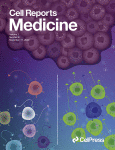
Cell Reports Medicine
Bridging molecular discoveries and clinical innovations.Cell Reports Medicine, published by Cell Press, represents a pivotal advancement in the open access landscape of biomedical research since its inception in 2020. With a dedicated focus on the intersection of medicine, biochemistry, genetics, and molecular biology, this journal has quickly established itself as a key resource, earning a remarkable Q1 ranking in these fields. Based in the United States, Cell Reports Medicine boasts impressive metrics, ranking #25 out of 636 in General Medicine and #18 out of 221 in Biochemistry, underscoring its influence and reach within the scientific community, with a notable 96th and 92nd percentile respectively. As a fully open access journal, it fosters global dissemination of knowledge, ensuring that groundbreaking research is readily available to researchers, professionals, and students alike. The journal not only promotes high-quality research but also aims to bridge the gap between molecular discoveries and clinical applications, making it an essential addition to any academic library or researcher's toolkit.