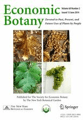
ECONOMIC BOTANY
metrics 2024
Cultivating Insights for a Sustainable Future
Introduction
Economic Botany, published by Springer, is a prestigious academic journal that has been at the forefront of research in the intersection of botany and economics since its inception in 1947. With an E-ISSN of 1874-9364 and a traditional ISSN of 0013-0001, this journal serves as a crucial platform for disseminating knowledge on the utilization and cultivation of plants that hold economic significance. While it does not operate under an Open Access model, the journal benefits from being indexed in high-quality databases, boasting a strong standing in 2023 with a Q2 classification in both Horticulture and Plant Science categories. Economic Botany enjoys an impressive Scopus ranking, positioned 24th out of 115 in Horticulture and 159th out of 516 in Plant Science, reflecting its influence and contribution to the field. Researchers, professionals, and students will find this journal essential for accessing cutting-edge studies that explore the vital role of plants in economies worldwide, fostering an interdisciplinary dialogue that shapes future botanical research and applied practices.
Metrics 2024
 0.401.702.4078
Metrics History
Rank 2024
Scopus
IF (Web Of Science)
JCI (Web Of Science)
Quartile History
Similar Journals
ANTHROPOLOGY OF CONSCIOUSNESS
Investigating the Rich Tapestry of Human AwarenessAnthropology of Consciousness is a prestigious journal published by Wiley, focusing on the intricate ties between consciousness and anthropology. With its ISSN 1053-4202 and E-ISSN 1556-3537, this journal has established itself as a key platform for scholars investigating the cognitive, cultural, and experiential dimensions of consciousness. Operating since 1990 and with converged years extending to 2024, it has achieved a commendable Q2 ranking in Anthropology for 2023, reflecting its significance in the field. Although it is not an open-access journal, it provides robust access options through various university and library subscriptions. The journal aims to disseminate high-quality research and foster interdisciplinary dialogue among researchers, professionals, and students interested in the anthropological aspects of consciousness. With its address located at 111 River St, Hoboken 07030-5774, NJ, United States, it continues to be a vital resource for those exploring the depths of human experience.

NEW ZEALAND JOURNAL OF BOTANY
Bridging Theory and Practice in Ecological StudiesThe New Zealand Journal of Botany, published by the esteemed Taylor & Francis Ltd, serves as a pivotal platform for disseminating significant research in the fields of Ecology, Evolution, Behavior and Systematics, as well as Plant Science. With a rich history dating back to 1963 and an impressive convergence extending to 2024, this journal has established itself as an essential resource for researchers and professionals dedicated to understanding the complexities of plant life and ecological systems in New Zealand and beyond. The journal is currently categorized in the Q3 quartile for both relevant disciplines as of 2023, reflecting its balanced influence within the global academic community. Although not an open access journal, it retains a significant impact factor, evidenced by its Scopus rankings, which place it within the top half of its categories. This makes it an invaluable tool for students, researchers, and academics aiming to engage with robust, peer-reviewed scientific findings and contribute to the evolving discourse surrounding botany and ecological research.

Indian Journal of Traditional Knowledge
Connecting Ancient Wisdom with Contemporary ScienceThe Indian Journal of Traditional Knowledge, published by the NATL INST SCIENCE COMMUNICATION-NISCAIR, serves as a pivotal platform for scholarship in the fields of traditional knowledge, complementary and alternative medicine, and manual therapy. With an ISSN of 0972-5938 and an E-ISSN of 0975-1068, this esteemed journal has embraced open access since 2002, ensuring that research is widely available to practitioners and scholars alike. Based in New Delhi, India, and with a commendable Q2 ranking in both the Complementary and Alternative Medicine and Complementary and Manual Therapy categories as of 2023, this journal aims to bridge the gap between traditional practices and modern scientific inquiry. By publishing innovative research and review articles, it not only highlights the rich cultural heritage and knowledge systems of India but also contributes to the global discourse surrounding holistic health and wellness. Researchers, professionals, and students will find invaluable insights and significant advancements within its pages, making the Indian Journal of Traditional Knowledge an essential resource for anyone interested in the dynamic interplay between tradition and contemporary medical practice.
ACTA AMAZONICA
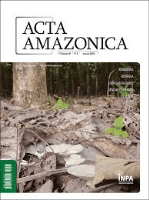
Connecting Minds, Cultivating Amazonian Research.ACTA AMAZONICA, an esteemed journal published by the Instituto Nacional de Pesquisas da Amazônia, is a pivotal resource in the fields of Agricultural and Biological Sciences, reflecting its stature with a 2023 Q2 category ranking. Since its inception in 1979 and transitioning to Open Access in 2003, this journal has dedicated itself to disseminating significant research related to the Amazon region, contributing to the understanding of its biodiversity, ecology, and sustainability challenges. With an ISSN of 0044-5967 and E-ISSN 1809-4392, ACTA AMAZONICA provides a platform for researchers, professionals, and students to share innovative findings and insights. Based in Manaus, Brazil, it plays a critical role in fostering collaborative research efforts that address environmental and conservation issues pertinent to the Amazonian context. Its commitment to accessibility ensures that valuable research is available to a wide audience, fulfilling its objective of promoting knowledge and encouraging dialogue amongst the global scientific community.
AGRICULTURE AND HUMAN VALUES
Connecting agriculture to the heart of human values.AGRICULTURE AND HUMAN VALUES is a leading interdisciplinary journal published by SPRINGER, focusing on the intricate relationships between agricultural practices, environmental sustainability, and human well-being. With an impressive impact factor and ranking in the Q1 quartile across various fields including Agronomy and Crop Science, Geography, Planning and Development, and Sociology and Political Science, this journal provides a vital platform for researchers and professionals to explore the social, economic, and cultural dimensions of agriculture. As a prominent outlet since its inception in 1984, it aims to contribute to the dialogue on sustainable practices and policies that impact food systems globally. The journal caters to a diverse readership, including scholars, policymakers, and students, ensuring that critical research findings reach those who can influence change. With a solid reputation and commitment to advancing knowledge in these essential areas, AGRICULTURE AND HUMAN VALUES remains an invaluable resource for those dedicated to improving agricultural practices and human health in a rapidly changing world.

Mediterranean Botany
Advancing Knowledge in Plant Science and EcologyMediterranean Botany is a distinguished peer-reviewed journal dedicated to the flourishing fields of Ecology, Plant Science, and Ecology, Evolution, Behavior and Systematics. Published by the Universidad Complutense de Madrid, Servicio Publicaciones, this Open Access journal has been disseminating valuable research since 2018, ensuring that findings are accessible to a global audience, with an emphasis on Mediterranean vegetation and biodiversity. With an ISSN of 2603-9109, it contributes significantly to the academic discourse in its category quartiles, recently featuring in Q3 for Ecology and related fields. Notably, Mediterranean Botany ranks within the top half of its category in Scopus, highlighting its relevance and contribution to the scientific community. Researchers, professionals, and students alike will find the journal to be a vital resource for latest discoveries, trends, and conservation strategies in Mediterranean ecosystems, positioning it as an essential platform for advancing knowledge and fostering collaboration within the plant sciences.
Journal of Herbal Medicine
Bridging Ancient Wisdom and Modern Research in Herbal HealingThe Journal of Herbal Medicine, published by Elsevier GmbH in Germany, stands at the forefront of research in the dynamic and evolving field of complementary and alternative medicine. With an ISSN of 2210-8033 and an E-ISSN of 2210-8041, this journal has been contributing significant insights since its inception in 2011 and continues to be a vital resource through 2024. Recognized for its scholarly rigor, it holds a commendable Q2 ranking in the 2023 Scopus category for Complementary and Alternative Medicine, placing it in the upper echelons of its field with a rank of 32 out of 105 journals, marking it in the 70th percentile. The Journal of Herbal Medicine emphasizes the integration of traditional herbal therapies and modern scientific approaches, offering researchers, professionals, and students a platform for disseminating their findings and fostering an inclusive dialogue on natural medicine's role in healthcare. Although it is not an open-access publication, its commitment to high-quality research makes it an essential read for those wanting to explore the efficacy and application of herbal medicine in contemporary practice.

NORDIC JOURNAL OF BOTANY
Cultivating Knowledge in Plant Science and EcologyNORDIC JOURNAL OF BOTANY, published by WILEY, is a distinguished journal that serves as a vital platform for the dissemination of innovative research in the fields of Plant Science and Ecology, Evolution, Behavior and Systematics. With an ISSN of 0107-055X and E-ISSN 1756-1051, this journal has been a crucial part of the academic landscape since its inception in 1981, continuing to contribute significantly to the literature up to 2024. NORDIC JOURNAL OF BOTANY holds a commendable Q2 ranking in Plant Science and Q3 in Ecology, which underscores its impact and relevance in the scientific community. Despite the absence of Open Access options, the journal offers robust access features that ensure researchers and readers can easily engage with its meticulously curated content. Aimed at both seasoned professionals and emerging scholars, the journal not only publishes high-quality articles but also fosters collaboration and knowledge exchange across various related disciplines, thereby solidifying its role as a cornerstone in botanical and ecological research.
JOURNAL OF ETHNOBIOLOGY
Exploring the Interconnections of Life and CultureJOURNAL OF ETHNOBIOLOGY, published by SAGE PUBLICATIONS INC, stands at the forefront of interdisciplinary research in the fields of ethnobiology, anthropology, and the biological sciences. With an ISSN of 0278-0771 and an E-ISSN of 2162-4496, this esteemed journal boasts a remarkable impact, categorized as Q1 in both Animal Science and Zoology, Anthropology, and Plant Science as of 2023. Ranking in the top percentiles among its peers on Scopus—29th in Anthropology and 69th in Animal Science—this journal plays a critical role in advancing our understanding of the complex relationships between humans and their biological environments. Covering a wide array of topics from traditional ecological knowledge to conservation strategies, the JOURNAL OF ETHNOBIOLOGY is dedicated to fostering scientific dialogue and innovation. With an emphasis on original research and reviews, the journal serves as an essential resource for researchers, professionals, and students alike, facilitating a deeper comprehension of the intricate networks of life that sustain our planet. The journal's contributions significantly influence both theoretical and practical applications in biodiversity and cultural heritage, making it indispensable for anyone engaged in these vital fields.

Acta Botanica Mexicana
Fostering collaboration in the heart of plant science.Acta Botanica Mexicana is a premier journal published by Instituto de Ecología AC, dedicated to advancing research in the fields of ecology, plant science, and biological sciences. With an E-ISSN of 2448-7589, this open-access journal facilitates extensive dissemination of scientific findings, ensuring that knowledge is accessible to researchers, professionals, and students worldwide. Established in 2008, Acta Botanica Mexicana has earned a notable reputation, achieving a Q3 ranking in plant science and a Q4 ranking in ecology and evolution for 2023. This positioning underscores its commitment to publishing high-quality research that addresses vital issues in ecological and botanical studies. With a focus on innovative methodologies and pragmatic solutions, the journal invites contributors to share their insights and findings, thus enriching the academic landscape and fostering collaborations that drive the field forward. The journal is based in Michoacán, Mexico, and serves as a key hub for researchers engaging with the challenges and intricacies of plant and ecological studies.