
Ecosistemas y Recursos Agropecuarios
metrics 2024
Transforming agroecosystem research into actionable insights.
Introduction
Ecosistemas y Recursos Agropecuarios is a distinguished academic journal published by the Universidad Juárez Autónoma de Tabasco through its Dirección de Investigación y Posgrado. Established in 2001, this journal has embraced the Open Access model to ensure that vital research in agriculture and environmental sciences is accessible to a broader audience, fostering knowledge sharing and collaboration globally. The journal's mission is to publish high-quality, peer-reviewed research that advances the understanding and management of agroecosystems and natural resources, making it a key resource for researchers, professionals, and students involved in related fields. Located in Villahermosa, Tabasco, Mexico, the journal's commitment to addressing pressing regional and global challenges in agriculture and sustainability enhances its importance in today’s academic landscape. With an emphasis on innovative solutions and interdisciplinary approaches, Ecosistemas y Recursos Agropecuarios plays a critical role in enriching the discourse on sustainable development and resource management.
Metrics 2024
 -0.300.50-
Metrics History
Rank 2024
IF (Web Of Science)
JCI (Web Of Science)
Quartile History
Similar Journals

Agrosystems Geosciences & Environment
Empowering knowledge generation in agricultural sciences.Agrosystems Geosciences & Environment, published by WILEY, is a premier open access journal dedicated to advancing the interdisciplinary field of agricultural and environmental sciences. With an E-ISSN of 2639-6696, the journal has gained recognition since its inception in 2018, currently holding a Q2 ranking in Agricultural and Biological Sciences, Plant Science, and Soil Science. Operating from the United Kingdom, Agrosystems Geosciences & Environment contributes significantly to knowledge generation and dissemination, offering vital insights into sustainable practices, soil management, and crop optimization. Researchers and professionals will find the open access model particularly advantageous, promoting greater visibility and engagement within the scientific community. By bridging the gap between geosciences and agrosystem management, this journal is vital for those committed to addressing today's critical environmental challenges.
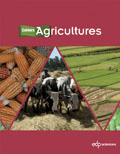
CAHIERS AGRICULTURES
Empowering agricultural innovation and policy.CAHIERS AGRICULTURES is a distinguished open-access journal published by EDP Sciences S A, focusing on the vital fields of Agronomy and Crop Science, Animal Science and Zoology, as well as Management, Monitoring, Policy, and Law. With an ISSN of 1166-7699 and an E-ISSN of 1777-5949, this journal has notably maintained a strong presence in the academic landscape since its establishment, covering a wide range of topics pertinent to agricultural sciences. Based in France, CAHIERS AGRICULTURES fosters collaboration and knowledge sharing among researchers and practitioners through its open-access model, which has been in effect since 2014. The journal is recognized for its rigorous peer-review process, reflected in its competitive Scopus rankings, which place it in the Q2 quartile for both Agronomy and Crop Science, and Animal Science and Zoology. Researchers and scholars are encouraged to contribute cutting-edge findings that may influence agricultural practices and policy development. With a vision to advance sustainable agricultural practices, CAHIERS AGRICULTURES stands as a critical resource for advancing scientific knowledge and informing stakeholders in the agricultural sector.
AGRICULTURE ECOSYSTEMS & ENVIRONMENT
Bridging Agriculture and Ecology for Future GenerationsAGRICULTURE ECOSYSTEMS & ENVIRONMENT is a premier journal published by Elsevier, specializing in the fields of agronomy, animal science, and ecology. With an impressive impact factor reflective of its stature, it ranks in the top quartile (Q1) across three significant categories, highlighting its critical role in advancing research within the agricultural and environmental sciences. The journal serves as a vital platform for disseminating high-quality research that addresses the complex interactions between agriculture and ecosystems, providing insightful methodologies and findings that inform sustainable practices. As the journal continues to converge from 1983 and through to 2025, it remains committed to offering both traditional and innovative access options while contributing to the academic community's understanding of pressing environmental challenges. Researchers, professionals, and students are encouraged to engage with the journal's comprehensive content, which is positioned among the elite in its fields, having achieved top rankings in Scopus across relevant disciplines.

Carpathian Journal of Earth and Environmental Sciences
Bridging Disciplines for Environmental SolutionsCarpathian Journal of Earth and Environmental Sciences is a distinguished academic journal dedicated to advancing the interdisciplinary field of Earth and environmental sciences. Published by the Carpathian Association for Environment and Earth Sciences, this journal plays a pivotal role in disseminating high-quality research focused on the dynamic interactions between geological processes and environmental changes. With an ISSN of 1842-4090 and an E-ISSN of 1844-489X, the journal is indexed in Scopus and holds an esteemed Q3 quartile ranking in both Earth and Planetary Sciences and Environmental Science categories as of 2023. Since its inception in 2008, the Carpathian Journal has provided an open access platform for researchers, professionals, and students to share insights, foster collaboration, and engage in critical discussions on pressing environmental issues. By continuously contributing to the body of knowledge in this field, the journal not only enhances academic discourse but also promotes sustainable environmental practices across Romania and beyond.

Journal of Agriculture and Environment for International Development
Bridging Agriculture and Environment for a Better TomorrowJournal of Agriculture and Environment for International Development, published by AGENZIA ITALIANA COOPERAZIONE SVILUPPO-ITALIAN DEV COOP AGENCY, is a vital platform advancing research at the intersection of agricultural practices, environmental sustainability, and international development. Since its inception, this Open Access journal has aimed to disseminate knowledge and innovative strategies that address global challenges in the agri-environment sector. With ISSN 2240-2802, this esteemed publication is situated in Italy and has maintained an unwavering commitment to accessibility since 2011, encouraging widespread engagement amongst researchers and practitioners. Although currently ranked in the Q4 quartile across various categories including Agricultural and Biological Sciences and Environmental Science, the journal is dedicated to covering crucial topics that contribute to sustainable development, thus serving as an invaluable resource for scholars and policymakers alike. The convergence years from 2016 to 2024 reflect the journal's adaptive approach to evolving global trends, ensuring its relevance in a rapidly changing academic landscape.
Indonesian Journal of Forestry Research
Fostering global collaboration in forestry science.The Indonesian Journal of Forestry Research is a distinguished, peer-reviewed academic journal published by the Ministry of Environment & Forestry of Indonesia. With an ISSN of 2355-7079 and E-ISSN 2406-8195, this journal has been an Open Access platform since 2014, fostering international collaboration and knowledge sharing in the fields of ecology and forestry. As of 2023, the journal holds a respectable Q3 category in both Ecology and Forestry, reflecting its contribution to the science community. It ranks #99/174 in Forestry and #305/461 in Ecology in Scopus, indicating its growing influence in the respective fields. Aimed at researchers, professionals, and students, the Indonesian Journal of Forestry Research provides vital insights and findings, supporting sustainable forestry practices and environmental management in Indonesia and beyond. With an emphasis on innovative methodologies and applied research, this journal stands as a pivotal resource for those dedicated to advancing forestry science and ecological research.

Revista Ciencia Agronomica
Exploring the frontiers of agricultural science.Revista Ciencia Agronomica is a leading open access journal published by the Universidade Federal do Ceará, Departamento de Geociências, dedicated to advancing the field of agricultural sciences. Established in 2008, the journal has emerged as a significant platform for the dissemination of original research and innovative advancements in areas including agronomy, horticulture, and soil science, with a dedicated convergence of years extending to 2025. With an impactful presence in academic circles—ranking in Q3 for Agronomy and Crop Science and Soil Science and Q2 for Horticulture in 2023—this journal provides vital insights for researchers and practitioners alike. Although specific HIndex metrics are currently unavailable, the journal's Scopus rankings attest to its relevance, placing it in the 52nd, 44th, and 43rd percentiles across multiple pertinent categories. Since transitioning to an open access model in 2010, Revista Ciencia Agronomica has committed to maximizing the reach and impact of its published work, thereby ensuring valuable contributions to global agricultural knowledge.

Bioagro
Bridging research and practice for sustainable agricultural advancements.Bioagro is an esteemed academic journal dedicated to advancing research in the field of Agricultural and Biological Sciences. Published by the University Centroccidental Lisandro Alvarado in Venezuela, this journal has made significant strides since its inception in 2008, with a focus on delivering high-quality research publications that address contemporary challenges in agriculture and biology. Recognized for its contributions, it holds a Q3 ranking in the Agricultural and Biological Sciences (miscellaneous) category as of 2023, and it ranks #125 out of 221 in its field, placing it in the 43rd percentile. Although it operates on an Open Access model, Bioagro strives to provide broad access to innovative research, thereby fostering collaboration and knowledge dissemination among researchers, professionals, and students. With a commitment to include a wide range of topics, the journal aims to be a pivotal platform for exploration and dialogue in agricultural sciences, ensuring that key findings reach both scientific and practitioner audiences. Located in Barquisimeto-Cabudare, Lara, Venezuela, Bioagro invites submissions that contribute to the global discourse on sustainable practices and innovations in agriculture.
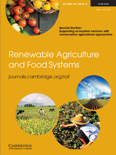
RENEWABLE AGRICULTURE AND FOOD SYSTEMS
Transforming food systems for a sustainable future.RENEWABLE AGRICULTURE AND FOOD SYSTEMS, published by Cambridge University Press, is a leading open-access journal dedicated to the advancement of sustainability in agricultural practices and food systems. With an ISSN of 1742-1705 and an E-ISSN of 1742-1713, this journal spans the interdisciplinary fields of agronomy and food science, achieving a commendable Q2 ranking in both categories for 2023. As it continues to converge through the years from 2004 to 2024, the journal offers a platform for researchers, professionals, and students to disseminate transformative research that addresses the challenges of food security, resource management, and environmental impact. The journal’s significant impact is underscored by its Scopus rankings, situating it in the 77th percentile among agronomy and crop science publications, and the 67th percentile in food science. Since becoming fully open access in 2023, RENEWABLE AGRICULTURE AND FOOD SYSTEMS promotes wider accessibility to vital research findings, fostering collaboration and innovation in the pursuit of sustainable agricultural practices and food systems worldwide.

AGRICULTURAL SYSTEMS
Transforming agricultural systems with groundbreaking insights.AGRICULTURAL SYSTEMS, published by Elsevier Science Ltd, is a premier academic journal that serves as a leading platform for innovative research in the fields of agronomy, animal science, and related biological sciences. With a prestigious impact factor reflected in its Q1 ranking in both Agronomy and Crop Science, as well as Animal Science and Zoology, the journal showcases cutting-edge studies and developments from 1976 through 2024. Located in the United Kingdom, the journal features a robust selection of articles that emphasize the integration of agricultural systems, enhancing global agricultural productivity and sustainability. Although it does not currently offer open access options, AGRICULTURAL SYSTEMS maintains an excellent reputation amongst scholars, epitomized by its high rankings in Scopus, placing it in the top 1% of journals in its categories. This makes it an essential resource for researchers, professionals, and students dedicated to advancing knowledge and practice within the agricultural sector.