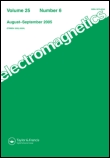
ELECTROMAGNETICS
Scope & Guideline
Fostering Collaboration in the World of Electromagnetics
Introduction
Aims and Scopes
- Bioelectromagnetics:
The journal publishes studies exploring how electromagnetic fields (EMFs) affect biological systems, particularly at cellular and molecular levels. This includes research on DNA damage, gene expression, and cellular responses to various frequencies of EMFs. - Medical Applications:
A significant focus is on the therapeutic applications of EMFs, including their use in regenerative medicine, wound healing, and pain management. This encompasses clinical trials and in vitro studies assessing the efficacy of pulsed electromagnetic fields on various health conditions. - Environmental and Occupational Exposure Assessments:
The journal addresses the assessment of electromagnetic exposure in various environments, particularly in occupational settings. This includes monitoring exposure levels from devices like mobile phones and smart meters, and studying their potential health impacts. - Neuromodulation and Neurostimulation:
Research related to neuromodulation through electrical and magnetic stimulation is a core area. This includes studies on transcranial magnetic stimulation, nerve regeneration, and the effects of electromagnetic fields on neurological functions. - Agricultural and Plant Studies:
The journal also explores the effects of EMFs on plants and agricultural productivity, including studies on germination, growth, and physiological responses of various plant species to electromagnetic exposure.
Trending and Emerging
- 5G and Radiofrequency Radiation Research:
There is an increasing trend towards studying the effects of 5G technology and radiofrequency radiation on health. This includes assessments of exposure levels, biological impacts, and public health implications, highlighting the urgency of understanding new technologies. - Cellular and Molecular Mechanisms of EMF Exposure:
Recent publications are increasingly focused on the cellular and molecular mechanisms through which EMFs exert their effects, including oxidative stress and gene expression changes, showcasing a deeper exploration of biological responses. - Regenerative Medicine and Healing Applications:
Research on the therapeutic uses of pulsed electromagnetic fields in regenerative medicine and wound healing is gaining momentum, with studies demonstrating efficacy in various clinical contexts. - Smart Home Devices and EMF Exposure:
Emerging studies are addressing the impact of everyday devices, such as smart home technology, on electromagnetic exposure and potential health risks, reflecting societal changes in technology use. - Interdisciplinary Approaches:
There is a noticeable trend towards interdisciplinary research that combines bioelectromagnetics with fields like neuroscience, environmental science, and materials science, illustrating the complex interactions between EMF exposure and various biological systems.
Declining or Waning
- Long-term Exposure Studies:
Research focusing on the long-term effects of EMF exposure, particularly in relation to chronic health conditions, has become less prominent. This may be due to a shift towards more immediate and clinically relevant studies. - Basic Mechanistic Studies:
Basic mechanistic studies that explore the fundamental interactions between EMFs and biological systems at a theoretical level are becoming less common, possibly as the focus shifts towards applied research with clear health implications. - High-Intensity EMF Effects:
Investigations into the effects of high-intensity EMF exposure, which were previously a focus, appear to be declining as the field moves towards understanding low-intensity and pulsed fields that have more practical applications.
Similar Journals
Nano-Micro Letters
Advancing nanotechnology through open collaboration.Nano-Micro Letters is a premier open-access journal published by Shanghai Jiao Tong University Press, specializing in groundbreaking research in the fields of Electrical and Electronic Engineering, Nanoscience, and Materials Science. Launched in 2009, this journal has rapidly established its reputation, achieving Q1 ranking across various categories, including Electronic, Optical and Magnetic Materials, and Surfaces, Coatings and Films, indicating its significant impact within the academic community. With an impressive Scopus ranking of #5 out of 797 in Electrical and Electronic Engineering and #2 in Surfaces, Coatings and Films, Nano-Micro Letters serves as a vital platform for disseminating cutting-edge insights and innovations in nanotechnology. Researchers, professionals, and students are encouraged to engage with the open-access content, fostering a collaborative environment that promotes the advancement of knowledge in these dynamic fields.

Przeglad Elektrotechniczny
Advancing Knowledge in Electrical and Electronic EngineeringPrzeglad Elektrotechniczny, published by WYDAWNICTWO SIGMA-NOT SP ZOO, is a prominent journal in the field of Electrical and Electronic Engineering, with its ISSN being 0033-2097 and E-ISSN 2449-9544. Established in Poland and in circulation since 1969, this journal has served as a vital platform for disseminating research findings, theoretical advancements, and innovative practices in electrical engineering. With an HIndex that reflects its scholarly impact, it currently holds a Q4 ranking within its category and a notable position on Scopus, ranking #644 out of 797 in Electrical and Electronic Engineering, which places it in the 19th percentile. Although it does not offer open access, the journal persists in fostering academic discourse and providing a repository of knowledge with publication timelines extending from 1969 to 1984 and then continuing from 2005 to 2024. As it seeks to bridge the gap between theory and practice, Przeglad Elektrotechniczny is essential for researchers, professionals, and students striving for excellence in this dynamic and ever-evolving field.

Journal of Electrical Engineering & Technology
Illuminating the Path of Electrical Engineering ResearchJournal of Electrical Engineering & Technology is a prominent academic journal published by SPRINGER SINGAPORE PTE LTD, dedicated to advancing the field of Electrical and Electronic Engineering. With an established history since 2008, the journal has become a vital resource for professionals, researchers, and students seeking to explore innovative research and technological developments within the discipline. The journal boasts a commendable 2023 Scopus Rank of #334 out of 797 in its category, reflecting its quality and the impact of published works. As a Q2 category journal, it upholds rigorous peer-review standards, making it a credible platform for disseminating groundbreaking findings. While currently not an open-access publication, the journal ensures that its content is accessible to a global audience committed to knowledge enhancement and technological progress. Subscribe or access issues through institutional affiliations to stay at the forefront of advancements in electrical engineering.
Advances in Radio Science
Accelerating Discoveries in Radio TechnologyAdvances in Radio Science, published by COPERNICUS GESELLSCHAFT MBH, is a leading open-access journal established in 2003, dedicated to the rapid dissemination of high-quality research in the field of radio science, particularly focusing on advancements in electrical and electronic engineering. With an ISSN of 1684-9965 and an E-ISSN of 1684-9973, this journal is indexed and provides an avenue for researchers to contribute to the latest developments and innovations within the domain. Despite its current Q4 ranking in the Electrical and Electronic Engineering category, its commitment to open access ensures that all published articles are freely available to a global audience, fostering collaboration and knowledge sharing among engineers, researchers, and students alike. Situated in Göttingen, Germany, the journal continues to evolve and expand its reach, with content converging until 2024, emphasizing its relevance in a rapidly changing technological landscape. Whether you're a seasoned researcher or an emerging scholar, Advances in Radio Science invites you to explore the frontiers of radio science and contribute to its growing body of knowledge.
Radiophysics and Quantum Electronics
Exploring the Depths of Quantum InnovationRadiophysics and Quantum Electronics is a leading scholarly journal published by SPRINGER, dedicated to advancing knowledge in the fields of radiophysics and quantum electronics. With a rich publication history dating back to 1967 and covering anticipated insights up to 2024, the journal serves as a crucial resource for researchers engaged in the exploration of areas such as Astronomy and Astrophysics, Electrical and Electronic Engineering, and Nuclear and High Energy Physics. Although it is classified in lower quartiles in several categories, its ongoing commitment to quality research and critical advancements adds invaluable knowledge to the scientific community. The journal does not currently offer open access options, allowing for traditional publication standards that uphold rigor and academic integrity. Researchers, professionals, and students alike can benefit from the comprehensive articles and studies published within its pages, making Radiophysics and Quantum Electronics an essential addition to any academic library focused on the nuances of modern physics and engineering.
RADIO SCIENCE
Illuminating the Path of Electromagnetic DiscoveryRADIO SCIENCE, published by the American Geophysical Union, is a premier journal dedicated to advancing the field of electromagnetic research across various domains, including Earth and planetary sciences, electrical engineering, and condensed matter physics. With an impressive convergence of scholarly contributions from 1966 to 2024, the journal is recognized for its impactful research, reflected in its Scopus rankings and its Q2 quartile status across multiple relevant categories. It ranks 71st in general Earth and planetary sciences and 396th in electrical and electronic engineering, highlighting its broad reach and significance. Although not an Open Access journal, RADIO SCIENCE continues to engage a dedicated readership of researchers, professionals, and students eager to contribute to and benefit from cutting-edge discoveries in the electromagnetic sciences. The journal serves as a vital resource for fostering dialogue and collaboration among academics and practitioners alike, promoting excellence in research and innovation.

Visnyk NTUU KPI Seriia-Radiotekhnika Radioaparatobuduvannia
Fostering Collaboration in Radio Engineering ExcellenceVisnyk NTUU KPI Seriia-Radiotekhnika Radioaparatobuduvannia is a distinguished open-access journal published by the National Technical University of Ukraine, Kyiv Polytechnic Institute. Since its inception in 2009, the journal has been a vital platform for disseminating innovative research findings in the fields of radio engineering, electronic technology, and the development of radio apparatus. With its commitment to providing unrestricted access to high-quality scientific content, the journal aims to foster collaboration and knowledge exchange among researchers, practitioners, and educators both in Ukraine and globally. While the journal's H-index and Scopus rankings are currently not provided, its growing reputation in the academic community is indicative of its impact in advancing technology and engineering practices. The journal's accessibility ensures that cutting-edge research is available to a wide audience, making it a crucial resource for professionals and students seeking to stay informed about the latest advancements in radio technology and engineering.
ELECTROMAGNETIC BIOLOGY AND MEDICINE
Exploring the Intersection of Electromagnetism and Life.ELECTROMAGNETIC BIOLOGY AND MEDICINE, published by Taylor & Francis Inc, is a pioneering journal that delves into the intricate relationships between electromagnetic fields and biological systems. With an ISSN of 1536-8378 and an E-ISSN of 1536-8386, this esteemed publication has been serving the scientific community since its inception in 1982. As a vital resource in the fields of biophysics and medical sciences, it is categorized in the Q3 quartile for both Biophysics and Medicine (miscellaneous) as of 2023, reflecting its significant contributions and robust research output. With Scopus rankings indicating a 61st percentile in Medicine and a 44th percentile in Biophysics, this journal is instrumental for researchers, professionals, and students seeking to explore the multifaceted applications of electromagnetic phenomena in health and medicine. This journal offers access options tailored to enhance visibility and dissemination of research, emphasizing its commitment to advancing knowledge and fostering innovation in this interdisciplinary domain.

Journal of Magnetics
Unlocking the Mysteries of Magnetics TogetherJournal of Magnetics, published by the Korean Magnetics Society, is an essential resource dedicated to advancing the knowledge and understanding of magnetics across the disciplines of Condensed Matter Physics, Electrical and Electronic Engineering, and Electronic, Optical and Magnetic Materials. With a focus on innovative research and development from 2008 to 2024, this journal serves as a platform for sharing cutting-edge findings and theoretical advancements in the field. Although it currently holds a Q4 ranking in established categories, it is an emerging publication that invites researchers, professionals, and students alike to contribute to and engage with its scientific discourse. Notably, it embraces a community of scholars aiming to bridge the gap between theory and practical applications in magnetics, despite its current Scopus rankings reflecting deeper industry competition. Based in South Korea, the journal operates from its office at Korea Sciences & Technology Center, RM 905, Yeoksam-dong 635-4, Kangnam-ku, Seoul 135-703, South Korea. While it does not provide open access, its commitment to academic rigor promises to elevate its stature in subsequent years, making it a vital publication for those keen on exploring the frontiers of magnetics.

Journal of Electromagnetic Engineering and Science
Pioneering Insights in Electrical and Communication TechnologiesThe Journal of Electromagnetic Engineering and Science (ISSN: 2671-7255, E-ISSN: 2671-7263) is a premier Open Access journal published by the Korean Institute of Electromagnetic Engineering & Science. Since its establishment in 2001, it has been dedicated to advancing knowledge in the fields of Electrical Engineering, Electromagnetic Theory, and Communications, making significant contributions to both academia and industry. The journal holds an impressive Q2 quartile ranking in notable categories such as Computer Networks and Communications and Electrical and Electronic Engineering as of 2023, reflecting its robust scientific impact and reputation. It is indexed in Scopus, with commendable rankings in multiple fields, enhancing its visibility and reach among researchers. The journal's open-access model ensures that cutting-edge research is accessible to a global audience, fostering collaboration and innovation. Researchers, professionals, and students in the domain are encouraged to contribute and engage with high-quality articles that cover the latest advancements and trends in electromagnetic engineering and associated sciences.