
EMERGING MARKETS FINANCE AND TRADE
Scope & Guideline
Shaping the Narrative of Finance in Developing Markets
Introduction
Aims and Scopes
- Financial Markets and Instruments:
The journal emphasizes research on the structure, behavior, and development of financial markets in emerging economies, including studies on stock markets, bond markets, and innovative financial instruments. - Corporate Finance and Governance:
A significant focus is placed on corporate finance practices, governance structures, and their implications for firm performance, particularly in the context of emerging markets. - Green Finance and Sustainability:
The journal contributes to the discourse on sustainable finance, exploring the intersection of finance, environmental policies, and corporate sustainability efforts, especially in the context of climate change. - Economic Policy and Institutional Analysis:
Research examining the effects of economic policies, institutional frameworks, and regulatory environments on economic performance in emerging markets is a core area of focus. - Behavioral Finance and Investor Behavior:
The journal includes studies on behavioral finance, exploring how psychological factors affect investor behavior and market dynamics in emerging economies. - International Trade Dynamics:
The journal covers topics related to international trade, including trade policies, trade barriers, and the impact of global economic shifts on emerging markets. - Technological Innovation and Digital Finance:
Research on the role of technology in transforming financial practices and enhancing corporate performance in emerging markets is a prominent theme.
Trending and Emerging
- Digital Transformation and Fintech:
There is a growing emphasis on the impact of digital transformation and financial technology on corporate performance and financial inclusion, reflecting the rapid adoption of technology in emerging markets. - Sustainable and Green Finance:
Research on sustainable finance and the role of green investments has gained momentum, addressing the urgent need for environmental sustainability in financial practices. - Impact of Geopolitical Risks:
Studies examining the impact of geopolitical risks on financial markets and corporate strategies are increasingly relevant, particularly in light of global tensions and their effects on emerging economies. - Behavioral Insights in Finance:
There is a rising interest in behavioral finance, particularly how investor sentiment and psychological factors influence market outcomes in the context of emerging markets. - Corporate Social Responsibility (CSR):
Research focusing on CSR practices and their impact on firm value and stakeholder relationships is trending, reflecting a broader societal awareness and corporate accountability. - Environmental Policy and Corporate Innovation:
Emerging studies are exploring the relationship between environmental policies and corporate innovation, highlighting how firms adapt to regulatory frameworks aimed at sustainability.
Declining or Waning
- Traditional Banking Practices:
There is a noticeable decline in research focused on traditional banking practices and their impacts, as newer studies emphasize digital finance and fintech innovations. - Basic Economic Theories:
Research rooted in classical economic theories appears to be waning, with a shift towards more contemporary and practical applications that address current market realities. - Macroeconomic Stability without Context:
Papers focusing solely on macroeconomic stability without addressing the specificities of emerging market contexts are becoming less frequent, as researchers prioritize localized analyses. - Insider Trading Regulation:
The frequency of studies on insider trading regulation and enforcement in emerging markets has decreased, suggesting a possible shift towards broader market dynamics and investor behavior. - Generalized Trade Policies:
Research focusing on generalized trade policies without specific case studies on emerging economies is declining, as the journal increasingly favors detailed empirical investigations.
Similar Journals
International Review of Economics & Finance
Advancing the Frontiers of Economic and Financial Knowledge.International Review of Economics & Finance is a premier academic journal published by ELSEVIER, dedicated to advancing the fields of economics and finance through high-quality, peer-reviewed research. With a distinguished history dating back to 1992 and set to continue until 2024, this journal holds an impressive Q1 ranking in both Economics and Econometrics and Finance categories as of 2023, showcasing its influential role in shaping scholarly discussions. The journal’s focus on empirical and theoretical advancements makes it an essential resource for researchers, professionals, and students seeking to understand and engage with cutting-edge economic and financial theories. Indexed in Scopus, the journal ranks in the top tiers for both finance and economics, underscoring its global impact within these disciplines. Although it does not offer open access, the journal remains committed to disseminating vital insights and fostering ongoing dialogue in the academic community.

International Journal of Financial Studies
Fostering collaboration and insight in financial studies.The International Journal of Financial Studies is a premier publication dedicated to advancing the field of finance through open-access research. Published by MDPI based in Switzerland, this journal offers researchers, professionals, and students a platform to disseminate their findings in an accessible format since its establishment in 2013. With its ISSN of 2227-7072 and a commendable impact reflected in its Q2 ranking in finance, it occupies an influential position among finance-related journals, as evidenced by its 65th percentile rank in Scopus. The journal encompasses a wide array of topics in finance, making it essential reading for those seeking to stay abreast of current research trends and methodologies. As an open-access journal, all articles are freely available, significantly enhancing the visibility and reach of published studies, which is crucial for fostering collaboration and innovation within the global financial community. Published continuously until 2024, the International Journal of Financial Studies is not just a source of knowledge; it is a critical contributor to the progression of financial scholarship.
Review of Pacific Basin Financial Markets and Policies
Navigating Trends and Policies Across the PacificThe Review of Pacific Basin Financial Markets and Policies is a prominent academic journal dedicated to exploring the dynamic landscape of financial markets and policies within the Pacific Basin region. Published by World Scientific Publishing Co. Pte Ltd and based in Singapore, this journal serves as a vital platform for researchers, professionals, and students interested in the intricacies of finance and economics. With an ISSN of 0219-0915 and E-ISSN 1793-6705, it encompasses a broad scope addressing critical issues and emerging trends from 2003 to 2024. Despite its current positioning within the Q4 quartile for both Economics and Econometrics as well as Finance, the journal fosters invaluable contributions that encourage scholarly communication and innovation. Access to the journal is through various academic libraries and institutions, providing an essential resource for those seeking to enhance their understanding of the financial frameworks in the Pacific region.
Studies in Economics and Finance
Exploring the forefront of economic thought.Studies in Economics and Finance is a distinguished journal published by Emerald Group Publishing Ltd, based in the United Kingdom. With an ISSN of 1086-7376 and an E-ISSN of 1755-6791, this journal has been a significant contributor to the fields of economics, econometrics, and finance since its inception, with coverage ranging from 1977 to the present. Ranked in the second quartile (Q2) for 2023 in its relevant categories, it holds a reputable position within the 83rd percentile in the general economics, econometrics, and finance fields according to Scopus rankings. This journal aims to disseminate cutting-edge research that addresses key issues and emerging trends in the economic and financial landscapes, fostering dialogue among scholars, practitioners, and policymakers. Although it does not operate under an Open Access model, Studies in Economics and Finance continues to be an essential resource for advancing knowledge and providing insights that are crucial for understanding complex economic behaviors and financial systems.
Borsa Istanbul Review
Empowering research, enriching understanding.Borsa Istanbul Review, published by ELSEVIER, is a premier open-access journal making significant contributions to the field of Economics and Finance since its inception in 2013. With a commendable Q1 rating in both categories according to the 2023 metrics, this journal ranks impressively at #36 out of 317 in Finance and #91 out of 716 in Economics and Econometrics on Scopus, placing it in the top tier of international academic publications. The journal not only provides a platform for rigorous and innovative research but also aims to foster a deeper understanding of the evolving economic landscape, particularly within the frameworks of emerging markets. Catering to researchers, professionals, and students alike, Borsa Istanbul Review is dedicated to delivering high-quality, peer-reviewed scholarly articles that are freely accessible to enhance global research collaboration. It serves as an essential resource for anyone looking to stay abreast of cutting-edge developments in the financial and economic sectors.

Journal of Multinational Financial Management
Pioneering Insights in Economics and FinanceThe Journal of Multinational Financial Management, published by Elsevier, stands at the forefront of research in the fields of economics and finance, with a notable impact factor that underscores its significance in both academia and industry. With an ISSN of 1042-444X and E-ISSN of 1873-1309, this esteemed journal operates out of the Netherlands, specifically from its address at RADARWEG 29, 1043 NX AMSTERDAM. It has earned commendable rankings, including Q2 in Economics and Econometrics and Q1 in Finance for 2023, solidifying its reputation as a vital resource for researchers, professionals, and students interested in global financial management and the intricate dynamics of multinational corporations. Covering a wide scope of relevant topics from 1997 to 2024, the journal strives to foster advancements in financial theories and practices. While currently not an open access journal, it remains a critical repository for scholars aiming to explore and publish their work within a peer-reviewed platform that continues to make substantial contributions to the discipline.

JOURNAL OF FINANCIAL ECONOMICS
Exploring the intersection of finance, economics, and innovation.Welcome to the JOURNAL OF FINANCIAL ECONOMICS, a premier publication in the realms of finance, economics, and accounting, published by Elsevier Science SA in the Netherlands. With its impactful contributions since 1974, this esteemed journal has earned an impressive impact factor and consistently ranks in the Q1 category across various fields, including Accounting, Economics and Econometrics, Finance, and Strategy and Management. Researchers can access cutting-edge studies that delve into both theoretical frameworks and empirical analyses, crucial for advancing financial literacy and economic policies globally. With remarkable Scopus rankings, notably placing #2 in Accounting and #6 in Finance, the journal serves not only as a reliable resource for academics but also as a vital tool for professionals seeking to stay abreast of the latest financial trends and insights. Engage with the latest research and contribute to the dialogue shaping the future of financial economics!
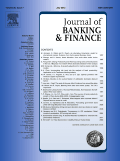
JOURNAL OF BANKING & FINANCE
Exploring Innovations in Finance and EconomicsWelcome to the Journal of Banking & Finance, a premier publication in the fields of finance and economics, expertly published by Elsevier. With its esteemed Q1 ranking in both the Economics and Econometrics and Finance categories for 2023, this journal frequently garners significant attention from researchers, professionals, and academics alike. Established in 1977, it has become a crucial resource for the latest research and advancements in banking and financial services, influencing policies and practices on a global scale. The journal's commitment to high-quality, peer-reviewed content ensures that it not only contributes to academic discourse but also drives real-world financial innovation. As part of the respected Elsevier publishing collection, the journal's rigorous standards and comprehensive analysis serve as indispensable tools for those seeking to understand and navigate the complexities of the financial landscape. Located in the Netherlands, the Journal of Banking & Finance continues to play a vital role in shaping the future of financial research through its impactful insights and research contributions.
International Finance
Pioneering research at the intersection of finance and geography.International Finance is a prestigious academic journal published by WILEY, dedicated to the exploration and advancement of theories and practices in the realms of finance, development, and geography. With a strong emphasis on empirical and theoretical research, this journal provides a crucial platform for researchers, professionals, and students to disseminate cutting-edge findings that shape our understanding of the financial landscape on a global scale. Holding an impressive impact factor and categorized in the Q2 quartile across multiple disciplines, including Development, Finance, and Geography, the journal has established itself as a significant contributor to scholarly discourse. Since its inception in 1998 and spanning until 2024, International Finance offers a comprehensive overview of current trends and challenges faced in financial contexts, enhancing the decision-making processes within academia and industry alike. Although the journal is not open access, its rigorous peer-review process guarantees high-quality content that is indispensable for anyone engaged in the diverse fields intersecting with finance.
INTERNATIONAL JOURNAL OF FINANCE & ECONOMICS
Pioneering Theories for Tomorrow's EconomistsInternational Journal of Finance & Economics, published by Wiley, is a premier academic journal that serves as a vital resource for researchers and professionals in the fields of finance, accounting, and economics. With an impressive impact factor and a reputation for excellence, the journal is recognized in the 2023 Scopus rankings, placing in the top quartiles across multiple categories, including Q2 in Accounting, Economics, and Finance. The journal has been a significant contributor to academic discourse since its inception in 1996, with its converged years extending to 2024, thereby ensuring the continuous advancement of knowledge in these critical areas. Although it operates under a traditional subscription model, its comprehensive articles provide insightful analyses, empirical research, and theoretical advancements that cater to a diverse audience—from seasoned scholars to emerging students in the field.