ENGLISH STUDIES IN AFRICA
Scope & Guideline
Illuminating African Perspectives in Literature
Introduction
Aims and Scopes
- Mobility and Transport in Literature:
This core area examines how mobility—through various forms of transport—shapes narratives and identities in African literature, highlighting the socio-political implications and personal experiences of characters. - Postcolonial Perspectives:
The journal emphasizes postcolonial themes, exploring how colonial legacies affect contemporary identities, narratives, and literary expressions across African societies. - Ecocriticism and Environmental Narratives:
Contributions often reflect on ecological concerns within African literatures, analyzing the relationship between humans and their environments, particularly in the context of postcolonial identities. - Cultural and Racial Politics:
The journal addresses the complexities of race, identity, and cultural politics in African literature, focusing on how these themes are represented and contested within various narratives. - Interdisciplinary Approaches:
The journal encourages interdisciplinary methodologies, integrating insights from cultural studies, sociology, and history to enrich literary analysis. - Focus on Contemporary Issues:
Recent publications reflect on current socio-political issues, such as the impacts of COVID-19 and the dynamics of urban life, showing the journal's commitment to relevance in contemporary discourse.
Trending and Emerging
- Exploration of Mobility and Urban Life:
A significant trend is the focus on mobility, particularly public transport and urban experiences, as a lens to understand identity and socio-political dynamics in African contexts. - Hydropolitics and Environmental Issues:
Emerging themes around hydropolitics and water narratives indicate a growing interest in environmental issues and their representation in literature, reflecting broader global concerns. - Intersection of Literature and Social Change:
Recent works increasingly link literature to social movements and transformations, addressing how narrative can influence and reflect societal changes, particularly in postcolonial settings. - Interdisciplinary Narratives:
There is a rise in interdisciplinary approaches that blend literature with other fields such as sociology, politics, and environmental studies, enriching the analysis of texts. - Contemporary Responses to Global Events:
The impact of global crises, such as the COVID-19 pandemic, is increasingly reflected in literary analyses, indicating a responsiveness to current events and their cultural implications.
Declining or Waning
- Traditional Literary Canon:
Analysis of classical authors and texts, particularly those outside the immediate African context, is becoming less frequent, indicating a shift towards more localized and contemporary voices. - Historical Narratives without Contemporary Relevance:
There seems to be a decline in the exploration of purely historical narratives that do not connect to current socio-political contexts or issues, suggesting a move towards literature that engages with present-day challenges. - Generalized Postcolonial Theory:
While postcolonial themes remain relevant, the application of broad theoretical frameworks without specific African contexts is decreasing, as scholars increasingly seek nuanced, localized analyses. - Focus on Non-Literary Genres:
There is a noticeable decline in the examination of non-literary genres such as oral traditions or folklore, which were once more prominent in the journal's discourse.
Similar Journals

Impossibilia-Revista Internacional de Estudios Literarios
Unlocking New Perspectives in Literary StudiesImpossibilia-Revista Internacional de Estudios Literarios is a premier open access journal dedicated to the vibrant field of literary studies, published by ASSOC CULTURAL IMPOSSIBILIA since 2011. With its ISSN 2174-2464, this international journal encourages the exploration and analysis of diverse literary theories, texts, and contexts, making it an essential resource for researchers, scholars, and students alike. Hailing from Granada, Spain, Impossibilia not only fosters academic discourse in literature but also promotes intercultural dialogue through its commitment to accessibility and inclusivity. While data such as H-index and Scopus rankings are still to be developed, the journal's focus on enriching the literary landscape ensures its growing impact and relevance within the academic community.
Journal of Postcolonial Writing
Advancing Critical Perspectives on Colonial HistoriesJournal of Postcolonial Writing, published by ROUTLEDGE JOURNALS, TAYLOR & FRANCIS LTD, stands as a pivotal platform in the field of postcolonial studies and literary theory. Since its inception in 2005, this esteemed journal has cultivated a dedicated space for scholarly discourse, focusing on the complex interplay between literature, culture, and colonial histories. With an impressive Q1 ranking in the 2023 Literature and Literary Theory category and a notable Scopus rank of 97/1106, the journal occupies a vital place in the academic landscape, achieving a significant percentile of the 91st. Researchers and students alike will find the journal’s commitment to exploring diverse narratives and critical frameworks invaluable, making it an essential resource for those engaged in contemporary literary scholarship. Although not open access, readers can access high-quality research that contributes to meaningful conversations within the discipline, supporting the journal’s objective to foster interdisciplinary collaboration and innovation.

Tydskrif vir letterkunde
Advancing Critical Dialogue in Cultural StudiesTydskrif vir letterkunde is an esteemed open-access journal published by UNIV PRETORIA, dedicated to the exploration and discourse surrounding literature and cultural studies in the South African context and beyond. With an impressive Q1 ranking in Literature and Literary Theory and a Q2 ranking in Cultural Studies as of 2023, this journal serves as a vital platform for researchers, professionals, and students alike, aiming to bridge theoretical concepts with contemporary literary practices. Since becoming open access in 2015, it has broadened its reach, allowing for greater collaboration and knowledge dissemination within the global academic community. By welcoming diverse voices and innovative research, Tydskrif vir letterkunde not only contributes to the rich tapestry of literary scholarship but also fosters critical dialogue around cultural issues, ensuring its relevance in an ever-evolving field.
South Central Review
Challenging Perspectives in the Heart of Cultural StudiesSouth Central Review, a distinguished academic journal published by Johns Hopkins University Press, serves as a vital platform for scholarly discourse in the fields of cultural studies, literature and literary theory, philosophy, and the visual and performing arts. With an ISSN of 0743-6831 and an E-ISSN of 1549-3377, this journal is dedicated to highlighting innovative research and critical analyses that explore the complexities of Southern culture and its broader implications. Although it operates without an open access option, the journal is recognized for its rigorous peer-review process and contributions to contemporary academic dialogue, holding Q3 and Q4 rankings across several disciplines as of 2023. The convergence of ideas and perspectives from diverse academic backgrounds positions the South Central Review as an essential resource for researchers, professionals, and students seeking to deepen their understanding of the cultural narratives shaping our world today.
AMERICAN LITERATURE
Fostering Innovation in the Study of American LiteratureAMERICAN LITERATURE is a premier academic journal published by DUKE UNIVERSITY PRESS, dedicated to enhancing the understanding of literature produced in the United States from the colonial period to contemporary works. With its ISSN 0002-9831 and E-ISSN 1527-2117, this influential journal has maintained its status as a leader in the field, achieving a commendable Q1 ranking in Literature and Literary Theory for 2023, and holding a notable position (ranked #169 out of 1106) within its Scopus category. Since its inception in 1968, the journal has committed to publishing innovative research that explores diverse literary traditions, critical theories, and cultural contexts, making it an essential resource for researchers, scholars, and students alike. Although not available as an open-access publication, AMERICAN LITERATURE continues to play a critical role in shaping conversations around the complex narratives that define American literary heritage, inviting contributions that push the boundaries of literary studies.
Safundi
Connecting Scholars to the Pulse of Cultural DiscourseSafundi, published by Routledge Journals, Taylor & Francis Ltd, is a distinguished peer-reviewed journal dedicated to exploring the intersections of culture, history, and political science. Since its inception in 2000, Safundi has contributed significantly to the discourse on cultural studies, positioning itself as a vital resource for researchers and professionals alike. With an Impact Factor reflective of its rigorous scholarship, the journal is ranked in the top quartiles for cultural studies and history, showcasing its influence and authority within these fields. The journal addresses critical contemporary issues, aiming to foster a nuanced understanding of cultural dynamics and historical contexts. While access options are traditional, Safundi remains committed to disseminating pivotal research that resonates with academics and policymakers. As it continues to evolve through to 2024, Safundi serves as an indispensable platform for students and scholars seeking to contribute to the vibrant dialogue surrounding culture and its implications in our global society.
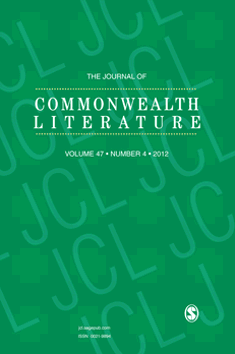
JOURNAL OF COMMONWEALTH LITERATURE
Charting New Territories in Literary ScholarshipJOURNAL OF COMMONWEALTH LITERATURE, published by SAGE Publications Ltd, serves as a premier platform for scholarly discourse in the field of Literature and Literary Theory. Established in 1966, this esteemed journal has built a robust reputation, as evidenced by its impressive Q1 ranking in the 2023 category of Literature and Literary Theory and its placement in the impressive 91st percentile among its peers in the Scopus rankings. With an ISSN of 0021-9894 and an E-ISSN of 1741-6442, the journal provides valuable insights into the rich tapestry of Commonwealth literature, exploring diverse works and critical theories that shape our understanding of literature outside the conventional Western canon. While currently not designated as an Open Access journal, it continues to attract a global readership seeking to advance knowledge in this vital area of scholarship. Researchers, professionals, and students alike will find in its pages a rich resource for innovative ideas and critical discussions that reflect the evolving landscape of literary studies.
AFRICAN AMERICAN REVIEW
Illuminating the Depths of African American Literature and ArtAFRICAN AMERICAN REVIEW, published by the Johns Hopkins University Press, stands as a pivotal journal since its inception, dedicated to exploring the multifaceted aspects of African American literature, culture, and artistic expression. With an ISSN of 1062-4783 and an E-ISSN of 1945-6182, this journal provides a critical platform that delves into the rich tapestry of African American experiences, bridging gaps across literary, cultural, and visual arts disciplines. Its latest impact metrics position it in esteemed quartiles, achieving Q2 rank in both Literature and Literary Theory and Visual Arts and Performing Arts, alongside a strong presence in Cultural Studies with a Q3 classification. The journal’s commitment to high-quality scholarship is reflected in its Scopus rankings, drawing attention from researchers and scholars invested in cultural narratives and historical contexts. Although not currently open access, the journal's comprehensive analyses contribute significantly to discussions in academia and beyond, making it an essential resource for researchers, educators, and students alike looking to deepen their understanding of African American contributions to the arts and humanities.
Italianist
Diving into Italy's Cultural Heritage and Historical NarrativesItalianist is a distinguished peer-reviewed journal published by Routledge Journals, Taylor & Francis Ltd, focusing on the multifaceted aspects of Italian culture, history, and anthropology. With a proud history spanning from 1981 to 2001 and then again from 2003 to 2024, this journal caters to a global audience of scholars, professionals, and students seeking to deepen their understanding of Italian studies. Although it currently operates without an open access option, it provides invaluable insights that contribute to critical discourse in the field, evidenced by its rankings in Scopus: Q4 in Anthropology and Q3 in History, demonstrating its growing influence among academics. The journal is based in the United Kingdom and strives to promote high-quality research that explores historical narratives, cultural practices, and anthropological themes related to Italy, making it an essential resource for anyone interested in this rich and vibrant area of study.
RESEARCH IN AFRICAN LITERATURES
Advancing Critical Discourse in African LiteraturesRESEARCH IN AFRICAN LITERATURES is a prestigious peer-reviewed journal published by Indiana University Press, dedicated to the critical exploration of African literary traditions, cultures, and texts. With an ISSN of 0034-5210 and an E-ISSN of 1527-2044, this journal stands out in the field of literature and literary theory, currently ranking in the 80th percentile of its category according to Scopus, making it a significant platform for scholars and researchers alike. Since its establishment, the journal has evolved through converged volumes from 2002 to 2024, consistently fostering innovative discourse and interdisciplinary approaches that illuminate the complexities of African narratives. Although it does not offer open access, the journal is integral for anyone engaged in African studies, providing critical insights that are essential for understanding the broader implications of literature within diverse cultural contexts. The journal's commitment to high standards of scholarship is reflected in its Q3 quartile ranking and its influential contribution to contemporary literary dialogue.