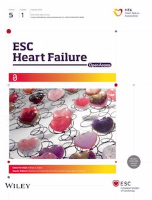
ESC Heart Failure
Scope & Guideline
Empowering healthcare professionals with vital cardiovascular insights.
Introduction
Aims and Scopes
- Heart Failure Management and Treatment Strategies:
The journal focuses on the latest advancements in heart failure therapies, including pharmacological interventions, device therapies, and surgical approaches. - Epidemiology and Risk Factors:
Research on the epidemiology of heart failure, including prevalence, risk factors, and the impact of comorbidities on heart failure outcomes, is a key focus area. - Diagnostic Innovations:
The journal publishes studies on novel diagnostic techniques and biomarkers that enhance the detection and monitoring of heart failure. - Patient Outcomes and Quality of Life:
There is a strong emphasis on research that evaluates patient-reported outcomes, quality of life, and the psychosocial aspects of living with heart failure. - Multi-disciplinary Approaches:
The journal encourages research that explores multi-disciplinary care models and collaborative strategies in heart failure management. - Advanced Heart Failure and Transplantation:
Articles addressing advanced heart failure, including the use of mechanical circulatory support and heart transplantation, are prominently featured.
Trending and Emerging
- Digital Health and Remote Monitoring:
There is a significant increase in research related to digital health solutions, including telemedicine and remote patient monitoring technologies for managing heart failure. - Artificial Intelligence and Machine Learning:
The utilization of AI and machine learning in predicting heart failure outcomes and personalizing treatment strategies has emerged as a prominent theme. - Heart Failure with Preserved Ejection Fraction (HFpEF):
Research focusing on HFpEF has gained traction, exploring its unique pathophysiology, management strategies, and prognostic indicators. - SGLT2 Inhibitors and Novel Pharmacotherapies:
The growing interest in SGLT2 inhibitors and other novel pharmacotherapies is evident, as studies highlight their benefits in heart failure management. - Psychosocial Factors and Patient-Centered Care:
Increased attention is being paid to psychosocial factors affecting heart failure patients, including mental health, quality of life, and health literacy. - Biomarkers and Precision Medicine:
Emerging research on biomarkers for heart failure diagnosis, prognosis, and treatment response is trending, supporting the movement towards precision medicine.
Declining or Waning
- Traditional Risk Factor Studies:
There has been a noticeable decrease in studies focusing on traditional cardiovascular risk factors (e.g., hypertension, hyperlipidemia) as standalone topics, with more emphasis now on complex interrelations with heart failure. - Single-Center Studies:
The prevalence of single-center studies has decreased as multi-center and large-scale studies are prioritized for their broader applicability and generalizability. - Basic Science and Mechanistic Studies:
Research focusing solely on basic science or mechanistic studies without direct clinical implications has waned, as the journal shifts towards clinically relevant applications. - Historical Data Analysis:
There is a reduced focus on retrospective analyses of historical data, as the field moves toward real-time data and prospective studies that incorporate current treatment paradigms.
Similar Journals
Revista Portuguesa de Cardiologia
Fostering collaboration and knowledge in the heart of cardiology.Revista Portuguesa de Cardiologia, published by Elsevier España SLU, stands as a pivotal resource in the realm of Cardiology and Cardiovascular Medicine. With its origins tracing back to 1970, this journal has cultivated a robust academic presence, achieving a 2023 Q3 ranking in its category, and currently holding a position of #220 out of 387 on the Scopus rankings, placing it within the 43rd percentile of its field. This open access journal, available since 2011, aims to disseminate high-quality research and insights relevant to contemporary cardiovascular issues. Its commitment to accessibility and knowledge exchange enhances its importance for clinicians, researchers, and students alike, fostering a more informed community in the fight against cardiovascular diseases. Operating from its base in Barcelona, Spain, the journal welcomes contributions that further the understanding and treatment of heart conditions, contributing significantly to the advancement of cardiovascular health.
Current Heart Failure Reports
Delivering Essential Research for Cardiovascular CareCurrent Heart Failure Reports, published by SpringerNature, is a leading journal dedicated to advancing the field of cardiology, specifically focusing on heart failure. With an impressive impact factor and a recognized reputation, this journal falls under the top quartiles in several categories, including Q1 in Cardiology and Cardiovascular Medicine and Emergency Medicine. Its range of topics encompasses both clinical and research insights into heart failure management, offering valuable perspectives aligned with the latest therapeutic advancements. Although it does not have open access options, researchers and practitioners can find profound studies and reviews aimed at improving patient care and outcomes in cardiovascular health. As the journal converges towards its 20th year in print, it continues to serve as a critical resource for academic professionals, providing a platform for high-quality research that shapes the future of heart failure treatments.
Cardiology and Therapy
Exploring breakthroughs in heart health and therapy.Cardiology and Therapy, published by SPRINGER LONDON LTD, is a leading open-access journal dedicated to advancing the field of cardiology and cardiovascular medicine. With an ISSN of 2193-8261 and an E-ISSN of 2193-6544, this esteemed journal has been at the forefront of disseminating high-quality research since its inception in 2012. It has achieved an impressive Q1 ranking in the 2023 Cardiology and Cardiovascular Medicine category, reflecting its commitment to excellence and relevance in the field. Spanning a wide array of topics—from clinical studies to cutting-edge therapeutic interventions—the journal aims to foster knowledge exchange among researchers, clinicians, and healthcare professionals. In addition, its position in the 72nd percentile of Scopus rankings underscores its global impact and contribution to the cardiovascular research community. With open access options, Cardiology and Therapy ensures that its content is widely accessible, promoting the sharing of vital findings that can influence clinical practice and improve patient outcomes.
HEART FAILURE REVIEWS
Shaping the Future of Heart Health Through Rigorous ReviewHEART FAILURE REVIEWS is a premier academic journal published by Springer, dedicated to the dynamic field of cardiology and cardiovascular medicine. With an impressive Q1 ranking in 2023, the journal stands as a vital resource for researchers, clinicians, and students seeking to stay abreast of the latest developments in heart failure management and research. Covering a broad spectrum of topics, including innovative therapies, epidemiology, and pathophysiology of heart failure, it fosters an environment for interdisciplinary collaboration. The journal is indexed with an ISSN of 1382-4147 and an E-ISSN of 1573-7322, ensuring widespread dissemination of knowledge. Although it does not currently offer open access options, its rigorous peer-review process guarantees high-quality content that contributes significantly to the scientific community. Established in 1996 and running through 2024, HEART FAILURE REVIEWS continues to be a leading platform for advancing understanding and treatment of heart conditions, making it an indispensable resource for all stakeholders in cardiac health.

IJC Heart & Vasculature
Advancing Cardiovascular Knowledge for a Healthier TomorrowIJC Heart & Vasculature is a premier open-access journal published by Elsevier Ireland Ltd, dedicated to advancing research in the fields of cardiology and cardiovascular medicine. Since its inception in 2013, this journal has established itself as a valuable resource for clinicians, researchers, and students keen on exploring the latest developments in heart and vascular health. With an impressive impact factor and ranked within Q2 in its category (2023), IJC Heart & Vasculature has achieved a significant Scopus rank of #125 out of 387, placing it in the 67th percentile of cardiology journals. The journal not only emphasizes high-quality research but also promotes innovative studies that can shape clinical practices and improve patient outcomes. Researchers and professionals can access a plethora of peer-reviewed articles, original research, and comprehensive reviews that unravel the complexities of cardiovascular science. With a commitment to fostering open and impactful dialogue in the field, IJC Heart & Vasculature is poised to be an essential platform for knowledge exchange in the evolving landscape of cardiovascular research.

CURRENT CARDIOLOGY REVIEWS
Navigating the Future of Cardiology TogetherCURRENT CARDIOLOGY REVIEWS, an esteemed journal published by BENTHAM SCIENCE PUBL LTD, is a pivotal resource in the field of cardiology and cardiovascular medicine. With an ISSN of 1573-403X and E-ISSN of 1875-6557, this journal presents comprehensive reviews that contribute significantly to the advancement of scientific knowledge and clinical practices in cardiology. Operating with open access options, CURRENT CARDIOLOGY REVIEWS is dedicated to bridging the gap between research and practice, thereby encouraging interdisciplinary collaboration and knowledge sharing. The journal has been instrumental in disseminating high-impact findings, consistently maintaining a Q2 category ranking in both Cardiology and Cardiovascular Medicine, as well as within the miscellaneous categories of Medicine, highlighting its relevance and respect in the academic community. Researchers, practitioners, and students alike will find valuable insights into contemporary cardiovascular issues, practices, and innovations that promote better patient outcomes. Based in the United Arab Emirates, CURRENT CARDIOLOGY REVIEWS encourages global contributions and reflects the latest advancements up to the year 2024, solidifying its role as an essential publication for those engaged in the quest for excellence in cardiovascular health.
CURRENT OPINION IN CARDIOLOGY
Empowering clinicians with the latest in cardiac research.CURRENT OPINION IN CARDIOLOGY, published by LIPPINCOTT WILLIAMS & WILKINS, is an esteemed journal in the field of cardiology that has been serving the academic community since 1988. With a robust focus on the latest developments and emerging trends in cardiovascular medicine, this journal aims to bridge the gap between clinical practice and research, offering critical insights and expert commentary. The journal is recognized in the medical community, achieving a 2023 Scopus rank of #148 out of 387 in its category, placing it in the 61st percentile. Although it operates under a subscription-based model, CURRENT OPINION IN CARDIOLOGY remains an essential resource for researchers, practitioners, and students seeking cutting-edge knowledge and advancements in cardiology. As a Q2 journal in the field, it continues to foster dialogue and provide a platform for disseminating impactful cardiovascular research, ultimately contributing to improved patient outcomes and informed clinical decisions.
KARDIOLOGIYA
Bridging Research and Practice in CardiologyKARDIOLOGIYA is a renowned academic journal in the field of cardiology, published by the Russian Heart Failure Society. Since its inception in 1961, this journal has been dedicated to disseminating cutting-edge research in cardiovascular medicine, contributing to the global understanding of heart-related diseases and their management. With a significant publication history that spans over six decades, KARDIOLOGIYA provides a platform for both established researchers and emerging scholars to publish their findings. Despite its current Q4 category ranking in the 2023 Cardiology and Cardiovascular Medicine category, the journal plays a crucial role in promoting regional insights and advancements in cardiology, while striving towards higher visibility and impact within the academic community. While not an open-access journal, the journal is accessible to institutions and professionals in the Russian Federation and beyond, fostering collaboration and knowledge sharing among healthcare professionals. With a Scopus rank of #259 among 387 journals, it is well-positioned to enhance discourse in the field and support the development of innovative approaches to cardiovascular care.

Cardiac Failure Review
Transforming cardiovascular medicine through open access.Cardiac Failure Review, published by Radcliffe Cardiology, is a leading open-access journal dedicated to advancing the understanding and management of cardiac failure. With an ISSN of 2057-7540 and an E-ISSN of 2057-7559, this journal has gained significant recognition in the field, achieving a Q1 ranking in Cardiology and Cardiovascular Medicine as of 2023. Its impressive positioning at rank #97 out of 387 in Scopus further highlights its impact, placing it within the top 25th percentile of its category. Since transitioning to open access in 2019, Cardiac Failure Review has become increasingly accessible, ensuring that critical research findings are available to a global audience. The journal's focus spans innovative treatments, emerging technologies, and comprehensive reviews, effectively meeting the needs of researchers, clinicians, and students alike. With a commitment to excellence in cardiovascular medicine, Cardiac Failure Review plays a vital role in disseminating knowledge and fostering discussions that drive the field forward.
JOURNAL OF THE AMERICAN COLLEGE OF CARDIOLOGY
Exploring the Frontiers of Cardiovascular MedicineJOURNAL OF THE AMERICAN COLLEGE OF CARDIOLOGY, the esteemed publication of Elsevier Science Inc, stands as a premier platform for advancing knowledge in the field of cardiology and cardiovascular medicine. With an impressive impact factor reflecting its prominence—ranked Q1 in its category for 2023 and occupying the 4th position out of 387 in the Scopus listings, firmly placing it in the 99th percentile—this journal is essential for researchers, clinicians, and students alike. Since its inception in 1983, it has continuously provided a vital space for high-quality research and innovative clinical practices, driving forward our understanding of cardiovascular health. While access options are not open, the value of the cutting-edge articles published here cannot be overstated, as they foster collaboration and inform better patient care across the globe. As part of its ongoing commitment to excellence, the journal solicits submissions of original research, reviews, and clinical studies that contribute meaningfully to the field and engage its diverse readership.