
Espacio Tiempo y Forma-Serie III-Historia Medieval
metrics 2024
Illuminating the Past: Your Gateway to Medieval Insights
Introduction
Espacio Tiempo y Forma-Serie III-Historia Medieval, published by the Universidad Nacional de Educación a Distancia (UNED), is a prominent open-access journal dedicated to advancing research in medieval history. Since its establishment, this journal has gained a significant reputation within the academic community, achieving Q1 rankings in both Classics and History, reflecting its commitment to high-quality scholarship and insightful contributions to the field. With a remarkable Scopus ranking of 36th in Classics and 589th in History, it places itself among the top-tier publications, ensuring visibility and impact for its authors. Open access since 2011, the journal promotes the dissemination of knowledge to a broader audience, enhancing academic engagement and fostering collaboration among researchers globally. With its rich resources, the journal attracts a diverse readership, including historians, students, and professionals keen on exploring innovative perspectives in medieval studies.
Metrics 2024
 0.400.200.204
Metrics History
Rank 2024
Scopus
IF (Web Of Science)
JCI (Web Of Science)
Quartile History
Similar Journals
JOURNAL OF ENGLISH AND GERMANIC PHILOLOGY
Navigating the Intersection of Language and CultureJournal of English and Germanic Philology, published by University of Illinois Press, stands as a prestigious forum for scholarly discourse in the fields of linguistics and literary studies. With its ISSN 0363-6941 and an impressive impact factor aligning it within the Q1 and Q2 quartiles in key academic categories, this journal delves into nuanced explorations of both the English and Germanic languages, enriching the understanding of language and its literary frameworks. The journal aims to foster interdisciplinary dialogue, offering cutting-edge research that appeals not only to linguists and literary theorists but also to educators and cultural historians alike. Although the journal is not open access, its contributions are essential for anyone keen on enhancing their knowledge of linguistic phenomena and literary narratives from these influential linguistic traditions. With a commitment to publishing innovative and rigorous scholarship, the Journal of English and Germanic Philology is a vital resource for academics seeking to advance their work in language and literature.
Sociedades Precapitalistas
Diving Deep into Historical Socio-Economic DynamicsSociedades Precapitalistas, published by the Universidad Nacional de La Plata, Faculty of Humanities and Educational Sciences, is a distinguished academic journal that specializes in the study of pre-capitalist societies, exploring their structures, cultures, and dynamics. With an ISSN of 2250-5121 and an E-ISSN of 2250-5121, this Open Access journal has been committed to disseminating knowledge since 2011, ensuring that research is accessible to a global audience. Set in La Plata, Buenos Aires, Argentina, the journal serves as a vital platform for researchers, professionals, and students engaged in this niche yet significant field of study. Although specific impact metrics such as H-Index are currently unavailable, its dedication to academic rigor and the relevance of its subject matter highlight its importance for those exploring the socio-economic histories of societies prior to the capitalist era. As the discourse surrounding global history continues to evolve, Sociedades Precapitalistas plays a crucial role in enriching our understanding of past societies and their legacies.
Al-Masaq-Journal of the Medieval Mediterranean
Exploring the Rich Tapestry of Medieval Mediterranean StudiesAl-Masaq: Journal of the Medieval Mediterranean is a premier academic journal published by Routledge Journals, Taylor & Francis Ltd, focusing on the intricate tapestry of medieval Mediterranean studies. With its first publication dating back to 1988, this journal invites researchers and scholars to explore the rich history, culture, and religious dynamics that shaped the Mediterranean region during the medieval period. The journal is strategically indexed and ranks in the Q3 quartile for both History and Religious Studies, positioning it within the top 25% of similar publications. Al-Masaq aims to bridge the gaps between various disciplines related to medieval studies, promoting interdisciplinary discourse and scholarly collaboration. Though it operates under a subscription model, the journal remains accessible to the academic community, fostering a robust dialogue on vital historical insights and research developments. Its esteemed contributors and comprehensive peer-review process underscore Al-Masaq’s importance as a significant platform for both emerging and established voices in the field.

Imago Temporis-Medium Aevum
Unlocking the Secrets of the Middle AgesImago Temporis-Medium Aevum is a distinguished journal published by SPACE POWER & CULTURE- CONSOLIDATED MEDIEVAL STUDIES RESEARCH GROUP, focusing on the rich tapestry of medieval studies within the context of history. Based in the culturally vibrant region of Catalonia, Spain, this journal has established itself as a vital resource for scholars and enthusiasts alike since it adopted an Open Access model in 2007, ensuring that its compelling research is widely accessible. With an impact factor reflected in its Q3 category ranking in the field of History for 2023, and an impressive Scopus rank in the 62nd percentile amongst 1,760 publications, Imago Temporis continues to serve as an incubator for innovative scholarship. The journal's consistent publication history, particularly from 2011 to 2013, 2016 to 2018, and its ongoing commitment through 2024, underscores its dedication to advancing the understanding of the medieval era. Researchers, students, and professionals are encouraged to engage with its unique content, which is poised to challenge traditional perspectives and contribute to the global discourse in medieval studies.
Anuario de Estudios Medievales
Connecting Researchers to the Heart of Medieval StudiesAnuario de Estudios Medievales is an esteemed academic journal dedicated to the field of Medieval Studies, published by the Consejo Superior de Investigaciones Científicas (CSIC) in Spain. With an ISSN of 0066-5061 and an E-ISSN of 1988-4230, the journal has been offering open access to researchers since 1996, fostering a collaborative and inclusive scholarly environment. Recognized for its high impact, it holds a commendable Q1 ranking in History as of 2023, reflecting its influence in the academic community. The journal encompasses a rich array of topics within medieval history, making it a vital resource for historians, scholars, and students alike who seek to explore and understand the complexities of the medieval period. With its indexed presence in Scopus, where it ranks 557th among 1760 in the Arts and Humanities category, Anuario de Estudios Medievales stands as a cornerstone publication, bridging historical inquiry and contemporary research in Medieval Studies.

Studia Historica-Historia Medieval
Fostering Global Dialogue on Medieval InsightsStudia Historica-Historia Medieval, published by EDICIONES UNIV SALAMANCA, is a premier open-access journal dedicated to the field of medieval history. Since its inception in 1983, this Spanish journal has provided a platform for scholars to disseminate innovative research, analyze historical trends, and foster academic discourse within the broader historical context. With an impressive ranking of Q1 in History and a notable position within the Scopus Arts and Humanities ranking (Ranked #473 out of 1760, 73rd percentile), Studia Historica stands out as a vital resource for researchers, professionals, and students alike. The journal embraces a wide spectrum of topics related to medieval studies and offers open access to its articles, facilitating the global exchange of knowledge and ideas. With a commitment to rigorous peer review, it aims to uphold high academic standards and contribute significantly to the historiography of the medieval period.

Medievalismo
Unveiling the Mysteries of the Middle AgesMedievalismo is a distinguished academic journal dedicated to the interdisciplinary study of medieval culture, history, and societal influences, published by the esteemed University of Murcia in Spain. Since achieving Open Access in 2010, it has fostered a rich environment for the dissemination of knowledge, encouraging contributions from researchers and scholars across diverse fields. The journal holds a notable Q1 ranking in History and exhibits strong performance metrics in Arts and Humanities and Cultural Studies, as evidenced by its relevant Scopus rankings. With a commitment to promoting high-quality research and discussion, Medievalismo has positioned itself as an essential resource for academics and students aiming to deepen their understanding of the medieval period. Situated in a vibrant scholarly landscape, it continues to publish transformative insights and foster critical dialogue, making significant contributions to the cultural and historical narratives of our time.

Edad Media-Revista de Historia
Connecting Scholars: Bridging Ideas in Medieval ResearchEdad Media-Revista de Historia is a distinguished academic journal published by UNIV VALLADOLID, SECRETARIADO PUBLICACIONES, dedicated to the exploration of medieval history. With an impact factor that situates it in the prestigious Q1 quartile of historical studies, this journal, ISSN 1138-9621 and E-ISSN 2530-6448, has established itself as a vital resource for scholars and students alike, fulfilling the need for rigorous research and discourse in the field. Since its transition to open access in 2017, it has broadened its reach, allowing for greater dissemination of knowledge and facilitating the exchange of ideas among a diverse audience. Covering a period from 2017 to 2024, it aims to publish high-quality, peer-reviewed articles that contribute to the understanding of the socio-political, cultural, and economic landscapes of the medieval era. Ranked within the top 61st percentile in Scopus under the arts and humanities category, it reflects the journal's commitment to excellence and significance in historical scholarship. The journal’s office is located at Juan Mambrilla 14, Valladolid 47003, Spain, solidifying its roots in one of Europe's key historical regions.
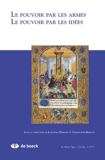
MOYEN AGE
Cultivating Knowledge in the Heart of Medieval ScholarshipMOYEN AGE is a distinguished academic journal published by LE MOYEN AGE BOECK & LARCIER S A in Belgium, focused on the multifaceted disciplines of History, Linguistics, and Literature. With its ISSN 0027-2841 and E-ISSN 1782-1436, this journal serves as a platform for researchers, professionals, and students alike to engage with scholarly articles that contribute to the understanding of medieval studies. Although currently categorized in the fourth quartile across various fields as of 2023, MOYEN AGE demonstrates a commitment to fostering academic dialogue and exploration around historical linguistics and literary theory. The journal is available via subscription, making it an essential resource for those looking to deepen their knowledge in its scope, which spans from 2001 through 2024. As it continues to evolve, MOYEN AGE remains a relevant source for emerging thinkers and established scholars drawn to the complexities of the medieval era.
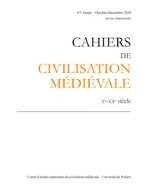
CAHIERS DE CIVILISATION MEDIEVALE
Illuminating History, Literature, and Art of the Medieval EraCAHIERS DE CIVILISATION MEDIEVALE is a distinguished scholarly journal focusing on the multifaceted aspects of medieval civilization, including its history, literature, visual arts, and performing arts. Published by the CENTRE ETUD SUPERIEUR CIV MED in France, this journal serves as a vital resource for researchers, professionals, and students striving to deepen their understanding of the medieval period. Although the journal’s impact factor and HIndex are not explicitly listed, it has been categorized in Q4 for 2023 in key areas such as History and Literature, indicating its role within niche academic discussions. With content spanning converged publication years from 2002 to 2014 and 2017 to 2023, CAHIERS DE CIVILISATION MEDIEVALE aims to foster a rich dialogue among scholars in the field, while its accessibility options provide a pathway for the dissemination of knowledge. Dive into the intricate world of medieval studies through this essential publication, which seeks to elevate the discourse and provide a platform for innovative research.