Etnoantropoloski Problemi-Issues in Ethnology and Anthropology
Scope & Guideline
Illuminating the intersections of anthropology and modern life.
Introduction
Aims and Scopes
- Cultural Practices and Traditions:
The journal consistently examines various cultural practices, traditions, and their significance in contemporary society, such as traditional dance, rituals, and folklore. - Socio-Political Contexts:
Research often includes analyses of socio-political contexts, exploring how historical and contemporary events shape cultural narratives and individual identities. - Interdisciplinary Approaches:
Emphasizes interdisciplinary methodologies, integrating perspectives from sociology, media studies, and history to enrich anthropological inquiry. - Gender Studies and Representation:
The journal highlights gender dynamics within cultural contexts, analyzing representation in media, historical narratives, and social structures. - Impact of Modernity and Technology:
Explores the effects of modernity, globalization, and technology on cultural practices and identities, including topics like digital culture and artificial intelligence. - Ethnographic and Qualitative Research:
Utilizes ethnographic methods to provide in-depth insights into cultural phenomena, ensuring a rich qualitative understanding of studied communities.
Trending and Emerging
- Digital Culture and Media Studies:
An increasing number of publications are focusing on the intersection of digital culture and anthropology, analyzing social media's impact on identity, community, and cultural expression. - Health and Pandemic Studies:
Research exploring the anthropological implications of health crises, such as the COVID-19 pandemic, has gained traction, emphasizing the relationship between culture and public health. - Environmental Anthropology:
A growing interest in environmental issues, sustainability, and human-animal relationships reflects the journal's engagement with global ecological challenges. - Migration and Transnationalism:
Emerging themes related to migration, diaspora studies, and the experiences of migrant communities indicate a shift towards understanding cultural fluidity and transnational identities. - Anthropological Perspectives on Technology:
Exploration of technology's role in shaping human experience and cultural practices, including studies on artificial intelligence and its social implications, is trending. - Intersectionality in Gender Studies:
There is a marked increase in research that examines the intersections of gender, ethnicity, and class, highlighting diverse experiences and representations within cultural contexts.
Declining or Waning
- Traditional Ethnographic Studies:
There appears to be a decreasing emphasis on traditional ethnographic studies that solely document cultural practices without critical analysis of their socio-political implications. - Historical Analysis of Past Cultures:
While historical perspectives are still valued, there is a noticeable waning interest in purely historical analyses as the journal shifts towards contemporary issues and modern interpretations. - Focus on Isolated Communities:
There is a gradual decrease in studies focusing exclusively on isolated or marginalized communities, as the journal increasingly addresses global interconnectedness and transnational issues. - Static Cultural Representations:
Research that presents static views of culture, without considering dynamic changes and adaptations in response to modernity, is becoming less common. - Theoretical Anthropology without Empirical Basis:
Theoretical discussions that lack empirical grounding or case studies are declining, as the journal prioritizes research that illustrates real-world applications and implications.
Similar Journals
Visual Anthropology
Decoding Society Through Visual NarrativesVisual Anthropology is a distinguished journal published by Routledge Journals, Taylor & Francis Ltd in the United Kingdom. With an ISSN of 0894-9468 and E-ISSN 1545-5920, this journal focuses on the intersection of visual media and anthropological research, exploring the ways in which visual representations influence cultural practices and perceptions. Since its inception in 1987, Visual Anthropology has contributed significantly to the fields of Anthropology and Cultural Studies, earning a Q2 rank in both categories as of 2023. With a solid impact factor and strategic indexing, the journal maintains a vital place for scholars seeking to understand the visual dimensions of human behavior and societal structures. Although it operates under a traditional subscription model, its rigorous peer-review process ensures the dissemination of high-quality research. The journal invites researchers, professionals, and students alike to engage with cutting-edge studies that bridge visual culture and anthropological inquiry.

Slovensky Narodopis-Slovak Ethnology
Unveiling Ethnological Insights from SlovakiaSlovensky Narodopis-Slovak Ethnology is a leading academic journal dedicated to the exploration of ethnology and cultural studies, published by the Slovak Academy of Sciences at the Institute of Ethnology. With an Open Access policy since 2013, it strives to make high-quality research readily accessible to a global audience, enhancing the dialogue around Slovak cultural heritage and broader anthropological topics. The journal holds a notable position in the field, currently ranked Q2 in anthropology for 2023, indicating its substantial contribution to the discipline. It is indexed in Scopus, with a current rank of 245 out of 502 in the Social Sciences category, reflecting its value within the academic community. Researchers and students alike can look forward to a rich array of original research articles, reviews, and essays that not only delve into Slovak ethnology but also engage with international perspectives, thereby enriching the understanding of cultural dynamics and practices.
Folk Life-Journal of Ethnological Studies
Delving Deep into Diverse Cultural Narratives and Practices.Welcome to the Folk Life-Journal of Ethnological Studies, a distinguished publication devoted to exploring the rich tapestry of human culture and ethnological research. Published by Routledge Journals, Taylor & Francis Ltd, this journal serves as an essential platform for scholars and practitioners within the fields of Anthropology, Arts and Humanities, and Cultural Studies. With a publication history stretching back to 1963, the journal has become a valuable resource for disseminating innovative and interdisciplinary research, contributing to a deeper understanding of diverse cultural phenomena. Despite its current quartile rankings of Q4 across multiple categories, 'Folk Life' continues to strive for academic excellence and encourages submissions that challenge existing narratives and offer fresh perspectives. Although not open access, articles published in this journal are rigorously peer-reviewed, ensuring the highest scholarly standards. Researchers, professionals, and students alike will find rigorous and thought-provoking studies within its pages, making Folk Life an important fixture in the academic landscape.
CROSS-CULTURAL RESEARCH
Illuminating the Intersections of Culture and SocietyCROSS-CULTURAL RESEARCH, published by SAGE PUBLICATIONS INC, is a premier journal dedicated to advancing the understanding of cultural variations and their implications across various disciplines. Established in 1966, the journal has maintained a standard of excellence, currently ranking in the Q1 quartile in Anthropology, Arts and Humanities (miscellaneous), and Psychology (miscellaneous) categories as of 2023. With an impressive Scopus Rank positioning it in the top percentiles of its fields, particularly ranking 22nd in Social Sciences (Anthropology), this journal is crucial for researchers, professionals, and students interested in interdisciplinary studies that bridge cultural contexts. Its broad scope covers insightful research articles, empirical studies, and theoretical discussions, thereby fostering a comprehensive dialogue within the cross-cultural landscape. While not an open-access journal, it provides essential contributions to the academic community, encouraging critical engagement with cultural issues that shape human experience globally.
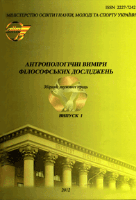
Anthropological Measurements of Philosophical Research
Unlocking the Philosophical Dimensions of AnthropologyAnthropological Measurements of Philosophical Research is a distinguished open-access journal published by the ACAD V LAZARYAN DNIPROPETROVSK NATL RAILWAY TRANSPORT UNIV, dedicated to advancing interdisciplinary scholarship at the intersection of anthropology and philosophy. Since its inception in 2012, this journal has provided an invaluable platform for researchers, professionals, and students to disseminate innovative ideas and research findings, thereby fostering a deeper understanding of anthropological principles applied to philosophical inquiries. The journal encourages submissions that explore theoretical frameworks, longitudinal studies, and methodological advancements within this complex field. With a commitment to accessibility, it operates under an open access model, facilitating wider dissemination and engagement with its content. Situated in Dnipro, Ukraine, this journal aspires to contribute significantly to global discourses on cultural and philosophical dimensions of human experience, making it essential reading for anyone interested in these critical areas of study. Scholars focused on developing multidisciplinary approaches will find Anthropological Measurements of Philosophical Research an indispensable resource in their academic pursuits.
ASIAN MUSIC
Unveiling the Harmonies of Culture and Sound.ASIAN MUSIC is a distinguished academic journal published by University of Texas Press, focusing on the rich and diverse musical traditions of Asia. With an ISSN of 0044-9202 and an E-ISSN of 1553-5630, this journal serves as a key platform for interdisciplinary research that encompasses musicology, ethnomusicology, and cultural studies related to Asian music practices. While ASIAN MUSIC is not an open-access journal, it provides valuable insights and scholarly articles that contribute significantly to the understanding of music’s role within Asian cultures. The journal originally covered works from 2002 to 2010 and has a reputation for fostering discussions that celebrate the intricacies of sound, performance, and society. Targeting researchers, professionals, and students alike, ASIAN MUSIC stands as a crucial resource for those engaged in the study of music in its multifaceted context.
Asia Pacific Journal of Anthropology
Advancing Knowledge in Anthropology and Cultural StudiesAsia Pacific Journal of Anthropology is a premier academic journal dedicated to advancing the field of anthropology and cultural studies, published by Routledge Journals, Taylor & Francis Ltd. With an ISSN of 1444-2213 and E-ISSN 1740-9314, this journal has gained recognition for its rigorous scholarly contributions since its inception in 2000. Situated in the UK, it is strategically positioned to serve as a vital resource for researchers, professionals, and students exploring the rich complexities of human societies and cultures within the Asia Pacific region and beyond. As evidenced by its Q2 ranking in both anthropology and cultural studies for 2023, alongside its impressive Scopus ranks—#218 among 1304 in Cultural Studies and #157 among 502 in Anthropology—this journal illustrates a strong commitment to delivering high-quality, impactful research. While it is not an open-access journal, it remains a key platform for disseminating innovative research and fostering academic dialogue, thereby significantly contributing to the advancement of knowledge in the social sciences.

Annual Review of Anthropology
Advancing Knowledge in AnthropologyAnnual Review of Anthropology is a premier journal published by Annual Reviews, dedicated to providing comprehensive and authoritative reviews in the field of anthropology. Established with the goal of synthesizing essential research findings, this influential publication not only shapes contemporary anthropological discourse but also facilitates interdisciplinary dialogue within the broader realm of social sciences and cultural studies. With an impressive impact factor that places it in the Q1 category across multiple classifications, including Anthropology and Arts and Humanities, this journal is highly regarded by researchers and academics alike. The Annual Review of Anthropology has been a trusted resource for critical insights and transformative ideas, helping to advance the understanding of human societies from 1980 to the present. Although it does not offer open access, access to its articles is available through various academic institutions, ensuring that both seasoned scholars and students can benefit from its wealth of knowledge. With a Scopus ranking placing it in the top percentiles for relevant subjects, this journal is essential reading for anyone looking to stay at the forefront of anthropological research.

Journal de la Societe des Americanistes
Fostering Global Dialogue in Ethnology and Cultural StudiesJournal de la Societe des Americanistes, published by UNIV PARIS X PARIS-NANTERRE, ARCHEOLOGIE & ETHNOLOGIE, is a distinguished platform for the dissemination of scholarly research in the fields of anthropology and cultural studies. With an ISSN of 0037-9174 and an E-ISSN of 1957-7842, this Open Access journal has been making academic content freely accessible since 2016, fostering a global dialogue among researchers and practitioners. Based in France, this journal prioritizes interdisciplinary discourse, enhancing the understanding of cultural dynamics and ethnic diversity across the Americas. Although currently ranked in the Q4 quartile for anthropology and cultural studies, its commitment to rigorous peer-reviewed research places it in a unique position to contribute to the academic landscape. Researchers, professionals, and students seeking to explore intricate cultural themes and anthropological perspectives will find the Journal de la Societe des Americanistes an invaluable resource for their scholarly endeavors.
Italianist
Connecting Scholars Through the Lens of Italian StudiesItalianist is a distinguished peer-reviewed journal published by Routledge Journals, Taylor & Francis Ltd, focusing on the multifaceted aspects of Italian culture, history, and anthropology. With a proud history spanning from 1981 to 2001 and then again from 2003 to 2024, this journal caters to a global audience of scholars, professionals, and students seeking to deepen their understanding of Italian studies. Although it currently operates without an open access option, it provides invaluable insights that contribute to critical discourse in the field, evidenced by its rankings in Scopus: Q4 in Anthropology and Q3 in History, demonstrating its growing influence among academics. The journal is based in the United Kingdom and strives to promote high-quality research that explores historical narratives, cultural practices, and anthropological themes related to Italy, making it an essential resource for anyone interested in this rich and vibrant area of study.