EUROPEAN ARCHIVES OF PSYCHIATRY AND CLINICAL NEUROSCIENCE
Scope & Guideline
Transforming Understanding in Psychiatry and Clinical Neuroscience
Introduction
Aims and Scopes
- Neurobiological Mechanisms:
Research published focuses on the neurobiological underpinnings of psychiatric disorders, including studies on neurotransmitter systems, brain connectivity, and neuroinflammation. - Clinical Interventions and Treatments:
The journal regularly features studies evaluating the efficacy of various treatment modalities, including pharmacological, psychological, and neurostimulation interventions for mental health disorders. - Transdiagnostic Approaches:
There is a significant emphasis on transdiagnostic research that explores commonalities across different psychiatric disorders, offering insights into shared mechanisms and treatment responses. - Impact of Societal Factors:
The journal addresses how societal influences, including socioeconomic factors and public health crises like COVID-19, affect mental health outcomes and treatment accessibility. - Genetic and Epigenetic Studies:
Research often includes genetic and epigenetic analyses to identify biomarkers and understand heritable aspects of psychiatric conditions. - Cognitive and Behavioral Aspects:
Papers frequently explore cognitive functions and behavioral patterns associated with psychiatric disorders, contributing to a holistic understanding of patient experiences.
Trending and Emerging
- Impact of COVID-19 on Mental Health:
There is a significant increase in studies investigating the psychological effects of the COVID-19 pandemic, including its impact on anxiety, depression, and the emergence of new psychiatric symptoms. - Neurostimulation Techniques:
Research on neurostimulation methods, such as transcranial magnetic stimulation (TMS) and electroconvulsive therapy (ECT), is on the rise, highlighting their efficacy in treating treatment-resistant conditions. - Biomarkers and Personalized Medicine:
Emerging studies focusing on identifying biomarkers for psychiatric disorders are becoming prevalent, paving the way for more tailored treatment approaches. - Cognitive Behavioral Interventions:
There is a growing interest in cognitive and behavioral therapies, particularly those that integrate technology, such as mobile health applications and teletherapy. - Substance Use and Mental Health Correlations:
Research exploring the interplay between substance use (including cannabis and opioids) and psychiatric disorders is trending, reflecting societal changes and public health concerns. - Transdiagnostic Research:
An increase in transdiagnostic studies that explore shared mechanisms across various mental health disorders is evident, indicating a shift towards understanding psychiatric conditions holistically.
Declining or Waning
- Traditional Psychodynamic Approaches:
There has been a noticeable decrease in publications focusing exclusively on psychodynamic theories and therapies, as empirical, evidence-based approaches gain favor. - Pharmacological Monotherapy Studies:
Research solely centered on single-drug efficacy without considering combination therapies or integrative approaches seems to be less frequent, as the field moves toward personalized medicine. - Stigmatization and Mental Health Awareness:
While still relevant, studies examining stigma related to mental health have become less central compared to empirical investigations into treatment efficacy and neurobiological mechanisms. - Longitudinal Studies without Integrated Approaches:
There appears to be a reduction in longitudinal studies that do not incorporate multidisciplinary approaches, especially those that fail to link clinical outcomes with biological or genetic data.
Similar Journals

ACTAS ESPANOLAS DE PSIQUIATRIA
Exploring innovative solutions in mental health care.ACTAS ESPANOLAS DE PSIQUIATRIA, published by the renowned JUAN JOSE LOPEZ-IBOR FOUNDATION, serves as a vital resource in the field of psychiatry and mental health, particularly within the Spanish-speaking academic community. With its ISSN 1139-9287 and E-ISSN 1578-2735, this journal has been a critical platform for disseminating high-quality research since its inception in 1996 and continues to contribute valuable insights until 2024. As a recognized journal in the Q3 category of psychiatry and mental health, it ranks 387 out of 567 in Scopus, placing it within the 31st percentile, thereby indicating a growing influence among its peers. The journal’s open access options enhance its accessibility, encouraging a broader readership to engage with contemporary research issues in mental health. Researchers, professionals, and students alike will find ACTAS ESPANOLAS DE PSIQUIATRIA essential for staying informed on the latest developments and innovations in psychiatric practice and research.

WORLD JOURNAL OF BIOLOGICAL PSYCHIATRY
Exploring the Nexus of Biology and Mind.WORLD JOURNAL OF BIOLOGICAL PSYCHIATRY, a premier academic journal published by TAYLOR & FRANCIS LTD, stands at the forefront of interdisciplinary research in the fields of Biological Psychiatry, Psychiatry, and Mental Health. Based in the United Kingdom, this esteemed journal (ISSN: 1562-2975; E-ISSN: 1814-1412) has become increasingly influential since its inception in 2000, with a remarkable impact factor that reflects its high-quality research contributions. The journal is consistently ranked in the Q1 and Q2 categories across various relevant indices, demonstrating its reputation for excellence within the academic community. With Scopus rankings placing it in the top 20th percentile for Psychiatry and Mental Health, the WORLD JOURNAL OF BIOLOGICAL PSYCHIATRY serves as a vital resource for researchers, professionals, and students seeking to further their understanding of the intricate relationship between biological processes and psychiatric phenomena. Despite being a traditional access journal, it possesses a robust scope that encompasses groundbreaking studies, reviews, and advancements in the understanding of mental health disorders, underlining its importance as a key reference in the advancement of psychiatric science and therapeutic practices.

HARVARD REVIEW OF PSYCHIATRY
Transforming insights into impactful mental health practices.HARVARD REVIEW OF PSYCHIATRY is a prestigious academic journal focused on the field of psychiatry and mental health, published by Lippincott Williams & Wilkins. Established in 1993, this journal has become a critical resource for researchers, clinicians, and students alike, providing cutting-edge insights and scholarly articles that address contemporary issues in mental health. With an impressive impact factor reflected in its Q1 ranking in Psychiatry and Mental Health, the journal ranks #90 out of 567 in its category in Scopus, placing it in the top 16% of publications in this field. The journal is dedicated to disseminating high-quality research and fostering dialogue among professionals, thus contributing significantly to the advancement of psychiatric sciences. Researchers can access the journal through traditional subscriptions, ensuring that vital knowledge and innovative practices are shared among a global audience.

Neuropsychopharmacology Reports
Pioneering discoveries in the field of neuropsychopharmacology.Neuropsychopharmacology Reports is a leading open-access journal published by WILEY, dedicated to advancing the fields of clinical psychology, pharmacology, psychiatry, and mental health. Established in 2018, the journal aims to disseminate high-quality research findings, critical reviews, and innovative methodologies that elucidate the complexities of neuropsychopharmacology in enhancing mental health outcomes. With an impressive impact indicated by its Q2 rankings in several categories including Clinical Psychology and Pharmacology (medical) as of 2023, Neuropsychopharmacology Reports stands out as a vital resource for researchers, professionals, and students keen on exploring the interplay between pharmacological interventions and psychological well-being. The journal’s open-access nature ensures that critical advancements in this rapidly evolving field are readily available to a global audience, fostering collaboration and discourse among scholars and practitioners alike. Building on its indexed status with Scopus, the journal is positioned as a noteworthy contributor to ongoing discussions and developments in psychiatry and medical pharmacology.

Neuropsychiatria i Neuropsychologia
Exploring the Frontiers of Mind and BehaviorNeuropsychiatria i Neuropsychologia is a pivotal journal dedicated to the exploration of behavioral neuroscience, neuropsychology, and psychiatry, published by TERMEDIA PUBLISHING HOUSE LTD in Poland. This journal, with an ISSN of 1896-6764, has been a significant contribution to the scientific community since its inception in 2009 and continues to converge its findings until 2024. While it operates under a traditional access model, its commitment to disseminating research in these critical fields is unwavering. The journal currently holds a Q4 classification in multiple categories including Behavioral Neuroscience and Neuropsychology, reflecting its growing influence in the landscape of mental health studies. With Scopus rankings displaying a percentile standing in the bottom quartile, Neuropsychiatria i Neuropsychologia presents an opportunity for authors and researchers to contribute and engage with emerging findings in psychiatry and behavioral science. By fostering scholarly communication and collaboration, this journal serves as a valuable resource for researchers, professionals, and students seeking to advance their understanding and knowledge within these vital areas of study.
PROGRESS IN NEURO-PSYCHOPHARMACOLOGY & BIOLOGICAL PSYCHIATRY
Bridging Science and Practice in NeuropsychopharmacologyPROGRESS IN NEURO-PSYCHOPHARMACOLOGY & BIOLOGICAL PSYCHIATRY, published by PERGAMON-ELSEVIER SCIENCE LTD, is a leading peer-reviewed journal that serves the interdisciplinary field of neuropsychopharmacology and biological psychiatry. With an impressive impact factor in the first quartile of both Biological Psychiatry and Pharmacology categories, this journal provides a critical platform for the dissemination of cutting-edge research and innovative therapeutic approaches. Covering a broad range of topics from the molecular mechanisms underlying psychiatric disorders to advanced pharmacological interventions, it aims to foster scientific dialogue among researchers, clinicians, and students alike. The journal has been at the forefront of scientific inquiry since its inception in 1982 and continues to evolve, adapting to the ever-changing landscape of neuroscience and mental health research. With its focus on high-quality articles and a commitment to advancing the understanding of neuropsychopharmacology, this journal is essential for anyone interested in the complexities of brain function and mental health.
DEPRESSION AND ANXIETY
Elevating the discourse on psychological well-being.DEPRESSION AND ANXIETY is a leading academic journal published by WILEY, dedicated to presenting cutting-edge research in the fields of clinical psychology, psychiatry, and mental health. With an impressive impact factor underscoring its prominence—ranked in the top quartile (Q1) for both clinical psychology and psychiatry, and occupying the 7th and 20th ranks in Scopus respectively—this journal serves as a pivotal resource for researchers, professionals, and students alike. Since its inception in 1996 and continuing through 2024, DEPRESSION AND ANXIETY has been at the forefront of disseminating findings that significantly impact our understanding of mental health issues. The journal's rigorous peer-review process ensures the highest quality of published works, making it an essential platform for scholars aiming to advance knowledge and contribute meaningfully to the mental health discourse.
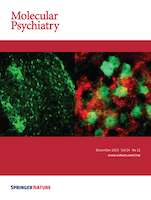
MOLECULAR PSYCHIATRY
Advancing the Frontiers of Mental Health ResearchMOLECULAR PSYCHIATRY, published by SpringerNature, is a premier peer-reviewed journal that has established itself as a leading platform for the dissemination of cutting-edge research in the fields of neuroscience, molecular biology, and psychiatry. With an impressive impact factor and a reputation for excellence, the journal is ranked Q1 in key categories, signifying its high academic quality and relevance. The journal’s scope spans groundbreaking studies and innovative therapeutic approaches that intersect at the molecular and cellular levels, providing invaluable insights into the biological underpinnings of psychiatric disorders. Since its inception in 1996, MOLECULAR PSYCHIATRY has evolved to support both established and emerging researchers, fostering a collaborative environment that enhances the understanding of mental health. It is committed to improving access to scientific knowledge, although it currently does not offer open access options. With its headquarters in London, the journal continues to play a pivotal role in enhancing the global dialogue on psychiatric and neurological advancements, making it an essential resource for academics and professionals dedicated to advancing mental health sciences.
PSYCHOLOGICAL MEDICINE
Uncovering transformative research in mental health.PSYCHOLOGICAL MEDICINE is a leading journal in the field of psychiatry and psychology, published by Cambridge University Press. With its ISSN 0033-2917 and E-ISSN 1469-8978, this journal has firmly established itself as a premier platform for cutting-edge research since its inception in 1970. It consistently ranks in the top quartile for both Applied Psychology and Psychiatry and Mental Health, reflecting its exceptional impact in the field, with a 2023 Scopus ranking of #36 out of 567 in Psychiatry and Mental Health, and #21 out of 249 in Applied Psychology. The journal aims to publish comprehensive studies that explore the interplay between psychological phenomena and medical health, contributing vital insights that advance both theoretical understanding and clinical practice. Although it is not an Open Access journal, PSYCHOLOGICAL MEDICINE remains a vital resource for researchers, professionals, and students committed to the scientific investigation of mental health issues.

Schizophrenia Research
Advancing understanding in schizophrenia research.Schizophrenia Research is a premier academic journal focused on innovative research within the domain of psychiatry and mental health, published by Elsevier. With its ISSN 0920-9964 and E-ISSN 1573-2509, the journal has established a strong presence since its inception in 1988, evolving to publish cutting-edge findings up to 2024. Positioned in Q1 in Psychiatry and Mental Health and Q2 in Biological Psychiatry, it ranks impressively in the 83rd percentile among its peers, according to Scopus, ranking #93/567 in the field of Medicine, and #12/51 in Neuroscience. This journal serves as a vital platform for the dissemination of significant scientific advancements and theoretical insights into schizophrenia, fostering a deeper understanding of mental illnesses. Although it operates on a subscription basis, its critical role in informing both ongoing research and clinical practices cannot be overstated, making it an essential resource for researchers, clinicians, and students alike. Join a global community dedicated to improving mental health outcomes and advancing the study of schizophrenia through this reputable publication.