
Expert Opinion on Orphan Drugs
Scope & Guideline
Transforming challenges into solutions for rare diseases.
Introduction
Aims and Scopes
- Orphan Drug Research:
The journal emphasizes the development, approval, and clinical use of orphan drugs, which are medications designed to treat rare diseases that affect small patient populations. - Clinical Management of Rare Diseases:
It covers clinical practices, management strategies, and therapeutic interventions in the treatment of various rare diseases, providing insights into effective patient care. - Health Technology Assessments:
The journal investigates the economic aspects of orphan drug therapies, including cost-effectiveness analyses, pricing negotiations, and reimbursement policies associated with rare disease treatments. - Patient Experience and Quality of Life:
Research is dedicated to understanding the impact of rare diseases on patients' quality of life, including studies on patient-reported outcomes and symptom management. - Genetic and Molecular Insights:
The journal publishes findings on the genetic and molecular underpinnings of rare diseases, contributing to the understanding of pathogenesis and therapeutic targets.
Trending and Emerging
- Innovative Therapeutic Strategies:
There is a growing emphasis on novel therapies and treatment modalities for rare diseases, highlighting advances in drug development and innovative approaches to patient care. - Real-World Evidence and Registries:
Recent publications are increasingly focusing on real-world data and registry-based research, which provide valuable insights into treatment efficacy and patient experiences in diverse populations. - Genetic Testing and Personalized Medicine:
The rise in articles discussing genetic testing and personalized approaches underscores the importance of tailoring treatments based on individual genetic profiles, enhancing therapeutic outcomes. - Access and Affordability of Orphan Drugs:
There is an emerging trend focusing on patient access to orphan drugs, addressing the challenges of affordability and the impact of health policies on drug availability. - Patient-Centric Research:
Research centered on patient experiences, outcomes, and quality of life is increasingly prioritized, reflecting a broader trend towards patient involvement in the management of rare diseases.
Declining or Waning
- Traditional Chemotherapy Approaches:
There appears to be a waning interest in discussing traditional chemotherapy methods for rare cancers, as newer targeted therapies and personalized medicine approaches are gaining traction. - Generalized Discussions on Rare Diseases:
Broad discussions that do not focus on specific therapies or patient outcomes are becoming less common, as the journal increasingly prioritizes targeted research and innovative therapies. - Historical Analyses of Drug Approvals:
While previously common, retrospective analyses of orphan drug approvals over extended periods are less frequent, suggesting a shift toward more current and forward-looking research.
Similar Journals
NEUROMUSCULAR DISORDERS
Transforming understanding through impactful findings.NEUROMUSCULAR DISORDERS is a premier academic journal published by PERGAMON-ELSEVIER SCIENCE LTD, focusing on the latest research and developments in the fields of neurology, genetics, and pediatric health. With an ISSN of 0960-8966 and an E-ISSN of 1873-2364, this journal has established a significant presence since its inception in 1991, and it continues to contribute to the scientific community with its impactful findings and reviews. The journal boasts a commendable impact factor, reflected in its placement in the Q2 category for Clinical Genetics and Neurology, as well as its positioning in the top tier Q1 for Pediatrics, Perinatology and Child Health according to the latest quartile assessments. With Scopus rankings such as Rank #71/330 in Pediatrics and Rank #51/99 in Clinical Genetics, NEUROMUSCULAR DISORDERS is recognized for its contribution to advancing knowledge in neuromuscular diseases. The journal is essential for researchers, clinicians, and students interested in the intricate relationship between genetics and neurological disorders, providing valuable insights that drive innovation and improve patient care.
Intractable & Rare Diseases Research
Exploring the Frontiers of Intractable Illnesses.Intractable & Rare Diseases Research is a pioneering journal dedicated to advancing the understanding and treatment of rare and intractable diseases. Published by INT RESEARCH & COOPERATION ASSOC BIO & SOCIO-SCIENCES ADVANCEMENT in Japan, this esteemed journal serves as a critical platform for researchers, clinicians, and healthcare professionals to share groundbreaking findings and developments in the field. With its established Scopus ranking of #238 out of 636 in the General Medicine category, placing it in the 62nd percentile, and its classification in the Q3 quartile for 2023, it is recognized as a significant contributor to the literature on rare diseases. Operating without an open-access model, the journal ensures high-quality content cultivated through rigorous peer-review processes. Through its scope spanning from 2012 to 2024, the journal aspires to bridge gaps in knowledge and foster collaboration among interdisciplinary researchers, ultimately aiming to improve patient outcomes and enhance public health concerning these challenging conditions.
CNS DRUGS
Pioneering Insights in Central Nervous System TreatmentsCNS DRUGS is a leading journal dedicated to the field of neuroscience, specifically focused on the advancement of pharmacological therapies for central nervous system disorders. Published by ADIS INT LTD, this esteemed journal has maintained a strong impact within its domain, achieving Q1 rankings in 2023 across multiple categories, including Neurology (clinical), Pharmacology (medical), and Psychiatry and Mental Health. With an impressive Scopus ranking as the 11th of 272 in medical pharmacology and high percentiles in psychiatry and neurology, it fosters high-quality research publication and dissemination. Spanning over two decades from 1994 to 2024, CNS DRUGS serves as a vital resource for researchers, professionals, and students alike, providing comprehensive insights that drive innovation in clinical practices. Although primarily a subscription-based journal, the richness of its content makes it an essential addition to any institution's library. Striving to bridge the gap between scientific research and clinical application, CNS DRUGS is positioned at the forefront of neurological and psychiatric pharmacotherapy research.
RHEUMATOLOGY INTERNATIONAL
Exploring the forefront of rheumatology research.Rheumatology International, published by Springer Heidelberg, is a prestigious journal that focuses on innovative research in the field of rheumatology and immunology. Established in 1981, this peer-reviewed journal has contributed significantly to advancing our understanding of autoimmune disorders, clinical approaches, and therapeutic interventions. It holds a commendable Q2 ranking in the categories of Immunology, Immunology and Allergy, and Rheumatology as of 2023, showcasing its influence and importance within these disciplines. With a robust Scopus ranking—positioned 14 out of 73 in Medicine Rheumatology—it caters to a diverse audience of researchers, clinicians, and students committed to improving patient care and treatment modalities. Although it does not currently offer open access options, the journal remains a vital resource for insights on contemporary challenges and breakthroughs in rheumatological research, published from its base in Heidelberg, Germany.
Current Rheumatology Reviews
Elevating standards in rheumatic disease research.Current Rheumatology Reviews is an esteemed journal dedicated to publishing comprehensive reviews on advancements in the field of rheumatology. Established by Bentham Science Publishers, this journal has become a vital resource for researchers, clinicians, and students seeking to stay abreast of the latest developments and therapeutic strategies from 2006 to 2024. Located in the United Arab Emirates, it caters to a global audience, delivering insights that have been pivotal in shaping clinical practices. With an impact factor reflective of its Q3 status in Rheumatology by 2023, the journal ranks #46 out of 73 in the Scopus database, positioning it in the 37th percentile in the discipline. Although it operates without open access, its high-quality content ensures that each article undergoes rigorous peer review, making the Current Rheumatology Reviews a trusted platform for disseminating critical research findings and reviews that drive forward the understanding and treatment of rheumatic diseases.
Neurodegenerative Diseases
Unraveling the complexities of neurodegeneration.Neurodegenerative Diseases, published by KARGER, is a prominent academic journal dedicated to advancing the field of neurology and neuroscience. With an ISSN of 1660-2854 and E-ISSN 1660-2862, this journal serves as a vital platform for researchers, professionals, and students engaged in the exploration of neurodegenerative disorders from various perspectives, including clinical applications and therapeutic interventions. Spanning two decades since its inception in 2004 and set to converge in 2024, it has steadily built a reputation within the academic community, achieving a commendable Q2 ranking in clinical neurology and Q3 in general neurology according to the 2023 category quartiles. The journal boasts an impressive Scopus rank of 114/400 (71st percentile) in clinical neurology and 58/192 (70th percentile) in neuroscience neurology. While not classified as open access, the publication provides critical insights into the latest research and developments, making it an essential resource for anyone dedicated to understanding and combating neurodegenerative diseases.
Allergy Asthma and Clinical Immunology
Transforming immunological insights into clinical practice.Allergy Asthma and Clinical Immunology, a pioneering open access journal published by BMC, has been at the forefront of immunological research since its inception in 2005. With an ISSN of 1710-1492, this UK-based journal has established a significant presence in the fields of Immunology, Allergy, and Pulmonary and Respiratory Medicine, achieving notable quartile rankings such as Q2 in Immunology and Allergy in 2023. It plays a crucial role in disseminating high-quality research that advances our understanding of allergy and asthma, making substantial contributions to clinical practices and public health. The journal embraces the principles of Open Access, allowing researchers, professionals, and students from around the globe to access its content freely, thus facilitating knowledge sharing and collaboration within the scientific community. As it converges towards 2024, Allergy Asthma and Clinical Immunology continues to attract impactful studies that drive innovation and improve patient care in the face of rapidly evolving challenges in immunological health.
JOURNAL OF ENDOCRINOLOGY
Exploring Innovations in Diabetes and MetabolismJOURNAL OF ENDOCRINOLOGY, established in 1946 and published by BIOSCIENTIFICA LTD, stands as a premier scholarly outlet in the field of endocrinology, diabetes, and metabolism. With an impressive H-Index reflecting its significant contribution to the literature, this journal maintains a strong presence in academic circles, evidenced by its Q1 ranking in the 2023 Scopus categories for both Endocrinology and Diabetes and Metabolism. With its targeted scope serving a global audience of researchers, professionals, and students, it provides a vital platform for disseminating innovative research findings and advancing the scientific understanding of endocrine systems. As we approach its convergence year of 2024, JOURNAL OF ENDOCRINOLOGY remains committed to publishing high-quality, peer-reviewed articles that explore cutting-edge developments in the field, thereby impacting clinical practices and guiding future research directions.
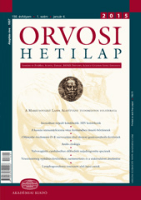
ORVOSI HETILAP
A Legacy of Medical Excellence and DiscoveryORVOSI HETILAP is a pivotal journal in the field of general medicine, published by AKADEMIAI KIADO ZRT in Hungary. With its rich history dating back to 1949, this journal has been a platform for disseminating significant research findings and clinical advancements that impact healthcare practices. Although it currently falls within the Q4 category in the 2023 ranking of Medicine (miscellaneous), it holds a Scopus rank of #320 among 636 journals in its category, indicating its growing recognition among peers and scholars. The journal does not offer open access options, which may limit broader dissemination, but it nonetheless remains an important resource for medical professionals, researchers, and students engaging with contemporary medical issues. Located in the vibrant academic landscape of Budapest, ORVOSI HETILAP continues to contribute to the evolving dialogue in the medical community, showcasing diverse topics and fostering interdisciplinary collaboration.
JOURNAL OF NEPHROLOGY
Advancing kidney health through innovative research.JOURNAL OF NEPHROLOGY is a premier academic journal dedicated to the field of nephrology, published by Springer Heidelberg. With its ISSN 1121-8428 and E-ISSN 1724-6059, this journal serves as a dynamic platform for disseminating high-quality research and groundbreaking findings in kidney health and disease. Since its inception in 1989, it has established itself as a vital resource for professionals, researchers, and students, consistently ranking in the top quartile (Q1) of nephrology journals and securing an impressive Scopus rank of #19 out of 81, placing it in the 77th percentile. Although it operates under a subscription model, the journal fosters an inclusive academic environment where critical discussions and innovative approaches to nephrological challenges are encouraged. With a commitment to advancing knowledge and practice in nephrology, JOURNAL OF NEPHROLOGY remains an essential resource for anyone who seeks to stay at the forefront of kidney research and clinical care.